
In modern piping systems pipe fitting components are essential for connecting directing and controlling the flow of fluids. Whether used in residential plumbing industrial pipelines or agricultural irrigation systems pipe fittings ensure system efficiency safety and long term durability.
With the development of advanced materials different types of pipe fittings have been introduced to meet specific performance requirements. This guide will explore the most common types including CPVC pipe fittings HDPE pipe fitting PP compression pipe fittings PPR pipe fittings and PVC pipe fitting focusing on their definitions features materials functions and applications.
What Are Pipe Fittings?
Pipe fittings are mechanical components used to connect pipes change flow direction regulate flow or adapt pipe sizes within a piping system. They are widely used in water supply drainage gas transport and industrial fluid systems.
Common functions of pipe fittings include connecting straight pipes redirecting flow splitting or combining flow and controlling pressure and volume.
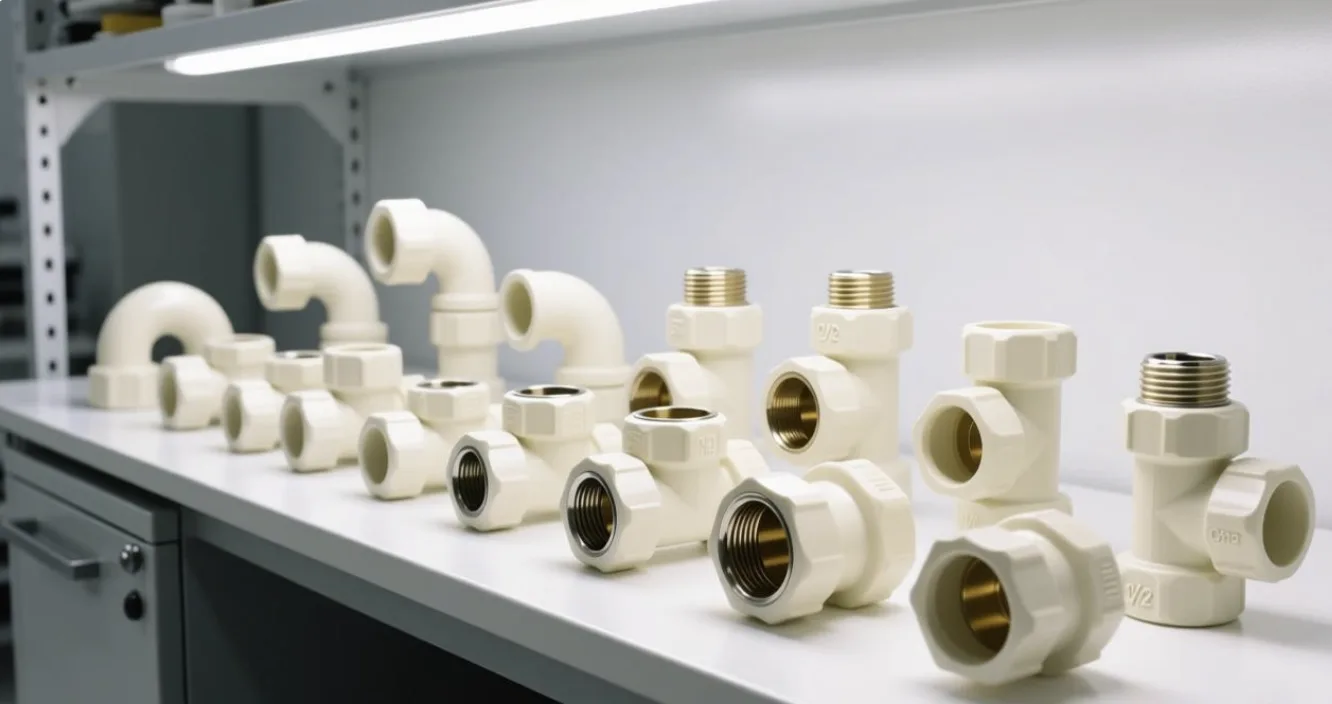
CPVC Pipe Fittings
CPVC pipe fittings are made from chlorinated polyvinyl chloride which enhances temperature resistance compared to standard PVC.
Features and Material
CPVC has excellent heat resistance and can handle higher temperatures up to around 90 degrees Celsius. It also offers strong chemical resistance and flame retardant properties.
Functions
These fittings are ideal for transporting hot water and corrosive fluids while maintaining system stability.
Applications
CPVC pipe fittings are widely used in hot water supply systems industrial chemical processing and commercial plumbing systems.
HDPE Pipe Fitting
HDPE pipe fitting is made from high density polyethylene known for its flexibility and strength.
Features and Material
HDPE provides excellent impact resistance flexibility and leak proof performance. It can withstand harsh environmental conditions and is suitable for underground installation.
Functions
These fittings ensure secure connections in systems that require flexibility and durability under pressure.
Applications
HDPE pipe fittings are commonly used in municipal water supply agricultural irrigation gas distribution and drainage systems.
PP Compression Pipe Fittings
PP compression pipe fittings are made from polypropylene and use a mechanical compression method for connection without the need for heat fusion.
Features and Material
They offer excellent chemical resistance and easy installation. The compression design allows for quick assembly and disassembly.
Functions
These fittings provide strong leak resistant connections while simplifying installation processes.
Applications
They are widely used in irrigation systems water distribution networks and temporary piping installations.
PPR Pipe Fittings
PPR pipe fittings are made from random copolymer polypropylene and are commonly used in modern plumbing systems.
Features and Material
PPR is non toxic heat resistant and has a long service life. It uses heat fusion welding which creates a seamless and durable connection.
Functions
These fittings ensure reliable water transport with minimal leakage risk and high pressure resistance.
Applications
PPR pipe fittings are ideal for residential water supply heating systems and potable water applications.
PVC Pipe Fitting
PVC pipe fitting is one of the most widely used types due to its cost effectiveness and versatility.
Features and Material
PVC is lightweight corrosion resistant and easy to install. It performs well in low to medium temperature environments.
Functions
These fittings are used to connect and control fluid flow in a wide range of systems.
Applications
PVC pipe fittings are commonly used in drainage systems irrigation networks swimming pools and general water supply systems.
Key Differences Between Pipe Fitting Materials
Each type of pipe fitting offers unique advantages depending on the application.
CPVC is best for high temperature applications
HDPE is ideal for flexibility and underground systems
PP compression fittings are perfect for quick installation
PPR is suitable for hot and cold water supply
PVC is widely used for cost effective general applications
Choosing the right material ensures optimal system performance and longevity.
How to Choose the Right Pipe Fitting
When selecting pipe fittings consider the following factors
Temperature requirements
Pressure rating
Chemical compatibility
Installation method
Application environment
Understanding these factors helps in selecting the most suitable pipe fitting for your project.
Applications of Pipe Fittings in Different Industries
Pipe fittings are used across various industries including
Construction and building water supply
Agricultural irrigation systems
Industrial fluid transportation
Municipal infrastructure projects
Residential plumbing systems
Their versatility makes them essential in both small scale and large scale systems.
FAQ Frequently Asked Questions
What are the different types of pipe fittings
Common types include elbows tees reducers couplings and unions made from materials such as CPVC HDPE PPR PP and PVC
What is the best material for pipe fittings
The best material depends on the application for example CPVC for hot water HDPE for underground use and PVC for general purposes
What is the difference between PVC and CPVC pipe fittings
CPVC can handle higher temperatures while PVC is more suitable for cold water and drainage systems
Are HDPE pipe fittings better than PVC
HDPE offers better flexibility and impact resistance while PVC is more rigid and cost effective
What are PP compression pipe fittings used for
They are mainly used in irrigation and water supply systems where quick and easy installation is required
How long do pipe fittings last
Depending on the material and application pipe fittings can last from 20 to over 50 years
Conclusion Pntek Plast
Pipe fittings are critical components in any piping system and selecting the right type is essential for efficiency and durability. From CPVC pipe fittings for high temperature applications to HDPE pipe fitting for flexible underground systems and PVC pipe fitting for cost effective solutions each material serves a specific purpose.
Understanding the characteristics functions and applications of different pipe fitting materials allows engineers contractors and buyers to make informed decisions and build reliable piping systems.If you have interest,just contact us directly!


