
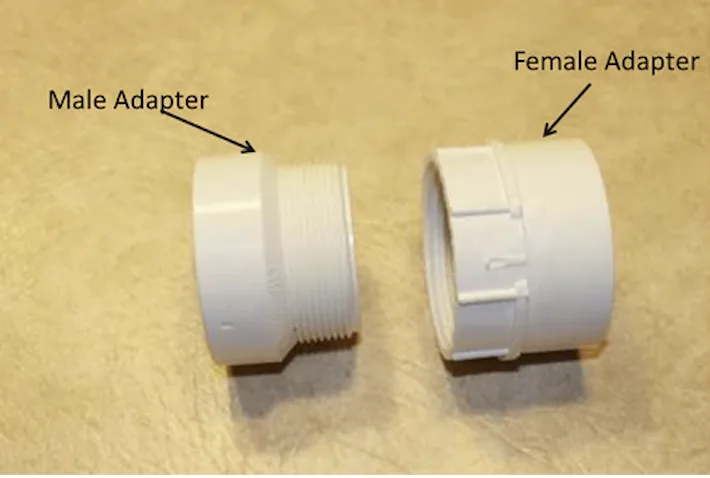
Male and female pipe fittings are connection components identified by thread position. A male pipe fitting has external threads on the outside surface. A female pipe fitting has internal threads inside the opening. These two thread types are designed to join together and create a secure fluid or gas connection in plumbing, irrigation, industrial piping, water treatment, and compressed air systems.
Understanding male and female pipe fittings is essential because thread mismatch is a common cause of leaks, installation delay, and damaged components. According to the National Institute of Standards and Technology (NIST), dimensional consistency and standards compliance are critical in mechanical assemblies. The same principle applies to threaded pipe fittings. Buyers often compare PVC male adapter, female threaded fitting, PVC union fitting, plastic pipe connector, threaded PVC coupling, and irrigation pipe fittings.
Male Pipe Fittings Definition and Common Uses
A male pipe fitting includes external threads that screw into a female threaded port or female fitting. Installers usually identify male fittings by visible thread ridges around the outside of the connector.
Common male fitting examples include
Male adapter
Male elbow
Male tee branch
Hose barb with male thread
Male union tailpiece
Male fittings are widely used when connecting valves, pumps, tanks, manifolds, and threaded equipment ports.
| Fitting Type | Thread Position | Common Application |
|---|---|---|
|
Male Adapter |
Outside |
Pipe to threaded valve |
|
Male Elbow |
Outside |
Direction change |
|
Male Tee |
Outside branch |
Split flow line |
|
Male Plug |
Outside |
Close unused port |
Many irrigation systems use PVC male threaded adapter components to connect plastic pipe to metal valves.
Female Pipe Fittings Definition and Common Uses
A female pipe fitting includes internal threads cut into the opening. A male fitting is inserted and tightened into the female side to create the joint.
Common female fitting examples include
Female coupling
Female elbow
Female union
Female threaded valve socket
Female cap or end connector
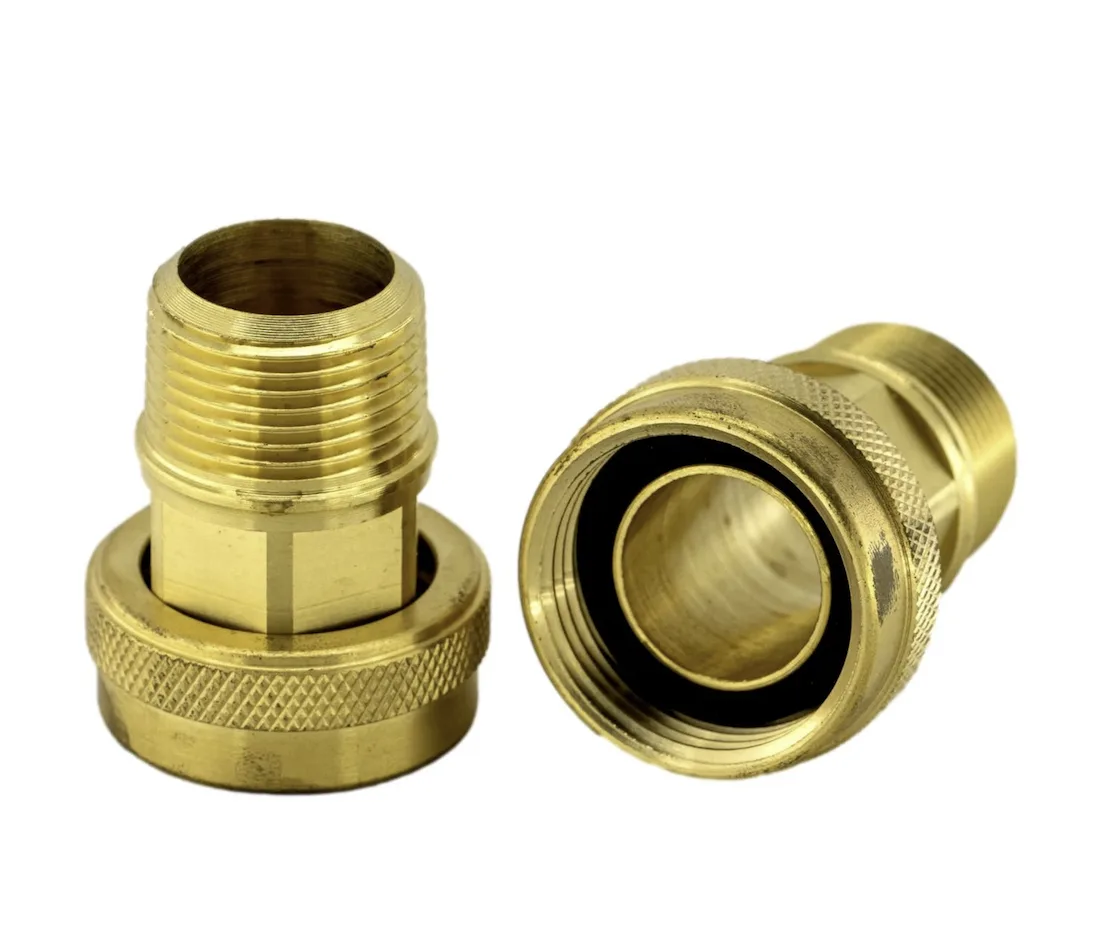
Female fittings are common on valves, filters, pumps, and control equipment because the threaded cavity protects the thread surface during handling.
The Occupational Safety and Health Administration (OSHA) emphasizes correct assembly and maintenance of pressurized systems. Correct thread engagement helps reduce leak risk in operating pipelines.
How Male and Female Pipe Threads Work Together
Male and female pipe fittings seal by thread engagement. When the male thread rotates into the female thread, the thread flanks compress and align. Depending on the standard, sealing may occur through tapered thread interference or by gasket, O-ring, or flat washer.
Typical Installation Sequence
-
Confirm thread standard and size
-
Clean both threaded surfaces
-
Apply sealant if required
-
Hand tighten first
-
Finish tightening with proper tool
-
Pressure test connection
| Sealing Method | Common Standard | Typical Use |
|---|---|---|
|
Tapered Thread |
NPT |
Water, air lines |
|
Parallel Thread + O-ring |
BSPP |
Equipment ports |
|
Union Seal Face |
Gasket |
Easy maintenance |
The Engineering Toolbox provides common thread reference dimensions used by many installers.
Male vs Female Pipe Fittings: Key Differences
Male and female fittings are complementary, but they differ in installation behavior and application planning.
| Feature | Male Pipe Fitting | Female Pipe Fitting |
|---|---|---|
|
Thread Location |
Outside |
Inside |
|
Visual Identification |
Easy to see |
Inside cavity |
|
Port Connection |
Inserts into port |
Receives male part |
|
Damage Risk |
External thread exposure |
Internal thread contamination |
Key conclusion: male fittings are usually the inserting side, while female fittings are the receiving side.
Common Thread Standards for Pipe Fittings
Thread gender alone is not enough. The fitting must also match the thread standard and nominal size.
Main Global Standards
-
NPT – National Pipe Taper, common in North America
-
BSPT – British Standard Pipe Taper
-
BSPP – British Standard Pipe Parallel
-
Metric Thread – used in some machinery systems
The International Organization for Standardization (ISO) supports dimensional and technical standards used across fluid handling industries. Mixing NPT male with BSP female threads often causes leakage or thread damage.
Many buyers source female PVC threaded coupling products in both NPT and BSP versions.
How to Choose Male or Female PVC Pipe Fittings
PVC systems often use threaded transitions where solvent cement joints meet valves or equipment.
Choose male or female fittings based on the port you need to connect
Female valve port → use male adapter
Male pump outlet → use female coupling
Frequent maintenance point → use union fitting
Outdoor irrigation line → UV-resistant PVC fitting
Corrosion-sensitive water line → plastic threaded fitting
The U.S. Environmental Protection Agency (EPA) provides guidance on water infrastructure materials and system performance. Corrosion-resistant plastics are often selected for water applications.
Buyers commonly compare PVC female adapter and PVC threaded union options for serviceable systems.
Common Installation Mistakes with Threaded Pipe Fittings
Most threaded fitting failures come from installation errors rather than material defects.
Frequent Mistakes
-
Cross-threading male into female fitting
-
Over-tightening PVC threads
-
Mixing incompatible standards
-
Using too much thread seal tape
-
Installing dirty or cracked threads
PVC fittings can crack under excessive torque. Hand start every connection before using tools.
The NIOSH safety resources also emphasize safe maintenance practices for mechanical systems under pressure.
Why Male and Female Fittings Matter in System Design
Correct male and female pipe fitting selection improves maintenance speed, inventory control, and future expansion. Engineers often standardize thread type across a facility to reduce spare part complexity.
Key conclusions include
Match thread gender first
Verify thread standard second
Confirm material compatibility third
Use correct sealing method fourth
These four steps prevent most connection problems.
FAQ
1. What is the difference between male and female pipe fittings?
A male pipe fitting has external threads on the outside. A female pipe fitting has internal threads inside the opening. They are designed to screw together and form a connection.
2. Can a male NPT fitting connect to a female BSP fitting?
Usually no. NPT and BSP threads have different angles and dimensions. Forced assembly may damage threads or create leaks. Always match the thread standard.
3. Are PVC male fittings stronger than PVC female fittings?
Strength depends on wall thickness, pressure rating, and installation quality. Male fittings can be damaged by over-tightening, while female fittings may crack if overstressed by tapered metal threads.
4. Do all male and female fittings need thread seal tape?
No. Tapered threads often use seal tape or sealant. O-ring unions and gasket-face fittings usually seal without thread tape. Follow the fitting design requirement.
5. How do I identify a female pipe fitting quickly?
Look inside the opening. If internal threads are visible, the fitting is female. If threads are on the outside of the connector, the fitting is male.


