
Introduction
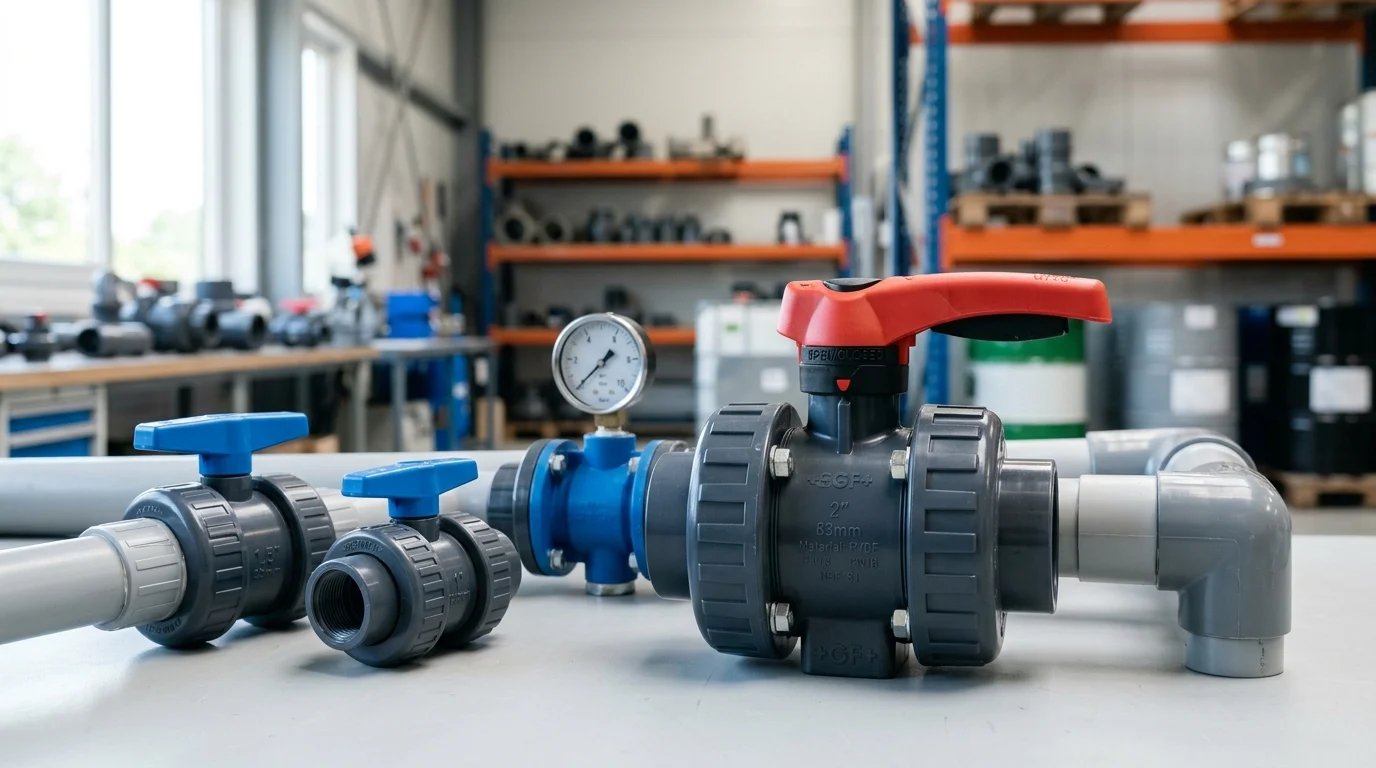
In chemical processing plants, valve selection directly affects safety, product purity, maintenance frequency, and operating cost. Plastic valves have become a common choice because many engineered polymers resist acids, alkalis, chlorides, and other aggressive media better than standard metals, while also avoiding rust and contamination issues. Their lighter weight, lower installation demands, and competitive lifecycle cost further strengthen their appeal in corrosive service. This article explains why plastic valves are widely specified in chemical systems, which material properties make them effective, and how they compare with metal alternatives in terms of corrosion resistance, reliability, and long-term plant performance.
Why Plastic Valves Matter in Chemical Systems
Chemical processing facilities operate under some of the most demanding fluid-handling conditions in the industrial sector. The transport of aggressive acids, caustics, and ultrapure fluids requires piping and valving systems that can withstand severe internal chemical attack without compromising structural integrity or fluid purity. Historically, engineers relied on exotic metal alloys to manage these corrosive environments. However, advancements in polymer science have positioned plastic valves as a primary specification for a vast array of chemical processing applications.
The shift toward non-metallic fluid control is driven by the inherent chemical inertness of engineered thermoplastics and fluoropolymers. Unlike metals, which rely on passive oxide layers that can be stripped away by halogens or strong acids, polymers offer bulk resistance to chemical degradation. This fundamental difference alters the lifecycle economics and operational reliability of chemical plants, making plastic valves a critical component in modern facility design.
Corrosion, uptime, and total cost drivers
The primary operational drivers for specifying plastic valves in chemical systems are the mitigation of corrosion, the maximization of process uptime, and the optimization of the total cost of ownership (TCO). Metallic valves subjected to aggressive media such as hydrochloric acid or sodium hypochlorite often experience pitting, crevice corrosion, and eventual premature failure. This degradation not only risks hazardous leaks but also necessitates frequent maintenance shutdowns.
Replacing exotic metal valves, such as those made from Hastelloy or titanium, with high-performance polymers like PVDF or CPVC drastically shifts the financial paradigm. Facilities can typically realize a 40% to 60% reduction in initial capital expenditure (CAPEX) per valve. More importantly, in highly corrosive acid lines, the mean time between failures (MTBF) can increase from a mere 12 to 18 months for standard alloys to over 5 to 7 years for correctly specified plastic alternatives, virtually eliminating unplanned downtime related to valve corrosion.
Where plastic valves fit in chemical applications
Plastic valves are integrated across diverse sectors of the chemical industry, including chlor-alkali production, semiconductor wet processing, water and wastewater treatment, and bulk chemical synthesis. In chlor-alkali plants, where the electrolysis of brine produces highly reactive chlorine gas and sodium hydroxide, plastic valves are indispensable due to their resistance to both wet chlorine and concentrated caustics.
Furthermore, in applications requiring ultrapure water (UPW) or electronic-grade chemicals, plastic valves prevent the leaching of metallic ions into the process media. Fluoropolymers, in particular, provide smooth, non-porous internal surfaces that inhibit biofilm growth and particulate accumulation, ensuring that stringent purity specifications—often measured in parts per trillion (ppt)—are continuously met.
Plastic Valve Types and Materials
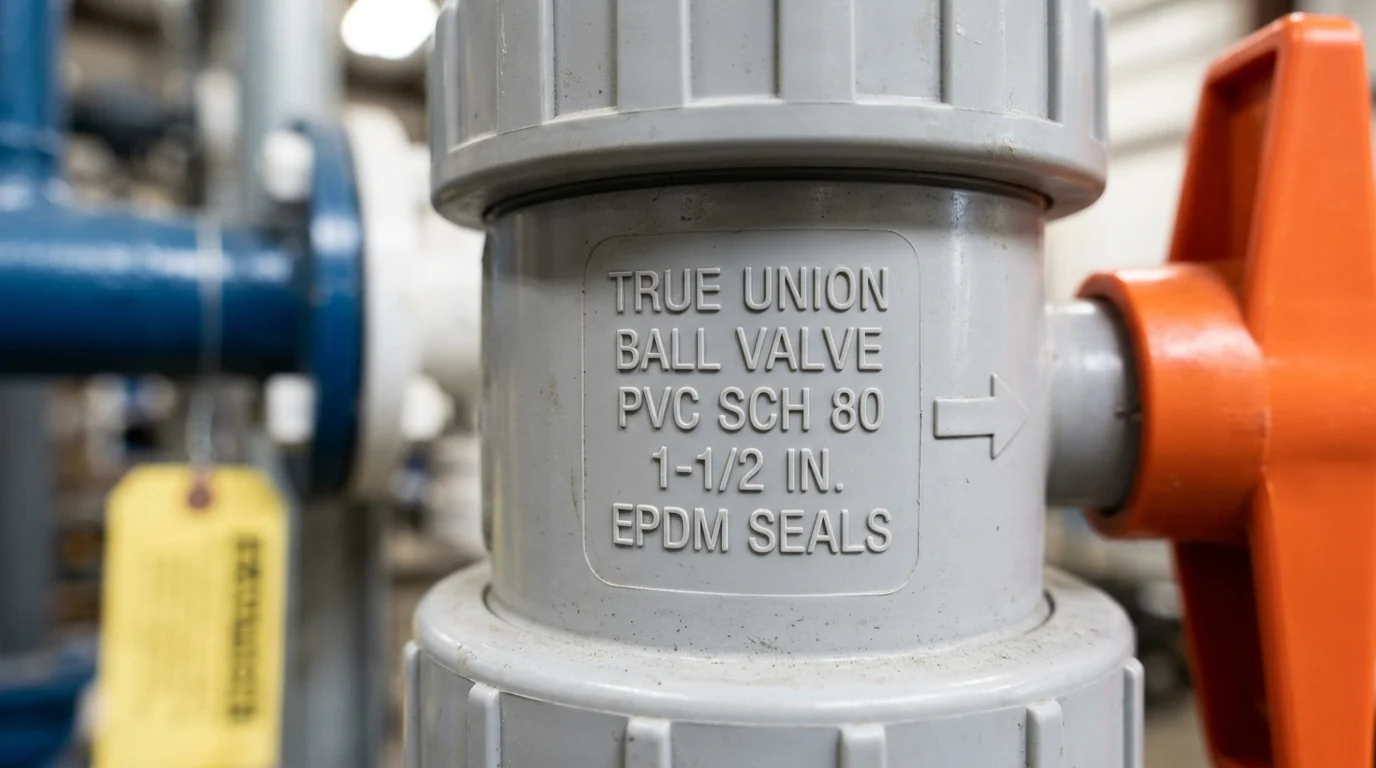
The performance envelope of a plastic valve is dictated by its base polymer and the design of its mechanical components. Selecting the appropriate valve requires a comprehensive understanding of both the material matrix and the mechanical actuation style, as each combination offers distinct flow characteristics and chemical resistance profiles.
Common thermoplastics and fluoropolymers
The chemical industry relies on a spectrum of thermoplastics and fluoropolymers, each suited to specific thermal and chemical environments. Polyvinyl chloride (PVC) and chlorinated polyvinyl chloride (CPVC) are foundational materials; PVC is widely utilized for general water and mild chemical transport up to 140°F (60°C), while CPVC extends thermal stability to 200°F (93°C) and handles a broader range of acids and bases.
For more aggressive applications, polypropylene (PP) offers excellent resistance to organic solvents and alkaline solutions. When thermal and chemical demands peak, engineers specify polyvinylidene fluoride (PVDF) or polytetrafluoroethylene (PTFE). PVDF provides exceptional mechanical strength and withstands highly corrosive halogens and strong acids up to 280°F (138°C). Fully fluorinated polymers like perfluoroalkoxy (PFA) or PTFE, often used as valve linings or seats, can endure temperatures approaching 400°F (200°C) and offer near-universal chemical inertness.
Ball, diaphragm, butterfly, check, and control valve roles
The mechanical configuration of the valve determines its suitability for isolation, throttling, or directional flow control. Ball valves are the standard for on/off isolation, offering high flow capacity and a compact footprint. Diaphragm valves are preferred for throttling highly corrosive or particulate-laden media, as the diaphragm isolates the working mechanism from the fluid. Butterfly valves are utilized for large-diameter lines where space and weight are constrained, while check valves prevent backflow to protect pumps and sensitive equipment.
| Valve Type | Typical Size Range | Primary Function | Optimal Chemical Application |
|---|---|---|---|
| True Union Ball | 1/2" to 6" | On/Off Isolation | General chemical transport, acid transfer |
| Diaphragm | 1/2" to 10" | Throttling / Isolation | Slurries, abrasive chemicals, ultrapure fluids |
| Butterfly | 2" to 24" | High-volume Isolation | Large cooling water lines, bulk effluent |
| Swing Check | 3/4" to 8" | Backflow Prevention | Pump discharge lines, gravity feed systems |
| Globe / Control | 1/2" to 4" | Precise Flow Modulation | Dosing systems, pH neutralization circuits |
Plastic vs Metal Valves
The decision to specify a plastic valve over a metallic counterpart involves a careful engineering trade-off between mechanical strength, thermal tolerance, and chemical inertness. While plastics offer unparalleled resistance to many corrosive agents, their mechanical properties are highly sensitive to temperature fluctuations.
Corrosion, pressure-temperature, and purity trade-offs
Metals inherently possess superior tensile strength and can handle internal pressures well above 300 psi, making them mandatory for high-pressure steam or extreme thermal processes. However, metals are susceptible to galvanic corrosion, oxidation, and chemical attack, which can lead to catastrophic failure or the contamination of high-purity media via ion leaching.
Plastics eliminate ion leaching and galvanic corrosion but are subject to strict pressure-temperature derating. A standard Schedule 80 PVC ball valve may be rated for 150 psi at 73°F (23°C), but its pressure-handling capacity drops by nearly 50% as the process temperature approaches 110°F (43°C). Engineers must strictly map the system's maximum operating pressure against the derating curve of the selected polymer to ensure structural safety.
Material comparison across PVC, CPVC, PP, PVDF, and metal
Comparing specific polymers against a standard industrial alloy highlights the distinct advantages and limitations of each material class. The following table contrasts common plastic valve materials with 316L stainless steel.
| Material | Max Operating Temp | Tensile Strength (approx.) | Chemical Resistance Profile | Relative Cost Multiplier |
|---|---|---|---|---|
| PVC | 140°F (60°C) | 7,000 psi | Good (water, mild acids, bases) | 1.0x (Baseline) |
| CPVC | 200°F (93°C) | 8,000 psi | Very Good (strong acids, halogens) | 1.5x – 2.0x |
| Polypropylene (PP) | 180°F (82°C) | 4,500 psi | Excellent (solvents, caustics) | 1.3x – 1.8x |
| PVDF | 280°F (138°C) | 6,500 psi | Exceptional (halogens, strong acids) | 4.0x – 6.0x |
| 316L Stainless Steel | > 1000°F (537°C) | 70,000 psi | Moderate (vulnerable to chlorides/HCl) | 3.0x – 5.0x |
When plastic outperforms metal and when it does not
Plastic valves significantly outperform metals in environments dominated by inorganic acids (such as hydrochloric or sulfuric acid), sodium hypochlorite, and ultrapure deionized water. In these settings, 316L stainless steel will rapidly pit or rust, whereas PVDF or CPVC will remain structurally sound for years.
Conversely, plastic valves are not suitable for processes involving high-pressure steam, extreme temperatures, or highly volatile organic compounds (VOCs). Solvents like aromatics (benzene, toluene) and ketones (acetone) can cause certain thermoplastics to swell, soften, or experience environmental stress cracking. In these specific chemical environments, metal valves or fully PTFE-lined metal valves remain the required engineering standard.
Specification and Validation
Procuring and installing plastic valves in a chemical plant requires rigorous specification protocols to mitigate the risks of chemical leaks, environmental contamination, and process downtime. Validation extends beyond merely selecting the right body material; it encompasses elastomers, actuation torque, and precise installation parameters.
Process data and chemical compatibility checks
The specification process begins with a comprehensive analysis of the process media. Engineers must account for the chemical concentration, minimum and maximum operating temperatures, operating pressure, and the specific gravity of the fluid. Chemical compatibility must be verified not only for the valve body but also for the internal seals, such as FKM (Viton) or EPDM O-rings, and PTFE seats.
Fluid specific gravity directly impacts valve actuation. For automated valves, a fluid with a specific gravity above 1.2 requires the actuator torque to be upsized by at least 15% to 20% to overcome the increased breakaway friction. Failing to calculate this can result in stalled actuators and critical loss of process control.
Compliance, documentation, traceability, and quality assurance
Quality assurance in chemical valve procurement relies heavily on industry compliance and traceability. Depending on the application, valves may need to conform to ANSI/ASME B16.34 for pressure boundaries, or FDA and USP Class VI standards for pharmaceutical and food-grade chemical processing.
Manufacturers must provide comprehensive documentation, including Material Test Reports (MTRs) and certificates of compliance. Traceability ensures that in the event of a failure or a plant audit, the exact resin batch, manufacturing date, and pressure testing results of the valve can be retrieved and verified.
Installation and commissioning practices to prevent failure
Improper installation is a leading cause of premature plastic valve failure. Thermoplastics have higher coefficients of thermal expansion than metals, meaning piping systems must be engineered with expansion loops and proper support spacing to prevent continuous mechanical stress, which leads to polymer creep and eventual rupture.
Furthermore, when installing flanged plastic valves, strict adherence to torque specifications is mandatory. Overtightening flange bolts can easily crack a plastic valve body. For instance, a standard 2-inch PVC flange typically requires a precise bolt torque of only 15 to 25 ft-lbs, applied in a strict star-pattern sequence using a calibrated torque wrench, to ensure a leak-free seal without damaging the polymer.
Selection Framework and Standardization
Developing a cohesive selection framework for plastic valves enables chemical processing facilities to streamline procurement, reduce maintenance overhead, and ensure consistent safety standards across diverse fluid-handling systems. Standardization is a strategic approach to managing plant assets over their entire lifecycle.
Balancing cost, service life, and spare parts strategy
A robust selection framework evaluates the total cost of ownership (TCO) rather than just the initial purchase price. This involves balancing the upfront cost of premium materials, expected service life, and the logistics of maintaining a spare parts inventory. By standardizing on specific valve types and materials for broad categories of chemical service, plants can drastically reduce their maintenance, repair, and operations (MRO) complexity.
For example, a facility might choose to standardize on PVDF true union ball valves for all acidic process lines, rather than mixing CPVC, PP, and PVDF based on marginal temperature differences. While the initial material cost is higher, reducing the unique SKU count can cut spare parts inventory carrying costs by 25% to 30%. Furthermore, standardizing on ISO/DIN or ANSI face-to-face dimensions ensures that any replacement valve drops seamlessly into the existing piping footprint without requiring pipe modifications.
Use cases for standardizing on plastic valves
Standardization proves highly effective in complex chemical environments such as semiconductor fabrication plants, lithium-ion battery precursor manufacturing, and large-scale desalination facilities. In semiconductor fabs, standardizing on high-purity PFA and PVDF valves across all wet benches ensures that no cross-contamination occurs between different chemical delivery modules, simplifying both procurement and cleanroom maintenance protocols.
Ultimately, standardizing on high-quality engineered plastic valves provides chemical processing plants with predictable maintenance schedules, reduced training burdens for maintenance technicians, and a highly reliable fluid-handling infrastructure capable of withstanding the industry's most aggressive chemical challenges.
Key Takeaways
- The most important conclusions and rationale for plastic valves for chemical industry
- Specs, compliance, and risk checks worth validating before you commit
- Practical next steps and caveats readers can apply immediately
Frequently Asked Questions
Why are plastic valves preferred over metal valves in chemical plants?
They resist corrosion from acids, caustics, and oxidizers better than many metals, reducing leaks, maintenance, and unplanned shutdowns.
Which plastic valve materials are common for chemical processing?
PVC suits mild chemicals, CPVC handles higher temperatures, PP works well with alkalis, and PVDF is chosen for highly corrosive media.
What valve types are most used in chemical systems?
Ball valves are common for shutoff, diaphragm valves for corrosive or pure fluids, butterfly valves for larger lines, and check valves to prevent backflow.
How do plastic valves help reduce total operating cost?
They often cost less than exotic metal valves and usually last longer in corrosive service, lowering replacement, labor, and downtime costs.
Can Pntek support chemical-industry buyers with plastic valve solutions?
Yes. Pntek supplies multiple plastic valve types and materials and offers export-oriented quote support for reliable integrated piping solutions.


