
Introduction
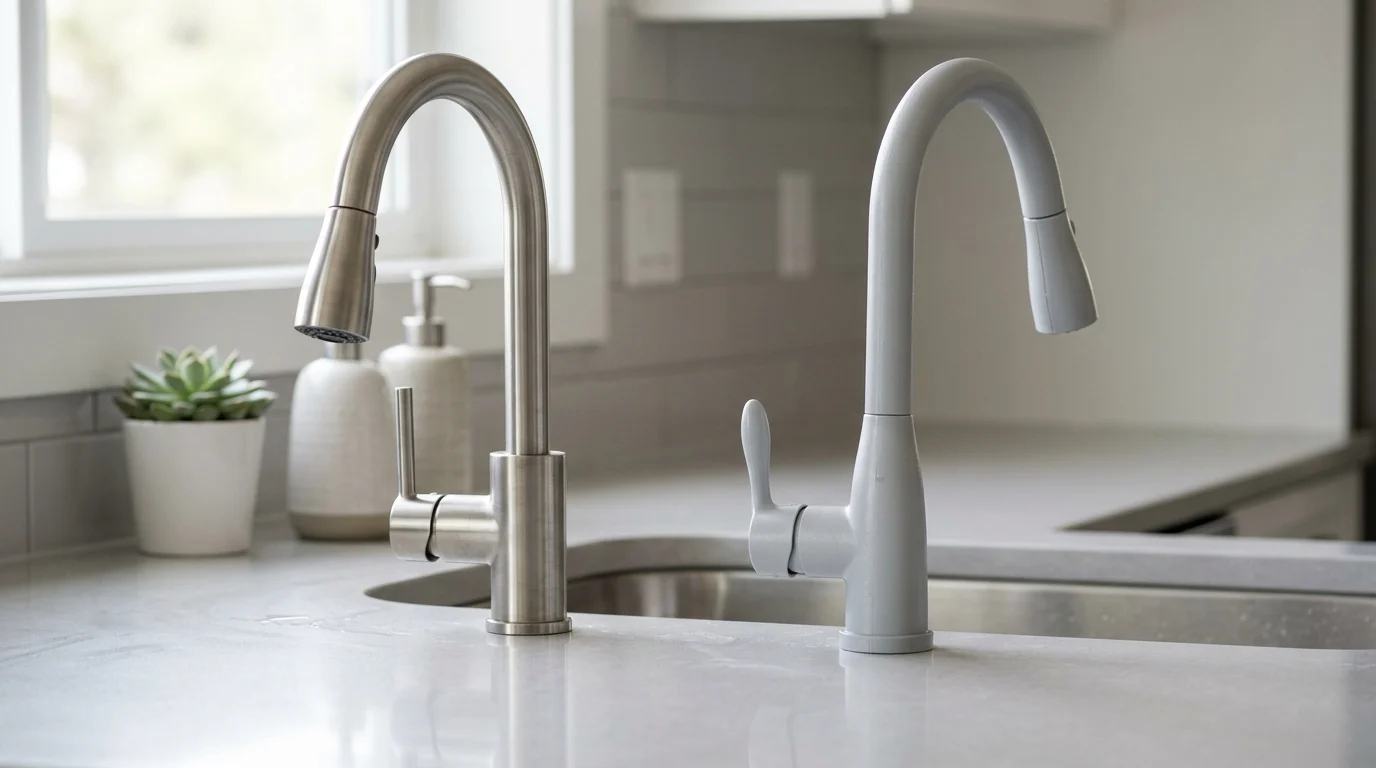
Choosing a faucet material affects more than appearance: it influences durability, water safety, maintenance needs, and how often you may need a replacement. For home use, plastic and metal faucets serve different priorities, from short-term budget savings to long-term reliability in busy kitchens and bathrooms. This article compares the two options in practical terms, including cost, expected lifespan, resistance to wear and corrosion, and where each material makes the most sense around the house. By the end, you will have a clearer basis for deciding which type fits your budget, usage patterns, and renovation goals.
Why Plastic vs Metal Faucets Matter for Homes
The specification of plumbing fixtures is a critical component of residential construction and renovation. Faucets serve as the primary interface for potable water delivery, handling an average household consumption of over 300 gallons per day. The choice between plastic and metal faucets dictates not only the aesthetic integration of the fixture but also its hydraulic reliability, maintenance frequency, and overall lifecycle cost.
Cost, performance, and replacement expectations
Analyzing the financial and operational metrics reveals a stark contrast between polymer and metallic fixtures. Standard ABS or POM plastic faucets typically command an initial procurement cost ranging from $15 to $50, making them highly attractive for strict budget constraints. However, their operational lifespan rarely exceeds 3 to 5 years under continuous daily use.
Conversely, metal faucets—specifically those forged from solid brass or stainless steel—require an initial capital outlay of $80 to over $300. Despite the higher acquisition cost, metal variants consistently deliver functional lifespans of 15 to 25 years, significantly reducing the frequency and labor costs associated with replacement.
Best home-use scenarios for each material
The optimal deployment of these materials depends heavily on the installation environment. Metal faucets dominate primary residential zones, such as master bathrooms and central kitchens, where high actuation frequency and structural rigidity are paramount.
Plastic faucets, characterized by their lightweight profiles and corrosion resistance, find their most effective applications in peripheral or transient environments. These include utility sinks, basement workshops, recreational vehicles (RVs), and temporary outdoor wash stations where long-term durability is subordinate to immediate cost savings.
What Plastic and Metal Faucets Are
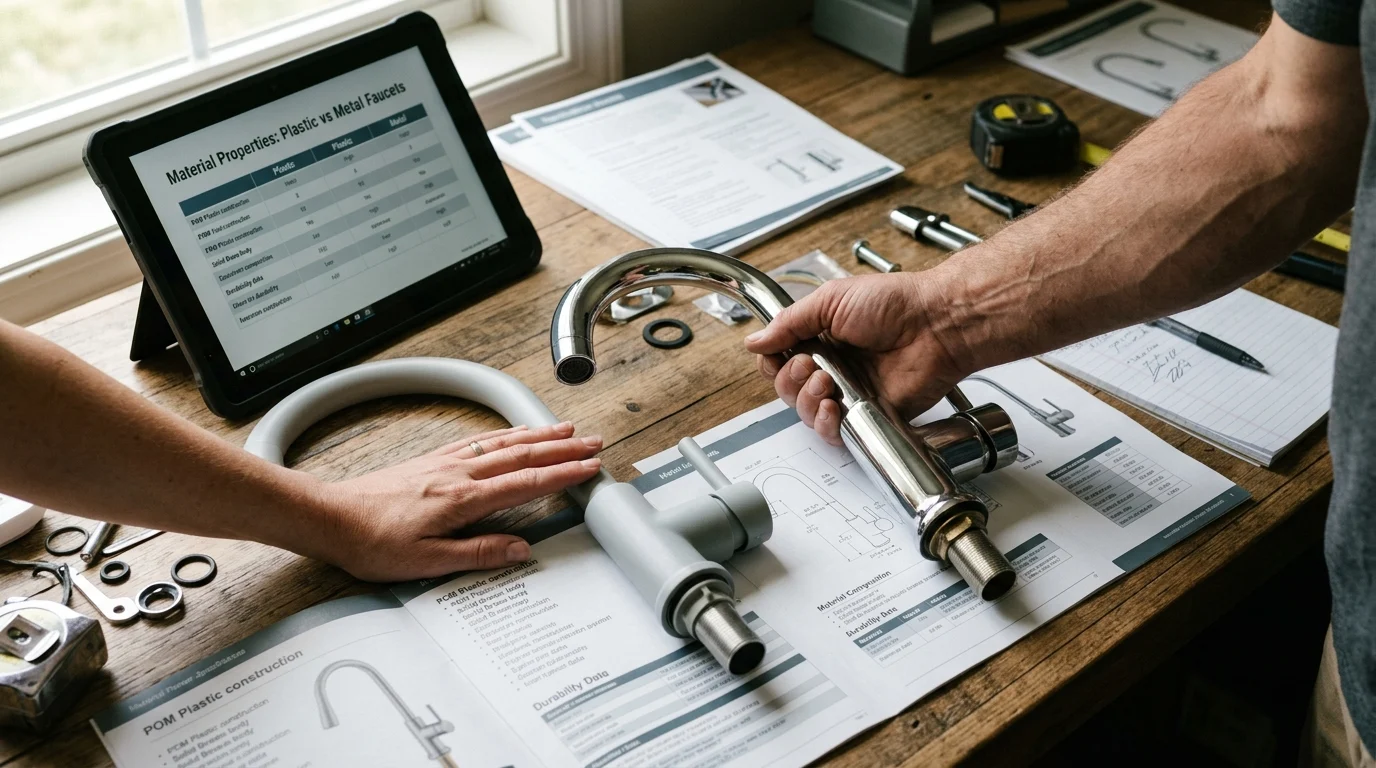
Understanding the fundamental material science behind plumbing fixtures is essential for evaluating their long-term viability. Faucet bodies, waterways, and valve housings are engineered using highly specific grades of polymers and alloys to withstand constant hydrostatic pressure and thermal cycling.
Plastic faucet construction and common polymers
Modern plastic faucets are predominantly manufactured via injection molding using advanced engineering thermoplastics. Acrylonitrile Butadiene Styrene (ABS) and Polyoxymethylene (POM, also known as acetal) are the most prevalent materials. POM offers excellent dimensional stability and a tensile strength of approximately 60 to 70 MPa, allowing it to withstand internal water pressures without immediate deformation.
Furthermore, high-end plastic fixtures often incorporate Cross-linked Polyethylene (PEX) for the internal waterways, isolating the potable water from the exterior housing and preventing chemical leaching.
Metal faucet materials and specifications
Metal faucets rely on casting, forging, and CNC machining processes, utilizing alloys chosen for their structural integrity and corrosion resistance. The industry standard remains brass, specifically lead-free variants like CW511L or DZR (Dezincification Resistant) brass, which prevent the leaching of zinc in aggressive water conditions.
Stainless steel, particularly 304 and 316 grades, represents the premium tier, offering a yield strength exceeding 215 MPa and absolute immunity to lead contamination.
| Material | Typical Tensile Strength | Thermal Tolerance (Max Continuous) | Base Alloy/Polymer Type |
|---|---|---|---|
| ABS Plastic | 40 – 50 MPa | 60°C (140°F) | Thermoplastic Polymer |
| POM (Acetal) | 60 – 70 MPa | 82°C (180°F) | Thermoplastic Polymer |
| C89833 (Lead-Free Brass) | ~240 MPa | 200°C+ | Copper-Bismuth Alloy |
| 304 Stainless Steel | 505 MPa | 870°C+ | Austenitic Alloy |
Plastic vs Metal Faucets: Durability and Safety
Evaluating durability and safety requires an examination of how these materials respond to mechanical stress, chemical exposure, and strict regulatory standards governing potable water systems. Both material classes exhibit distinct vulnerabilities over prolonged usage cycles.
Durability comparison at a glance
Mechanical endurance is typically measured through actuation cycle testing. Industry-grade metal faucets equipped with ceramic disc cartridges are routinely tested to withstand 500,000 continuous operating cycles without failure or significant seal degradation. In contrast, standard plastic faucet assemblies often experience thread fatigue, housing micro-fractures, or valve seal failures between 50,000 and 100,000 cycles.
| Feature | Plastic Faucets | Metal Faucets |
|---|---|---|
| Cartridge Housing Integrity | Moderate (Prone to flexing) | High (Rigid containment) |
| Scratch Resistance | Low (Easily marred) | High (Especially brushed/PVD finishes) |
| Freeze-Thaw Resilience | High (Yields to expansion) | Low (Prone to bursting if undrained) |
| Thread Stripping Risk | High (During installation) | Low (Precision machined threads) |
Water-contact standards and lead considerations
Regulatory compliance for water safety in North America is governed by standards such as NSF/ANSI 61 (leaching of contaminants) and NSF/ANSI 372 (lead content). Under NSF/ANSI 372, any fixture dispensing water for human consumption must contain a weighted average lead content of less than 0.25%.
While plastic and stainless steel inherently meet this requirement, brass fixtures must utilize specific bismuth or silicon-alloyed brass to achieve compliance. Conversely, while plastic bypasses heavy metal concerns, inferior polymers may leach volatile organic compounds (VOCs) or microplastics if subjected to water temperatures exceeding their designed thermal limits.
Common failure modes and maintenance needs
The maintenance profiles for these materials differ significantly. Metal faucets frequently suffer from galvanic corrosion if connected to dissimilar metals, as well as mineral scaling (calcium and magnesium deposits) that can pit the finish if not addressed.
Plastic faucets are impervious to galvanic corrosion but are highly susceptible to UV degradation if installed near windows, leading to embrittlement. Furthermore, the overtightening of supply lines on plastic shanks is a primary failure mode, often resulting in catastrophic thread stripping and subsequent flooding.
How to Choose the Right Faucet for Home Use
Selecting the appropriate fixture necessitates a rigorous evaluation of the installation environment, local hydraulic conditions, and the desired lifecycle of the plumbing system. A methodical approach ensures the selected faucet meets both the functional demands and the regulatory requirements of the residence. Most residential plumbing systems operate at a static pressure of 40 to 80 PSI; the chosen fixture must reliably contain this pressure while delivering optimal flow.
Best applications for plastic faucets
While metallic fixtures are the default for primary living spaces, plastic faucets excel in specific, high-utility environments. They are the superior choice for coastal outdoor kitchens where airborne salinity rapidly oxidizes standard metals, or in unconditioned utility spaces subject to minor freezing, as polymers offer slight volumetric expansion without immediate rupture.
Furthermore, their lightweight nature makes them the standard specification for mobile homes and marine applications where weight reduction is prioritized.
Quality, warranty, and sourcing checks
Procurement should always involve verifying quality assurance marks and warranty terms. Premium metal faucets typically carry limited lifetime warranties covering both the finish and the internal cartridge mechanism. Plastic variants usually offer strictly limited 1- to 3-year warranties.
Buyers must verify the presence of cUPC, WaterSense, or WRAS certifications stamped on the packaging or the fixture itself, which guarantee the product has undergone independent third-party testing for pressure tolerance and toxicity.
Step-by-step buyer evaluation process
The evaluation process must follow a strict sequence. First, verify the maximum flow rate; modern ecological standards mandate a flow rate no greater than 1.5 to 1.8 Gallons Per Minute (GPM) for bathroom sinks and 2.2 GPM for kitchens.
Second, measure the sink deck thickness, as plastic shanks are often bulkier and may not accommodate countertops thicker than 1.5 inches. Finally, inspect the internal valve architecture—regardless of the exterior body material, prioritize fixtures utilizing diamond-seal or high-alumina ceramic disc cartridges over rubber washer compression valves to ensure longevity.
Which Is Better for Home Use
The definitive choice between plastic and metal faucets relies on balancing upfront capital expenditure against long-term reliability and asset depreciation. While both materials can legally and functionally deliver potable water, their respective total cost of ownership (TCO) profiles dictate their optimal use cases.
Decision framework for choosing the right material
A rigorous decision framework prioritizes TCO over a 15-year horizon. Assuming a metal faucet costs $150 and lasts 15 years, the annualized hardware cost is $10. A $30 plastic faucet replaced every 4 years yields an annualized hardware cost of $7.50.
However, when factoring in the specialized labor rate of a licensed plumber—averaging $90 to $150 per hour for each replacement interval—the TCO of the plastic fixture vastly exceeds that of the metal unit by year 8. Therefore, for permanent installations, the economic advantage heavily favors metal.
When plastic is acceptable and when metal is better
Ultimately, metal faucets remain the superior and most financially sound choice for primary home use. Their robust tensile strength, aesthetic longevity, and resistance to thermal and mechanical fatigue make them indispensable for high-traffic kitchens and bathrooms.
Plastic faucets should not be entirely dismissed, but their application should be strictly confined to secondary, low-budget, or highly corrosive environments (like utility sinks or saltwater-adjacent outdoor stations) where their specific material properties offer a tactical advantage rather than a mere cost-cutting compromise.
Key Takeaways
- The most important conclusions and rationale for Plastic Faucets vs Metal Faucets
- Specs, compliance, and risk checks worth validating before you commit
- Practical next steps and caveats readers can apply immediately
Frequently Asked Questions
Which faucet material is better for most homes?
Metal faucets are usually better for main kitchens and bathrooms because they handle frequent use and often last 15–25 years.
When does a plastic faucet make sense for home use?
Choose plastic for utility sinks, RVs, basement wash areas, or temporary outdoor stations where low cost and corrosion resistance matter most.
Are plastic faucets safe for potable water?
They can be safe if made from quality engineering plastics and certified for potable water. Always confirm material and compliance before buying.
How do plastic and metal faucets compare on lifespan?
Plastic faucets commonly last about 3–5 years in daily use, while brass or stainless steel models typically last much longer with fewer replacements.
Can Pntek help with plastic faucet and plumbing system matching?
Yes. Pntek supplies plastic faucets, valves, pipes, and fittings, so buyers can request matched solutions for water supply, irrigation, or construction projects.


