
PVC ball valves are one of the most common flow-control components in modern water systems. These plastic valves use a rotating ball with a hole through the center to start or stop water flow quickly and efficiently.
Water treatment systems, irrigation networks, swimming pools, and residential plumbing frequently use PVC ball valves because PVC material resists corrosion, chemicals, and mineral buildup. According to industry manufacturers, UPVC and CPVC valves are especially suitable for low- to medium-pressure water applications due to their durability and lightweight structure.
What Is a PVC Ball Valve?
A PVC ball valve is a quarter-turn valve made from polyvinyl chloride material. The valve controls water flow through a hollow internal ball that rotates when the handle turns.
When the hole inside the ball aligns with the pipe, water flows freely. When the ball rotates 90 degrees, the solid side blocks the passage and stops the flow completely.
PVC ball valves are commonly manufactured in several configurations, including:
- Compact ball valves
- Union ball valves
- Two-piece ball valves
- True union ball valves
- Threaded and socket connection valves
Manufacturers such as PNTEK Plast produce multiple valve categories for irrigation, industrial piping, and water supply systems.
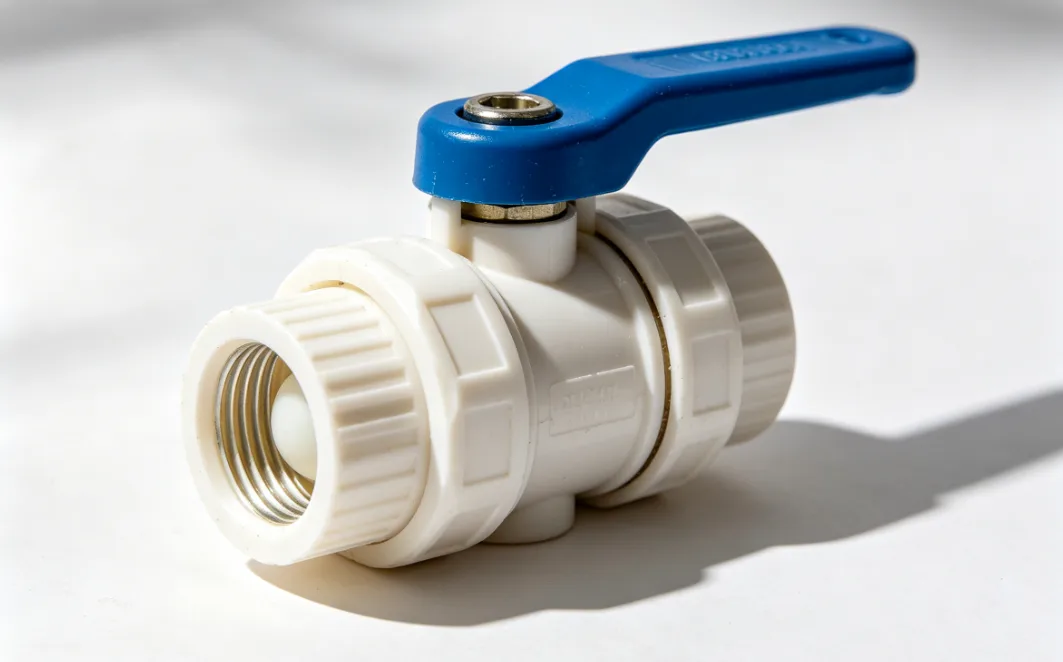
Main Components of a PVC Ball Valve
A PVC ball valve contains several important internal parts that work together to regulate water flow.
| Component | Function |
|---|---|
| Valve Body | Holds the internal valve assembly |
| Ball | Rotates to open or close flow |
| Stem | Connects the handle to the ball |
| Handle | Manual control for valve operation |
| Seats and Seals | Prevent leakage around the ball |
| Union Ends | Allow easy installation and removal |
Most plastic ball valves use thermoplastic sealing materials such as PTFE or TPE for leak prevention. These materials provide chemical resistance and smooth operation in water systems.
For systems requiring corrosion-resistant piping connections, many installers combine valves with PVC pipe fittings and HDPE pipe fittings to create durable water distribution networks.
How PVC Ball Valves Work in Water Systems
PVC ball valves operate using a simple quarter-turn mechanism. The handle rotates the internal ball between open and closed positions.
The working process follows four basic steps:
- The handle turns manually or automatically.
- The stem transfers movement to the ball.
- The ball rotates inside the valve body.
- The opening inside the ball either aligns with or blocks the water flow.
This design creates very low flow resistance compared with some traditional gate valves or globe valves. Industry sources note that ball valves provide one of the lowest pressure drops among common valve types.
PVC ball valves are mainly designed for:
- On/off water control
- Pipeline isolation
- Irrigation flow management
- Swimming pool circulation systems
- Water treatment equipment
Many industrial water systems also integrate UPVC ball valves because UPVC material resists scaling and chemical corrosion better than many metal alternatives.
Types of PVC Ball Valves Used in Water Applications
Different water systems require different PVC valve designs. The selection depends on pressure requirements, maintenance needs, and installation conditions.
| Valve Type | Best Use Case | Key Feature |
|---|---|---|
| Compact Ball Valve | Residential plumbing | Small size |
| Union Ball Valve | Maintenance-heavy systems | Easy removal |
| True Union Ball Valve | Industrial water systems | Replaceable components |
| Two-Piece Ball Valve | Higher pressure systems | Strong body structure |
| Threaded Ball Valve | Portable installations | Fast assembly |
Many manufacturers also produce PP ball valves and CPVC pipe fittings for specialized hot water or chemical handling applications.
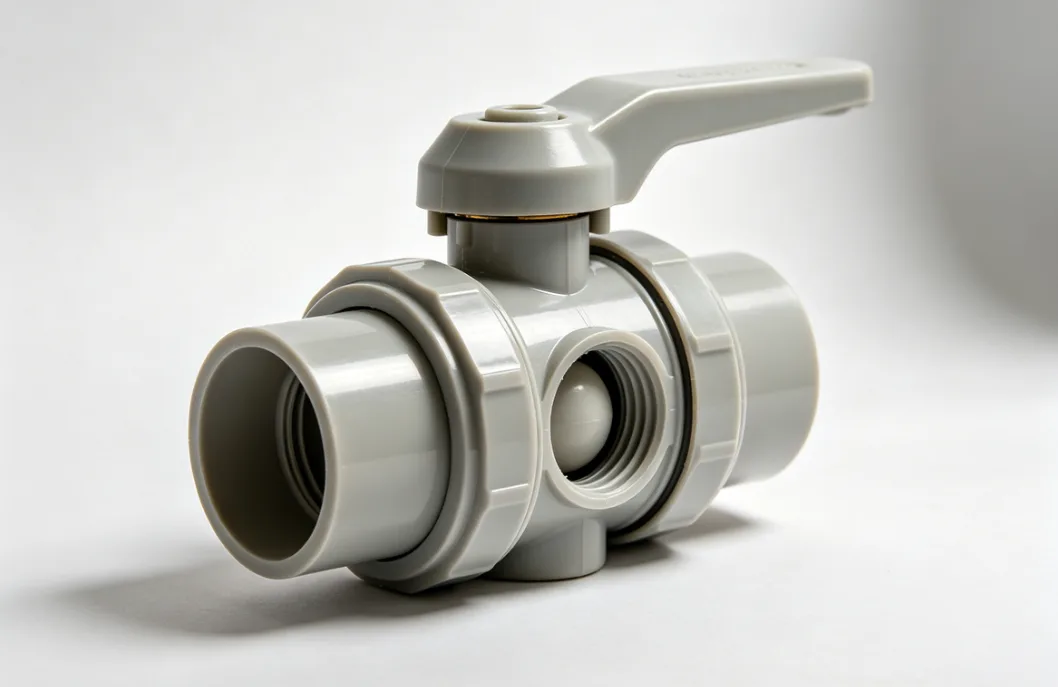
Advantages of PVC Ball Valves
PVC ball valves offer several operational advantages in water systems.
Excellent Corrosion Resistance
PVC material resists rust, scale buildup, and many water-treatment chemicals. This characteristic makes PVC valves suitable for chlorinated water and agricultural irrigation systems.
Lightweight Construction
PVC valves weigh significantly less than brass or steel valves. Lightweight valves simplify installation and reduce transportation costs.
Fast Shut-Off Operation
The quarter-turn mechanism allows operators to open or close the valve quickly during maintenance or emergencies.
Low Maintenance Requirements
PVC ball valves contain fewer moving parts than many traditional valve designs. Fewer components reduce wear and maintenance frequency.
Cost Efficiency
PVC valves generally cost less than stainless steel or bronze alternatives while still providing reliable performance in low- and medium-pressure systems.
According to manufacturers, many PVC ball valves can operate for decades under normal working conditions when installed correctly.
PVC Ball Valves vs Other Valve Types
PVC ball valves are not always the best solution for every water system. Comparing them with other valves helps determine the correct application.
| Valve Type | Main Function | Advantages | Limitations |
|---|---|---|---|
| PVC Ball Valve | Shut-off control | Fast operation, low resistance | Limited throttling accuracy |
| Butterfly Valve | Flow regulation | Compact for large pipes | Lower sealing performance |
| Gate Valve | Full flow isolation | Minimal restriction | Slower operation |
| Check Valve | Prevent backflow | Automatic operation | No manual control |
Water engineers often combine ball valves with plastic valves and fittings to create complete water management systems.
Common Applications in Water Systems
PVC ball valves support many residential, commercial, and industrial water applications.
Residential Plumbing
Home water systems use PVC shut-off valves for:
- Outdoor water lines
- Garden irrigation
- Pool systems
- Water filtration equipment
Agricultural Irrigation
Agricultural systems frequently use PVC valves because fertilizers and groundwater minerals can corrode metal components over time.
Water Treatment Plants
Water treatment facilities use plastic valves for chemical dosing systems and filtration equipment due to PVC’s chemical resistance.
Industrial Fluid Systems
Factories use PVC ball valves for cooling systems, wastewater pipelines, and non-corrosive industrial liquids.
According to the U.S. Environmental Protection Agency, corrosion-resistant piping materials can help improve long-term water system reliability in many municipal applications. EPA Water Infrastructure Resources
The American Water Works Association also provides technical guidance for valve selection in water distribution systems. American Water Works Association
How to Select the Right PVC Ball Valve
Correct valve selection improves safety, durability, and system efficiency.
Consider Pipe Size
Valve diameter must match pipeline dimensions to maintain stable flow rates.
Verify Pressure Ratings
Most PVC ball valves are designed for low- to medium-pressure systems. Always confirm pressure specifications before installation.
Check Temperature Limits
Standard PVC valves work best in cold or moderate-temperature systems. CPVC valves are better for higher-temperature water applications.
Evaluate Chemical Compatibility
Some industrial chemicals require specialized thermoplastic materials such as CPVC or PVDF.
Choose Proper Connection Types
Common connection options include:
- Socket connection
- Threaded connection
- Flanged connection
- Union connection
The University of Wisconsin’s plumbing material guidance notes that proper material compatibility is essential for safe water system performance. University of Wisconsin Plumbing Guidance
Installation and Maintenance Tips
Proper installation extends PVC ball valve service life.
Installation Best Practices
- Avoid overtightening threaded connections
- Align piping carefully to reduce stress
- Use compatible PVC solvent cement when required
- Test the system for leaks after installation
Maintenance Recommendations
- Operate valves periodically to prevent sticking
- Inspect seals for wear or cracking
- Replace damaged handles or seats immediately
- Keep debris out of the pipeline system
Manufacturers recommend avoiding excessive torque because over-tightening may deform plastic valve bodies or seals.
Conclusion
PVC ball valves are reliable flow-control devices widely used in water systems because they combine corrosion resistance, lightweight construction, and simple operation. Their quarter-turn mechanism allows fast shut-off performance while maintaining low pressure loss.
Modern water supply, irrigation, and industrial systems frequently use PVC ball valves alongside plastic pipe fittings and thermoplastic piping materials. Choosing the correct valve type, pressure rating, and connection style helps ensure long-term system efficiency and leak-free operation.
FAQs
Are PVC ball valves suitable for drinking water systems?
Yes, many PVC and UPVC ball valves are designed for potable water systems. Users should verify that the valve materials meet local drinking water standards and certification requirements before installation.
Can s regulate water flow?
PVC ball valves can partially regulate flow, but they are mainly designed for full open or full closed operation. Continuous throttling may increase wear on the valve seats over time.
What is the difference between PVC and CPVC ball valves?
CPVC ball valves tolerate higher temperatures than standard PVC valves. PVC valves are more common in cold-water systems, while CPVC valves are often used in hot-water applications.
How long do PVC ball valves last?
Service life depends on pressure, temperature, water quality, and operating conditions. According to industry estimates, properly installed PVC ball valves can last several decades in standard water systems.
Are PVC ball valves better than metal valves?
PVC ball valves perform better in many corrosive water environments because they resist rust and chemical damage. Metal valves may still be preferred for very high-pressure or high-temperature applications.


