
Introduction
For brands sourcing plumbing fixtures at scale, China’s OEM PVC faucet factories offer a practical mix of cost efficiency, production capacity, and customization. This article explains why Chinese manufacturers have become central to the global PVC faucet supply chain, what product categories and service capabilities they typically provide, and how OEM partnerships support private labeling, specification control, and faster market response. It also sets up the key factors buyers should evaluate, from material quality and molding precision to compliance, lead times, and communication, so the rest of the article can help readers assess suppliers with clearer expectations.
Why OEM PVC Faucets from China Matter
The global market for polymer-based plumbing fixtures has expanded rapidly, with China solidifying its position as the primary manufacturing hub for OEM PVC faucets. With the plastic plumbing sector projected to see a global compound annual growth rate (CAGR) of 5.2% through 2028, international hardware and sanitary ware brands increasingly rely on Chinese production infrastructure. This reliance stems from the country's unmatched capacity to combine raw material sourcing, precision injection molding, and large-scale assembly within tight geographic clusters, primarily located in provinces like Zhejiang, Guangdong, and Fujian.
Strategic value for global brands
Procuring OEM PVC faucets from established Chinese factories offers substantial strategic advantages, primarily centered around cost compression and rapid supply chain scaling. Global brands leveraging these OEM services typically achieve a 30% to 50% reduction in unit costs compared to domestic injection molding operations. This margin improvement allows companies to aggressively price their products in competitive retail markets while maintaining profitability. Furthermore, Chinese manufacturers offer the agility to rapidly pivot production volumes, accommodating seasonal demand spikes without requiring the brand to invest in localized, capital-intensive machinery.
Key product categories and market demand
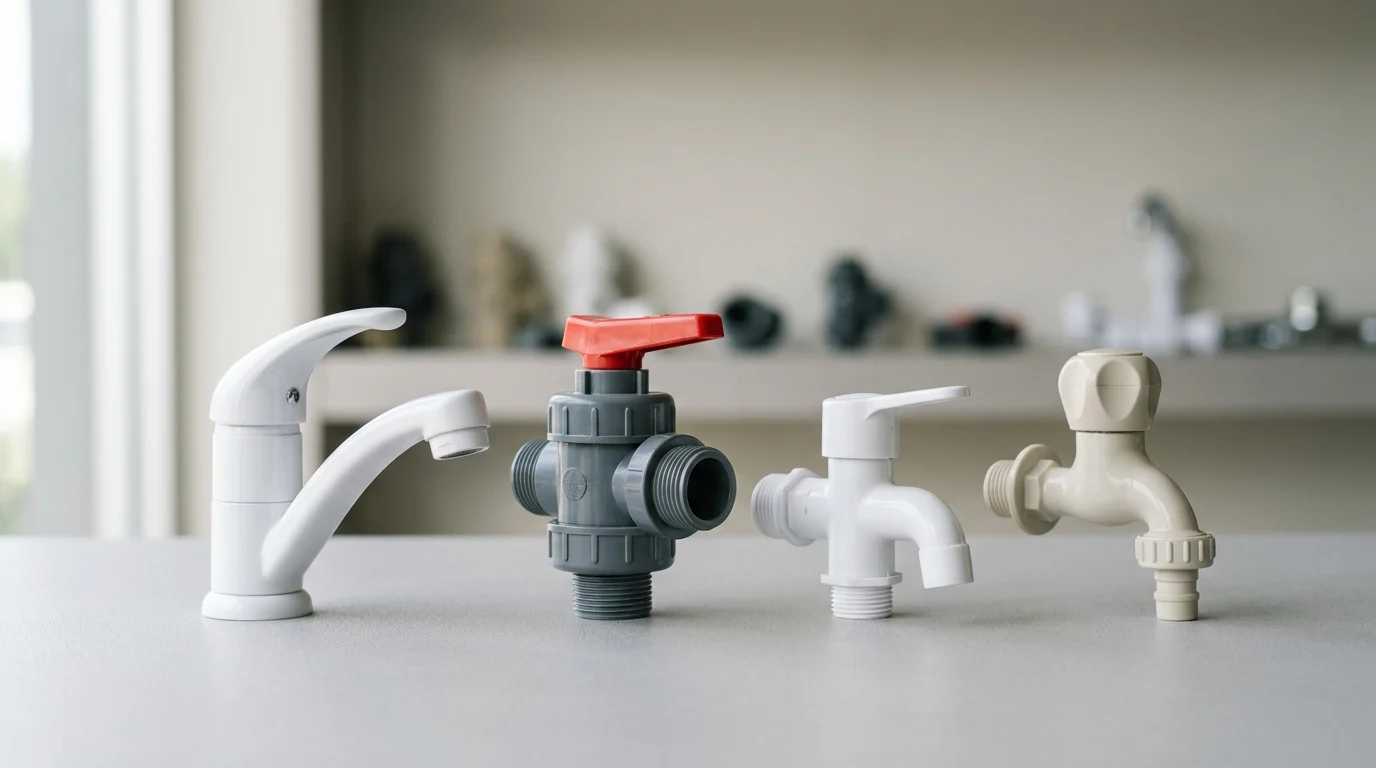
The product spectrum within the OEM PVC faucet sector encompasses kitchen sink mixers, bathroom basin taps, wall-mounted bibcocks, and heavy-duty garden valves. Market demand is heavily segmented by application. For instance, single-cold basin faucets and washing machine bibcocks represent the highest volume categories, often ordered in batches exceeding 50,000 units per SKU. The agricultural and temporary construction sectors also drive significant demand for durable, weather-resistant PVC ball valves and outdoor spigots, prioritizing functional flow rates and UV resistance over aesthetic finishes.
Regional use cases and channel fit
Regional use cases dictate specific material formulations and design requirements, making channel fit a critical consideration for OEM buyers. In emerging markets across Southeast Asia, Africa, and parts of Latin America, PVC faucets are deployed as primary plumbing fixtures in low-cost housing developments due to their affordability and resistance to hard water scaling. Conversely, in European and North American markets, these products are frequently positioned in utility sinks, RVs, marine applications, and agricultural irrigation systems. Target operating temperatures heavily influence these regional deployments; standard PVC formulations are generally rated for 0°C to 45°C, while modified UPVC variants are engineered to withstand up to 60°C, catering to distinct climatic and functional demands.
What Defines OEM PVC Faucet Production

Translating a brand's concept into a market-ready polymer faucet requires a deep understanding of injection molding physics, material science, and fluid dynamics. OEM PVC faucet production is not a monolithic process; it involves precise selection of base resins, internal component engineering, and rigorous adherence to international plumbing standards to ensure long-term reliability and leak-free operation.
Materials, valve design, and thread standards
The foundation of any OEM faucet lies in its polymer matrix. While standard Polyvinyl Chloride (PVC) is common for budget lines, high-performance applications necessitate Unplasticized PVC (UPVC), Acrylonitrile Butadiene Styrene (ABS), or Polypropylene (PP). The internal valve mechanism is equally critical; premium OEM models integrate precision ceramic disc cartridges capable of enduring hard water particulates, whereas economy versions utilize rubber-sealed plastic compression valves. Furthermore, factories must expertly mold connection threads to match regional standards, predominantly producing 1/2-inch or 3/4-inch fittings in either British Standard Pipe (BSP) or National Pipe Thread (NPT) profiles to ensure seamless integration into local plumbing infrastructures.
Performance, pressure, and quality benchmarks
Performance benchmarks separate professional-grade OEM production from subpar manufacturing. High-quality PVC faucets must sustain continuous working pressures between 0.6 MPa and 1.0 MPa (approximately 87 to 145 PSI) without structural deformation or seal failure. Lifespan testing is another critical metric, with premium ceramic-core PVC faucets rated for 500,000 open/close cycles, compared to the 100,000-cycle threshold typical of entry-level rubber seal variants.
| Material Specification | Ideal Application Profile | Max Working Temperature | Max Rated Pressure |
|---|---|---|---|
| Standard PVC | Economy residential, temporary cold water | 45°C (113°F) | 0.6 MPa |
| UPVC (Unplasticized) | Utility, agricultural, hard water environments | 60°C (140°F) | 1.0 MPa |
| ABS (Acrylonitrile) | High-impact residential, premium aesthetics | 80°C (176°F) | 1.2 MPa |
Branding, mold customization, and packaging options
Differentiation in a crowded market relies heavily on the factory's customization capabilities. Chinese OEM partners offer extensive mold modification services, allowing brands to emboss logos directly onto the faucet body or handle. Color customization is achieved through precise Pantone matching via resin masterbatches, ensuring brand consistency across product lines. Packaging is the final production phase, where factories offer solutions ranging from bulk polybags for B2B distribution to premium blister cards and full-color retail boxes. Custom retail packaging typically requires a Minimum Order Quantity (MOQ) of 2,000 to 3,000 units to offset the initial printing and die-cutting setup costs.
How to Evaluate a China PVC Faucet Factory
Identifying a highly capable PVC faucet factory among thousands of suppliers requires rigorous due diligence. Buyers must differentiate between integrated manufacturers with in-house tooling capabilities and trading companies that merely aggregate products from localized workshops. A systematic evaluation of production capacity, quality assurance protocols, and regulatory compliance is mandatory to mitigate supply chain risks.
Factory capabilities and production capacity
A factory's true capability is reflected in its capital equipment and floor space. Tier-1 OEM manufacturers typically operate advanced injection molding machines with clamping forces ranging from 120T to 250T, calibrated specifically for complex, multi-cavity polymer molds. Production capacity should be verified through monthly output metrics; a mid-to-large scale facility should comfortably demonstrate an output capacity of 500,000 to 1,000,000 units per month. Additionally, evaluating the factory's in-house tooling workshop—specifically the presence of precision CNC machines and EDM (Electrical Discharge Machining) equipment—indicates their ability to independently maintain, repair, and iterate on custom molds without third-party delays.
Quality control checkpoints and testing methods
Quality control (QC) must be embedded throughout the manufacturing lifecycle, not just at the final packing stage. Incoming material inspection should verify the melt flow index and purity of the PVC resin to prevent structural brittleness. During assembly, the most critical checkpoint is 100% pneumatic or hydrostatic testing. Reliable factories subject every assembled faucet to an air pressure test at 0.8 MPa for 60 seconds to detect micro-leaks in the valve core or body seams. Visual inspection protocols should also be strictly enforced to identify molding flashes, sink marks, or color inconsistencies, targeting a final visual defect rate of less than 1.5%.
Certifications and market compliance requirements
While plastic faucets face different regulatory hurdles than heavy-metal brass fixtures, compliance remains a strict barrier to entry in regulated markets. A baseline requirement for any reputable factory is ISO 9001:2015 certification, ensuring standardized management and traceability. Depending on the target market, the factory must be capable of producing faucets that meet specific regional standards. For European distribution, CE marking and adherence to REACH regulations regarding restricted substances are necessary. If the PVC faucets are intended for potable water applications in the UK or North America, the factory must demonstrate the capability to source WRAS-approved or NSF/ANSI 61-compliant internal components and food-grade lubricants, respectively.
Sourcing, Pricing, and Logistics Considerations
The financial architecture of sourcing OEM PVC faucets extends far beyond the initial unit price quotation. Procurement teams must conduct comprehensive landed cost analyses, factoring in raw material volatility, tooling amortization, and international freight logistics. Understanding these mechanics ensures accurate forecasting and prevents margin erosion during transit.
Main cost drivers and quotation factors
The primary cost driver in PVC faucet manufacturing is the fluctuating price of polymer resins, which typically ranges from $1,000 to $1,500 per metric ton depending on global petrochemical markets and the specific grade of the material. The internal valve core is the second major cost component; upgrading from a standard plastic compression valve to a high-end brass-housed ceramic cartridge can increase the unit cost by $0.30 to $0.80. Additional quotation factors include the complexity of the mold (e.g., the number of cavities), the weight of the injected product, and the requested finishing techniques, such as electroplating ABS models to simulate a metallic chrome appearance.
Lead times, sampling, and shipping terms
Time-to-market is heavily influenced by the factory's operational efficiency and the agreed-upon shipping terms. For new OEM projects requiring custom molds, tooling fabrication typically requires 25 to 35 days, followed by a 7 to 14-day sampling and revision period. Once the final sample is approved, mass production lead times generally span 30 to 45 days. Shipping terms also dictate logistical responsibilities; Free On Board (FOB) is the most common B2B incoterm, where the factory covers transport to the Chinese departure port (e.g., Ningbo or Shenzhen), leaving the buyer responsible for ocean freight and import duties.
| Procurement Phase | Standard Duration | Estimated Cost Implication / Threshold |
|---|---|---|
| 3D Design & Prototyping | 7 – 14 Days | $200 – $500 (Often credited to mass order) |
| Custom Mold Fabrication | 25 – 35 Days | $3,000 – $8,000 per mold (Depends on cavities) |
| Mass Production Run | 30 – 45 Days | Tied to unit price and MOQ (e.g., 5,000 pcs) |
| Ocean Freight (FOB to Destination) | 20 – 40 Days | Highly variable based on TEU/FEU container rates |
Supplier selection and landed cost analysis
Selecting a supplier requires calculating the Total Landed Cost (TLC), which aggregates the Ex-Works (EXW) or FOB unit price, international freight, marine insurance, customs duties, and domestic drayage. Because PVC faucets are relatively lightweight but moderately bulky, optimizing container space is crucial for cost efficiency. A standard 20-foot container (TEU) can typically accommodate between 40,000 and 60,000 pieces, depending on whether the items are packed in space-saving bulk polybags or voluminous retail display boxes. Procurement managers must work closely with the factory to engineer packaging dimensions that maximize container utilization, thereby reducing the per-unit freight cost.
How to Make the Final Supplier Decision
Finalizing the selection of a Chinese OEM PVC faucet factory is a strategic commitment that binds a brand's market reputation to the supplier's execution. The decision matrix must objectively weigh technical capabilities, financial stability, and long-term partnership potential to ensure a resilient supply chain.
Decision criteria for brand and product fit
The most critical decision criterion is the alignment between the factory's historical product portfolio and the buyer's brand positioning. A brand targeting premium hardware retailers should partner with a facility experienced in molding high-impact ABS and executing flawless chrome-plated finishes, even if their unit costs are 15% higher. Conversely, a distributor supplying budget agricultural markets should prioritize factories optimized for high-speed, high-volume standard PVC injection with low MOQs. Standard MOQs in this sector generally range from 3,000 to 5,000 pieces per SKU; however, factories demanding 10,000+ units may indicate an inflexible production line unsuited for brands requiring diverse, multi-colored product ranges.
Balancing customization, cost, and supply reliability
The final contractual agreement must balance the desire for extensive customization with overarching cost constraints and supply reliability. Buyers should negotiate raw material indexing clauses to protect against sudden spikes in petrochemical costs, ensuring pricing transparency. Furthermore, establishing a Service Level Agreement (SLA) that strictly defines acceptable defect allowances—typically capped at a maximum of 2%—is essential. By securing transparent communication channels, confirming in-house tooling autonomy, and legally defining quality thresholds, global brands can confidently integrate Chinese OEM PVC faucets into their global distribution networks.
Key Takeaways
- The most important conclusions and rationale for OEM PVC faucets
- Specs, compliance, and risk checks worth validating before you commit
- Practical next steps and caveats readers can apply immediately
Frequently Asked Questions
What OEM PVC faucet services can Pntek provide for global brands?
Pntek can support custom logos, colors, thread standards, packaging, and selected faucet structures to match your market and brand requirements.
Which PVC faucet materials are best for different applications?
Standard PVC suits economy cold-water use, while UPVC is better for utility, irrigation, and harder-water environments needing higher temperature and pressure resistance.
Can OEM PVC faucets be made for BSP or NPT thread standards?
Yes. Chinese OEM factories like Pntek can produce 1/2-inch or 3/4-inch faucets with BSP or NPT threads for easier compatibility in target markets.
What quality checks should buyers request for OEM PVC faucets?
Ask for pressure testing, leak testing, cycle-life data, raw material verification, and inspection reports on threads, sealing parts, and finished packaging.
Are OEM PVC faucets suitable for irrigation and construction projects?
Yes. They are widely used in irrigation, utility sinks, temporary construction water lines, and outdoor applications where cost, corrosion resistance, and easy installation matter.


