When comparing CPVC vs UPVC temperature resistance, significant differences emerge. CPVC valves, known for their superior performance, have a temperature rating that can withstand up to 200°F (93°C), while UPVC valves are limited to a maximum of 140°F (60°C). This brings us to the CPVC valve temperature rating, which is essential for ensuring the right valve is chosen for specific applications. Understanding the CPVC vs UPVC valve difference is crucial, as temperature resistance directly impacts valve performance and safety. The CPVC valve working temperature allows it to handle higher fluid temperatures effectively, making it a reliable choice for various applications. On the other hand, one might wonder, is UPVC valve suitable for high temperature? The answer is no, as it cannot handle the same heat levels as CPVC. For those in need of quality products, finding a reputable CPVC valve supplier is key to ensuring you have the right components for your projects. Incorrect selection can lead to leaks, failures, and even accidents.
Key Takeaways
- CPVC valves can handle temperatures up to 200°F (93°C), making them ideal for hot water applications.
- UPVC valves are limited to 140°F (60°C) and are best suited for cold water systems.
- Choosing the right valve based on temperature requirements ensures optimal performance and safety.
- CPVC valves are more expensive but offer long-term savings by reducing the risk of leaks and failures.
- Consider chemical exposure when selecting valves; CPVC performs better in corrosive environments.
CPVC vs UPVC Temperature Resistance
When evaluating the temperature resistance of CPVC and UPVC valves, several factors come into play. Both materials exhibit distinct properties that influence their performance under heat.
Key Properties Influencing Temperature Resistance
- Chemical Composition: CPVC is produced by chlorinating PVC, which enhances its flexibility and durability. This chlorination process allows CPVC to withstand higher temperatures compared to UPVC.
- Thermal Stability: Laboratory tests indicate that CPVC maintains its integrity at elevated temperatures. For instance, it can endure temperatures up to 93°C (200°F), making it suitable for hot water applications. In contrast, UPVC has a maximum temperature resistance of only 60°C (140°F).
| Material | Maximum Temperature Resistance |
|---|---|
| CPVC | 93°C |
| UPVC | 60°C |
Performance Under Elevated Temperatures
CPVC valves excel in high-temperature environments. Their ability to resist thermal degradation makes them ideal for applications in chemical processing and industrial systems. The oxidation induction time of CPVC pipes reflects their long-term heat-resistant properties. This measure indicates how long CPVC can withstand high temperatures before beginning to oxidize.
On the other hand, UPVC valves perform well in standard temperature environments. They show significant resistance to chemical corrosion and degradation, even after prolonged exposure to disinfectants. This characteristic is crucial for applications involving elevated temperatures and harsh environments.
Common Failure Modes
Both CPVC and UPVC valves can experience failure when exposed to high temperatures. The following table outlines common failure modes:
| Failure Mode | Description |
|---|---|
| Temperature Limits | Both materials can soften and fail when temperatures exceed their glass transition temperature (Tg) of 80°C. |
| Environmental Stress Cracking | Exposure to incompatible chemicals, especially at elevated temperatures, can lead to micro-cracking and material degradation. |
| Chemical Incompatibility | Moist chlorine gas can cause severe surface cracking and loss of material properties in PVC materials. |
Temperature Resistance of CPVC Valves
Maximum Temperature Ratings
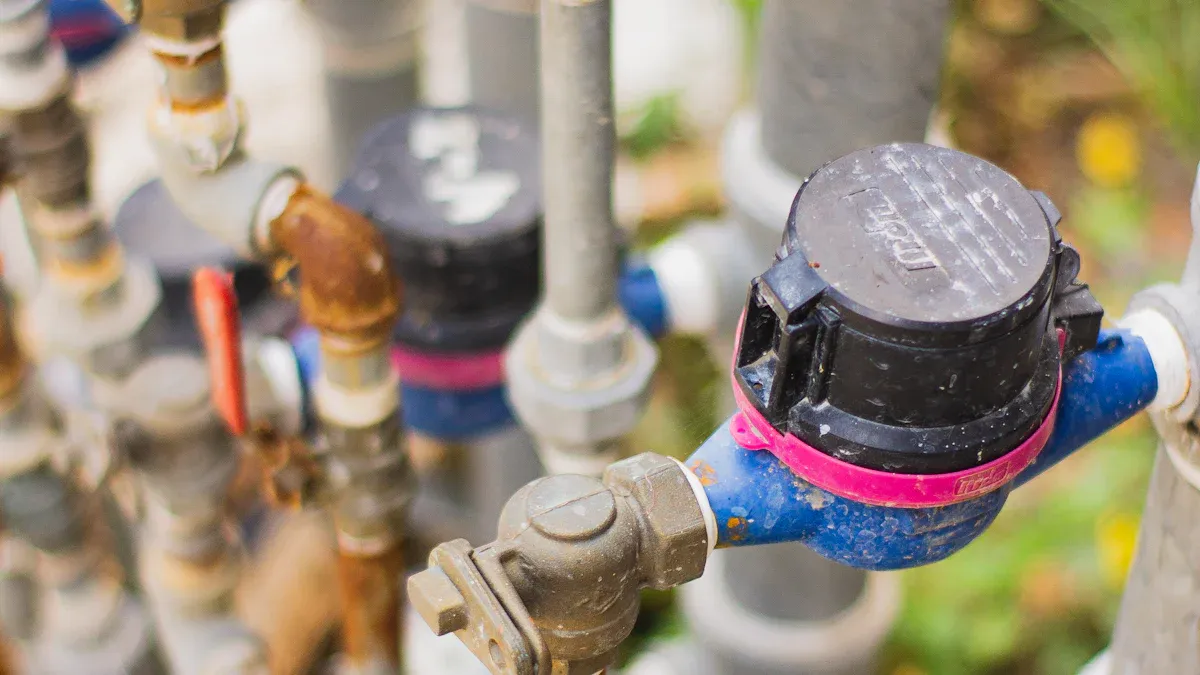
CPVC valves exhibit impressive temperature resistance, with a maximum continuous operating temperature of 93°C (200°F). This capability allows them to perform effectively in various demanding applications. The following table summarizes the maximum temperature ratings for CPVC valves:
| Material | Maximum Continuous Operating Temperature |
|---|---|
| CPVC | 93°C (200°F) |
Applications in High-Temperature Environments
CPVC valves find extensive use in high-temperature environments due to their superior thermal stability. They are particularly suitable for:
- Chemical Processing: Transporting aggressive chemicals at elevated temperatures without risk of corrosion.
- Commercial Plumbing: Ensuring reliable hot water delivery in settings such as hotels and factories.
- Power Generation: Withstanding high pressures and corrosive chemicals in power plants.
- Wastewater Treatment: Safely transporting disinfection chemicals without degradation.
These applications highlight the versatility of CPVC valves in industries that demand durability and reliability under heat.
Advantages of CPVC in Temperature Resistance
CPVC offers several advantages over UPVC when it comes to temperature resistance:
- CPVC maintains structural integrity under thermal stress, ensuring long-term reliability.
- The material’s resistance to corrosion from hot water and chemicals enhances its performance in high-temperature applications.
- CPVC fittings can withstand continuous operating temperatures up to 90–95°C and short-term surges up to 100–110°C without softening or deforming.
These characteristics make CPVC an ideal choice for hot water piping systems, providing a cost-effective and easy-to-install solution that minimizes risks of leaks and system failures.
Temperature Resistance of UPVC Valves
Maximum Temperature Ratings
UPVC valves have a maximum operating temperature of 60°C (140°F). Exceeding this limit can lead to deformation and potential failure. The softening point of UPVC occurs around 80°C (176°F), where the material begins to lose its structural integrity. Additionally, UPVC can withstand temperatures as low as -10°C (14°F) without significant brittleness. However, below freezing temperatures can make UPVC prone to cracking.
| Temperature Range | Effect on UPVC Valves |
|---|---|
| Maximum Operating Temp | 60°C (140°F) – Can lead to deformation and failure if exceeded |
| Minimum Operating Temp | -10°C (14°F) – Below 0°C, becomes brittle and prone to cracking |
| Softening Point | Around 80°C (176°F) – Loss of structural integrity at high temperatures |
| Melting Point | 160-200°C (320-392°F) – Not relevant for cold water systems |
Applications in Standard Temperature Environments
UPVC valves are ideal for applications that operate within ambient to moderate temperature ranges, specifically below 60–65°C. They are commonly used in plumbing, irrigation, and drainage systems. These valves excel in environments where high temperatures are not a concern, ensuring reliable performance without the risk of softening or failure. Their resistance to chemical corrosion further enhances their suitability for various applications.
Advantages of UPVC in Temperature Resistance
UPVC offers several advantages in standard temperature environments. Its excellent heat resistance allows it to endure high temperatures without compromising structural integrity. This reliability makes UPVC a preferred choice for plumbing, construction, and industrial projects.
- UPVC fittings operate efficiently in temperatures up to 60°C, while CPVC can sustain performance up to approximately 90°C.
- UPVC maintains superior pressure capacity and rigidity compared to other materials, making it ideal for cold-water applications.
While UPVC is effective for standard temperature environments, it is important to note that other materials like CPVC can handle higher temperatures. However, UPVC’s ability to maintain rigidity under pressure makes it a preferred choice for many applications.
Comparative Analysis of CPVC and UPVC Valves
Key Differences in Temperature Resistance
The temperature resistance of CPVC and UPVC valves significantly influences their performance in various applications. Empirical data highlights the stark contrast between the two materials:
| Material | Temperature Limits |
|---|---|
| CPVC | 33–200 °F (1–93 °C) |
| UPVC | 33–140 °F (1–60 °C) |
CPVC valves can withstand temperatures up to 200°F (93°C), making them suitable for high-temperature applications. In contrast, UPVC valves are limited to a maximum of 140°F (60°C). This difference in temperature limits directly impacts the choice of valve for specific environments.
Suitability for Various Applications
The selection of CPVC or UPVC valves often depends on the intended application. CPVC valves are preferred in scenarios requiring higher temperature resistance. They find extensive use in:
- Residential and Commercial Hot Water Distribution: CPVC is ideal for delivering hot water efficiently.
- Industrial Liquid Handling: Applications that involve higher temperatures benefit from CPVC’s durability.
- Chemical Processing: CPVC valves excel in transporting aggressive chemicals at elevated temperatures.
Conversely, UPVC valves are suitable for applications operating within standard temperature ranges. They are commonly used in:
- Plumbing Systems: Ideal for cold water distribution.
- Irrigation: Effective in agricultural applications where high temperatures are not a concern.
- Drainage Systems: UPVC provides reliable performance in waste management.
Cost Considerations Related to Temperature Resistance
Cost is a crucial factor when selecting between CPVC and UPVC valves. The price difference often reflects their temperature resistance capabilities. The following table summarizes the cost comparison:
| Type | Price Range (per foot) | Temperature Resistance |
|---|---|---|
| CPVC | $0.50 – $2.00 | Up to 93°C |
| UPVC | $0.30 – $1.50 | Up to 60°C |
While CPVC valves may have a higher initial cost, their ability to withstand higher temperatures can lead to long-term savings. CPVC valves often provide a necessary safety margin in high-temperature applications, reducing the risk of leaks and failures. In contrast, UPVC valves are more economical for cold water systems but may not offer the same durability under heat.
In summary, CPVC valves offer superior temperature resistance, with a maximum rating of 200°F (93°C), making them ideal for hot water applications. In contrast, UPVC valves are limited to 140°F (60°C), suitable for cold water systems.
When selecting valves, consider the following factors:
- Temperature Requirements: Choose CPVC for high-temperature applications and UPVC for standard conditions.
- Chemical Exposure: CPVC performs better in corrosive environments, while UPVC may excel with specific solvents.
| Valve Type | Temperature Rating | Compliance Standards |
|---|---|---|
| CPVC | Up to 200°F | ASTM D1784, ASTM D2467 |
| UPVC | 0°C to 60°C | N/A |
Selecting the right valve ensures optimal performance and longevity in plumbing systems.
FAQ
What is the main difference in temperature resistance between CPVC and UPVC valves?
CPVC valves can withstand temperatures up to 200°F (93°C), while UPVC valves are limited to 140°F (60°C). This difference makes CPVC suitable for high-temperature applications.
Can UPVC valves be used in hot water systems?
No, UPVC valves are not recommended for hot water systems due to their maximum temperature limit of 140°F (60°C). CPVC valves are the better choice for such applications.
Are CPVC valves more expensive than UPVC valves?
Yes, CPVC valves typically cost more than UPVC valves. However, their higher temperature resistance can lead to long-term savings by reducing the risk of leaks and failures.
What industries commonly use CPVC valves?
CPVC valves are widely used in industries such as chemical processing, commercial plumbing, power generation, and wastewater treatment due to their ability to handle high temperatures.
How do temperature limits affect valve selection?
Temperature limits directly influence valve selection. For applications involving high temperatures, CPVC valves are essential. For standard temperature environments, UPVC valves provide reliable performance.