HDPE pipe fittings offer unmatched durability for underground applications, making them a reliable choice for municipal projects. These chemical resistant underground pipes are designed to withstand harsh conditions, ensuring longevity. Their flexibility allows for easy installation in various environments, adapting seamlessly to different terrains. Additionally, their corrosion-resistant pipe fittings contribute to their effectiveness in challenging conditions. The cost-effectiveness of HDPE fittings for underground infrastructure significantly reduces expenses, establishing them as the best pipe fittings for underground water systems and a smart investment for long-term success. So, what are the advantages of HDPE pipe fittings in underground pipelines? Their resilience and adaptability make them an ideal solution for modern infrastructure needs.
Key Takeaways
- HDPE pipe fittings are highly durable and can last between 50 to 100 years, making them a reliable choice for underground infrastructure.
- Their flexibility allows for easy installation in various terrains, reducing the risk of damage during ground movements.
- Using HDPE fittings can significantly lower maintenance costs and installation time, leading to long-term savings for municipal projects.
Durability of HDPE Pipe Fittings
Resistance to Corrosion
HDPE pipe fittings exhibit exceptional resistance to corrosion, making them a preferred choice for underground applications. Unlike metal pipes, which are prone to rust and degradation, HDPE remains stable in various environments. This durability stems from its chemical inertness, allowing it to withstand exposure to a wide range of substances, including acids and other corrosive materials.
The following table highlights the corrosion resistance of different fitting types:
| Fitting Type | Corrosion Resistance | Notes |
|---|---|---|
| HDPE | Excellent | Chemically inert, resistant to a wide range of chemicals |
| PVC | Good | Offers good resistance but less than HDPE |
| Metal | Poor | Prone to rust and corrosion over time |
Scientific studies confirm that HDPE pipes excel in subsurface environments. They resist corrosion and chemical attacks, ensuring long-lasting performance. The Plastic Pipe Institute states that HDPE pipes can last between 50 to 100 years, depending on environmental conditions and application. This longevity is crucial for municipal projects, where reliability is paramount.
Longevity in Harsh Conditions
HDPE pipe fittings are designed to endure harsh soil and water conditions. Their lifespan typically ranges from 50 to 100 years, influenced by factors such as installation quality and environmental stressors. The material’s high resistance to chemicals, corrosion, and abrasion makes it suitable for challenging environments.
Key factors contributing to the longevity of HDPE pipe fittings include:
- Long Lifespan & Exceptional Durability: HDPE pipes can last over 50 years without corrosion, rust, or aging.
- High Flexibility & Impact Resistance: They adapt to unstable environments, reducing the risk of rupture.
- Leak-Free Joint System: The welding technology used for connections prevents leaks in critical applications.
- Low Maintenance Costs: Minimal maintenance requirements lead to reduced long-term operational costs.
In extreme conditions, documented cases demonstrate HDPE’s superiority over other materials. For instance, at the Cerro Negro Norte Mine in Chile, HDPE pipes transport thickened tailings over long distances. Similarly, in the Toromocho copper project in Peru, they handle highly viscous tailings slurry efficiently. These examples illustrate HDPE’s capability to perform reliably under demanding circumstances.
Flexibility of HDPE Pipe Fittings
Adaptability to Terrain
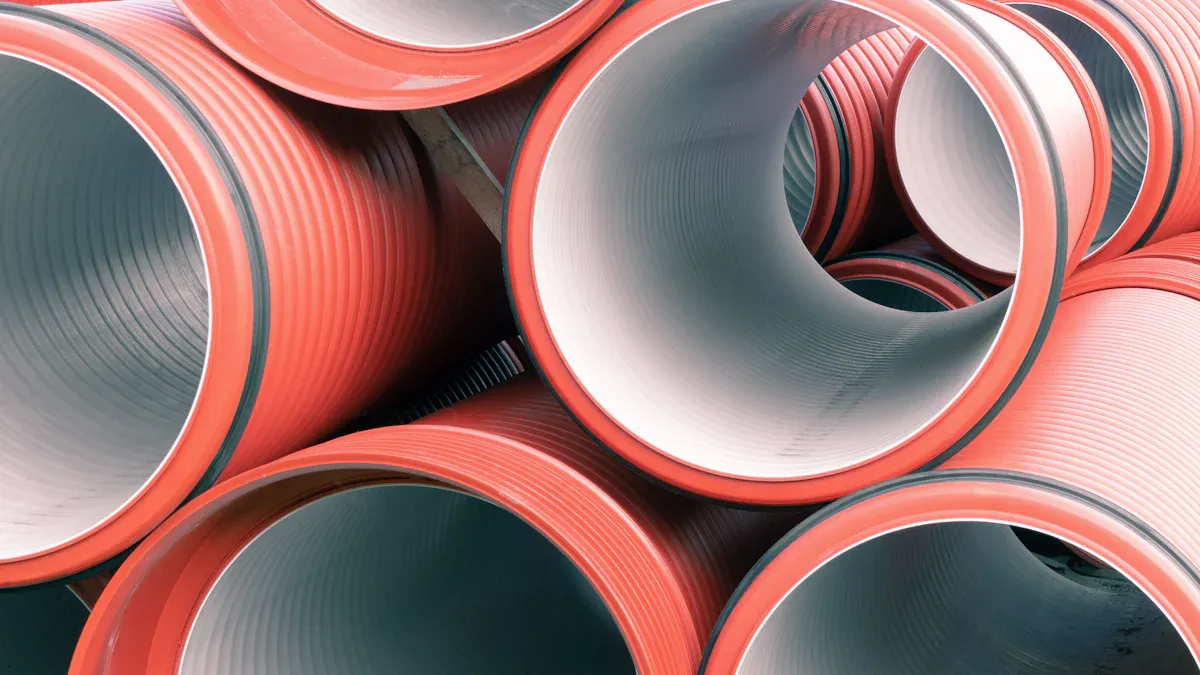
HDPE pipe fittings demonstrate remarkable adaptability to various terrain types. Their flexibility allows them to withstand significant ground movements, making them ideal for regions prone to seismic activity. Engineering reports highlight their performance in challenging scenarios:
| Scenario | Findings |
|---|---|
| Earthquake-induced ground rupture | HDPE pipelines showed superior performance under abrupt ground rupture, with strains well below rupture levels. |
| Soil liquefaction | HDPE maintained integrity despite lateral spreading and settlements up to 2 meters, requiring no repairs post-replacement. |
| Seismic retrofitting | Engineers advance HDPE designs for critical facilities in seismic-prone areas like San Francisco and Los Angeles. |
These findings underscore the ability of HDPE pipe fittings to adapt to unpredictable environmental conditions, ensuring long-term reliability.
Simplified Joining Methods
The installation of HDPE pipe fittings benefits from simplified joining methods. Various techniques enhance efficiency and reliability:
| Joining Method | Description | Benefits |
|---|---|---|
| Butt Fusion Welding | Heats pipe and fitting ends until molten, then presses them together. | Creates a leak-proof joint with strength equal to the pipe itself. |
| Electrofusion Welding | Uses fittings with embedded electric coils to melt surfaces for fusion. | Ensures a secure connection, eliminating the need for adhesives or mechanical fasteners. |
| Restrained Coupling | Suitable for larger diameters, uses grip rings for connection. | Prevents deformation of HDPE pipes, ensuring a strong connection. |
| Flange Connection | Allows for easy disassembly and maintenance of the pipeline. | Suitable for various diameters, requires blocking at the end of the pipe. |
Fusion methods eliminate the need for adhesives, gaskets, or mechanical fasteners. They provide reliable joints, reducing the risk of leaks or failures. Proper training ensures consistent, high-quality installations, further enhancing project timelines.
Cost-Effectiveness of HDPE Pipe Fittings
Lower Maintenance Costs
HDPE pipe fittings significantly reduce maintenance costs, making them an economical choice for municipal projects. Their resistance to corrosion and chemical damage minimizes the need for routine inspections and repairs. This durability translates into fewer disruptions and lower operational expenses over time.
Consider the lifecycle benefits of HDPE pipe fittings compared to traditional materials:
| Lifecycle Stage | Benefits of HDPE Pipe |
|---|---|
| Installation | Lightweight sections reduce labor and equipment costs |
| Operation | Fusion joints minimize leaks and water loss |
| Maintenance | Corrosion resistance lowers routine inspection and repair needs |
| End of Life | Material can be recycled, supporting green infrastructure goals |
By investing in HDPE, municipalities can expect long-term savings. The reduced need for maintenance not only cuts costs but also enhances the reliability of water systems.
Reduced Installation Time
The installation process for HDPE pipe fittings is notably faster than that of metal or concrete alternatives. Several factors contribute to this efficiency:
- HDPE pipe is significantly lighter than metal, making it easier to handle and install.
- The flexibility of HDPE allows for bending without additional fittings, which speeds up the installation process.
- Fewer fittings are needed due to the seamless capabilities of HDPE, leading to faster installations.
Moreover, the seamless capabilities and flexibility of HDPE reduce the need for multiple fittings, which lowers labor costs. The ability to weld HDPE pipes into seamless runs minimizes the risk of leaks, further reducing potential repair costs.
Heat fusion creates joints that are as strong as or stronger than the pipe itself, ensuring durability. The virtually leak-free nature of heat-fused joints contributes to a more efficient installation process. Overall, these factors make HDPE pipe fittings a cost-effective solution for underground infrastructure.
Environmental Benefits of HDPE Pipe Fittings
Sustainability and Recyclability
HDPE pipe fittings stand out for their sustainability and recyclability. They are 100% recyclable, which enhances their eco-friendliness. This feature sets them apart from other materials, such as ductile iron pipes, which may contain recycled content but do not emphasize recyclability as strongly. The sustainability metrics for HDPE include:
- Lower Carbon Footprint: The production and transportation of HDPE consume less energy compared to heavier materials.
- Support for Circular Economy: Recycled HDPE can be used in new pipes, reducing the demand for virgin resources.
- Minimized Land Disruption: Trenchless installation methods lessen environmental impact during construction.
These factors contribute to a more sustainable approach to municipal projects.
Water Conservation Features
HDPE pipe fittings play a crucial role in water conservation. Their robust design allows them to withstand high pressure, ensuring reliable water transport without leaks. Key features include:
- Leak-Free Connections: HDPE fittings create secure joints that prevent water loss, which is vital for conserving resources.
- Durability: Their resistance to corrosion and chemicals helps maintain water quality, minimizing contamination risks.
- Efficient Installation: The flexibility of HDPE allows for fewer joints, reducing potential leak points and promoting quicker project completion.
By integrating these features, HDPE pipe fittings significantly contribute to long-term water conservation efforts in underground infrastructure.
HDPE pipe fittings provide a reliable solution for underground infrastructure. Their durability, flexibility, and cost-effectiveness enhance the efficiency of municipal projects. Recent studies show that municipalities using HDPE have experienced significant reductions in water loss and maintenance costs. For future projects, consider HDPE to ensure long-term success and sustainability.
FAQ
What are the main advantages of HDPE pipe fittings?
HDPE pipe fittings offer durability, flexibility, and cost-effectiveness, making them ideal for underground infrastructure and municipal projects.
How long do HDPE pipe fittings typically last?
HDPE pipe fittings can last between 50 to 100 years, depending on environmental conditions and installation quality.
Are HDPE pipe fittings environmentally friendly?
Yes, HDPE pipe fittings are 100% recyclable and support sustainable practices in municipal projects, reducing environmental impact.