
Soldering pipe fittings is the process of joining metal pipe and fittings—most commonly copper tubing—by heating the joint and drawing molten solder into the connection through capillary action. A correct soldered joint depends on five essentials: clean surfaces, correct fit, proper flux, even heating, and full cooling time. When these steps are followed, the result is a durable and leak-resistant connection for water supply, HVAC, and low-pressure service systems.
Soldering is different from threading or gluing pipe fittings. Soldering is used mainly for copper and brass systems, while PVC systems usually use solvent cement or threaded joints. According to the U.S. Environmental Protection Agency (EPA), many plumbing upgrades continue to use copper in water systems because of durability and recyclability. Buyers often compare PVC pipe fittings, threaded PVC fittings, PVC union fitting, plastic pipe connector, PVC male adapter, and female threaded coupling when selecting non-solder alternatives.
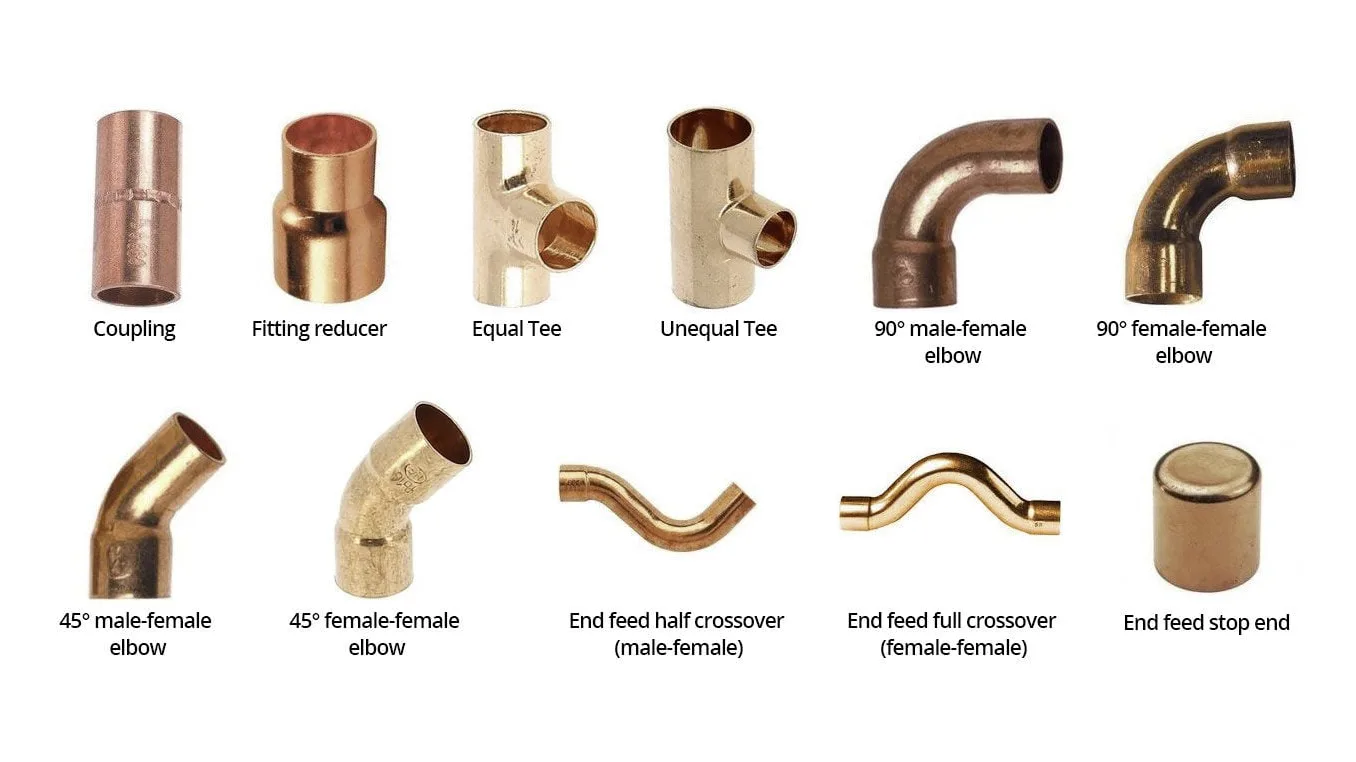
What Pipe Fittings Can Be Soldered?
Soldering is normally used on metallic fittings designed for sweat connections. “Sweat fitting” means a smooth socket that receives copper tube.
Common Soldered Materials
-
Copper pipe and copper fittings
-
Brass sweat adapters
-
Bronze plumbing fittings
-
Copper refrigeration tubing (with suitable alloy)
PVC, CPVC, PE, and PP plastic fittings are not soldered. Plastic systems use solvent welding, fusion, compression, or threaded connections.
| Material | Soldered? | Common Joining Method |
|---|---|---|
|
Copper |
Yes |
Soldering |
|
Brass Sweat Fitting |
Yes |
Soldering |
|
PVC |
No |
Solvent cement |
|
CPVC |
No |
Solvent cement |
|
PE |
No |
Fusion |
The National Institute of Standards and Technology (NIST) emphasizes material compatibility in engineered assemblies, which is critical for pipe joining.
Tools Needed to Solder Pipe Fittings
Correct tools improve joint quality and reduce overheating.
Standard Soldering Tools
-
Propane or MAP-Pro torch
-
Lead-free plumbing solder
-
Flux paste
-
Pipe cutter
-
Deburring tool
-
Emery cloth or wire brush
-
Heat shield cloth
-
Safety gloves and eye protection
For plastic systems, users often select PVC threaded adapter parts because no flame or soldering torch is required.
The Occupational Safety and Health Administration (OSHA) provides fire safety and hot-work guidance relevant to torch-based tasks.
How to Solder Pipe Fittings Step by Step
A repeatable process creates consistent joints.
Standard Copper Pipe Soldering Method
-
Cut pipe squarely with a pipe cutter
-
Ream or deburr inside edge
-
Clean pipe outside with emery cloth
-
Clean fitting socket with brush
-
Apply thin layer of flux
-
Insert pipe fully into fitting
-
Heat fitting evenly, not direct solder first
-
Touch solder to joint edge
-
Allow solder to flow around circumference
-
Remove heat and let cool naturally
Capillary action pulls molten solder into the gap when temperature is correct.
| Step | Purpose | Result |
|---|---|---|
|
Cleaning |
Remove oxide |
Better bonding |
|
Fluxing |
Prevent oxidation |
Smooth flow |
|
Heating |
Reach solder temp |
Capillary fill |
|
Cooling |
Solidify joint |
Strong seal |
How Hot Should Pipe Fittings Be for Soldering?
The fitting should be heated enough to melt solder on contact with the joint, not by melting solder directly with the flame. Many lead-free solders melt roughly in the 200°C to 250°C range, depending on alloy.
Uneven heating can cause weak joints. Overheating can burn flux and oxidize copper surfaces, preventing solder flow.
The U.S. Department of Energy notes that efficient hot-work practices and correct tool use reduce waste and rework in maintenance operations.
Common Pipe Fitting Soldering Mistakes
Most solder leaks come from preparation errors.
Frequent Errors
-
Dirty copper surfaces
-
Too much flux residue left inside line
-
Overheating fitting body
-
Moving joint before cooling
-
Insufficient solder fill
-
Water remaining inside pipe
| Mistake | Likely Result | Prevention |
|---|---|---|
|
Dirty pipe |
Leak path |
Clean thoroughly |
|
Burned flux |
Poor wetting |
Moderate heat |
|
Wet pipe |
Steam / no bond |
Drain line fully |
|
Joint movement |
Hairline leak |
Cool completely |
The NIOSH safety resources also support proper ventilation and hazard awareness during heated maintenance work.
When to Use Threaded or Plastic Fittings Instead of Soldering
Soldering is effective, but not ideal for every site. In finished buildings, flame use may be restricted. In corrosive water or temporary systems, alternative fittings may be faster.
Better Alternatives in Some Cases
-
No open flame allowed
-
Fast emergency repair needed
-
Plastic irrigation system installed
-
Frequent disassembly required
-
Lightweight corrosion-resistant line needed
Many users choose PVC union fitting or threaded plastic fittings where service access matters.
The International Organization for Standardization (ISO) supports quality management principles that include selecting suitable joining methods for the application.
How to Inspect a Soldered Pipe Fitting
Inspection should happen before wall closure or system handover.
Verification Checklist
-
Continuous solder ring visible at joint edge
-
No burnt black flux residue buildup
-
Pipe fully inserted into socket
-
Pressure test passes without seepage
-
No distortion or overheating marks
For mixed-material systems, installers often combine copper lines with female threaded coupling transitions or plastic pipe connector components.
Best Practices for Reliable Pipe Fitting Soldering
Use clean surfaces, lead-free solder, moderate heat, and patient cooling time. Never solder over active water flow. Never overheat flux. Always pressure test before covering the piping.
Key conclusions include:
Preparation determines quality
Even heat improves solder flow
Cooling time prevents cracks
Testing confirms reliability
Correct material choice matters most
FAQ
1. Can PVC pipe fittings be soldered?
No. PVC fittings cannot be soldered because plastic softens under heat. PVC systems are usually joined with solvent cement, threads, or mechanical connectors.
2. Why is my solder not flowing into the fitting?
Common causes include dirty metal, insufficient heat, burned flux, or water inside the pipe. Clean surfaces and heat the fitting evenly.
3. How long should a soldered joint cool?
Allow the joint to cool naturally for several minutes. Moving or quenching the joint too early can weaken the seal.
4. Is lead-free solder required for plumbing?
In many potable water applications, lead-free solder is the standard requirement. Always check local code and product certification.
5. What causes a soldered pipe fitting to leak later?
Late leaks often result from poor cleaning, partial solder fill, vibration, freeze damage, or corrosion caused by unsuitable water chemistry.


