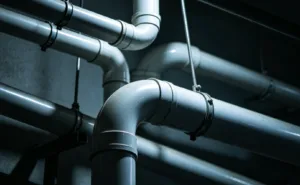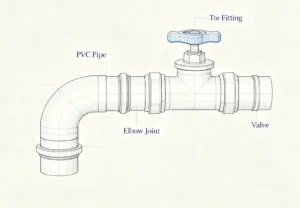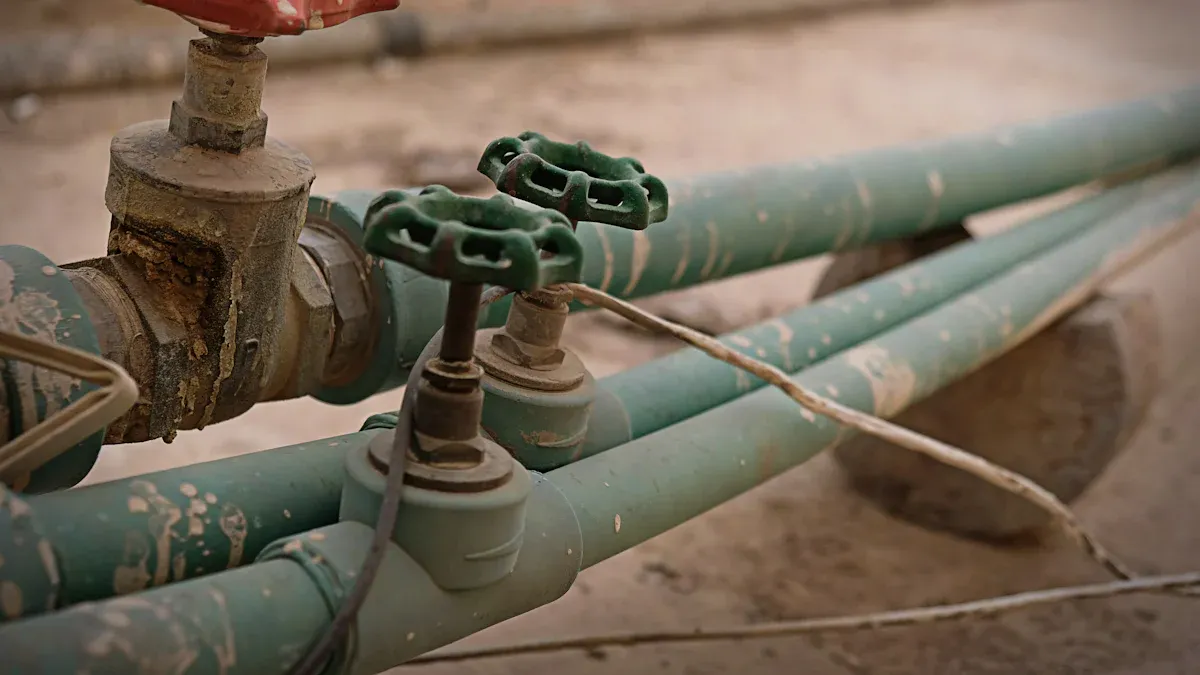
Plumbing systems rely on various types of plumbing valves for crucial flow control, safety, and efficiency. Plastic ball valve uses offer versatility and significant advantages across numerous applications. Many types of plumbing valves exist, including Ball Valves, Gate Valves, Stop Valves, and Stop and Waste Valves, each serving specific functions in residential settings. Understanding what are ball valves used for helps in choosing the correct component. This ensures optimal system performance, whether considering PVC Pipe Fittings or evaluating options like ball valves vs butterfly valves for specific needs.
Key Takeaways
- Plastic ball valves are good for plumbing. They resist rust and cost less. They work well for water and chemicals.
- Different plastic valves fit different needs. CPVC valves handle hot water. PP valves work with strong chemicals.
- Other valves do different jobs. Gate valves turn water fully on or off. Globe valves control water flow slowly. Check valves stop water from flowing backward.
- Choose the right valve for your job. Think about what the valve does. Check what materials it can handle. Look at its temperature and pressure limits.
- Install valves correctly. Check them often. This makes them last longer. Replace old valves when they show signs of wear.
Understanding Plastic Ball Valves: Features and Primary Uses
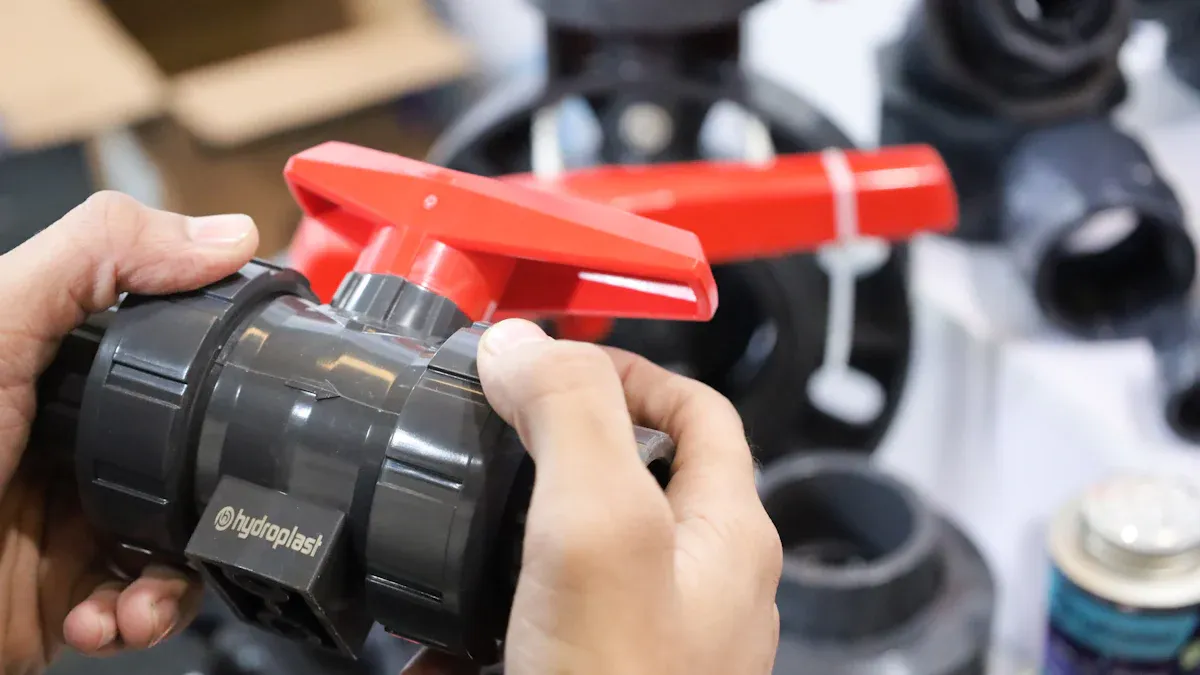
What is a Plastic Ball Valve?
A plastic ball valve is a quarter-turn valve. It controls flow using a hollow, pivoting ball. A 90-degree turn of the handle moves the ball. This movement opens or closes the flow path. The valve’s design creates a linear relationship between its opening and the fluid flow. When controlling flow, its characteristics depend on the pipe’s flow resistance, valve diameter, and form. In a partially open state, one side of the valve body and the butterfly front create a nozzle-like opening. This accelerates flow. The other side acts as a throttle. This can cause negative pressure and issues like rubber seal detachment. For precise positioning, a worm gear reducer often provides self-locking capability. This improves operational performance because the butterfly lever itself lacks self-locking ability.
Plastic ball valves feature a simple structure. They consist of few parts, which saves material. They also have a small volume and light weight. Installation size and drive torque are small. Operation is easy and fast. A 90-degree rotation quickly opens and closes the valve. These valves offer good flow regulation and tight sealing. When fully open, the butterfly plate’s thickness provides minimal resistance. This results in a very small pressure drop and good flow control. Manufacturers offer these valves with elastic seals, embedded on the valve body or attached to the butterfly plate. Metal seals are also available. Metal seals generally last longer but are harder to seal completely. They suit high-temperature applications.
Key Advantages of Plastic Ball Valves in Plumbing
Plastic ball valves offer significant advantages in plumbing systems. They are inherently resistant to corrosion. This makes them ideal for aggressive chemicals or highly acidic fluids. Unlike metal valves, plastic valves do not fail prematurely due to corrosion. This reduces the need for constant maintenance, repairs, or replacements. Their chemical and corrosion resistance ensures a longer lifespan. They do not require frequent maintenance or specialized protective coatings. Plastic valves provide a reliable, maintenance-free option in environments where metal valves would degrade over time. They require no protective coatings or treatments. This simplifies installation and improves cost-effectiveness.
Common Materials for Plastic Ball Valves
Several plastic materials are common for ball valves. Each material offers specific properties for different applications.
-
PVC (Polyvinyl Chloride): PVC is a popular choice for industrial valves. It is affordable and resists corrosion from various bases, acids, and salt solutions. However, some moderately polar solvents, like tetrahydrofuran, can corrode PVC. It remains resistant to solvents at either end of the polarity scale, such as fuel, water, and oil. GEON® PVC (Polyvinyl Chloride Type 1, Grade 1) offers excellent chemical resistance to a wide variety of acids, alkalies, salt solutions, and many other chemicals. However, some solvents, aromatics, and chlorinated organic compounds attack it. The maximum service temperature for PVC is 140°F (60°C). Compact PVC ball valves are typically rated for 150 PSI (Pounds per Square Inch) at 73°F (23°C) working pressure in standard plumbing applications. This rating decreases as the fluid temperature increases. Always consult manufacturers’ data. This 150 PSI rating is generally sufficient for common water applications like irrigation, pools, and residential plumbing.
-
CPVC (Chlorinated Polyvinyl Chloride): CPVC offers superior chemical resistance. It also handles higher temperatures, up to 180°F to 210°F. This is due to its increased chlorine content compared to PVC’s maximum of 140°F.
-
PP (Polypropylene): Polypropylene ball valves are also common. They offer excellent chemical resistance, especially to organic solvents. They are often used in industrial and chemical processing applications.
Primary Applications: Non-Potable Water Lines and Irrigation
Plastic ball valves are essential components in non-potable water lines and irrigation systems. Their corrosion resistance makes them ideal for outdoor and underground installations. These valves effectively manage water flow in various settings. They serve critical roles in water and wastewater treatment plants. They also find use in steel processing and mining operations. Furthermore, plastic ball valves are crucial for natural gas distribution systems. They also support processes in the pharmaceutical industry. Pulp and paper mills rely on them for fluid control. The semiconductor industry also utilizes these valves. Emerging sectors like hydrogen production and lithium processing also benefit from their reliability. In irrigation, plastic ball valves control water distribution to crops and landscapes. They withstand exposure to soil, fertilizers, and varying weather conditions. This ensures efficient water delivery and minimizes leaks.
Primary Applications: Chemical Transfer and Industrial Use
Plastic ball valves excel in chemical transfer and industrial applications due to their superior chemical resistance. They safely handle a wide range of corrosive fluids. These valves are suitable for transferring strong bases, such as hydroxides and caustics. They also manage organic acids, like acetic acid. Industries use them for ammonia and ammonium salt solutions. They also control nonpotable water, air and inert gases, and various alcohols and glycols. Plastic ball valves are effective with numerous metal salt solutions. These include bicarbonates, bromides, carbonates, chlorides, cyanides, and fluorides. They also handle hypochlorites, nitrates, oxides, phosphates, sulphates, or sulphides of aluminum, barium, calcium, copper, iron, magnesium, mercury, nickel, potassium, silver, sodium, tin, or zinc. Beyond these, plastic ball valves manage crude oil, produced water, carbon dioxide, hydrogen sulphide, landfill methane and leachate, and hydrogen peroxide. They are also vital for general acids and bases transfer. In the energy sector, they control dry gas gathering, salt water, gaseous hydrocarbons, and liquid hydrocarbons. Their robust construction prevents chemical degradation and ensures safe operation in demanding industrial environments.
Primary Applications: Low-Pressure Systems and Drainage
Plastic ball valves are highly effective in low-pressure systems and drainage applications. Their simple design and reliable shut-off capabilities make them a preferred choice. These systems often do not require the high-pressure tolerance of metal valves. Plastic ball valves provide an economical and efficient solution. They are common in residential and commercial drainage lines. They control the flow of wastewater and prevent backflow. In low-pressure water distribution, they offer easy on/off control. This makes them suitable for garden hoses, pool plumbing, and simple water features. Their lightweight nature simplifies installation. Their resistance to rust and scale buildup ensures long-term performance in these less demanding environments.
Exploring Different Types of Plastic Valves and PVC Pipe Fittings
PVC Ball Valves and Their Applications
PVC ball valves are a cornerstone in many plumbing systems. They offer excellent corrosion resistance and affordability. These valves find common use in various applications. For instance, chemical treatment facilities use them in the production of fertilizers, pesticides, and solvents. They also handle hazardous materials safely. Water treatment plants control water flow through filters and chlorinators with PVC ball valves. Wastewater treatment systems manage the flow of wastewater into plants, often withstanding high temperatures and acidity. The food and beverage processing industry regulates material flow in bottling, packaging, and cooking processes, meeting stringent industry regulations. The automotive sector controls fluid flow during vehicle repair and maintenance, valuing these valves for their lightweight, reliability, and ease of operation.
PVC ball valves are also ideal for irrigation and agriculture due to their cost-effectiveness and ease of operation. They resist chlorine and salt, making them perfect for pools, spas, and aquariums. General plumbing uses them to isolate parts of cold water systems or for drain lines. Water treatment facilities rely on them to handle various chemicals without degradation. In irrigation systems, especially for large gardens, true union ball valves customize water flow. Users can place them at the beginning of each row to shut off specific rows when not needed, increasing system control. They are also useful for managing water flow in PVC projects involving sprinklers or hose extensions. Placing a true union ball valve between a PVC hose adapter and a PVC structure allows easy water flow control without needing to go to the spigot. PVC ball valves also find use in gas line applications. When installing these valves, proper PVC Pipe Fittings ensure a secure and leak-free connection.
CPVC Ball Valves for Higher Temperatures
CPVC ball valves extend the capabilities of plastic valves to higher temperature environments. CPVC performs perfectly up to 93°C (200°F). It stands as the standard material for hot and cold water plumbing in residential and commercial buildings. The CPVC body construction is specifically designed for use in corrosive and high-temperature environments, often up to 180°F. This makes CPVC ball valves suitable for applications where PVC might degrade due to heat. They maintain their structural integrity and sealing capabilities even when exposed to elevated fluid temperatures. This ensures reliable operation in demanding hot water systems.
PP Ball Valves for Chemical Resistance
Polypropylene (PP) ball valves offer exceptional chemical resistance, making them invaluable in specialized industrial settings. These valves resist acids, alkalis, and many solvents. They are effective with water, various chemicals, and certain food-grade fluids. Technical documentation from the valve industry confirms that polypropylene resists a wide range of chemicals, including acids, alkalis, and organic solvents. This ensures the valve maintains fluid purity and prevents chemical attack even in aggressive environments. PP ball valves are particularly useful where fluid purity is critical or where highly corrosive substances are present. They provide a robust solution for chemical transfer and processing, often used with specific PVC Pipe Fittings designed for chemical compatibility.
The Role of PVC Pipe Fittings in Valve Installation
Proper valve installation relies heavily on the correct selection and application of PVC Pipe Fittings. These fittings create secure and leak-proof connections between valves and the rest of the plumbing system. Choosing the right fitting ensures the system operates efficiently and safely. Different connection types suit various installation needs.
| Connection Type | Best For | Process Overview |
|---|---|---|
| Threaded | Systems requiring future disassembly (e.g., pumps, tanks) | Wrap male threads with PTFE tape and screw together. |
| Socket (Solvent Weld) | Permanent, leak-proof installations (e.g., irrigation mainlines) | Use primer and cement to chemically fuse the pipe and valve. |
Threaded connections offer flexibility. Installers can easily remove and replace components when necessary. This is beneficial for maintenance or system modifications. Socket connections, conversely, provide a strong, permanent bond. They are ideal for critical lines where long-term integrity is paramount.
When connecting PVC components to other materials, such as brass, specific PVC Pipe Fittings are essential. These fittings bridge the material difference and maintain a tight seal.
| Connection Type | Required Fitting | Sealing Method |
|---|---|---|
| PVC to Brass Male Thread | PVC Female Adapter | Teflon Tape + Pipe Dope |
| PVC to Brass Female Thread | PVC Male Adapter | Teflon Tape + Pipe Dope |
| Slip Connection | Union Fitting | PVC Cement & Thread Sealant |
Using the appropriate adapter and sealing method prevents leaks and ensures compatibility. For instance, a PVC female adapter connects a PVC pipe to a brass male thread. Teflon tape and pipe dope provide an effective seal. Union fittings are particularly useful for slip connections. They allow for easy disconnection of a section without cutting the pipe. This simplifies future repairs or replacements. Correctly installed PVC Pipe Fittings are fundamental for the overall reliability and longevity of any plumbing system.
Other Essential Valve Types in Plumbing Systems
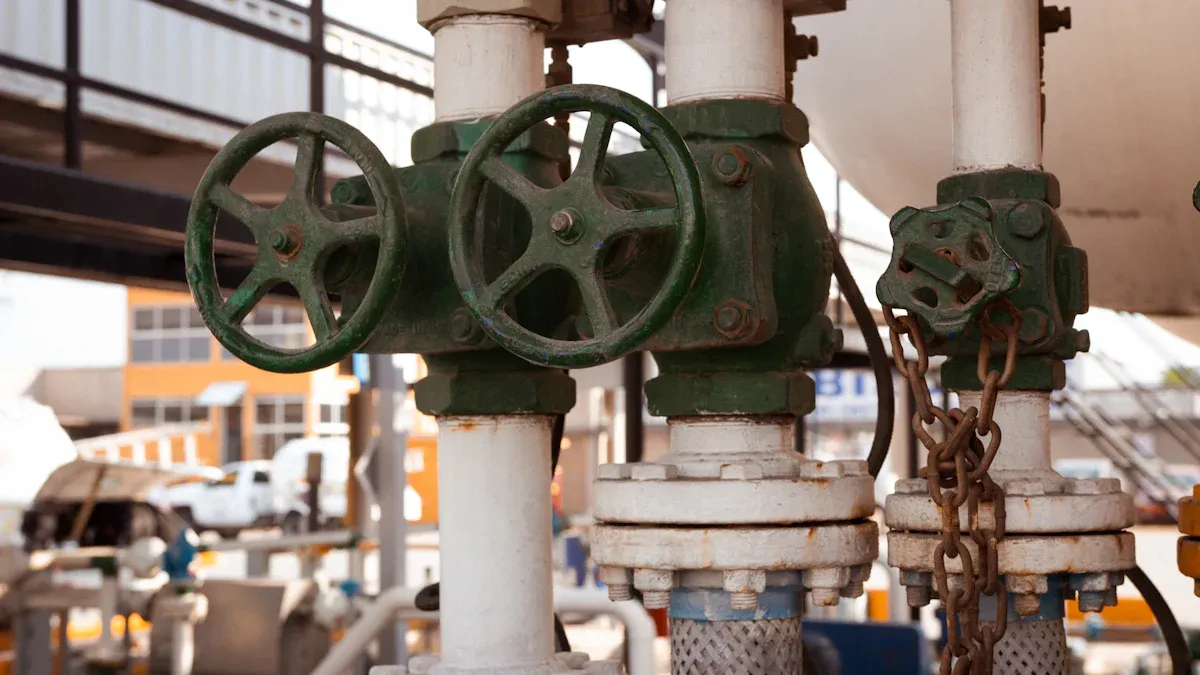
Plumbing systems rely on a variety of valve types beyond plastic ball valves. Each valve serves a unique purpose, ensuring efficient operation, safety, and precise control over fluid movement. Understanding these different valves helps in selecting the correct component for specific plumbing needs.
Gate Valves: Full Flow and Isolation
Gate valves are crucial for achieving full flow and complete isolation in a plumbing system. They function as on/off valves, meaning they are either fully open or fully closed. A gate valve utilizes a wedge-shaped metal disc. This disc can be raised or lowered to control fluid flow. When open, the gate fully retracts into the valve body. This design provides minimal resistance to flow.
A primary characteristic of gate valves is their full bore opening. The gate retracts completely into the bonnet. This creates an opening that matches the pipe size. This design results in almost zero pressure drop and maximum flow efficiency. Gate valves also feature durable sealing. They employ solid or flexible wedges for a tight seal. This seal can be metal-to-metal or resilient, ensuring reliable long-term shut-off and isolation. Installers typically use gate valves where they need infrequent operation and a tight shut-off.
Globe Valves: Throttling and Flow Regulation
Globe valves excel at throttling and regulating fluid flow. Their design allows for precise adjustment of flow rates, making them ideal for applications requiring fine control. A globe valve’s plug or disc can adjust from fully open to fully closed. This matches the required flow rate, providing precise regulation control. The flow restriction increases as the distance between the plug and the seat in the valve body changes. These valves are particularly effective in partially open configurations, offering ideal throttling capabilities. They are also easy to maintain and resurface.
Globe valves primarily control the flow of liquids and gases in industrial settings, power generation, and water supply systems. They suit flow control and throttling applications due to their design. This design allows for precise adjustment of the fluid flow. The linear movement of the valve plug, controlled by a threaded stem, accurately modifies the annular opening between the plug and seat. Raising the disc increases flow, while lowering it restricts flow, enabling fine-tuning. This design makes them ideal for applications demanding precise flow control. They often provide linear or equal percentage flow control characteristics depending on the plug design. Common applications include cooling water systems, fuel oil systems, feedwater systems, chemical feed systems, and steam vents and drains.
Check Valves: Preventing Backflow
Check valves play a vital role in preventing backflow in plumbing systems. They allow fluid to flow in only one direction, automatically closing to stop reverse flow. This protects pumps, prevents contamination, and maintains system integrity. Various types of check valves exist, each with a specific mechanism for preventing backflow.
- Swing Check Valves: These valves feature a hinged disc. The disc swings open for flow in one direction. It closes to prevent backflow. When flow reverses, the disc swings shut, creating a seal.
- Ball Check Valves: These valves utilize a spherical ball or floating disc. The ball is forced into the seat when flow stops or reverses. This creates a seal to prevent backflow. Gravity or a spring typically guides the ball.
- Diaphragm Check Valves: These valves use a flexible diaphragm. The diaphragm flexes away from the seat for forward flow. It seals against the seat in reverse flow to prevent backflow.
- Lift Check Valves: These valves feature a disc or piston. The disc lifts away from the seat with forward flow. Gravity or a spring mechanism causes it to close when flow stops or reverses, preventing backflow.
- Wafer Check Valves: These valves fit between flanges. They feature a disc that pivots on a hinge or swings freely. This regulates flow direction and prevents backflow. They have a compact design with two half-circle disks. These disks fold together for forward flow and retract to prevent backflow.
- In-line Check Valves: These are compact valves with various designs. They include spring-loaded, spring-assisted, or gravity-operated mechanisms. Installers place them directly in a pipeline to control flow direction.
- Tilting Disc Check Valves: These valves utilize a disc that tilts away from the seat for forward flow. It returns to the closed position to prevent backflow.
- Dual Disc Check Valves (Double Door Check Valve): These valves employ two semicircular doors on a central hinge. They open when upstream pressure exceeds cracking pressure. They close automatically with a spring to quickly seal before backflow.
- Piston Check Valves: These valves utilize a piston’s linear motion, often with an optional spring. They remain closed when not engaged, minimizing backflow risk. They are calibrated to respond to specific flow pressures.
- Stop Check Valves: This hybrid combines globe and check valve features. It can serve as a flow regulator or backflow prevention mechanism. It includes an external control for manual operation.
- Spring-Loaded Check Valves: These valves incorporate a spring mechanism for rapid closure. This ensures the valve shuts before fluid flow reverses. It prevents backflow and mitigates hydraulic shock.
Pressure Reducing Valves (PRVs): System Protection
Pressure Reducing Valves (PRVs) protect plumbing systems from excessive water pressure. They automatically lower incoming high water pressure to a safer, more manageable level. High water pressure can damage pipes, fixtures, and appliances. It also leads to increased water consumption and noise. A PRV maintains a consistent, lower pressure downstream, regardless of fluctuations in the upstream supply. This protects the entire plumbing network.
For residential properties, installers typically set PRVs between 40 and 60 psi. Many homes operate efficiently with a pressure around 50 psi. This pressure range ensures adequate water flow without overstressing plumbing systems. Maintaining this optimal pressure extends the lifespan of plumbing components. It also prevents leaks and reduces the risk of burst pipes. PRVs are essential for system longevity and efficiency.
Stopcock Valves: Localized Shut-off
Stopcock valves provide crucial localized shut-off capabilities within plumbing systems. They serve as essential shut-off valves to control water flow. These valves primarily function as the main shut-off for entire homes. They also isolate specific sections of piping during maintenance or emergencies. Installers commonly locate them under kitchen sinks, in utility rooms, or near the point of entry from the main water supply. In the UK, the inside stop valve is the primary point for shutting off the mains water supply. Plumbing codes, such as the Uniform Plumbing Code (UPC), mandate their use for supply lines to fixtures like water heaters and throughout the distribution system. Installers place them inline within copper or PEX piping systems. Frost-proof models are used for outdoor applications like hose bibbs or exterior faucets to prevent freezing.
Stopcocks, also known as stop taps or shut-off valves, are crucial in plumbing systems for managing the main water supply into a building. They allow users to cut off water flow for maintenance or in emergencies without affecting the broader municipal network.
These valves offer immediate control. They allow homeowners or plumbers to quickly stop water flow to a specific area. This prevents extensive water damage during a leak or when performing repairs. Their strategic placement ensures minimal disruption to the rest of the system.
Butterfly Valves: Large Diameter Flow Control
Butterfly valves excel at controlling flow in large diameter pipes. They feature a disc that rotates on a central axis within the valve body. A quarter-turn of the handle or actuator rotates the disc 90 degrees, moving it from fully open to fully closed. This quick operation makes them highly efficient.
Butterfly valves offer several advantages over gate valves, especially for larger pipe sizes. They have lower upfront costs and significantly lower operational costs due to their fast opening and closing. Their technical characteristics enable automation and optimization of processes efficiently. Butterfly valves are lighter and more compact, making them easier to operate and install for large pipe diameters, especially in limited spaces. They are more affordable in larger sizes compared to gate valves, whose prices increase rapidly with caliber diameter. Butterfly valves offer quick opening and closing, suitable for frequent operations and emergency shut-offs. They can also be used for throttling and adjusting flow rates, unlike gate valves which typically operate only in fully open or fully closed positions. Butterfly valves are suitable for moderate to high temperature and pressure conditions. They can be mounted in any orientation, whereas gate valves often require vertical mounting to prevent debris accumulation.
- Quick Operation: Requires only a quarter turn for flow control.
- Space-saving design: Suitable for installations with limited space.
- Low Pressure Drop: Designed to minimize flow resistance.
Their compact and lightweight design, combined with quick quarter-turn operation, makes them a cost-effective choice for large diameter applications.
Choosing the Right Valve: Key Factors to Consider
Selecting the correct valve ensures a plumbing system operates efficiently and safely. Engineers consider several critical factors when choosing a valve for any application. These factors include the valve’s intended use, the materials it handles, and its pressure and temperature limits.
Application Requirements: On/Off, Throttling, or Backflow Prevention
The valve’s primary function dictates its type. Some applications require simple on/off control. These valves start or stop fluid flow. Examples include ball valves, plug valves, and diaphragm valves. They provide reliable shutoff, which is crucial for safety. Other applications demand precise flow adjustment. These are throttling applications. Throttling valves require precise control, good rangeability, and minimal issues like backlash and stiction. Valve gain, which is the percent flow per percent signal, should not change significantly. For instance, it should remain between 0.5 and 2.0 from minimum to maximum flow. Using on-off valves for throttling leads to poor sensitivity, excessive backlash, and nonlinearity. For both throttling and tight shutoff, engineers often use separate valves: a good throttling valve in series with a separate tight shutoff valve. Check valves, conversely, prevent backflow, allowing fluid movement in only one direction.
Material Compatibility with Fluid Type and Environment
Valve material selection is paramount. The material must withstand the fluid it transports and the surrounding environment. Corrosive fluids require materials like PVC, CPVC, or PP, which offer superior chemical resistance. For example, PP ball valves resist a wide range of acids, alkalis, and organic solvents. This prevents degradation and maintains fluid purity. The environment, including exposure to UV light or extreme temperatures, also influences material choice.
Pressure and Temperature Ratings for System Safety
Valves must meet specific pressure and temperature ratings for system safety. Industry standards define these critical limits. ANSI/ASME B16.5 covers pipe flanges and flanged fittings, establishing pressure-temperature ratings. ANSI/ASME B16.34 covers valves for temperatures from -325°F to 1500°F. These standards prescribe pressure-temperature ratings, dimensions, and materials. ANSI Pressure Class Designations, such as Class 150, 300, or 600, define the pressure-temperature relationship for valves. For example, a Class 150 carbon steel valve has a maximum pressure rating of 285 psi at ambient temperature. This rating decreases as the temperature increases. AWWA standards, like AWWA C110, apply to cold water service, typically up to 100°F, often with higher pressure ratings than ASME/ANSI for similar fittings due to their specific design.
Installation and Maintenance Considerations
Proper valve installation ensures optimal performance and longevity. Installers must correctly size and orient valves for efficient flow. For globe valves, they prefer a vertical stem orientation. This minimizes side loading and ensures smooth motion. Technicians align the piping to the valve flanges, avoiding forced connections. They achieve precise alignment of control valves with the piping system. This prevents uneven stress, leakage, and increased maintenance. Using alignment jigs or laser alignment tools helps achieve this precision. Installers follow manufacturer specifications for valve orientation, especially regarding flow direction. Arrows on the valve body indicate this direction. They ensure actuators and accessories remain accessible for maintenance and adjustments. Adhering to specific installation position requirements, whether horizontal, vertical, or angled, ensures proper functioning of internal components. Proper orientation also protects electronic components from environmental factors and facilitates calibration. Regular inspection and operation extend valve lifespan. Technicians check for leaks, corrosion, and wear. They replace valves showing signs of wear or malfunction to prevent system failures.
Cost-Effectiveness and Long-Term Performance
Choosing the right valve involves more than just the initial purchase price. Investing in higher-quality plumbing materials significantly reduces the need for costly repairs and replacements later. While a low-quality valve might cost $50, it often leads to frequent repairs and replacements. A high-quality valve, costing around $100, offers fewer repairs and better performance. This ultimately saves time and money. Higher-quality products are less likely to encounter leaks, breaks, or malfunctions. These issues can result in expensive future repairs or replacements.
Consider Apollo Valves as an example. They offer a lower total cost of ownership despite a higher initial investment. Their stainless steel and brass construction provides superior durability. This reduces replacement frequency. Premium materials and engineering standards result in up to 60% lower maintenance costs over time. A 2000WOG pressure rating ensures reliable performance in high-pressure systems. This minimizes operational failures. Utility companies report dramatic downtime reduction after installing Apollo’s Stainless Steel 1/2 Inch Reduce Bore valves. Their 10-15 year lifespan greatly extends replacement cycles. Forged stainless steel and bronze construction withstand harsh conditions, preventing deterioration. Reinforced PTFE seals maintain integrity under extreme conditions. This prevents small leaks that can cascade into major system failures.
Installation and Maintenance Tips for Plumbing Valves
Proper Sizing and Orientation for Optimal Flow
Correct valve sizing ensures optimal flow and system efficiency. Engineers consult sizing charts from valve manufacturers. These charts consider flow rate, application, and material. Advanced valve sizing software helps calculate system requirements. It suggests optimal sizes, especially for control valves. Professionals advise on specific system needs when questions arise. Valves must accommodate the required flow rate without excessive pressure loss. For example, butterfly valves have maximum velocity limits to prevent damage. Properly sized valves enable effective flow control. They allow the system to operate across a wide flow range. Selecting valves based solely on pipe size can lead to incorrect choices. Control valves should be chosen based on their flow coefficient (Cv), not pipeline size. Proper orientation also ensures smooth operation.
Sealing and Leak Prevention Techniques
Effective sealing prevents leaks around valve connections. Several techniques address different leak scenarios. The adhesive method works well for small leaks, especially under low pressure. It involves cleaning the leak area. Tapered pins temporarily seal the leak. Then, fast-curing adhesive is applied. For larger leaks, a pressure tool with soft metal gaskets stops the leak before cleaning and applying adhesive. The welding method suits valve leaks under high temperature and pressure. This provides a long-lasting solution for larger valves with minor leaks. It involves sealing gaps on the valve body. The wrapping method offers an effective solution for emergencies. It creates and welds a box around the leak area. This creates a sealed space.
Regular Inspection and Operation for Longevity
Regular inspection and operation extend valve longevity. Inspection frequency depends on the property type and operating conditions. New homes, under 10 years old, require checks every two years. Established homes, 10-20 years old, need annual inspections. Historic properties, over 50 years old, benefit from twice-yearly checks. Rental properties require inspection before new tenants move in. Vacation homes need spring and fall checks. More frequent inspections are recommended for properties with specific risk factors. These include homes with mature trees near sewer lines or residences in flood-prone areas. Valves in normal conditions with non-corrosive fluids typically suffice with annual inspections. Conversely, valves exposed to corrosive environments, high pressures, or high temperatures may require inspections every six months or even quarterly. Regular inspections include visual checks for wear, corrosion, and leaks. Functional tests confirm proper opening and closing.
When to Replace a Valve and Signs of Wear
Plumbing valves do not last forever. Recognizing when to replace a valve prevents significant plumbing problems. Aging infrastructure often signals a need for replacement. For instance, if a home is over 20 years old and still uses its original water main valve, continuous use likely caused deterioration. This valve is probably due for replacement.
Several clear indicators suggest a valve needs replacement. Frequent leaks are a primary sign. Water pooling around the valve or damp spots nearby indicate worn-out seals or corrosion. This leads to water loss and potential damage. Visible rust and corrosion also point to deterioration. Discoloration on the valve and pipes, or a flaky surface, suggests metal components are weakening. This can cause leaks and make the valve difficult to operate.
Water pressure issues throughout the home can also signal a malfunctioning valve. Inconsistent or low water pressure often results from mineral buildup, debris, or wear partially blocking the valve. Unusual sounds like banging, rattling, or whistling from the valve suggest it struggles to regulate water flow. Loose components or blockages often cause this noisy operation. Finally, visible damage like cracks, dents, or other physical deformities on the valve clearly compromise its integrity. These signs indicate an immediate need for replacement to maintain system safety and efficiency.
Informed valve selection ensures plumbing system integrity. Plastic ball valves offer versatility and efficiency in many applications. Other valve types, like gate, globe, and check valves, serve diverse roles.
Readers should always consider application, material compatibility, and system requirements.
Choosing the correct valve ensures efficiency, safety, and durability in all plumbing projects. This careful consideration leads to optimal system performance.
FAQ
What are the main advantages of plastic ball valves?
Plastic ball valves offer excellent corrosion resistance. They are also lightweight and cost-effective. These valves provide reliable shut-off and require minimal maintenance. Their durability makes them suitable for various plumbing applications.
Which plastic valve material is best for high temperatures?
CPVC (Chlorinated Polyvinyl Chloride) ball valves are best for higher temperatures. They handle fluids up to 180°F to 210°F. This makes them ideal for hot water systems where PVC might degrade.
What is the primary function of a check valve?
Check valves prevent backflow in plumbing systems. They allow fluid to flow in only one direction. This protects pumps and prevents contamination. They maintain system integrity automatically.
How do I select the correct valve for my plumbing system?
Consider the application requirements first. Determine if you need on/off control, throttling, or backflow prevention. Evaluate material compatibility with the fluid and environment. Check pressure and temperature ratings for safety. Finally, assess installation, maintenance, and cost-effectiveness.