Choosing the right PP ball valve features for industrial fluid control applications requires careful consideration. Understanding fluid characteristics, such as corrosiveness and viscosity, plays a crucial role in this selection process. Additionally, system requirements must align with the valve’s specifications to ensure optimal performance.
Proper valve selection significantly impacts system efficiency and safety. For instance, using high performance PP valves can prevent issues related to material compatibility, pressure ratings, and flow characteristics. The following table illustrates how these factors affect efficiency and safety:
| Factor | Impact on Efficiency and Safety |
|---|---|
| Material Compatibility | Prevents corrosion and wear, ensuring long-term reliability with plastic fittings. |
| Pressure Ratings | Ensures industrial fluid control valves can handle operational pressures without failure. |
| Flow Characteristics | Optimizes fluid control, enhancing system performance. |
| Operational Requirements | Tailors valve design to specific application needs, improving safety and efficiency. |
When comparing PP valve vs steel valve, it’s essential to consider the advantages of chemical resistant valves, especially in applications involving harsh substances.
Key Takeaways
- Choose the right PP ball valve by considering fluid characteristics like corrosiveness and viscosity. This ensures optimal performance and safety.
- Evaluate key selection criteria such as temperature, pressure ratings, and material compatibility. These factors prevent failures and enhance reliability.
- Understand the importance of proper installation. Follow best practices to minimize leaks and extend the valve’s service life.
- Regular maintenance is crucial. Schedule inspections to identify issues early and ensure the valve operates efficiently.
- Consult with experts to tailor valve selections to specific applications. This collaboration can significantly improve system performance.
Types of PP Ball Valves
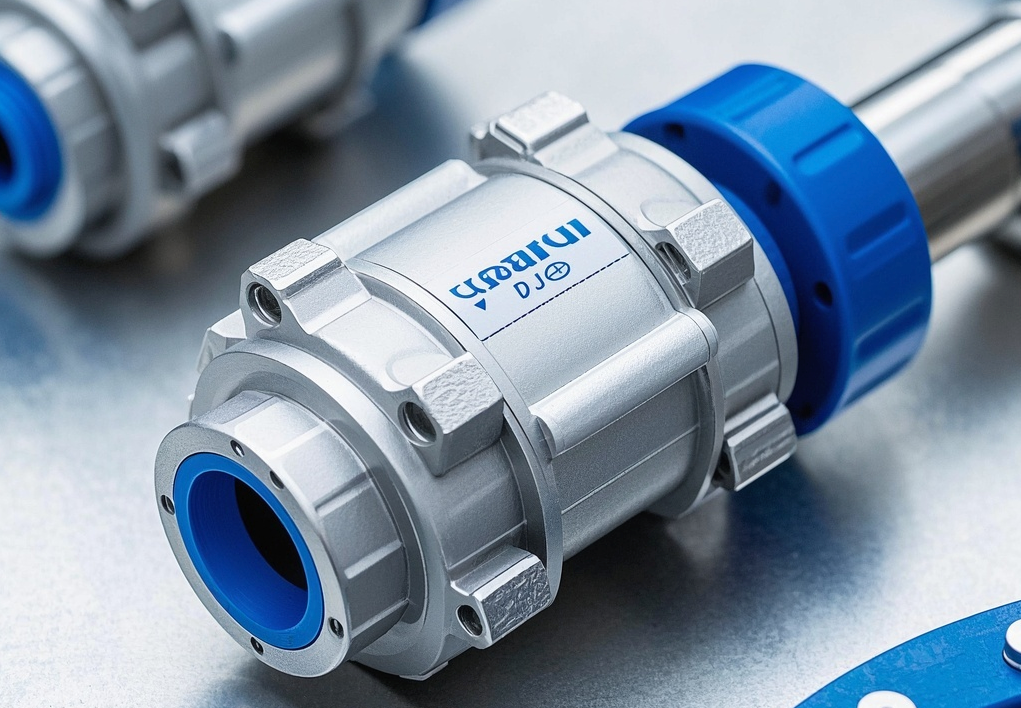
PP ball valves come in various types, each designed for specific applications in industrial fluid control. Understanding these types helps users select the most suitable valve for their needs. Here are some common types of PP ball valves:
-
CSA Gas Ball Valve: This valve is specialized for combustible gas applications. It requires CSA certification to ensure safety and compliance with industry standards.
-
EzPress/EzGrip Ball Valve: Designed for ease of use, this valve features an ergonomic design that allows for simple activation in industrial settings. Its user-friendly nature enhances operational efficiency.
-
PEX Valves: These two-way, full-port valves are ideal for shutting off water supply during maintenance. Their design ensures minimal flow resistance, making them effective for various applications.
-
PP-R Valves: Compatible with PP-R pipes, these valves resist aggressive chemicals. They find use in diverse industrial applications, providing reliable performance under challenging conditions.
Advancements in PP ball valve design have also contributed to improved reliability in fluid control systems. For instance, the integration of IoT and automation enhances real-time monitoring capabilities. Predictive maintenance reduces downtime and operational costs, while smart technologies improve response times and overall efficiency.
One notable innovation is the Electric O-Type Ball Valve technology. This technology combines traditional reliability with modern electric actuation, offering enhanced control accuracy and safety protocols. By eliminating the need for compressed air, it simplifies installation and reduces utility costs. This results in consistent performance, unaffected by variations in air supply, thereby enhancing reliability in fluid control systems.
Selecting the right type of PP ball valve ensures optimal performance and longevity in industrial applications.
Key Selection Criteria
Selecting the right PP ball valve involves evaluating several critical criteria. These factors ensure that the valve meets the specific needs of the application while maintaining efficiency and safety. Below are the key selection criteria to consider:
-
Temperature and Pressure: Ensure the valve can withstand the service fluid’s temperature and pressure. This prevents wear and potential failure, which can lead to costly downtime.
-
Estimated Annual Cycles: Assess how frequently the valve will operate. This evaluation helps determine the valve’s durability and reliability over time.
-
Material Compatibility: Verify that the valve materials are suitable for the service media. The right materials resist corrosion and degradation, ensuring long-term performance.
-
Certifications: Check for relevant certifications. These certifications ensure that the valve complies with industry standards and safety regulations.
-
Maintenance Requirements: Consider the ease of maintenance. Valves that require less frequent maintenance can extend service intervals and reduce operational interruptions.
The following table summarizes these key criteria:
| Criteria | Description |
|---|---|
| Temperature and Pressure | Ensure the valve can withstand the service fluid’s temperature and pressure to prevent wear and failure. |
| Estimated Annual Cycles | Assess the frequency of valve operation to determine durability and reliability. |
| Material Compatibility | Verify that the valve materials are suitable for the service media and resistant to corrosion. |
| Certifications | Check for relevant certifications to ensure safety and compliance with application standards. |
| Maintenance Requirements | Consider ease of maintenance to extend service intervals and reduce operational interruptions. |
In addition to these criteria, understanding the chemical resistance and temperature handling capabilities of PP is crucial. PP offers excellent chemical resistance, making it suitable for various applications. It can handle moderate temperatures, ensuring durability in industrial settings.
When evaluating industry standards, professionals should reference certifications such as ANSI, NEMA, and NSF. These certifications provide guidelines for pressure ratings, design standards, and safety compliance. The following table outlines some important certifications:
| Certification | Description |
|---|---|
| ANSI | Determines the pressure and temperature ratings for pipe flanges. |
| NEMA | Sets the standards for the design of electrically actuated ball valves. |
| NSF | Provides guidelines for selecting ball valves in food, beverage, and drug production facilities. |
Cost considerations also play a significant role in valve selection. Lifecycle cost analysis encompasses various financial aspects, including the initial purchase price, installation costs, and maintenance needs. This comprehensive evaluation helps engineers make informed decisions that enhance reliability and cost-effectiveness in industrial applications.
| Cost Factor | Description |
|---|---|
| Initial Purchase Price | The upfront cost of acquiring the ball valve. |
| Installation Costs | Expenses related to the installation of the valve in the system. |
| Maintenance Requirements | Ongoing costs for upkeep and repairs during the valve’s service life. |
| Expected Service Life | Anticipated duration the valve will function effectively under operating conditions. |
By prioritizing these selection criteria, professionals can ensure they choose the most suitable PP ball valve for their specific fluid control applications.
Material Compatibility
Material compatibility is crucial when selecting PP ball valves for industrial applications. Ensuring that the valve materials align with the fluid medium prevents issues such as corrosion and premature failure. Here are key factors to consider:
- Evaluate Components: Assess all components in the piping system for compatibility with the fluid medium. This includes the valve, pipes, and fittings.
- Chemical Concentration: Consider the concentration of chemicals in the fluid. Higher concentrations may require more robust materials.
- Operating Temperatures: Verify that the valve can withstand the temperatures of the operating environment. Extreme temperatures can affect material integrity.
- Potential Interactions: Be aware of how different chemicals may interact. Some combinations can lead to unexpected reactions or degradation.
- Thread Compounds and Lubricants: Use caution with thread paste compounds, lubricants, and cleaning agents. These substances can affect compatibility and performance.
- Environmental Stress Cracking: Recognize that certain chemicals may cause environmental stress cracking when combined with others. This can lead to leaks and failures.
Polypropylene (PP) stands out among various plastics for its chemical resistance properties. The table below compares PP’s performance to other common plastics in corrosive fluid environments:
| Property | Polypropylene (PP) | Other Plastics (e.g., ABS, PE) |
|---|---|---|
| Chemical Resistance | High | Moderate to Low |
| Stiffness | High | Varies |
| Lightweight | Yes | Yes |
| Moisture Absorption | Low | Moderate |
| Cost | Low | Varies |
| Recyclability | 100% | Varies |
Choosing the right materials ensures that the PP ball valve performs reliably in demanding conditions. By prioritizing material compatibility, engineers can enhance the longevity and efficiency of their fluid control systems.
Size and Dimensions
Selecting the correct size and dimensions for PP ball valves is essential for optimal performance in industrial fluid control applications. The size of a valve directly influences its flow capacity and pressure characteristics. A well-chosen valve size ensures efficient fluid movement and minimizes energy loss.
Standard Size Ranges
PP ball valves are available in a wide range of sizes from various global manufacturers. Here are some common size ranges for different types of PP ball valves:
| Valve Type | Size Range |
|---|---|
| Polypropylene 2-Way Ball | 3/8″ to 2-1/2″ |
| V-Ball, 3-Piece Control | NPS 1/4″-4″ (DN 8-100) |
Impact on Flow Rate and Pressure Drop
The orifice size in a valve plays a critical role in controlling fluid flow. Larger orifices facilitate higher flow rates and reduce pressure drops. Conversely, smaller orifices restrict flow and increase pressure drop, which can lead to inefficiencies in the system.
- Larger orifices allow for higher flow rates.
- Smaller orifices create greater resistance, leading to larger pressure drops.
- Smaller orifices can increase fluid velocity, potentially causing turbulence.
Flow efficiency is vital for determining how easily a fluid passes through a valve. Higher efficiency results in lower energy requirements for maintaining flow rates. Poor valve design can exacerbate pressure drops due to turbulence and friction losses.
The design of the flow path significantly impacts both flow rate and pressure drop. Valves like ball valves provide a straight-through flow path, allowing for high flow rates and minimal pressure drops. In contrast, valves that change the direction of flow can increase turbulence and pressure drop.
Pressure Ratings
Pressure ratings are critical when selecting PP ball valves for industrial applications. These ratings indicate the maximum pressure a valve can safely handle without failure. Understanding these ratings ensures that engineers choose the right valve for their specific needs.
- Typical pressure ratings for PP true union ball valves range from 150 psi to 300 psi (10.3 bar to 20.7 bar).
- For demanding applications, specialized valves can withstand pressures up to 600 psi (41.4 bar).
When comparing the pressure ratings of PP ball valves to those of metal ball valves, notable differences emerge. The table below highlights these distinctions:
| Feature | PP Plastic Ball Valves | Metal Ball Valves |
|---|---|---|
| Pressure Rating | Low to moderate (up to 235 PSI) | Moderate to high (150-1000+ PSI) |
PP ball valves generally exhibit lower pressure ratings than their metal counterparts. This characteristic makes them suitable for applications where moderate pressure is sufficient. However, their lightweight and corrosion-resistant properties often outweigh the limitations in pressure handling.
Engineers must consider the specific requirements of their systems when selecting a valve. Factors such as fluid type, temperature, and pressure fluctuations can influence the choice. Properly rated valves enhance system reliability and safety, reducing the risk of leaks or failures.
Flow Requirements
Flow requirements play a vital role in selecting the appropriate PP ball valve for industrial applications. Understanding these requirements ensures that the valve operates effectively and efficiently. Key factors to consider include:
- Flow Rate: This is the volume of fluid passing through the valve per unit time. It directly influences the valve size.
- Pressure Drop: A valve that is too small can restrict flow and increase pressure, while an oversized valve may lead to inefficiency and higher costs.
- Valve Type: Different types of valves may perform better under specific flow conditions.
Calculating the maximum flow rate involves considering the number and type of fixtures connected to the plumbing system. Properly sizing the valve based on flow requirements prevents operational issues and enhances system performance.
The following table illustrates the flow coefficient (Cv) values associated with common PP ball valve sizes. These values indicate how much fluid can flow through the valve at various opening angles:
| Valve Size (Inches) | CV Value at 10° | CV Value at 20° | CV Value at 30° | CV Value at 40° | CV Value at 50° | CV Value at 60° | CV Value at 70° | CV Value at 80° | CV Value at 90° |
|---|---|---|---|---|---|---|---|---|---|
| 2 | 0.1 | 5 | 12 | 24 | 45 | 64 | 90 | 125 | 135 |
| 2½ | 0.2 | 8 | 20 | 37 | 65 | 98 | 144 | 204 | 220 |
| 3 | 0.3 | 12 | 22 | 39 | 70 | 116 | 183 | 275 | 302 |
| 4 | 0.5 | 17 | 36 | 78 | 139 | 230 | 364 | 546 | 600 |
| 5 | 0.8 | 29 | 61 | 133 | 237 | 392 | 620 | 930 | 1022 |
| 6 | 2 | 45 | 95 | 205 | 366 | 605 | 958 | 1437 | 1579 |
| 8 | 3 | 89 | 188 | 408 | 727 | 1202 | 1903 | 2854 | 3136 |
| 10 | 4 | 151 | 320 | 694 | 1237 | 2047 | 3240 | 4859 | 5340 |
| 12 | 5 | 234 | 495 | 1072 | 1911 | 3162 | 5005 | 7507 | 8250 |
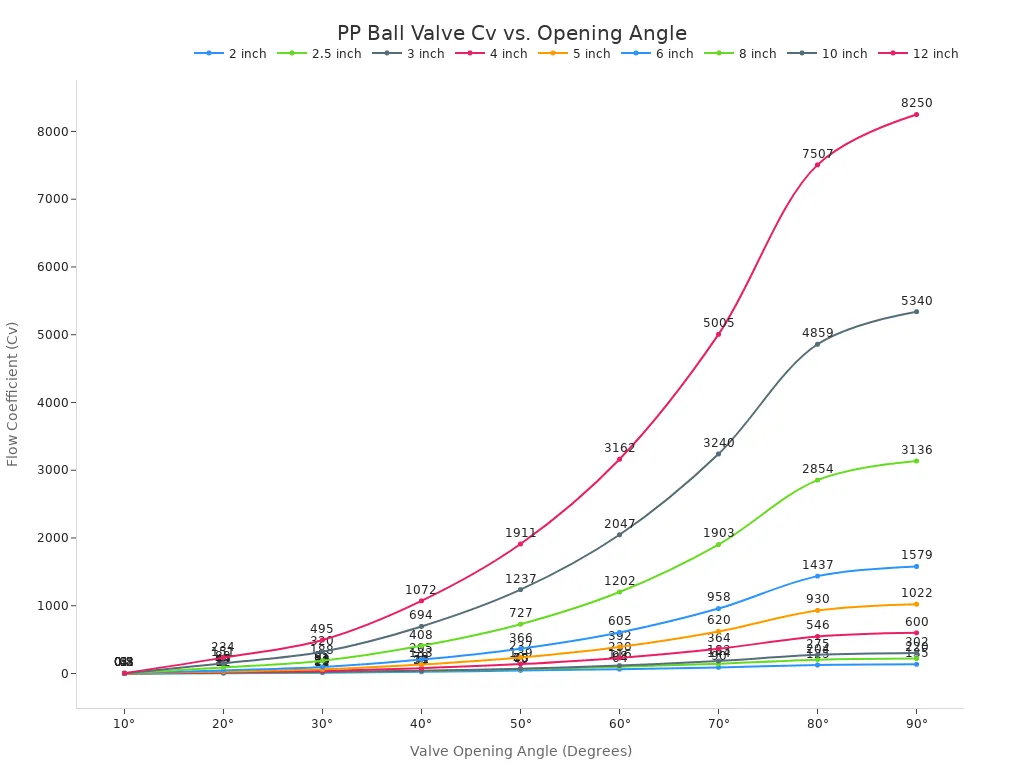
By understanding flow requirements, engineers can select the right valve size and type, ensuring optimal performance in their fluid control systems.
Application Suitability
PP ball valves are versatile components in industrial fluid control systems. Their suitability depends on the specific application, fluid type, and operating conditions. Understanding these factors helps engineers select the right valve for optimal performance.
Ideal Applications for PP Ball Valves
PP ball valves excel in various applications due to their durability and chemical resistance. The following table outlines some common applications and their characteristics:
| Application | Characteristics |
|---|---|
| Water Treatment | Durable, corrosion-resistant, suitable for water |
| Chemical Processing | Handles a wide range of chemicals effectively |
| Industrial Sectors | Versatile for various industrial applications |
In water treatment facilities, PP ball valves provide reliable service. Their resistance to corrosion ensures longevity, making them ideal for handling potable water. In chemical processing, these valves manage aggressive fluids without compromising integrity. Their ability to withstand a variety of chemicals enhances operational efficiency.
Limitations of PP Ball Valves
While PP ball valves offer many advantages, they do have limitations. They are generally unsuitable for high-temperature and high-pressure applications. The maximum temperature rating for PP ball valves is 60 °C (140 °F). This limitation restricts their use in environments where temperatures exceed this threshold.
Additionally, abrasive fluids can damage PP ball valves. The presence of abrasive particles can compromise the valve’s integrity, leading to leaks or failures. Engineers must consider these factors when selecting valves for specific applications.
| Limitation | Description |
|---|---|
| Maximum Temperature Rating | 60 °C (140 °F), unsuitable for high-temperature applications. |
| Susceptibility to Abrasive Particles | Can compromise integrity in abrasive fluid applications. |
Regulatory Considerations
Regulatory requirements also play a significant role in the selection of PP ball valves. Specifications must align with the type of fluid being controlled and adhere to industry standards. This alignment is crucial for ensuring both operational efficiency and compliance with safety regulations. Engineers should familiarize themselves with relevant regulations to ensure proper valve selection.
Installation Considerations
Proper installation of PP ball valves is essential for ensuring optimal performance and longevity in industrial fluid control systems. Following best practices during installation minimizes the risk of leaks and operational failures. Here are key considerations for installing PP ball valves:
-
Preparation of Pipe Ends: Clean the pipe ends thoroughly. This step ensures a smooth surface for the valve connection, which is crucial for creating a reliable seal.
-
Sealing Methods: Apply Teflon tape or pipe dope to the threads of the pipe ends. This application creates a seal that prevents leaks.
-
Attaching the Valve: Hand-tighten the ball valve onto the threads. Ensure it is secure but avoid over-tightening, which can damage the valve.
-
Alignment Check: Verify the proper alignment of the valve handle and body with the pipe. Misalignment can lead to operational issues.
-
Final Tightening: Use a torque wrench to apply the recommended torque value for final tightening. This step secures the valve without over-torquing, which can compromise the integrity of the connection.
Following these steps helps ensure that the installation process is efficient and effective. Proper installation not only enhances the valve’s performance but also extends its service life.
Tip: Always refer to the manufacturer’s guidelines for specific torque values and installation instructions. Adhering to these recommendations can significantly improve the reliability of the valve in your system.
By considering these installation factors, engineers can optimize the functionality of PP ball valves in their fluid control applications.
Maintenance and Troubleshooting
Proper maintenance and troubleshooting of PP ball valves are essential for ensuring their longevity and reliability in industrial fluid control applications. Regular inspections help identify potential issues before they escalate into significant problems.
Common Maintenance Issues
Several common maintenance issues can arise with PP ball valves:
- Improper Installation: Incorrect installation can lead to catastrophic failures and leaks.
- Wear and Erosion: High-velocity applications and abrasive media can cause wear over time.
- Actuator Sizing Mismatches: Incorrect actuator sizing can result in ineffective valve operation.
- Chemical Attacks: Corrosive media can damage valve components, necessitating careful material selection.
Inspection Frequency
To maintain optimal performance, engineers should adhere to a regular inspection schedule:
- Daily and Weekly Inspections: These checks are crucial for identifying minor issues early.
- Monthly Maintenance: This includes cleaning, checking bolt torque, and lubricating the stem.
- Quarterly or Semi-Annual Checks: Full lubrication, seat leakage testing, and packing adjustments should occur during these inspections.
Critical valves may require more frequent inspections compared to non-critical ones. Regular performance testing, including pressure and leak tests, ensures reliability.
Troubleshooting Tips
When troubleshooting PP ball valves, consider the following:
- Cavitation Damage: Pressure drops can cause material loss. Monitor pressure levels to prevent this issue.
- Electrical Issues: Problems in control circuits can hinder proper actuator function. Regularly check electrical connections.
- Flow Conditions: Improper valve sizing can create conditions that accelerate wear. Ensure the valve size matches the application requirements.
By prioritizing maintenance and addressing issues promptly, engineers can enhance the performance and lifespan of PP ball valves in their systems.
Selecting the right PP ball valve is crucial for ensuring efficiency and safety in industrial fluid control systems. Key factors to consider include material compatibility, pressure ratings, and flow requirements.
| Benefit | Description |
|---|---|
| Efficiency | Understanding the relationship between valve opening and pressure drop optimizes performance. |
| Flow Control | Three-way valves enhance control over fluid paths in various industrial applications. |
| Operational Effectiveness | Improved valve design leads to better system reliability and convenience in operations. |
Engineers should consult with experts to tailor valve selections to specific applications. This collaboration can enhance system performance and longevity.
FAQ
What is a PP ball valve?
PP ball valves are valves made from polypropylene, a durable plastic. They control fluid flow in various industrial applications due to their corrosion resistance and lightweight properties.
How do I determine the right size for a PP ball valve?
To determine the right size, assess the flow rate and pressure requirements of your system. Use manufacturer specifications to match the valve size with your application needs.
Can PP ball valves handle high temperatures?
PP ball valves typically have a maximum temperature rating of 60 °C (140 °F). For applications exceeding this temperature, consider alternative materials or valve types.
What maintenance do PP ball valves require?
Regular inspections are essential. Check for leaks, wear, and proper operation. Lubricate moving parts and ensure all connections remain secure to maintain optimal performance.
Are PP ball valves suitable for all chemicals?
While PP ball valves resist many chemicals, they may not be suitable for highly abrasive or extreme temperature fluids. Always verify material compatibility with specific chemicals before use.