
Introduction
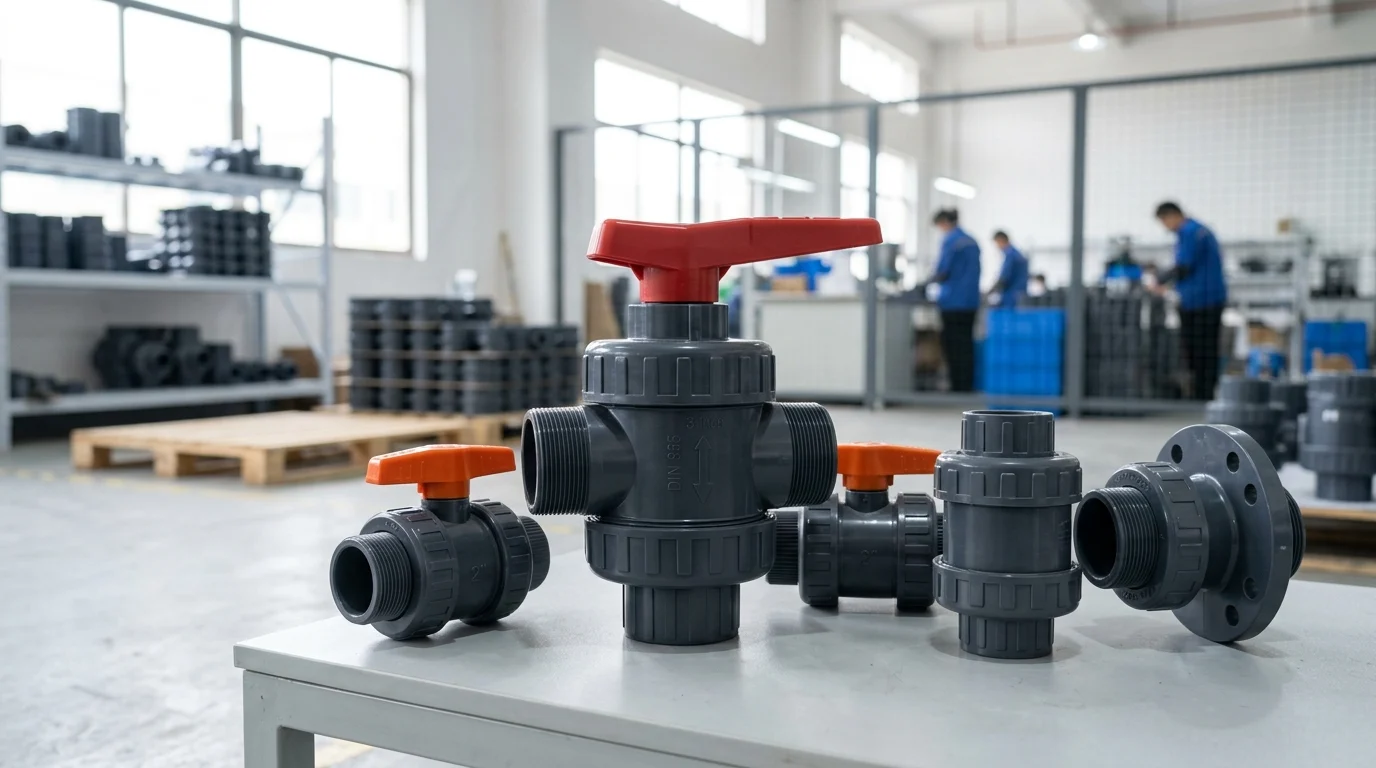
Choosing a reliable plastic valve supplier in China can directly affect chemical plant safety, uptime, and total procurement cost. For buyers working with corrosive media, the key question is not only price, but also material performance, manufacturing consistency, and the supplier’s ability to scale. This article explains why Chinese manufacturers have become important sources for chemical-grade plastic valves, how resin access and production capacity influence lead times and cost, and which applications benefit most from thermoplastic options such as PVDF, PTFE, and related materials. It also sets up the criteria you should use to compare suppliers before moving into specific companies and product capabilities.
Why are China plastic valve suppliers important for chemical processing
The global chemical processing industry relies heavily on advanced fluid control systems, where corrosion resistance and chemical inertness are paramount. Engaging a competent China plastic valve supplier has become a strategic imperative for procurement teams. This shift is driven by the ongoing transition from traditional metallic valves, which are inherently prone to galvanic corrosion and aggressive chemical attack, to highly engineered thermoplastics.
How do manufacturing scale and resin access affect supply?
China's dominance in the chemical supply chain is anchored by its massive domestic production of raw polymer resins. Currently, the region accounts for over 60% of the global production capacity for advanced fluoropolymers like polytetrafluoroethylene (PTFE) and polyvinylidene fluoride (PVDF). This deep vertical integration allows top-tier manufacturers to bypass the volatile international resin commodity markets.
By sourcing raw materials domestically, a leading China plastic valve supplier can typically reduce production costs by 15% to 25% compared to Western counterparts. Furthermore, immediate access to specialized compounds ensures that manufacturers can scale production rapidly without being bottlenecked by international shipping delays or sudden raw material shortages.
Which chemical processing applications benefit most?
The advantages of thermoplastic valves are most pronounced in aggressive chemical environments where alloy valves either fail prematurely or prove cost-prohibitive. Chlor-alkali production facilities, which handle highly corrosive brine and chlorine gas, rely extensively on CPVC and PTFE-lined valves to maintain system integrity and prevent toxic releases.
Similarly, the semiconductor manufacturing sector utilizes PVDF valves for ultra-pure water (UPW) and wet processing applications. For example, high-grade PVDF valves are routinely deployed to manage sulfuric acid (H2SO4) at concentrations up to 98% and temperatures reaching 120°C. In such demanding environments, the chemical inertness of the fluoropolymer prevents both rapid degradation of the valve body and ionic contamination of the process fluid.
What technical criteria should buyers use to compare suppliers
Evaluating technical competencies separates Tier 1 manufacturers from lower-grade assemblers. Precision engineering in thermoplastic molding is critical to maintaining zero-leakage standards in hazardous environments, making rigorous technical comparisons essential during the procurement phase.
Which materials, pressure ratings, and sealing options matter?
Material selection directly dictates the operational limits of the fluid control system. Procurement engineers must match the polymer and elastomer components to the specific chemical concentration, system pressure, and temperature profile. While UPVC suffices for basic water treatment, industrial chemical processing demands higher-performance resins.
| Material | Max Operating Temperature | Typical Pressure Rating | Optimal Chemical Applications |
|---|---|---|---|
| UPVC | 60°C (140°F) | PN16 (232 PSI) | Water treatment, weak acids, bases |
| CPVC | 90°C (194°F) | PN16 (232 PSI) | Hot commercial liquids, chlor-alkali |
| PVDF | 140°C (284°F) | PN10 (150 PSI) | Halogens, strong acids, high-purity |
| PTFE (Lined) | 200°C (392°F) | PN10 to PN16 | Extreme solvents, mixed aggressive chemicals |
Beyond the body material, the sealing architecture is equally critical. A premier China plastic valve supplier will offer extensive elastomer options, including EPDM for alkaline solutions, FKM (Viton) for petroleum and acidic media, and machined PTFE seats for ultimate chemical resistance.
How should valve types be compared?
The geometry and mechanical action of the valve dictate its suitability for isolation versus throttling. True union ball valves are favored for basic on/off isolation due to their minimal pressure drop and ease of inline maintenance. Conversely, diaphragm valves are critical for handling slurries and executing precise throttling, as they isolate the mechanical actuator components from the corrosive media. Engineers must evaluate flow coefficients (Cv) and the breakaway torque required, since excessive torque in plastic valves can lead to premature stem failure or seat deformation.
How should lifecycle cost and maintenance be assessed?
Lifecycle cost analysis must supersede the initial purchase price when dealing with hazardous chemicals. Industrial-grade plastic valves should be evaluated on their Mean Time Between Failures (MTBF) and actuation cycle life. Leading manufacturers subject their automated valve designs to rigorous endurance testing, often certifying pneumatic or electric actuated assemblies for over 100,000 cycles without pressure boundary failure. Maintenance assessments should also factor in the availability of replacement O-rings and diaphragm membranes, ensuring the supplier provides comprehensive spare parts kits to minimize downtime.
How can buyers verify quality and manufacturing capability
Quality assurance in chemical fluid handling is non-negotiable due to the catastrophic environmental and safety risks associated with chemical leaks. Rigorous auditing protocols and capability verifications must be established before onboarding any manufacturing partner.
Which certifications, test records, and traceability controls are essential?
Establishing a baseline of quality begins with recognized international certifications. A qualified supplier must operate under an ISO 9001:2015 certified quality management system and comply with the European Pressure Equipment Directive (PED 2014/68/EU) for pressurized components. Traceability is paramount; buyers should require lot-level tracking and heat numbers for all primary pressure-retaining polymer batches.
Physical validation of pressure integrity separates reliable suppliers from the rest. Standard industry practice requires 100% hydrostatic testing of all completed valve assemblies. For instance, a valve rated for PN10 (10 bar) must undergo hydrostatic shell testing at 1.5 times the maximum working pressure—yielding a test pressure of 15 bar—held for a minimum of 60 seconds with zero visible leakage or pressure decay.
How do OEM, ODM, and catalog suppliers differ?
The Chinese manufacturing landscape comprises pure original equipment manufacturers (OEMs), original design manufacturers (ODMs), and trading companies acting as catalog suppliers. Pure catalog suppliers often source components from multiple sub-tier injection molding shops, leading to inconsistent dimensional tolerances and mixed resin grades. This fragmentation can result in defect rates exceeding 5% in high-stress chemical applications.
Conversely, partnering directly with a Tier 1 OEM or ODM ensures stringent control over the entire production lifecycle, from mold tooling to final assembly. These integrated factories utilize automated injection molding machines with closed-loop process controls, effectively driving down defect rates to below 500 Parts Per Million (PPM), or 0.05%. Direct OEM engagement also facilitates custom tooling modifications for proprietary flow control requirements.
What sourcing and logistics risks should buyers manage
Securing a reliable supply chain requires navigating complex logistical variables and production constraints that extend well beyond the technical specifications of the valve itself. Proactive risk management is essential for maintaining project timelines.
How do MOQ, lead time, packaging, and Incoterms affect sourcing?
Production minimums and lead times are dictated by the complexity of the valve and the rarity of the resin. For standard UPVC or CPVC injection-molded valves, a typical China plastic valve supplier will require a Minimum Order Quantity (MOQ) of 100 to 500 units per size, offering lead times of 15 to 20 days. However, specialized PVDF diaphragm valves or custom-actuated assemblies may require MOQs of just 50 units but extend lead times to 45 or 60 days due to specialized machining and testing requirements.
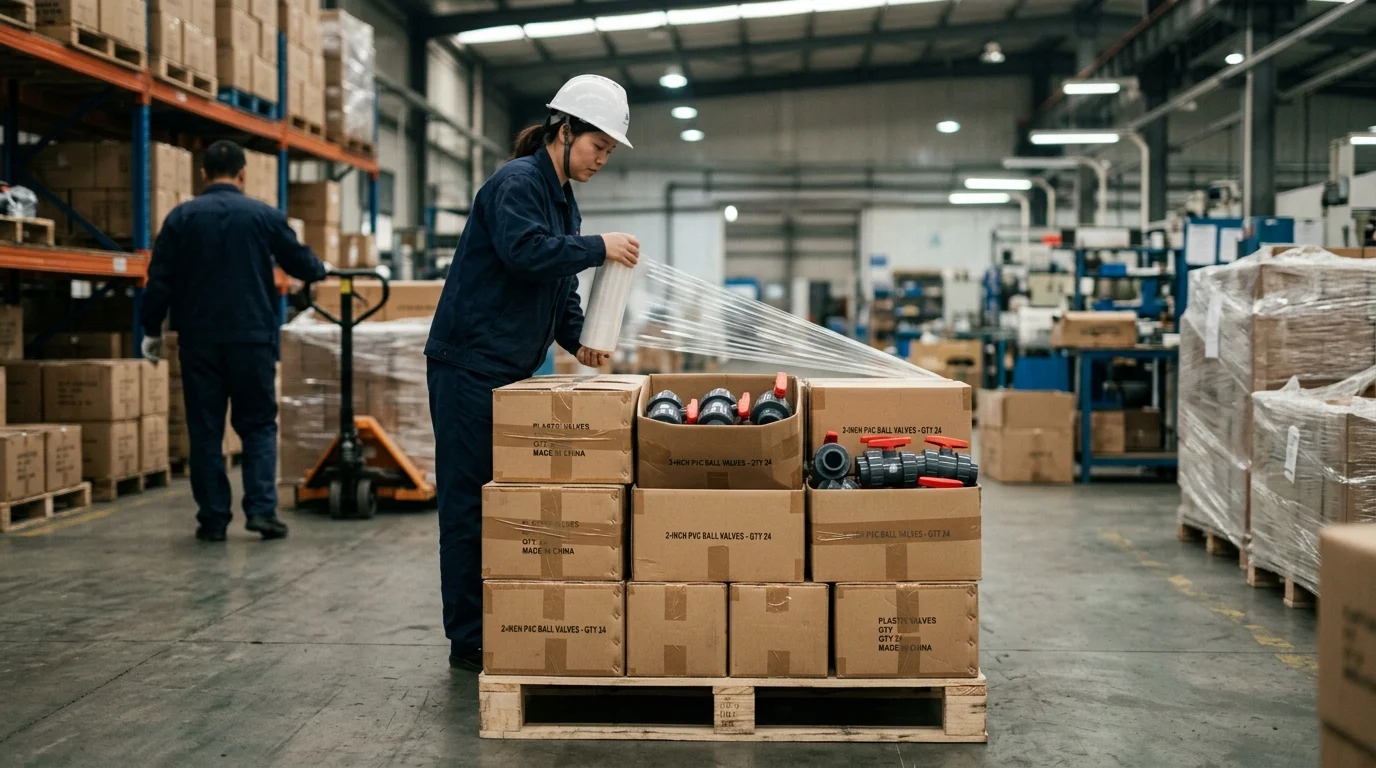
Logistics planning must also account for Incoterms and robust export packaging. Purchasing under FOB (Free On Board) terms from major ports like Ningbo or Shanghai provides buyers with better control over freight forwarding compared to CIF (Cost, Insurance, and Freight). Furthermore, valves must be packaged in ISPM 15 certified wooden crates with adequate dunnage to survive 30 to 45 days of ocean transit without suffering impact damage to fragile flange faces or actuator housings.
What supplier qualification and sampling steps reduce risk?
Risk mitigation during supplier onboarding requires a structured sampling and qualification process. Procurement teams should mandate First Article Inspection (FAI) reports alongside the delivery of physical samples. These samples must undergo destructive testing at the buyer's facility, including burst pressure testing and maximum torque validation, before mass production is authorized. This empirical validation ensures the supplier's mold tooling and resin injection parameters match the required engineering specifications.
Which decision framework helps shortlist suppliers
Procurement teams require structured, data-driven methodologies to evaluate potential partners objectively, moving beyond basic price comparisons to comprehensively assess total vendor capability and long-term viability.
What scorecard should procurement teams use?
A weighted supplier scorecard is the most effective tool for shortlisting candidates. This framework standardizes the evaluation process across multiple technical and commercial dimensions, ensuring that critical safety and quality metrics are not overshadowed by aggressive pricing strategies.
| Evaluation Category | Weight | Key Metrics & Targets |
|---|---|---|
| Quality & Certifications | 35% | ISO 9001, PED compliance, <500 PPM defect rate |
| Technical Capability | 25% | In-house mold design, automated testing, MTBF data |
| Commercial Terms | 20% | Unit cost competitiveness, MOQs (e.g., <200 units), Payment terms |
| Supply Chain & Logistics | 20% | Lead times (<30 days standard), proximity to major ports (FOB Ningbo/Shanghai) |
How should buyers balance price, customization, and assurance?
Balancing upfront capital expenditure with long-term reliability is the final hurdle in supplier selection. Total Cost of Ownership (TCO) analysis must be applied to all critical fluid control components. While a Tier 3 supplier might offer a 30% lower upfront unit price on a PVDF butterfly valve, the TCO over a five-year operational lifecycle is often 40% to 60% higher.
This cost inflation stems from premature elastomer degradation, frequent actuator recalibration, and the devastating financial impact of unscheduled downtime in a chemical plant. By utilizing the scorecard and focusing on TCO, buyers can confidently identify a China plastic valve supplier that delivers the optimal blend of custom engineering, certified quality assurance, and sustainable economic value.
Key Takeaways
- The most important conclusions and rationale for China plastic valve supplier
- Specs, compliance, and risk checks worth validating before you commit
- Practical next steps and caveats readers can apply immediately
Frequently Asked Questions
What materials should I prioritize for chemical service valves?
Match resin to media and temperature: UPVC for mild chemicals, CPVC for hotter corrosive service, PVDF for strong acids and high purity, and PTFE-lined valves for the most aggressive solvents.
How can I compare a China plastic valve supplier beyond price?
Check material traceability, pressure ratings, seal options, molding quality, export experience, and response speed for technical quotes. Reliable suppliers should provide clear specs and application guidance.
Which valve types are best for chemical processing lines?
Use true union ball valves for shutoff, diaphragm valves for corrosive fluids or slurries, and check valves to prevent backflow. Choose based on isolation, throttling, and maintenance needs.
Why do buyers choose Chinese plastic valve suppliers for chemical projects?
Top suppliers benefit from large-scale resin access, competitive pricing, and faster production. This helps buyers secure corrosion-resistant valves with shorter lead times for industrial projects.
Can Pntek support integrated piping and valve sourcing?
Yes. Pntek supplies valves, pipes, and fittings across UPVC, CPVC, PPR, HDPE, and related systems, which can simplify procurement and improve compatibility across water and industrial piping projects.


