
Introduction
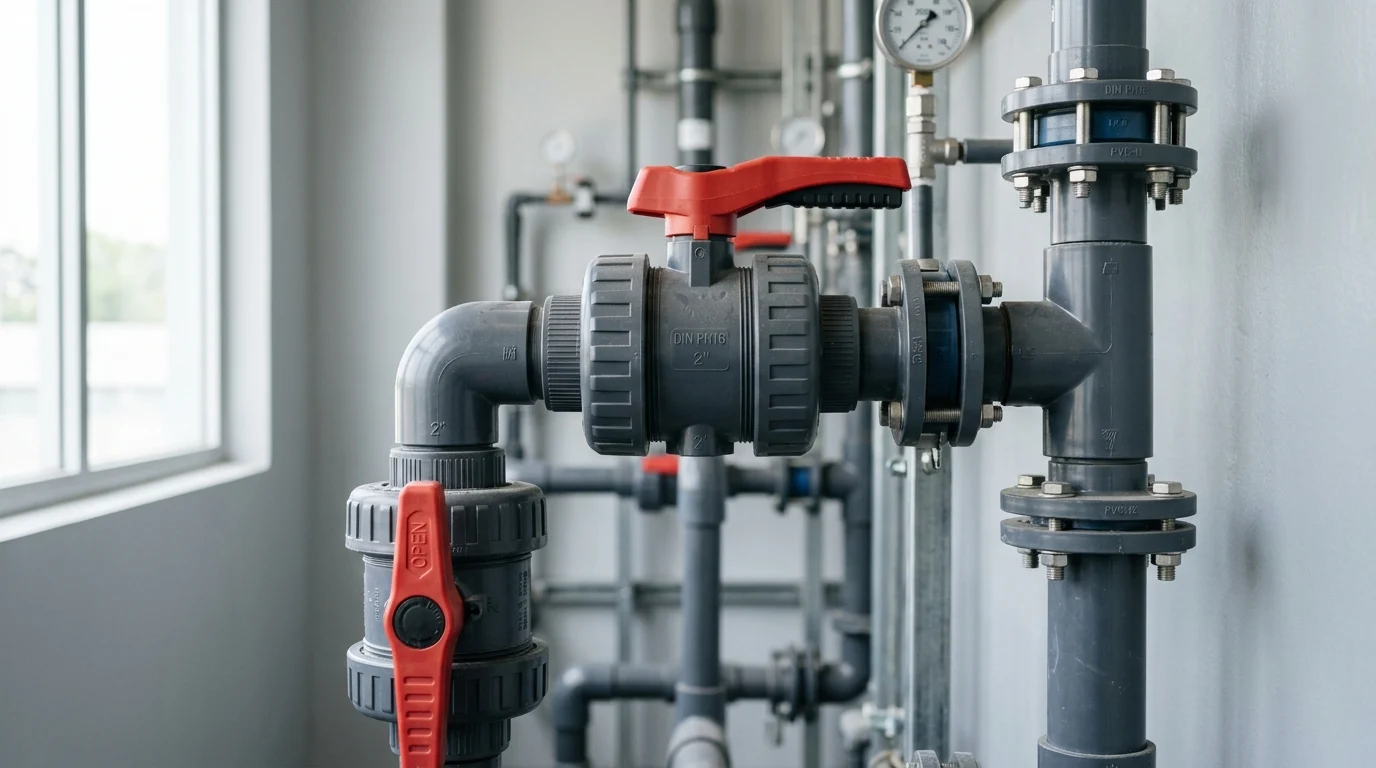
By 2026, industrial plastic valves are no longer a niche alternative to metal components; they are a practical choice for corrosive, high-purity, and cost-sensitive fluid systems. This article explains where these valves are used, why thermoplastics and fluoropolymers are gaining ground in sectors like chemical processing, water treatment, and semiconductor manufacturing, and how material selection affects reliability, maintenance, and total installed cost. Readers will also get a clear view of the application limits, performance tradeoffs, and specification factors that matter most when choosing plastic valves for modern industrial operations.
Why Industrial Plastic Valves Matter in 2026
The industrial landscape of 2026 demands fluid handling systems that can withstand increasingly aggressive chemical environments while minimizing operational downtime. As chemical synthesis, semiconductor manufacturing, and advanced water treatment facilities scale their operations, industrial plastic valves have transitioned from a lightweight alternative to the primary specification for critical infrastructure. Thermoplastic valves now routinely replace high-alloy metals, offering a compelling combination of chemical inertness, reduced structural load, and favorable lifecycle economics. Weighing up to 60% less than equivalent carbon steel components, these valves significantly reduce pipe strain and structural support requirements.
Process reliability, corrosion resistance, and total installed cost
Process reliability in harsh environments hinges on the elimination of galvanic corrosion, a persistent failure mode in metallic piping systems. Industrial plastic valves inherently resist oxidation and degradation from acidic or alkaline media, ensuring consistent flow control without the risk of particulate shedding. This inertness directly influences the total installed cost (TIC). While the unit price of advanced fluoropolymers may rival certain metals, the TIC of plastic valve networks is often 30% to 40% lower due to simplified joining methods like solvent cementing, socket fusion, or electrofusion. These methods eliminate the need for specialized welding labor and heavy lifting equipment.
Furthermore, operational expenditure (OPEX) over a 10- to 15-year lifecycle is drastically reduced. Maintenance teams spend less time treating exterior rust or replacing seized metallic stems, allowing facilities to maintain continuous uptime and predictable maintenance schedules.
Industries driving demand growth
Several high-growth sectors are accelerating the adoption of advanced thermoplastic valves. The semiconductor industry, requiring ultra-pure water (UPW) systems, relies heavily on high-purity PVDF and PP valves to maintain contamination levels below 10 parts per trillion (ppt). Any metallic leaching in these environments can compromise microchip yields, making plastics the only viable choice.
Similarly, the booming lithium-ion battery manufacturing sector utilizes aggressive solvents and sulfuric acid in its extraction and refining processes. Here, CPVC and specialized engineered plastics provide the necessary chemical resistance. Municipal and industrial desalination plants also drive volume, specifying large-diameter PVC butterfly valves to handle corrosive brine streams at high throughput volumes.
Performance Factors and Material Selection
Selecting the correct polymer and valve architecture is the most critical phase of fluid system design. By 2026, engineers have access to a highly refined spectrum of thermoplastic resins, each formulated to handle specific pressure-temperature profiles and chemical interactions. Matching the polymer chain to the process media dictates the functional lifespan of the valve.
Comparing PVC, CPVC, PP, and PVDF
Polyvinyl Chloride (PVC) remains the industry standard for general utility, handling water and mild chemicals at temperatures up to 140°F (60°C). Chlorinated PVC (CPVC) extends this thermal limit to 200°F (93°C) and offers enhanced resistance to corrosive acids and bases, making it a staple in chemical processing. Polypropylene (PP) provides excellent resistance to organic solvents and is frequently specified in pharmaceutical and food-grade applications, operating effectively up to 180°F (82°C).
For the most extreme environments, Polyvinylidene Fluoride (PVDF) is the premium specification. PVDF withstands highly aggressive acids, halogens, and ultra-pure applications at temperatures reaching 280°F (138°C). While PVDF commands a higher capital investment, its uncompromised durability in severe chemical service prevents catastrophic failures and costly unplanned shutdowns.
Valve types, seal materials, connections, and actuation
Valve architecture must align with the flow characteristics and isolation requirements of the system. True union ball valves are ubiquitous for on/off isolation in lines up to 4 inches, allowing for inline maintenance without pipe section removal. For larger diameters, thermoplastic butterfly valves provide a compact footprint and excellent throttling capabilities. Diaphragm valves are preferred for slurries and particulate-laden media, as the elastomeric diaphragm isolates the mechanical components from the fluid.
Seal material selection is equally vital. Ethylene Propylene Diene Monomer (EPDM) is favored for water, alkalis, and dilute acids, whereas Fluorocarbon (FKM/Viton) is necessary for oils, hydrocarbons, and strong acids. Polytetrafluoroethylene (PTFE) seats provide nearly universal chemical resistance. In automated systems, pneumatic actuators requiring a standard 80 psi air supply remain common, though electric actuators with digital positioning are gaining market share for precise modulating control.
Key material comparison criteria
When comparing materials, engineers must evaluate the interplay between temperature, pressure rating, and chemical concentration. The following table outlines the foundational criteria for selecting industrial plastic valve materials:
| Material | Max Operating Temp | Primary Strengths | Relative Cost Factor |
|---|---|---|---|
| PVC | 140°F (60°C) | Broad utility, water treatment, low cost | 1.0x |
| CPVC | 200°F (93°C) | Acid resistance, higher temperature handling | 1.8x – 2.5x |
| PP | 180°F (82°C) | Solvent resistance, high purity | 2.0x – 3.0x |
| PVDF | 280°F (138°C) | Extreme chemicals, ozone, ultra-pure water | 5.0x – 8.0x |
Using derating curves is mandatory; a valve rated for 150 psi at 73°F will have a significantly lower pressure threshold as the fluid temperature approaches the material's maximum limit. Ignoring this thermodynamic reality is a leading cause of premature material fatigue.
Compliance, Quality, and Supplier Evaluation
In highly regulated industries, the physical valve is only as valuable as the documentation and quality assurance backing it. Evaluating suppliers requires a rigorous audit of their compliance frameworks, testing methodologies, and supply chain resilience. Facilities cannot risk regulatory fines or process contamination stemming from non-compliant fluid handling components.
Relevant standards and certifications
Industrial plastic valves must adhere to an overlapping network of international standards. ASTM D1784 dictates the rigid PVC and CPVC compounds used in manufacturing, ensuring material consistency and strength. For potable water applications, NSF/ANSI 61 certification is legally mandated in North America to guarantee that no harmful toxins leach into the drinking water supply.
In the biopharmaceutical and food processing sectors, FDA CFR 21 compliance and USP Class VI certifications are non-negotiable for wetted components, particularly elastomers and diaphragms. Furthermore, ISO 16138 establishes the design, testing, and performance parameters specifically for industrial thermoplastic valves, ensuring uniform face-to-face dimensions and pressure-bearing capabilities.
Quality control, traceability, and testing
Top-tier manufacturers employ automated quality control systems to minimize human error. Hydrostatic shell testing is a standard benchmark, where valves are subjected to 1.5 times their maximum rated working pressure to verify structural integrity and seal performance before leaving the factory. Advanced optical sorting and dimensional laser scanning are now routinely used to catch molding defects.
Traceability is another critical pillar of quality assurance. Industrial valves must feature molded-in batch codes or laser-etched QR codes linked to material test reports (MTRs). This allows plant operators to trace a failed component back to the exact resin lot and production shift. Suppliers operating under ISO 9001:2015 frameworks typically target a defect rate of less than 0.1%, ensuring high reliability across bulk procurements.
Procurement comparison points
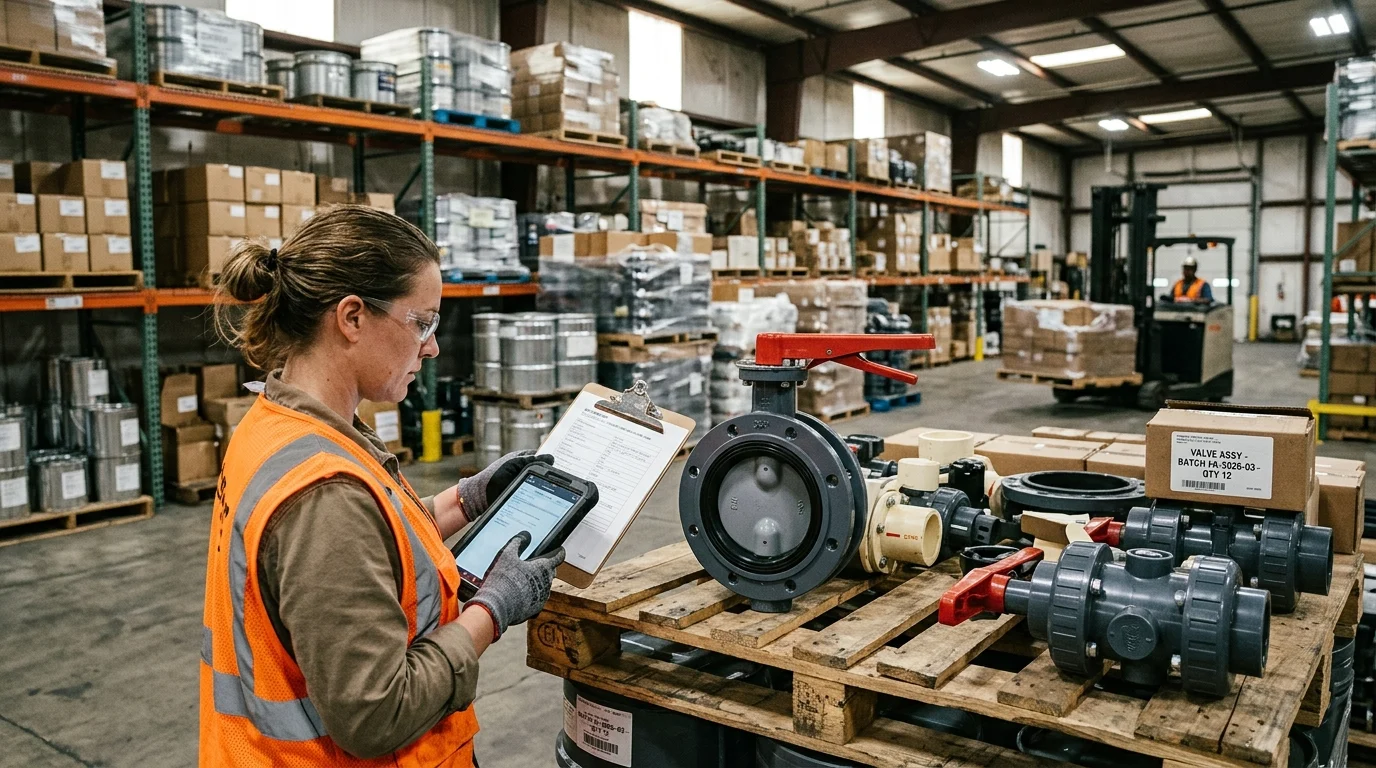
Procurement teams must balance unit cost against supplier reliability and logistical performance. Minimum Order Quantities (MOQs) and lead times are primary comparison points. While standard PVC ball valves might be available off-the-shelf, specialty PVDF diaphragm valves with PTFE diaphragms can experience lead times of 10 to 12 weeks, requiring proactive project forecasting.
Evaluating a supplier's domestic inventory footprint, technical support capabilities, and warranty terms are essential steps. A supplier offering comprehensive CAD libraries and BIM (Building Information Modeling) objects provides significant added value to engineering contractors during the facility design phase, directly reducing engineering labor costs.
A Practical Valve Selection Process
A robust valve selection process minimizes premature failures and optimizes system hydraulics. Engineers must transition from theoretical material properties to practical, application-specific sizing and specification protocols. A systematic approach ensures that the chosen valve operates safely within its design envelope while meeting the facility's economic targets.
Step-by-step sizing and application review
The sizing process begins with calculating the required flow coefficient (Cv), which represents the volume of water in gallons per minute that will flow through the valve with a 1 psi pressure drop. Oversizing a valve leads to poor throttling control and unnecessary capital expense, while undersizing causes excessive pressure drops and fluid velocities.
Engineers must target a fluid velocity between 5 and 8 feet per second (ft/s). Velocities exceeding this range exponentially increase the risk of water hammer—a pressure surge that can easily shatter rigid thermoplastic piping networks. Surge pressure calculations must be performed to ensure that the combined static and dynamic pressures do not exceed the valve's pressure rating at the specific operating temperature.
Balancing cost, maintenance, and service life
Balancing the initial Capital Expenditure (CAPEX) against ongoing Operational Expenditure (OPEX) is the core of lifecycle engineering. Specifying a $50 PVC valve for a borderline high-temperature application might save money upfront, but the recurring cost of replacing deformed valves and the associated downtime will quickly eclipse the initial savings.
Conversely, defaulting to a $500 PVDF valve for a benign cooling water line is an inefficient use of project funds. Maintenance requirements also play a role; specifying true union connections allows maintenance personnel to remove the valve body for seal replacement in minutes, vastly reducing labor costs and system downtime compared to flanged or permanently cemented alternatives.
Common specification mistakes to avoid
One of the most frequent specification errors is ignoring the coefficient of linear thermal expansion. Thermoplastics expand and contract 5 to 10 times more than metals. For example, PP has an expansion rate of approximately 8.5 x 10^-5 in/in/°F. Failing to specify expansion loops or sliding guides near the valve can place immense stress on the valve flanges, leading to structural cracking.
Another common pitfall is mismatching the elastomer to the media. The table below highlights common seal misapplications:
| Seal Material | Ideal Application | Common Mistake / Incompatibility |
|---|---|---|
| EPDM | Water, dilute acids, alkalis | Fails rapidly in petroleum oils and hydrocarbons |
| FKM (Viton) | Oils, strong acids, fuels | Swells and degrades in steam or hot amines |
| PTFE | Aggressive solvents, extreme chemicals | Cold flow issues; requires higher actuation torque |
Finally, engineers frequently undersize pneumatic actuators for plastic valves. Thermoplastic valves, particularly ball valves with PTFE seats, experience higher breakaway torques after prolonged periods in the closed position, requiring a safety factor of at least 30% in actuator torque sizing to prevent stalling.
Planning Priorities for Future Projects
As industrial facilities map out their infrastructure upgrades for the latter half of the decade, fluid control strategies must align with broader corporate objectives. The integration of intelligent systems and the demand for environmentally responsible manufacturing are reshaping how plastic valves are sourced, installed, and managed.
Sustainability, automation, and supply chain considerations
Sustainability mandates are driving a preference for thermoplastics due to their lower carbon footprint during manufacturing compared to the energy-intensive casting and forging of steel alloys. Furthermore, at the end of their service life, un-contaminated PP and PVC valves can be mechanically recycled into secondary industrial products, supporting circular economy initiatives.
Automation is simultaneously advancing. Smart actuators equipped with IO-Link or AS-Interface protocols are being mounted on plastic valves, providing real-time telemetry on cycle counts, torque variations, and travel times. This data enables predictive maintenance, allowing operators to replace worn elastomers before a failure occurs. Transitioning to highly efficient localized electro-pneumatic positioners can also reduce compressed air energy consumption by up to 15% across a large processing plant.
Final decision criteria for stakeholders
For final stakeholders, the decision criteria culminate in standardizing the plant's fluid handling architecture. By standardizing on a specific manufacturer's valve platform, facilities can reduce their spare parts inventory by up to 20%, simplifying maintenance training and procurement logistics.
Ultimately, the successful deployment of industrial plastic valves relies on a holistic view of the project. Stakeholders must weigh thermal and chemical parameters, embrace automated diagnostics, and strictly enforce supplier quality requirements to ensure decades of leak-free performance in the demanding industrial environments of 2026.
Key Takeaways
- The most important conclusions and rationale for industrial plastic valves 2026
- Specs, compliance, and risk checks worth validating before you commit
- Practical next steps and caveats readers can apply immediately
Frequently Asked Questions
Which plastic valve material is best for water supply and mild chemical lines in 2026?
PVC or UPVC is usually the most cost-effective choice for water supply and mild chemicals up to about 60°C. For hotter or more corrosive service, move to CPVC.
When should I choose CPVC instead of PVC for industrial plastic valves?
Choose CPVC when your system handles higher temperatures, stronger acids or bases, or more demanding chemical processing. It offers better thermal and chemical resistance than standard PVC.
What valve types does Pntek commonly supply for irrigation and water transport systems?
Pntek commonly offers ball, butterfly, check, gate, foot, and union valves, along with matching pipes and fittings. Ball valves suit isolation, while butterfly valves work well on larger flow lines.
How do I select the right seal material for a plastic valve?
Use EPDM for water, alkalis, and dilute acids; use FKM for oils, hydrocarbons, and stronger chemicals. If compatibility is uncertain, request a media and temperature check before ordering.
Why are industrial buyers replacing metal valves with plastic valves in 2026?
Plastic valves resist corrosion, reduce system weight, and often lower installation and maintenance costs. They are especially practical for water treatment, underground piping, irrigation, and chemical service.


