
Introduction
Outdoor service can shorten valve life dramatically when the plastic is not matched to UV exposure, temperature swings, moisture, and airborne chemicals. This article compares the main plastic valve materials used outside, focusing on how they resist weathering, retain mechanical strength, and affect maintenance intervals and total lifecycle cost. You will see where common options such as PVC, CPVC, PP, and PVDF tend to perform well or fall short, and which operating conditions matter most before selecting one. With that context, the discussion can move from general material traits to practical selection criteria for exposed piping systems.
Why outdoor plastic valve materials matter for lifecycle cost
Selecting the optimal outdoor plastic valve materials is a critical engineering decision that directly impacts capital expenditure and long-term facility maintenance. Industrial piping systems exposed to the elements face a unique set of challenges compared to indoor applications, requiring polymers capable of withstanding complex environmental interactions.
When valves fail in exposed environments due to improper material selection, the financial consequences are severe. The cost of unplanned downtime, environmental cleanup, and emergency replacement labor frequently exceeds the initial component cost by a factor of 10 to 50. Therefore, understanding how different plastics degrade and perform outdoors is fundamental to optimizing lifecycle costs.
Environmental stress factors
Outdoor environments introduce multiple degradation vectors that continuously attack polymer chains. The most pervasive is ultraviolet (UV) radiation, which causes photo-oxidation in susceptible plastics. This chemical reaction leads to surface chalking, embrittlement, and a significant reduction in structural integrity.
Without proper UV stabilization or protective shielding, standard commercial plastics can experience a 30% to 50% reduction in tensile strength and impact resistance over a five-year exposure period. Additionally, freeze-thaw cycles and ambient chemical exposure—such as salt spray in coastal regions or corrosive airborne particulates in industrial zones—further accelerate material fatigue.
Critical operating conditions to define
Engineers must define the precise operating envelope of the system, balancing internal fluid dynamics with external environmental extremes. The relationship between internal fluid pressure and ambient temperature is paramount, as thermoplastic pressure ratings are inversely proportional to temperature.
The pressure derating factor is a critical calculation. For example, a standard PVC ball valve rated for 150 psi at 73°F (23°C) will see its structural capacity drop precipitously as temperatures rise; it may only safely sustain 40 psi at 140°F (60°C). Specifiers must account for both the internal fluid temperature and the external heat absorbed from direct solar radiation to prevent unexpected catastrophic ruptures.
Best outdoor plastic valve materials by environment
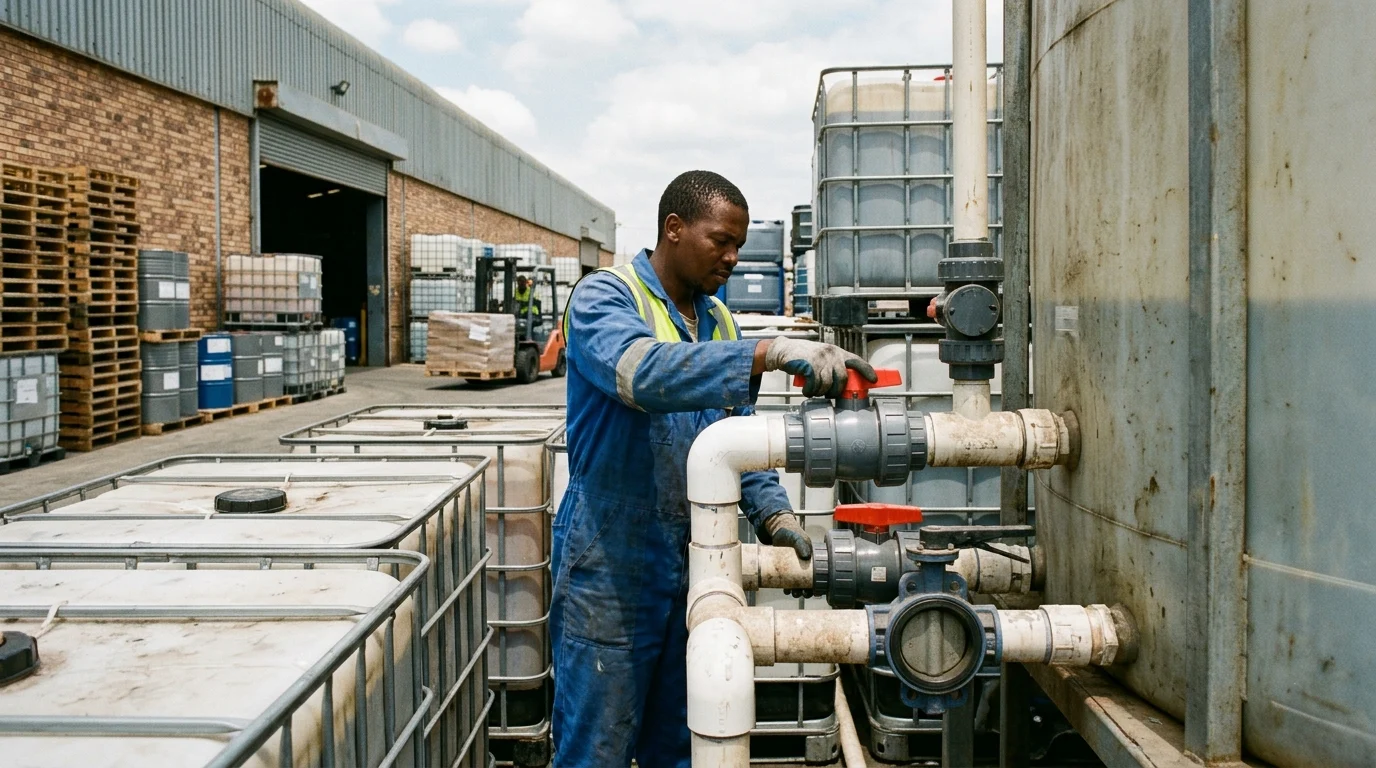
Matching a polymer's inherent physical properties to the specific outdoor microclimate is essential for long-term reliability. The chemical composition of the valve body dictates its thermal limits, UV resistance, and overall durability in exposed conditions.
PVC, CPVC, PP, PVDF, and ABS compared
Different polymers offer distinct advantages and limitations when deployed outdoors. Polyvinyl chloride (PVC) is highly cost-effective and chemically resistant, but it is limited to a maximum operating temperature of 140°F (60°C) and requires external shielding or painting to prevent UV degradation. Chlorinated polyvinyl chloride (CPVC) extends the thermal range to 200°F (93°C) and offers slightly better weatherability, though it remains vulnerable to prolonged sunlight.
Polypropylene (PP) operates effectively up to 180°F (82°C) and handles highly corrosive chemicals well, but natural PP degrades rapidly outdoors unless heavily modified. Polyvinylidene fluoride (PVDF) is the premium choice for harsh environments; it boasts a maximum operating temperature of 280°F (138°C), exceptional chemical purity, and inherent resistance to UV radiation without the need for additives. Acrylonitrile butadiene styrene (ABS) is frequently specified for exceptionally cold climates, retaining high impact strength at temperatures down to -40°F (-40°C).
Material trade-off summary
The following table summarizes the primary trade-offs among common outdoor plastic valve materials, providing a baseline for material selection based on thermal limits and initial capital outlay.
| Material | Max Operating Temp | Inherent UV Resistance | Relative Cost Multiplier |
|---|---|---|---|
| PVC | 140°F (60°C) | Poor (Requires Coating) | 1.0x |
| ABS | 140°F (60°C) | Moderate | 1.1x – 1.5x |
| PP | 180°F (82°C) | Poor (Requires Additives) | 1.2x – 1.8x |
| CPVC | 200°F (93°C) | Moderate | 1.5x – 2.0x |
| PVDF | 280°F (138°C) | Excellent | 5.0x – 10.0x |
Effects of additives, seals, and valve design
Base polymers rarely operate in isolation; their outdoor performance is heavily influenced by compounding additives. The introduction of carbon black (typically 2% to 3% by weight) or titanium dioxide acts as a highly effective UV screen, absorbing or reflecting damaging wavelengths before they can break polymer bonds. This modification is practically mandatory for outdoor polypropylene installations.
Furthermore, the valve design and internal seals must align with the environmental profile. Elastomeric seals, such as O-rings and diaphragms, are equally vulnerable to weathering. EPDM offers excellent resistance to ozone and UV light, making it ideal for standard water applications. However, if the system transports hydrocarbons or operates at elevated temperatures, FKM (fluoroelastomer) seals become necessary, despite being more sensitive to certain low-temperature extremes.
Specifications, testing, and compliance checks
Procurement and engineering teams must validate material claims through recognized testing standards. Rigorous certification protocols ensure that outdoor plastic valve materials will survive their intended design life, which typically ranges from 10 to 25 years in municipal and industrial applications.
Standards and test data to request
To guarantee longevity, specifiers should request compliance data against industry benchmarks. ASTM D1784 governs the cell classification for PVC and CPVC compounds, ensuring minimum thresholds for tensile strength and modulus of elasticity. For polyolefins, ASTM D4101 (PP) and ASTM D3222 (PVDF) provide baseline material specifications.
For outdoor viability, accelerated weathering data is non-negotiable. Manufacturers should provide test results derived from ASTM G154 or ASTM G155 testing, which utilize fluorescent UV lamps or xenon arc exposure. A robust outdoor valve material should demonstrate high retention of tensile strength and impact resistance after 1,000 to 2,000 hours of continuous accelerated exposure.
Connections, actuators, and seal compatibility
Mechanical connections and automated components require as much scrutiny as the valve body itself. Thermal expansion is a critical metric in outdoor piping networks; for instance, PVC expands at a rate of approximately 3.0 x 10^-5 in/in/°F. Over a 100-foot run subject to a 50°F temperature swing, this results in nearly 2 inches of linear expansion. Valves with flanged or socket fusion connections must be integrated with expansion loops to prevent stress fracturing at the joints.
When specifying automated valves, actuator enclosures must be rated for the environment. Actuators mounted on outdoor valves should feature enclosures certified to NEMA 4X or IP67 standards to prevent water and dust ingress. Compatibility between the actuator torque output and the valve stem is also crucial, as plastic valves can experience increased operating torque when exposed to near-freezing ambient temperatures.
Evaluating total cost, sourcing, and service
Evaluating outdoor plastic valve materials requires a comprehensive Total Cost of Ownership (TCO) analysis. While procurement teams may be tempted by low initial unit costs, the true financial impact of a valve spans its entire operational lifecycle, including supply chain logistics and maintenance requirements.
Cost drivers beyond purchase price
The initial procurement price represents only a fraction of the total lifecycle cost. Installation labor, routine maintenance, and replacement frequency drive the bulk of long-term expenses. Choosing a cheaper, non-UV-stabilized material often guarantees premature failure, necessitating costly system shutdowns.
A lifecycle cost comparison highlights these differences over a standard operational timeframe:
| Cost Component | Standard PVC (Unprotected) | UV-Stabilized PP | Premium PVDF |
|---|---|---|---|
| Unit Price (2-inch Valve) | $50 | $75 | $450 |
| 10-Year Replacement Cycles | 2 | 0 | 0 |
| Replacement Labor (10 Yrs) | $300 | $0 | $0 |
| Protective Maintenance/Paint | $100 | $0 | $0 |
| 10-Year TCO | $450 | $75 | $450 |
This analysis demonstrates that while PVDF carries a steep initial premium of 5x to 10x over standard PVC, its zero-maintenance profile in harsh sunlight equalizes its TCO over a 10-year horizon compared to frequently replaced standard plastics. UV-stabilized PP often emerges as the most cost-effective middle ground for compatible chemical applications.
Supplier quality, availability, and lead times
Supply chain variables directly impact project timelines and installation schedules. Standard PVC and ABS valves are typically stocked in high volumes through global distribution networks, boasting lead times of one to two weeks and minimum order quantities (MOQs) as low as a single unit.
Conversely, sourcing specialty materials requires strategic planning. High-purity PVDF or custom-actuated CPVC valves may require 8 to 12 weeks of lead time, with manufacturers occasionally enforcing MOQs of 50 to 100 units for non-standard configurations. Furthermore, industrial buyers must audit supplier quality management systems; for critical process components, acceptable defect rates should be strictly maintained below 0.1% (1,000 PPM) to ensure field reliability.
Decision framework for selecting the right valve
Implementing a rigorous decision framework ensures that the selected outdoor plastic valve materials will perform reliably under all anticipated conditions. A structured approach prevents premature failures, optimizes capital allocation, and minimizes maintenance overhead.
Step-by-step selection process
The selection process should follow a strict hierarchy of operating parameters. First, define the internal fluid's maximum working pressure, peak temperature, and exact chemical composition. Second, map the external environmental extremes, documenting peak summer solar radiation, ambient high/low temperatures, and potential exposure to external corrosives.
Third, cross-reference these parameters against polymer material compatibility charts and derating curves. Finally, apply a safety factor of at least 1.5x to the pressure rating at the maximum expected ambient temperature. This buffer is critical to prevent catastrophic failure during unexpected pressure surges or unprecedented heatwaves.
Common material selection mistakes
Premature valve failures in outdoor applications typically stem from a few recurring engineering oversights. A primary error is failing to account for solar heat gain. Direct sunlight can elevate the surface temperature of dark-colored valves or pipes by up to 30°F (17°C) above the ambient air temperature, easily pushing standard PVC past its thermal limit and causing deformation.
Another frequent mistake is neglecting thermal expansion in the piping runs adjacent to the valve. If rigid plastic piping expands without proper anchoring or expansion joints, it imparts severe bending moments onto the valve body, frequently causing the component to fracture at the union threads or flanges. Lastly, specifiers often overlook seal degradation, mistakenly deploying standard EPDM seals in systems exposed to trace hydrocarbons, leading to rapid swelling and valve seizure.
Key Takeaways
- The most important conclusions and rationale for outdoor plastic valve materials
- Specs, compliance, and risk checks worth validating before you commit
- Practical next steps and caveats readers can apply immediately
Frequently Asked Questions
Which plastic valve material performs best outdoors overall?
PVDF performs best overall outdoors because it combines strong UV resistance, high temperature capacity, and excellent chemical resistance. It costs more, so it is usually chosen for harsh industrial or long-life applications.
Is PVC suitable for outdoor valve installations?
Yes, PVC can work outdoors for cost-sensitive systems, but it needs UV protection such as paint, shielding, or stabilized compounds. It is best for moderate temperatures and non-extreme exposure.
When should I choose CPVC instead of PVC for outdoor use?
Choose CPVC when outdoor systems face higher fluid temperatures, up to about 200°F, or need better thermal safety margin. It still benefits from sunlight protection in long-term exposed service.
What is the best plastic valve material for cold outdoor climates?
ABS is often preferred for very cold outdoor conditions because it keeps good impact strength down to about -40°F. Verify UV exposure and pressure requirements before specifying it.
Can Pntek help match outdoor valves to irrigation or water supply projects?
Yes, Pntek supplies UPVC, CPVC, PPR, HDPE, and multiple valve types for irrigation and water systems. Share your temperature, pressure, and exposure conditions to get a practical material recommendation.


