
Introduction
For commercial construction teams managing large fixture counts, wholesale plastic water taps can affect far more than unit price. Material choice influences freight, installation speed, corrosion resistance, and replacement planning across temporary facilities, modular buildings, service areas, and budget-sensitive developments. This article explains where polymer taps make practical sense, how bulk purchasing changes cost calculations, and which performance factors matter most when specifying products at scale. By the end, readers will have a clearer framework for evaluating durability, application fit, and procurement efficiency before moving into detailed product and project considerations.
Why wholesale plastic water taps matter in commercial construction
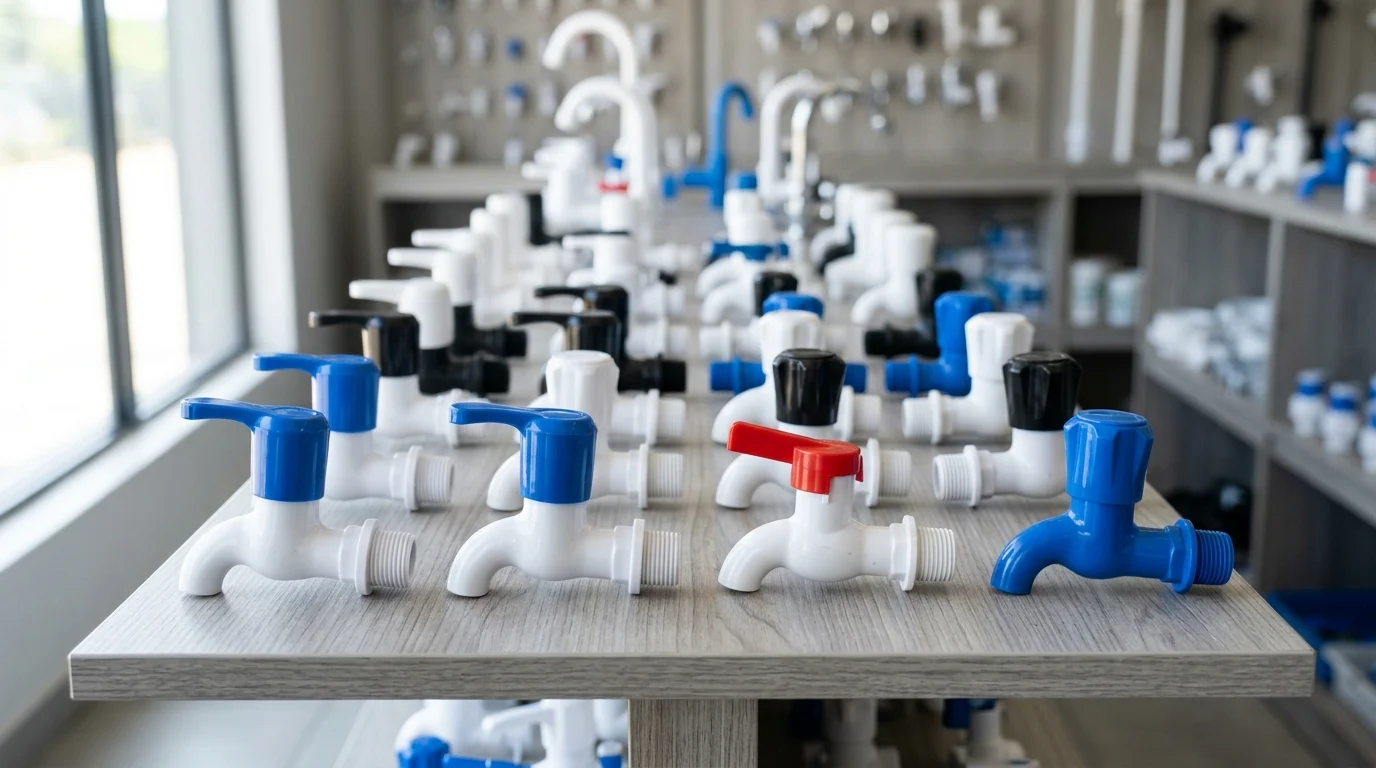
The specification of wholesale plastic water taps has become a strategic procurement decision in modern commercial construction. As developers scale operations across modular builds, temporary facilities, and high-density commercial spaces, relying on engineered polymers over traditional metals offers distinct logistical advantages.
Procuring these fixtures in bulk—often in quantities exceeding 500 to 1,000 units per project phase—requires a rigorous understanding of material capabilities and supply chain dynamics to ensure viability at scale.
Impact on project budgets
The primary driver for adopting polymer-based fixtures is the profound impact on project budgets. Traditional commercial-grade brass or stainless steel taps can cost upwards of $15 to $30 per unit at wholesale volumes. In contrast, high-quality engineered plastic taps typically range from $1.50 to $4.00 per unit depending on the internal cartridge mechanism.
For a commercial development requiring 2,000 points of use, this represents a capital expenditure reduction of over $25,000 on fixtures alone. Furthermore, polymer fixtures are approximately 80% lighter than their metallic counterparts. This massive reduction in weight directly compresses freight costs, minimizes the required structural support for temporary plumbing manifolds, and reduces physical fatigue on installation crews, thereby accelerating project timelines and lowering billable labor hours.
Best-fit commercial applications
While not suited for high-end luxury hospitality, wholesale plastic water taps excel in specific commercial environments. They have become the standard for modular construction, agricultural facilities, public parks, and temporary workforce housing. In these high-traffic, utility-focused applications, the inherent resistance of plastics to theft—lacking the scrap metal value of brass or copper—provides a highly valued security benefit.
Additionally, industrial environments that utilize highly chlorinated water or reverse osmosis (RO) systems frequently specify plastic taps. Metallic fixtures are prone to rapid degradation and heavy metal ion leaching when exposed to aggressive RO water, whereas engineered polymers maintain structural and chemical integrity over extended operational cycles.
How to compare specifications for wholesale plastic water taps
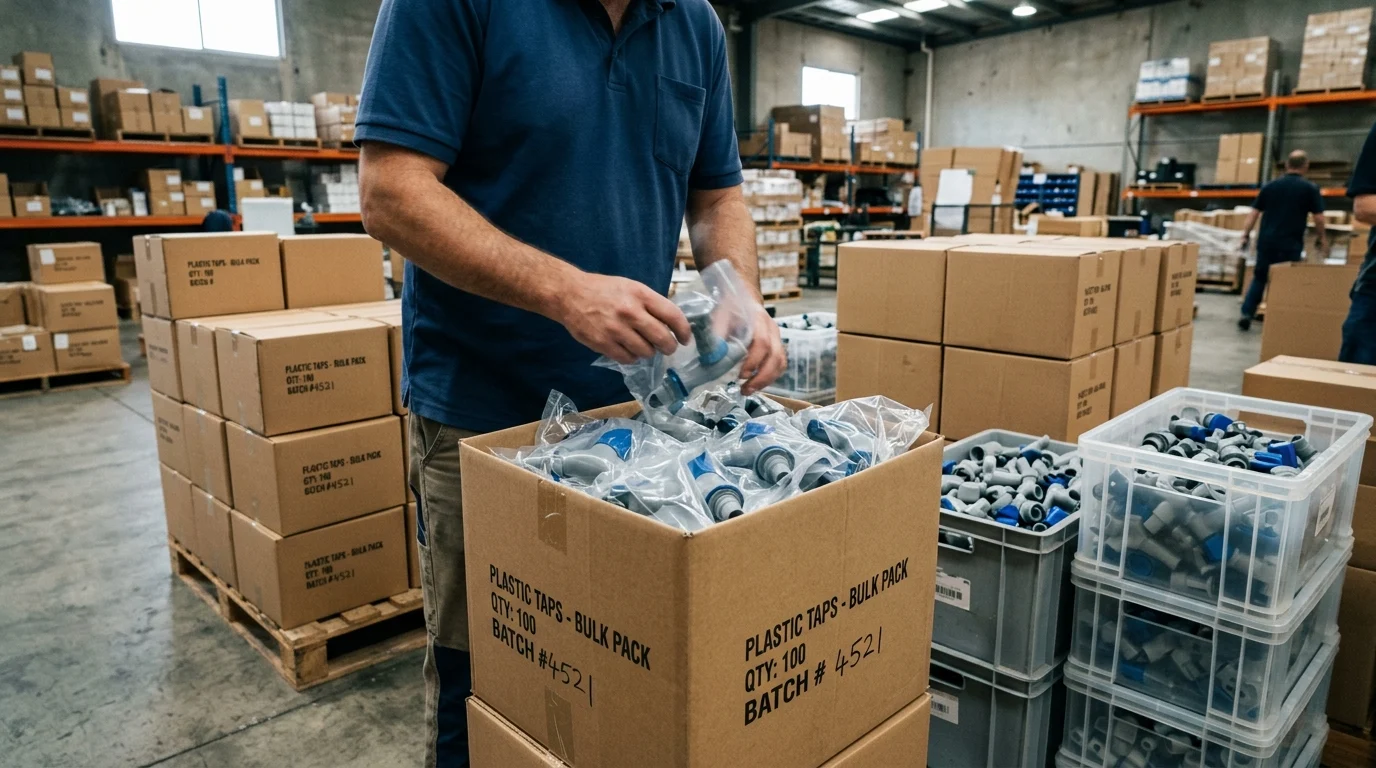
Evaluating wholesale plastic water taps requires moving beyond basic aesthetics to analyze core engineering specifications. Procurement engineers must match the polymer’s physical properties against the specific hydraulic and thermal demands of the commercial facility.
Material, pressure, temperature, thread, and flow rate
The foundational specifications dictate performance boundaries. Polyvinyl Chloride (PVC) and Acrylonitrile Butadiene Styrene (ABS) are common for cold-water applications, generally limited to continuous temperatures below 60°C (140°F). For environments requiring hot water resistance, Chlorinated Polyvinyl Chloride (CPVC) or Polypropylene (PP) must be specified, supporting continuous temperatures up to 90°C (194°F).
Pressure ratings are equally critical. Commercial taps must typically meet PN10 (1.0 MPa or 145 psi) or PN16 (1.6 MPa or 232 psi) standards to withstand municipal supply fluctuations. Thread specifications must strictly adhere to regional plumbing codes, utilizing standardized 1/2-inch or 3/4-inch BSP (British Standard Pipe) or NPT (National Pipe Thread) connections. Flow rates, often regulated by integrated aerators, should be constrained to 1.5 to 2.2 gallons per minute (GPM) to comply with commercial water conservation standards.
Comparison with alternative tap materials
When compared to alternative materials like brass or zinc alloys, engineered plastics offer distinct chemical advantages. Zinc alloys, while inexpensive, are highly susceptible to galvanic corrosion and blistering over time. Brass offers excellent durability but carries the risk of lead leaching if not explicitly certified as lead-free, a compliance hurdle that adds significant manufacturing cost.
Plastics inherently eliminate heavy metal leaching and are entirely immune to galvanic corrosion. This makes them ideal for coastal environments with high airborne salinity or facilities dealing with hard, mineral-rich water that would otherwise cause scale buildup and seize metallic internal valve mechanisms.
Using a comparison table for evaluation
To streamline the specification process, procurement teams should utilize standardized matrices to contrast material properties against project requirements. This quantitative approach prevents over-specification, which inflates costs, or under-specification, which risks catastrophic failure.
| Material | Max Continuous Temp | Max Pressure Rating | Scaling Resistance | Relative Wholesale Cost |
|---|---|---|---|---|
| Standard PVC | 60°C (140°F) | PN10 (1.0 MPa) | High | Lowest |
| CPVC | 90°C (194°F) | PN16 (1.6 MPa) | High | Medium |
| Polyacetal (POM) | 80°C (176°F) | PN16 (1.6 MPa) | Very High | Medium-High |
| DZR Brass (Ref) | 95°C+ (203°F+) | PN20+ (2.0 MPa+) | Moderate | Highest |
How contractors and distributors should source wholesale plastic water t
Securing a reliable pipeline of wholesale plastic water taps demands rigorous vetting of international manufacturers and logistics networks. For commercial contractors and regional distributors, supply chain resilience is just as critical as the target unit price.
Supplier qualification and OEM capability
Effective sourcing begins with supplier qualification. Buyers must verify a manufacturer’s Original Equipment Manufacturer (OEM) capabilities and quality management systems, specifically looking for active ISO 9001 certifications. An ideal factory partner should demonstrate automated injection molding capacities capable of producing upwards of 100,000 units per month to ensure scalability.
Furthermore, advanced OEM capabilities allow distributors to request custom tooling for specific thread lengths, proprietary handle designs, or corporate color matching. Assessing the supplier’s in-house tooling shop is crucial, as outsourced mold maintenance often leads to dimensional inconsistencies and flashing defects across large production runs.
MOQ, lead time, and logistics review
Minimum Order Quantities (MOQs) for custom or high-grade wholesale plastic water taps typically range from 3,000 to 5,000 pieces per SKU. Standard lead times average 25 to 35 days for production, but custom molds can extend this timeline by an additional 40 to 45 days.
Logistics review is paramount for protecting profit margins. Because plastic taps are lightweight but voluminous, shipping optimization focuses on container utilization. A standard 20-foot shipping container can typically accommodate between 70,000 and 80,000 units depending on retail packaging versus bulk industrial packing. Distributors must accurately calculate the landed cost per unit by factoring in ocean freight, import duties, and domestic drayage.
Sourcing steps to reduce defects and delays
To minimize defect rates and prevent costly project delays, contractors must implement strict pre-shipment inspections based on Acceptable Quality Limit (AQL) standards. A standard benchmark for commercial plumbing fixtures is AQL 1.5 for major defects (such as thread malformation or internal valve leaks) and AQL 4.0 for minor defects (such as surface scratches or flash from the injection mold).
Sourcing contracts should explicitly mandate burst pressure testing and cycle testing—such as 50,000 open-and-close cycles—on a randomized batch from every production run before container loading is authorized.
Compliance, testing, and installation factors for wholesale plastic wate
Even the highest-quality wholesale plastic water taps will fail if they do not meet regional compliance mandates or are installed incorrectly. Navigating the regulatory landscape and enforcing strict field protocols are essential steps in the commercial construction lifecycle.
Regional standards and potable water testing
Taps intended for human consumption must pass stringent potable water certifications. In North America, this requires NSF/ANSI 61 compliance to verify that the polymer, colorants, and internal lubricants do not leach harmful VOCs, BPA, or phthalates into the water supply.
Similarly, the WRAS certification in the United Kingdom and the WaterMark scheme in Australia mandate rigorous material testing. Distributors importing wholesale plastic water taps must demand current, third-party laboratory test reports; relying solely on self-certified factory documentation is a severe liability risk in commercial plumbing.
Effects of installation conditions and water quality
Environmental and water quality conditions heavily influence the long-term viability of plastic fixtures. If installed in outdoor agricultural, maritime, or park settings, the polymers must be UV-stabilized. Standard ABS or PVC will become brittle and discolor within 12 to 18 months of direct sunlight exposure, leading to micro-fractures under pressure.
Regarding installation, the most common point of failure for plastic taps is overtightening. Unlike brass, plastic threads can deform or strip if subjected to excessive torque. Installation protocols must specify a strict maximum torque limit—typically not exceeding 15 Nm—and mandate the use of PTFE (Teflon) tape rather than liquid pipe dope, which can chemically degrade certain polymers.
Field inspection and acceptance checks
Upon completion of the rough and finish plumbing phases, field inspection protocols must validate the integrity of the installation. Acceptance checks should include a hydrostatic pressure test, typically isolating the system and subjecting the taps to 1.5 times their maximum working pressure (e.g., 1.5 MPa for a PN10 rated tap) for a minimum of 2 hours.
Inspectors must also verify the smooth actuation of the ceramic or polymer disc cartridges under pressure, ensuring no water hammer effect is generated due to sudden valve closure, which can severely stress the plastic manifold connections.
How to choose the right wholesale plastic water taps for
Ultimately, finalizing the procurement of wholesale plastic water taps requires a strategic balance between upfront capital expenditure and long-term operational reliability. Project managers must synthesize technical, logistical, and financial data to make an informed choice.
Decision framework for specification and supplier selection
The decision framework begins by categorizing the project’s intended lifespan. For temporary disaster relief housing or modular construction slated for a 3-to-5-year deployment, entry-level PVC taps optimized for the lowest unit cost are highly appropriate. Conversely, for permanent high-density commercial facilities like stadiums or transit hubs, specifying high-durability POM or CPVC taps with precision ceramic internal cartridges becomes necessary to withstand continuous, aggressive use.
Supplier selection within this framework hinges on transparency. The chosen manufacturing partner must provide clear warranties, verifiable compliance certificates, and a track record of maintaining consistent virgin resin quality across multiple production batches, strictly avoiding the use of degraded recycled plastics that compromise burst strength.
Balancing unit price and lifecycle cost
The true cost of a plumbing fixture extends far beyond its purchase price. Balancing the unit price against the total lifecycle cost requires factoring in the labor associated with maintenance and replacement. A commercial plumber’s labor rate can easily exceed $80 to $120 per hour. If a substandard $1.50 tap fails prematurely, the cost to dispatch a technician to replace it entirely negates the initial material savings.
Procurement teams must evaluate Total Cost of Ownership (TCO) over a projected timeframe. Investing in a premium engineered plastic tap at a slightly higher wholesale cost often yields superior financial outcomes by drastically reducing the frequency of facility maintenance interventions.
| Procurement Strategy | Initial Unit Cost | Expected Lifespan | Estimated Replacement Labor | 10-Year TCO (per fixture) |
|---|---|---|---|---|
| Budget Plastic Tap | $1.50 | 2 Years | $85.00 (Replaced 4x) | $347.50 |
| Premium POM Plastic Tap | $4.50 | 5 Years | $85.00 (Replaced 1x) | $94.00 |
| Standard Brass Tap | $18.00 | 10 Years | $0.00 (No Replacement) | $18.00 |
(Note: While brass has a lower replacement TCO in permanent installs, premium plastics offer a highly strategic middle ground for mid-term commercial applications where upfront capital is strictly constrained or theft and corrosion risks are elevated.)
Key Takeaways
- The most important conclusions and rationale for wholesale plastic water taps
- Specs, compliance, and risk checks worth validating before you commit
- Practical next steps and caveats readers can apply immediately
Frequently Asked Questions
What plastic material is best for commercial water taps?
Use PVC or ABS for cold water below 60°C, and choose CPVC or PP for hot water up to 90°C. Match the material to your project’s temperature and chemical exposure.
What pressure rating should wholesale plastic water taps meet?
For most commercial projects, specify at least PN10, and use PN16 where municipal pressure fluctuates or duty is heavier. Confirm the rating against your site plumbing design.
Which thread type should I order for a construction project?
Check local plumbing code and the connected piping system. Most projects use 1/2-inch or 3/4-inch BSP or NPT threads, so verify compatibility before bulk ordering.
Why choose wholesale plastic water taps over brass for utility projects?
Plastic taps cut unit cost, reduce freight weight, resist corrosion, and avoid scrap-theft issues. They are especially practical for modular buildings, temporary facilities, and public-use installations.
Can Pntek support bulk orders for integrated plumbing systems?
Yes. Pntek supplies plastic taps along with pipes, fittings, and valves, helping buyers source matched components for construction and water supply projects with responsive quote support.


