In the demanding world of industrial fluid control, selecting the right valve is not just a technical decision—it’s a financial and safety imperative. Among the various options available, Industrial PVC Ball Valves have emerged as the backbone of chemical processing, water treatment, and irrigation systems. But what makes them superior to traditional metal valves, and how do you choose the right one for your specific application?
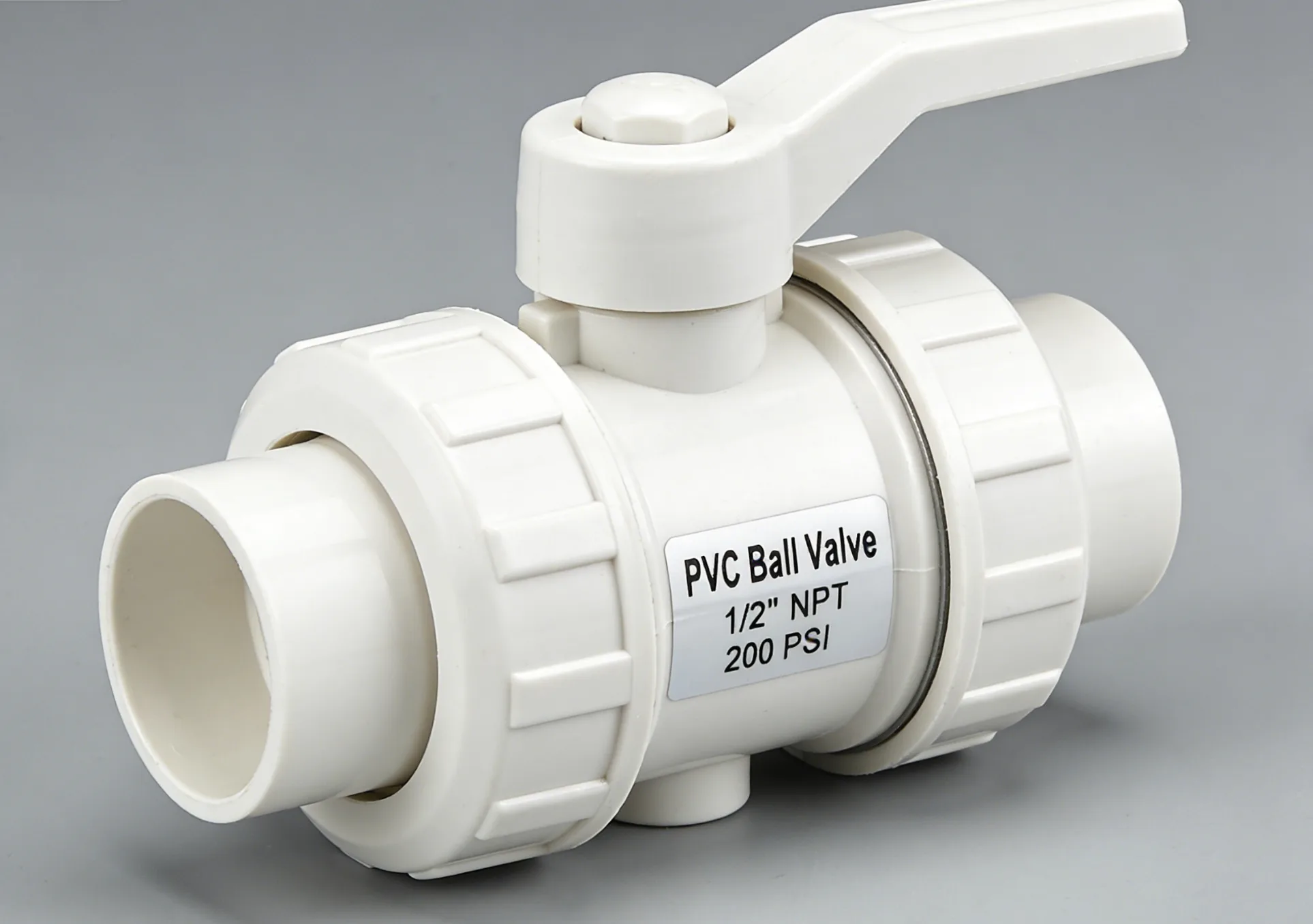
What Is an Industrial PVC Ball Valve and How Does It Work?
An industrial PVC (Polyvinyl Chloride) ball valve is a quarter-turn flow control device that uses a hollow, perforated, and pivoting ball to control fluid flow. When the ball’s hole is in line with the flow, the valve is open; when it is pivoted 90 degrees by the valve handle, the flow is stopped.
Unlike standard residential valves, industrial-grade valves from PNTEK are engineered to withstand higher pressures (PN10/PN16) and harsher environments. They often feature a True Union design, allowing the valve body to be removed from the pipeline for maintenance without dismantling the entire piping system.
Why Should You Choose PVC Over Metal for Corrosive Environments?
One of the primary reasons engineers pivot toward PVC is its exceptional chemical inertness. According to the PPI (Plastics Pipe Institute), PVC does not suffer from electrolysis or corrosion, which are the leading causes of failure in stainless steel or cast iron valves when handling brine or acidic solutions.
Comparison Table: PVC vs. Stainless Steel Ball Valves
| Feature | Industrial PVC Ball Valve | Stainless Steel (316) Valve |
|---|---|---|
| Corrosion Resistance | Excellent (Acids, Bases, Salts) | Moderate (Subject to Pitting) |
| Weight | Lightweight (Easy Installation) | Heavy (Requires Support) |
| Cost Efficiency | High (Low Initial & Maintenance Cost) | Low (High Material Cost) |
| Temperature Range | 0°C to 60°C | -29°C to 230°C+ |
| Lifespan in Brine | 20+ Years | 5-10 Years (due to scaling) |
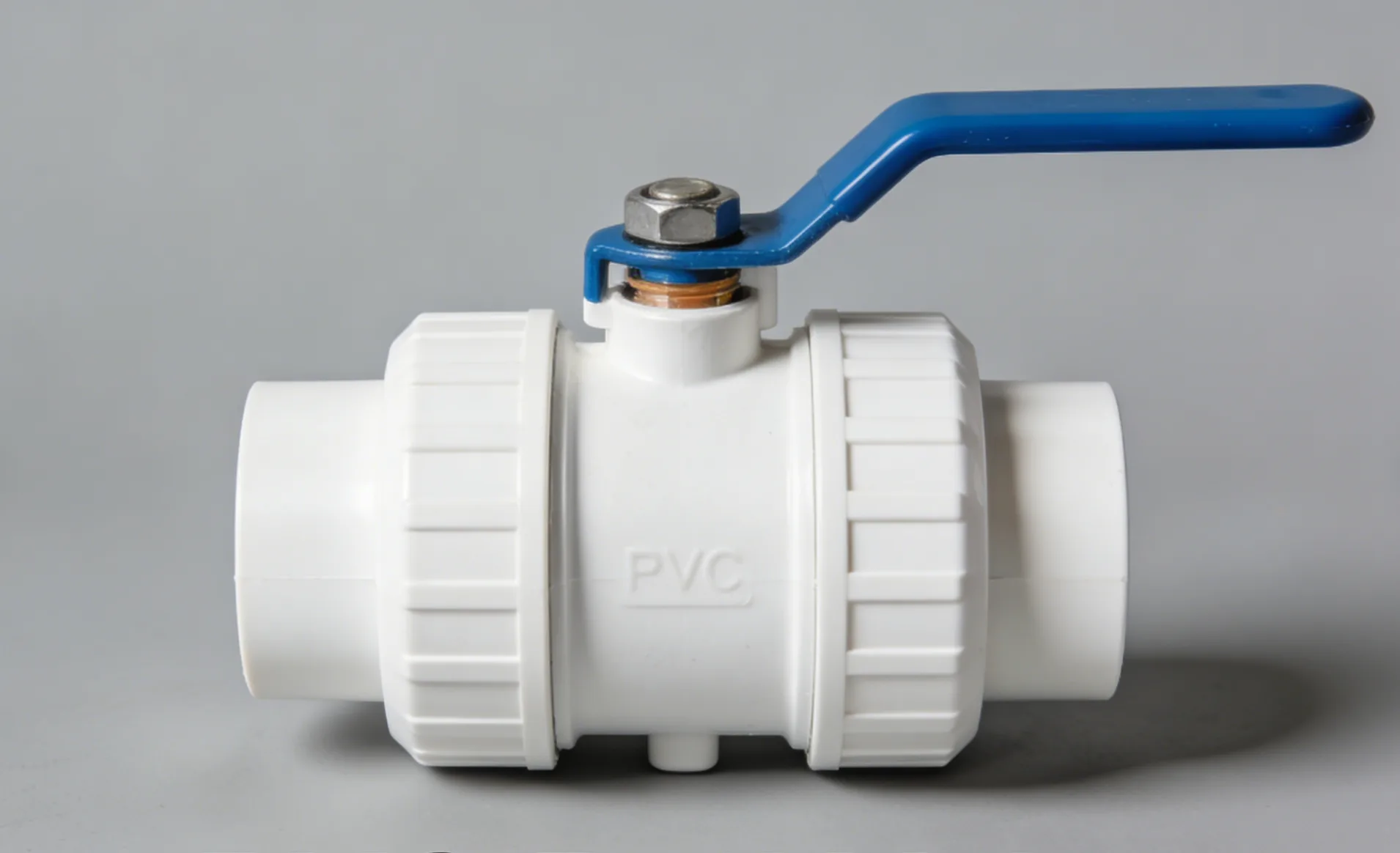
What Are the Key Benefits of True Union PVC Ball Valves?
In professional industrial setups, the True Union design is the gold standard. But why?
- Ease of Maintenance: The union nuts can be unscrewed, allowing the carrier to be replaced without cutting the pipe.
- Adjustable Seal Tightness: As the Teflon (PTFE) seats wear down over time, the union can often be tightened to restore a leak-proof seal.
- Versatility: They can be used with both socket (solvent weld) and threaded connections.
How Do You Select the Right Seal Material: EPDM vs. FPM (Viton)?
A common mistake in procurement is overlooking the O-ring material. The “ball” provides the shut-off, but the O-rings provide the seal.
- EPDM (Ethylene Propylene Diene Monomer): Ideal for water treatment, phosphate esters, and many mild chemicals. Not suitable for petroleum oils.
- FPM/FKM (Viton): Necessary for concentrated acids, petroleum products, and high-temperature chemical processing.
When sourcing from PNTEK, it is crucial to specify your medium to ensure the valve longevity matches your system’s requirements.
What Are the Step-by-Step Installation Best Practices for PVC Valves?
To ensure your industrial piping system operates without failure, follow these technical steps:
- Preparation: Ensure the pipe ends are square and deburred.
- Dry Fit: Check that the pipe enters the valve socket at least 1/3 to 2/3 of the way before applying solvent.
- Solvent Welding: Apply a uniform layer of high-quality PVC cement. Rotate the valve 1/4 turn during insertion to distribute the cement.
- Alignment: Ensure the handle is accessible and the flow direction (if marked) is correct.
- Curing: Allow at least 24 hours of curing time before pressure testing the system to its rated PN10 or PN16 capacity.
How Does Temperature Affect the Pressure Rating of PVC Valves?
It is a scientific fact that the tensile strength of thermoplastics decreases as temperature rises. While a PVC ball valve might be rated for 150 PSI at 23°C (73°F), that rating may drop by 50% or more as it approaches its maximum operating temperature of 60°C (140°F). Always consult the Pressure-Temperature De-rating Chart provided by PNTEK’s technical team before installation in hot climate zones or industrial heat-process lines.
What Maintenance Is Required for Industrial Plastic Valves?
While PVC is “low maintenance,” it is not “no maintenance.”
- Quarterly Cycling: Turn the valve on and off at least once every three months to prevent “sticking” due to mineral buildup.
- Visual Inspection: Check for weeping around the stem or union nuts.
- Lubrication: If the handle becomes difficult to turn, the internal O-rings may need food-grade silicone lubrication.
FAQ: Everything You Need to Know About Industrial PVC Ball Valves
Why is my PVC ball valve handle hard to turn?
This is usually caused by the PTFE seats being compressed too tightly or debris trapped between the ball and the seat. In a True Union valve, you can slightly loosen the union nut or disassemble the valve to clean the internal components.
Can PVC ball valves be used for compressed air?
No. Industry standards, including those from OSHA, strictly advise against using PVC for high-pressure compressed air or gases. PVC is a brittle material; if it fails under air pressure, it can shatter and create dangerous shrapnel.
What is the difference between Schedule 40 and Schedule 80 PVC valves?
Schedule 80 valves have thicker walls and are designed to handle higher pressures and more rigorous industrial environments compared to Schedule 40. For most chemical and industrial applications, Schedule 80 is the recommended standard.
Are PNTEK valves UV resistant for outdoor use?
Yes, industrial PVC valves are often formulated with UV inhibitors. However, for long-term outdoor exposure (10+ years), we recommend painting the exterior of the pipe and valve with a light-colored water-based latex paint to reflect UV radiation.
How do I know if I need a Ball Valve or a Butterfly Valve?
Use a Ball Valve for smaller pipe sizes (typically under 4 inches) where a bubble-tight seal and low pressure drop are required. Use a Butterfly Valve for larger pipelines (above 4 inches) to save space, weight, and cost.