How Corrosion silently Destroys Metal Irrigation Infrastructure
Metal pipes have served agricultural irrigation systems for decades, but corrosion remains their most persistent and costly failure mode. In the United States alone, corroded water infrastructure costs an estimated $13.1 billion annually across municipal and agricultural sectors, according to the Environmental Protection Agency (EPA). For farms applying chemical fertilizers through irrigation systems—particularly those using ammonium nitrate, phosphorus solutions, or chlorine-treated water—metal pipes face accelerated corrosion rates of 0.1–0.5 mm per year, leading to premature leaks, pressure failures, and contamination of applied water.
This article examines why corrosion-resistant PVC (Polyvinyl Chloride) pipes have become the preferred material for chemical fertilizer irrigation systems, comparing failure mechanisms, service life, and total cost of ownership against traditional metal alternatives.
What Causes Corrosion in Metal Irrigation Pipes Used with Fertilizers?
Metal pipe corrosion in agricultural settings results from a combination of chemical, electrochemical, and mechanical factors that compound over time.
Chemical Corrosion from Fertilizer Solutions
Ammonium nitrate—among the most widely used nitrogen fertilizers—creates highly corrosive conditions inside metal pipes. When dissolved in irrigation water, ammonium nitrate forms ammonium chloride and nitric acid compounds that lower the internal pH to 4.0–5.5, well within the range that accelerates galvanic corrosion on steel and iron surfaces. Similarly, phosphorus-based fertilizers (such as superphosphate solutions) introduce phosphate ions that promote pitting corrosion, a localized failure mechanism where small holes develop rapidly beneath the pipe surface while surrounding metal appears unaffected.
Electrochemical (Galvanic) Corrosion at Joints
Metal irrigation systems assembled with dissimilar metals—such as connecting galvanized steel main lines to brass fittings or copper submain lines—create galvanic cells where electrical potential differences drive accelerated corrosion at the junction points. This galvanic corrosion can reduce joint wall thickness by 3–5 times the rate observed on the pipe body alone, making joints the most common failure points in multi-metal irrigation systems.
Microbiologically Influenced Corrosion (MIC)
Soil bacteria including Gallionella, Ferrobacillus, and Sulfuricibacter species colonize the external and internal surfaces of buried metal pipes, creating localized oxygen concentration cells that accelerate pitting. Research published in the Journal of Agricultural Engineering documents MIC-related failures in 15–30% of buried metal irrigation infrastructure in humid agricultural regions, with failure timelines as short as 5–8 years in untreated soil conditions.
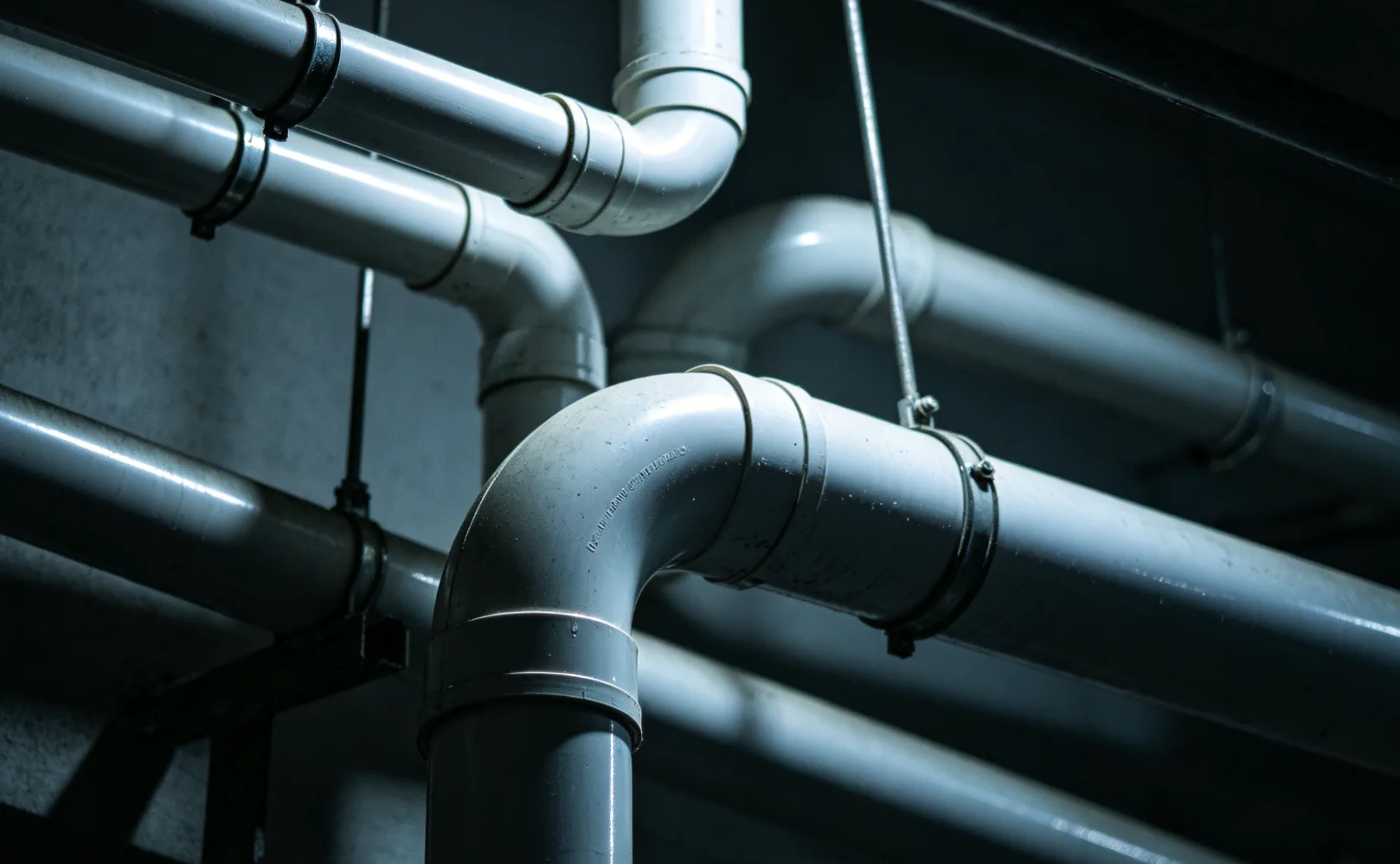
How Do PVC Pipes Resist Chemical Attack from Fertilizer Solutions?
PVC pipes offer fundamentally different corrosion resistance mechanisms compared to metal, primarily through chemical stability of the polymer matrix rather than sacrificial protection.
Inherent Chemical Inertness
The vinyl polymer chain in PVC consists of repeating CH₂-CHCl units that exhibit high resistance to ion exchange reactions with surrounding chemicals. Unlike metal pipes, which oxidize when electrons transfer between the metal surface and an electrolyte, PVC surfaces do not undergo electron transfer reactions under normal agricultural chemical exposure conditions. This chemical inertness means PVC pipes do not corrode, pit, or scale regardless of water chemistry or fertilizer concentration within the pipe’s rated temperature and pressure envelope.
Resistance Ratings for Common Agricultural Chemicals
| Chemical Compound | Typical Concentration | PVC Compatibility | Metal (Steel/Galvanized) Compatibility |
|---|---|---|---|
|
Ammonium Nitrate |
20–30% solutions |
Excellent |
Poor (0.1–0.3 mm/year corrosion rate) |
|
Urea |
40–46% solutions |
Excellent |
Moderate |
|
Phosphoric Acid |
10–85% solutions |
Excellent |
Poor |
|
Potassium Chloride (KCl) |
10–40% solutions |
Excellent |
Moderate to Poor |
|
Calcium Nitrate |
20–30% solutions |
Excellent |
Poor |
|
Chlorine (water treatment) |
1–5 ppm |
Excellent |
Poor at >2 ppm |
Reference: PVC Pipe Association Chemical Resistance Guide
Zero Scale Formation
Metal pipes exposed to hard water or high-mineral fertilizer solutions develop calcium carbonate and magnesium phosphate scale deposits on internal surfaces. Scale buildup reduces effective pipe diameter, increases friction losses by 10–40%, and creates localized corrosion cells beneath scale deposits. PVC’s smooth, non-polar internal surface prevents mineral adhesion and scale formation entirely, maintaining consistent flow characteristics over the system lifetime.
What Is the Real Cost Difference Between PVC and Metal Pipes Over 20 Years?
Initial material cost comparison consistently favors metal pipes, but lifecycle cost analysis tells a dramatically different story when corrosion, maintenance, and replacement are factored.
Initial Material Cost Comparison
For a typical 500-meter agricultural main line at 150 mm diameter:
Galvanized Steel: approximately $8–12 per meter
-
Ductile Iron: approximately $15–20 per meter
-
UPVC: approximately $5–9 per meter
-
HDPE: approximately $7–11 per meter
UPVC and HDPE offer 20–40% lower initial material costs compared to galvanized steel at equivalent pressure ratings.
20-Year Lifecycle Cost Analysis
| Cost Category | Galvanized Steel | UPVC |
|---|---|---|
|
Initial Material |
$5,500 |
$3,500 |
|
Installation Labor |
$4,000 |
$3,200 |
|
Corrosion Treatment |
$1,500 |
$0 |
|
Leak Repair (3–5 events) |
$3,000–$6,000 |
$0 |
|
Pressure Loss from Scale (energy cost) |
$2,000–$4,000 |
$0 |
|
Replacement at Year 15–18 |
$5,500 |
$0 |
|
Total 20-Year Cost |
$21,500–$24,000 |
$6,700 |
The American Society of Agricultural Engineers (ASAE) estimates that PVC irrigation systems achieve a 60–75% reduction in lifecycle maintenance costs compared to metal pipe alternatives in chemical fertilizer applications.
How Does PVC Pipe Installation Compare to Metal Pipe Installation?
Installation differences directly affect labor costs, timeline, and system reliability at startup.
Weight and Handling
PVC pipes weigh approximately 20–30% of equivalent diameter steel pipes, enabling easier handling by smaller crews without specialized heavy equipment. A standard 6-meter length of 150 mm UPVC pipe weighs approximately 12–15 kg, compared to 45–55 kg for equivalent galvanized steel. This weight reduction translates to faster installation, reduced equipment rental costs, and safer working conditions.
Joint Reliability
Metal pipe joints rely on threaded connections or mechanical couplings that create potential leak points. Threaded connections require pipe tape or sealant compounds that degrade over time, particularly in UV-exposed above-ground installations. PVC solvent-cemented joints, when properly assembled, create a monolithic bond where the pipe and fitting become a single homogeneous unit. Joint integrity testing by the International Association of Plumbing and Mechanical Officials (IAPMO) demonstrates joint strength exceeding 95% of pipe tensile strength for properly assembled PVC connections.
Joint Assembly Steps for PVC
-
Square-cut the pipe end using a wheel cutter; bevel the outer edge at approximately 15°.
-
Dry-fit the pipe and fitting to verify engagement depth (typically 2/3 of socket depth).
-
Apply PVC primer to both the pipe outer surface and fitting inner surface until the surface gloss is removed.
-
Apply solvent cement evenly to both prepared surfaces.
-
Insert the pipe fully into the fitting socket with a quarter-turn motion.
-
Hold in position for 30 seconds; do not disturb for 5 minutes.
What Are the Environmental and Regulatory Considerations for PVC in Agriculture?
Longevity and Waste Reduction
Metal pipes failing from corrosion generate significant environmental waste, with replacement cycles of 10–20 years in aggressive chemical environments. PVC pipes serving 25–50 years under equivalent conditions reduce raw material consumption, manufacturing emissions, and construction waste proportionally. The Vinyl Institute reports that PVC pipe production requires approximately 15% less energy than equivalent ductile iron pipe production.
Regulatory Certifications for Agricultural Water Contact
PVC pipes used in food production irrigation require specific third-party certifications to ensure material safety. Key certifications include:
NSF/ANSI 61: Drinking Water System Components – Health Effects (North America)
-
WRAS: Water Regulations Advisory Scheme approval (United Kingdom)
-
ACS: Attestation de Conformité Sanitaire (France)
-
GB/T 10002.1: Chinese national standard for PVC pipes for drinking water
These certifications verify that pipe materials do not leach harmful compounds into water at concentrations exceeding established safety thresholds, making them compliant with food safety regulations in most major export markets.
Frequently Asked Questions (FAQ)
How long do PVC pipes last when exposed to chemical fertilizers?
PVC pipes installed in chemical fertilizer irrigation systems have a documented service life of 25–50 years under normal operating conditions. Unlike metal pipes, PVC does not suffer from corrosive degradation when exposed to ammonia-based, phosphorus-based, or potassium-based fertilizers within rated temperature (up to 60°C for UPVC, 95°C for CPVC) and pressure specifications. The Uni-Bell PVC Pipe Association surveys utilities and reports median PVC pipe service life exceeding 35 years across all installation environments.
Can PVC pipes handle high-pressure fertilizer injection systems?
Yes. PVC pipes are manufactured in multiple pressure ratings from PN6 (6 bar) to PN25 (25 bar), making them suitable for high-pressure fertilizer injection systems that typically operate at 3–10 bar. For injection systems exceeding 10 bar, CPVC or reinforced HDPE formulations are recommended. Always select pipes with a pressure rating of 1.5–2 times the maximum system operating pressure to provide a safety margin for pressure surges common during pump startup and valve operations.
Are there any chemicals that should not be used with PVC pipes in irrigation?
PVC pipes are incompatible with aromatic hydrocarbons, ketones, Esters, and some chlorinated solvents. Specific chemicals to avoid include: toluene, benzene, acetone, ethyl acetate, and methylene chloride. These compounds act as solvents on PVC, causing surface softening, cracking, or joint failure. The Chemical Resistance Guide from the PVC Pipe Association provides a complete compatibility table for over 400 chemical compounds with concentration and temperature specifications.
What happens if a PVC pipe freezes in winter?
PVC pipes are susceptible to freeze damage when water inside the pipe freezes and expands. Unlike ductile iron, PVC has limited flexibility and cannot accommodate the volumetric expansion of freezing water without cracking. In regions where freezing temperatures occur, drain all irrigation lines before winter, or install pipes below the local frost line (typically 60–120 cm in northern climates). Using flexible HDPE pipe in above-ground freeze-prone sections allows the pipe to expand slightly without fracturing.
How do I verify that PVC pipes are certified for agricultural food crop irrigation?
Request the manufacturer’s material certification documentation for each pipe lot purchased. Valid certifications should include third-party test reports from accredited laboratories confirming compliance with NSF/ANSI 61, WRAS, or equivalent national standards for your target export market. Reputable manufacturers provide batch-specific test certificates and can supply Technical Data Sheets (TDS) documenting material properties including impact resistance, hydrostatic design basis, and long-term strength rating (LTHS). For European Union markets, look for CE marking and Declaration of Performance (DoP) documentation.