
Why PPR Pipe Systems Are Replacing Metal Pipes Worldwide
Why PPR Pipe Systems Are a Strategic Procurement Choice
The global plumbing and HVAC industries are undergoing a massive material transition, moving away from legacy metallic infrastructure toward advanced polymer solutions. At the forefront of this transition is the PPR pipe system, manufactured from Polypropylene Random Copolymer. For B2B wholesale buyers, distributors, and engineering procurement teams, understanding this shift is critical for maintaining a competitive product portfolio and protecting profit margins in an evolving market.
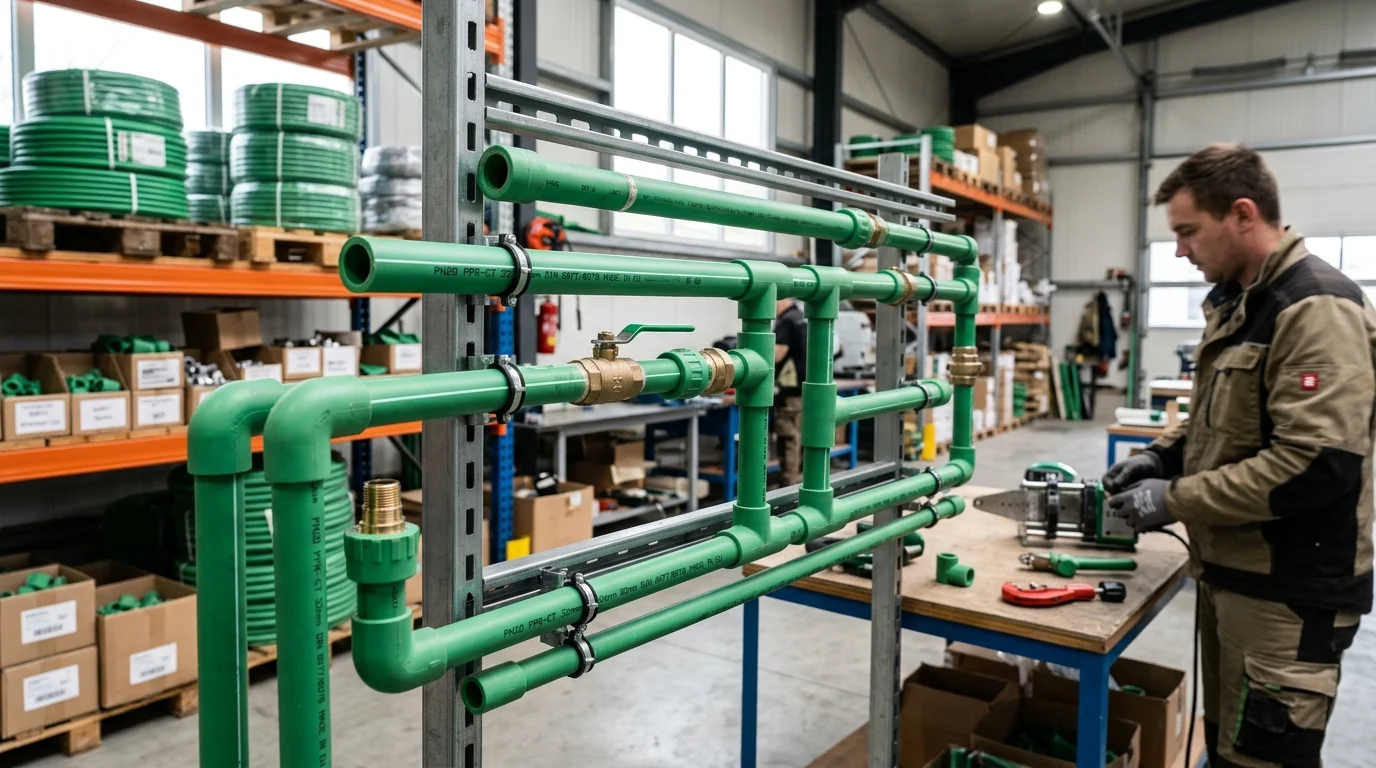
A complete PPR pipe system provides a unified network of pipes, fittings, and valves fused through heat to create a homogeneous, leak-proof infrastructure. This technology effectively addresses historical vulnerabilities of traditional plumbing, particularly joint failures and internal degradation. As global projects increasingly mandate sustainable, long-lasting materials, procurement departments are aligning supply chains to meet these new regulatory and commercial demands.
Strategic procurement goes beyond simply swapping materials; it involves recognizing how polymer pipes streamline logistics, reduce reliance on skilled welding labor, and offer predictable long-term costs. By transitioning catalog offerings to prioritize PPR, distributors can capture significant market share in both emerging and developed construction sectors.
Demand shifts from metal pipes
The transition from galvanized steel and copper is driven by metal’s inherent chemical vulnerabilities. Corrosion, scale buildup, and subsequent flow restriction cause costly maintenance and premature failures. Buyers frequently ask Why replace metal pipes?—the answer lies in the total elimination of rust and the significant reduction in water contamination risks, making polymer alternatives the definitive choice for modern fluid transport.
High-growth application sectors
PPR solutions are seeing exponential adoption across high-value sectors. Residential potable water distribution remains the largest segment, but commercial HVAC (chilled water lines) and industrial compressed air systems are rapidly expanding. Looking ahead at plumbing trends 2026, the integration of these systems into green building projects and large-scale hospital infrastructure is expected to drive double-digit market growth.
Commercial benefits for distributors and importers
For import and distribution channels, polymer systems offer compelling commercial advantages. Their lightweight nature drastically reduces freight costs and handling liabilities compared to heavy steel or easily dented copper. Furthermore, the comprehensive nature of a PPR pipe system—requiring proprietary fittings, specialized valves, and dedicated welding tools—creates excellent cross-selling opportunities and higher overall order values per client.
PPR Pipe System Specifications and Product Scope
Procuring a PPR pipe system requires a thorough understanding of its technical scope. Unlike generic commodity pipes, a proper PPR network is an engineered ecosystem. Buyers must source highly compatible components sharing the exact melt flow index and thermal properties to ensure perfect fusion welding on job sites.
The product scope encompasses a vast array of SKUs, making inventory planning complex but necessary. Standard catalogs include straight pipes, coiled pipes, and hundreds of injection-molded fittings. Distributors must ensure their manufacturing partners possess the tooling capabilities to produce the full spectrum of required components without relying on third-party outsourcing, which can compromise system homogeneity.
Technical specifications must also align with target market demands, including precise pressure ratings, dimensional standards (typically metric), and thermal tolerances required by local building codes. Accurate specification ensures the procured system will perform flawlessly across its projected 50-year lifespan.
Core system components
A robust catalog must include standard straight pipes alongside comprehensive fittings: elbows (45° and 90°), tees, reducers, end caps, and unions. Crucially, the system scope extends to brass-insert transition fittings for connecting to legacy metal lines, polymer ball valves, and the specialized PTFE-coated heat fusion welding machines required for installation.
Pressure, size, and temperature requirements
PPR systems are categorized by nominal pressure (PN) ratings—typically PN10, PN16, PN20, and PN25—dictating wall thickness and pressure tolerance. Standard outer diameters range from 20mm up to 160mm for commercial mains. The material is engineered to handle continuous operating temperatures up to 70°C and short-term spikes up to 95°C, making it ideal for hot water distribution.
Material grades and reinforcement options
Modern manufacturing utilizes various structural designs to minimize linear thermal expansion, a critical factor in long pipe runs.
| Pipe Type | Composition | Key Benefit | Typical Application |
|---|---|---|---|
| Standard PPR | 100% Polypropylene Random Copolymer | Cost-effective, highly flexible | Cold water, short indoor runs |
| PPR-FB-PPR | Fiberglass reinforced middle layer | Reduces thermal expansion by 75% | Exposed hot water lines, HVAC |
| PPR-AL-PPR | Aluminum foil barrier layer | 100% oxygen barrier, rigid | Hydronic heating, boiler feeds |
PPR vs Metal Pipes: Performance and Total Cost
The debate between polymer and metallic piping is central to modern MEP (Mechanical, Electrical, and Plumbing) engineering. While metal pipes have a long track record, their physical limitations in high-efficiency buildings are increasingly apparent. Procurement teams must clearly articulate the performance and cost differences to justify the transition to their downstream contractor clients.
Evaluating a PPR pipe system against copper or steel extends beyond the initial per-meter cost. Analysis must encompass installation speed, required tooling, joint lifespan, and energy efficiency. Polymer pipes offer inherently superior thermal insulation, reducing the need for extensive secondary lagging in hot water applications.
Ultimately, total cost of ownership (TCO) is the deciding factor for large-scale developers. While copper offers high temperature tolerance, its volatile pricing and susceptibility to theft make it a risky choice. PPR stabilizes project budgeting while delivering superior long-term water quality and system integrity.
Key technical comparison points
The most critical technical differentiator is the jointing method. Metal pipes rely on threads, solder, or mechanical press-fits, introducing potential leak points. In contrast, evaluating PPR vs metal pipe reveals that PPR utilizes heat fusion, melting the pipe and fitting into a single, seamless piece of plastic, virtually eliminating the risk of joint failure and pressure loss.
Lifecycle cost factors
While PPR’s raw material cost is generally lower than copper and comparable to galvanized steel, true savings are realized in labor. Heat fusion is significantly faster than threading or brazing. Over a 50-year lifecycle, zero maintenance costs for corrosion treatment or leak repairs solidify the economic superiority of the polymer system.
Application suitability by material
PPR is ideal for aggressive water conditions, potable water lines, and chemical transport where metal would rapidly degrade. However, metallic pipes (like carbon steel) still hold relevance in highly specific industrial applications requiring extreme pressure tolerances (exceeding PN25) or environments with extreme external mechanical impact risks where polymer might be structurally compromised.
Compliance and Quality Control for PPR Pipe Systems
For B2B importers, navigating the regulatory landscape is critical when sourcing a PPR pipe system. Non-compliant products pose severe liability risks, from structural leaks to toxic chemical leaching into municipal drinking water supplies. Strict adherence to international quality standards is non-negotiable.
Quality control must begin at the raw material stage. Final pipe performance depends entirely on the purity of the Type 3 Polypropylene resin. Reputable manufacturers utilize virgin resins from globally recognized petrochemical brands. The introduction of recycled regrind material, while lowering costs, severely compromises the hydrostatic strength and thermal stability of the pipe.
Importers must establish rigorous factory audit protocols, verifying that the supplier possesses an in-house laboratory capable of continuous batch testing. Without robust, documented quality control, distributors cannot confidently extend the standard 50-year warranties required by commercial building contractors.
Standards and certifications
Global procurement relies on standardized benchmarks, including ISO 15874 and the German DIN 8077/8078 directives. For potable water applications, region-specific health certifications are mandatory, such as WRAS (UK), NSF 14/61 (North America), and CE marking for the European Economic Area.
Testing and traceability checks
Leading factories subject products to rigorous testing, including hydrostatic pressure tests at elevated temperatures, melt flow index (MFI) verification, and impact resistance assessments. Furthermore, ecological compliance is increasingly scrutinized; buyers frequently ask, Are PPR pipes eco-friendly? Modern traceability involves laser-printing batch codes on every pipe, ensuring accountability and confirming the use of 100% recyclable, non-toxic materials.
Factory audit and warranty controls
A thorough factory audit should verify ISO 9001 quality management systems and inspect machinery for modern automation. Buyers must secure legally binding warranty agreements, ensuring the manufacturer will cover replacement costs and associated damages if a system failure occurs due to verified manufacturing defects within the 50-year operational lifespan.
How to Source the Right PPR Pipe System Supplier
Contracting a reliable manufacturing partner requires extensive due diligence. The global market is saturated with suppliers varying wildly in capability, from automated industrial parks to rudimentary workshops. Buyers must filter these options based on scalable capacity and consistent quality.
A prime indicator of a capable supplier is their tooling library. A complete system requires hundreds of distinct molds for various fittings. Suppliers who own and maintain extensive mold libraries guarantee better dimensional consistency and faster time-to-market for new or custom components than those who outsource injection molding.
The sourcing process must also evaluate financial stability and export experience. A partner well-versed in international trade understands regional certifications, optimized container loading, and customs documentation, reducing procurement friction.
Supplier qualification criteria
Key qualification metrics include annual production tonnage, raw material origin (e.g., Borealis or Hyosung resins), and extrusion line brands (European machinery generally yields tighter tolerances). Additionally, evaluating defect rates and the ability to provide comprehensive English-language technical datasheets is crucial for B2B qualification.
MOQ, pricing, and payment terms
Minimum Order Quantities (MOQs) typically range from 5,000 to 10,000 meters per pipe size, or one 20ft container for mixed orders. Pricing is heavily indexed to global crude oil and polypropylene resin markets. Standard international payment terms usually involve a 30% T/T deposit with the 70% balance paid against the Bill of Lading, or an irrevocable Letter of Credit (L/C) at sight for larger contracts.
RFQ to contract process
The procurement cycle begins with a detailed Request for Quotation (RFQ) specifying PN ratings, sizes, and certifications, followed by sampling and independent lab testing. Once samples are approved, buyers should execute a trial order (typically one container) to evaluate production lead times and logistics before signing a long-term master supply agreement.
Packaging, Logistics, and Inventory Planning
The physical logistics of importing a PPR pipe system present unique challenges. Because pipes are voluminous, buyers essentially pay to ship empty space. Optimizing packaging and container loading is critical to reducing the landed cost per meter and maintaining competitive market pricing.
Inventory planning requires nuanced SKU management. The ratio of straight pipes to fittings varies by project, but fittings generally carry higher profit margins and require less warehouse space. Distributors must carefully balance safety stock to ensure they can fulfill complete project lists without stranding capital in slow-moving pipe sizes.
Environmental factors during shipping and storage must also be mitigated. While PPR is highly durable, prolonged exposure to direct ultraviolet (UV) radiation can degrade the polymer. Proper packaging and indoor warehousing protocols are essential to preserve the structural integrity and aesthetic appearance of the product before it reaches the end-user.
Packaging and container efficiency
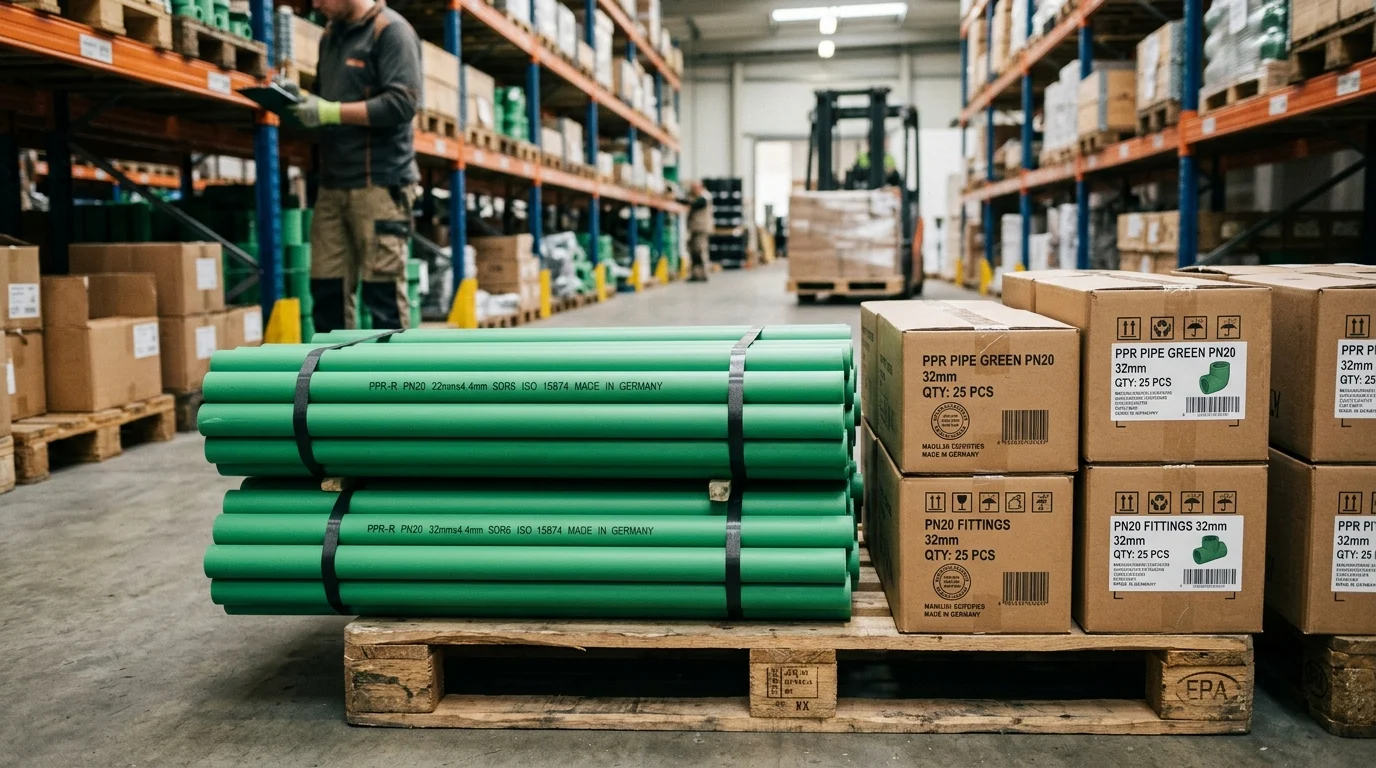
Straight pipes are typically extruded in 4-meter lengths to optimize loading in 20ft containers, or 5.8-meter lengths for 40ft High Cube containers. To maximize freight efficiency, suppliers often employ nested packing—inserting smaller diameter pipes (e.g., 20mm) inside larger ones (e.g., 63mm). Fittings are packed in heavy-duty, moisture-resistant master cartons.
| Container Size | Pipe Length | Estimated Volume Capacity | Best For |
|---|---|---|---|
| 20ft Standard | 4.0 meters | ~28-30 CBM | Trial orders, high-density fittings |
| 40ft High Cube | 5.8 meters | ~68-70 CBM | Bulk straight pipes, maximized freight |
Freight, labeling, and customs factors
PPR products generally fall under HS Code 3917.23 for rigid tubes of polymers of propylene. Accurate classification is vital to avoid customs delays and tariffs. Packaging must feature opaque, UV-resistant PE bags for pipes, and all cartons must have clear, waterproof shipping marks detailing SKU, PN rating, and gross weight to expedite warehouse receiving.
SKU and safety stock planning
A standard inventory strategy maintains a 1:3 or 1:4 value ratio between pipes and fittings. Fast-moving residential sizes require high safety stock levels to prevent stockouts. Conversely, large commercial diameters (90mm to 160mm) are often procured on a project-by-project basis to optimize warehouse space and cash flow.
Channel Positioning and Sales Strategy
Successfully distributing a PPR pipe system requires shifting from selling a commodity to an engineered solution. Distributors must equip sales teams to educate contractors on the long-term benefits of polymer systems. Positioning the product effectively relies on demonstrating clear ROI through labor savings and reduced liability.
Sales strategies should focus on the "complete system." Incentivizing contractors to purchase pipes, fittings, valves, and tools as a single package locks in loyalty and ensures system integrity. Mixing brands within a single installation voids manufacturer warranties, a fact that can be leveraged to secure exclusive supply contracts for major projects.
Providing robust after-sales support transforms a distributor from a simple vendor into an indispensable project partner. Offering technical training, tool maintenance, and on-site troubleshooting builds brand trust and accelerates the regional adoption of the specific PPR brand being imported.
Target buyer segments
Primary targets for wholesale distribution are MEP engineering firms, large-scale residential developers, and municipal water authorities. Secondary channels include regional hardware retail chains and specialized plumbing supply depots that cater to independent, residential plumbing contractors.
Value proposition versus metal pipes
The core sales pitch hinges on efficiency and risk mitigation. Sales teams must highlight that heat fusion joints are stronger than the pipe itself, eliminating hidden wall leaks. Emphasizing the total eradication of rust, quieter water flow, and significantly faster installation times provides a compelling financial argument against traditional metal systems.
Sales tools and after-sales support
Distributors should invest in comprehensive sales toolkits, including cutaway samples demonstrating joint fusion, pressure-loss calculation charts, and digital catalogs. Supplying high-quality welding machines (often subsidized or rented) and offering certified installation training sessions are proven strategies to lower the barrier to entry for contractors switching to PPR.
Key Takeaways for Global PPR Pipe System Buyers

The global transition to polymer piping represents a highly lucrative opportunity for B2B procurement professionals. By systematically sourcing and distributing high-quality PPR pipe systems, wholesalers can secure long-term contracts in residential and commercial construction. Success relies heavily on rigorous supplier vetting and strict adherence to international quality standards.
Procurement teams must prioritize total value over the lowest per-meter cost. Investing in systems manufactured from premium virgin resins, backed by comprehensive mold libraries and recognized certifications, protects distributors from catastrophic liability. The goal is to build a resilient supply chain capable of delivering consistent, homogenous systems to demanding engineering clients.
Ultimately, mastering the logistics, SKU management, and technical sales strategies associated with PPR positions distribution businesses at the forefront of modern infrastructure development. As metal pipes continue their steady decline in market share, polymer systems will dominate the future of global fluid transport.
Final supplier selection criteria
Choose manufacturing partners based on their certified use of virgin raw materials, modern extrusion technology, and the breadth of proprietary fitting molds. A reliable supplier must demonstrate transparent quality control processes, a strong track record of international exports, and the financial stability to honor 50-year product warranties.
Expected service life and project fit
When properly specified and installed according to temperature and pressure guidelines, a certified PPR system delivers a minimum 50-year service life. This makes it the ideal fit for permanent infrastructure projects, including high-rise potable water distribution, hospital sanitary lines, and commercial HVAC chilled water networks.
Typical MOQ, lead time, and certification needs
Global buyers should anticipate MOQs of one 20ft container, with production lead times generally spanning 20 to 30 days depending on factory capacity. Securing regional health and safety certifications (WRAS, NSF, CE) prior to importation is the final, non-negotiable step to ensure seamless market entry and regulatory compliance.
Related reading: PPR vs metal pipe
Key Takeaways
- Wholesale sourcing and supply-chain implications for PPR pipe system
- Specifications, compliance, and commercial terms buyers should validate
- Actionable recommendations for distributors and procurement teams


