
Introduction
Efficient irrigation depends not only on pumps and pipes, but also on the fittings that control how water moves through the system. In agricultural networks, UPVC pipe fittings are used to connect, redirect, divide, regulate, and seal pipelines in layouts such as drip, sprinkler, and mainline distribution systems. Their value comes from combining rigidity, corrosion resistance, and low friction loss, which helps maintain pressure and reduce leakage across long field runs. This article explains the practical uses of common UPVC fittings in irrigation, how they support water-use efficiency, and why their material properties make them a reliable choice for modern farm infrastructure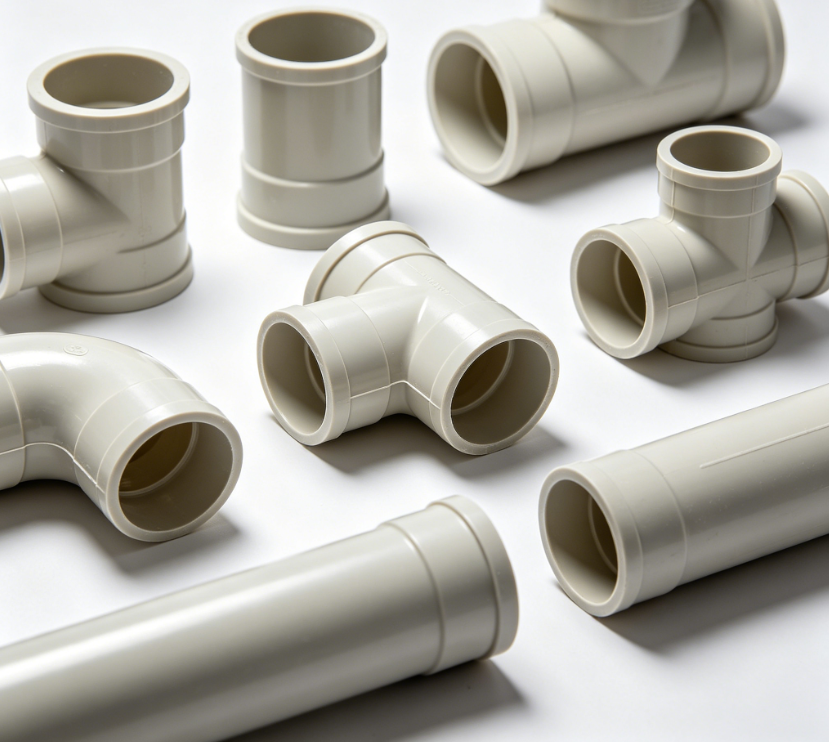
Why UPVC Pipe Fittings Matter in Modern Irrigation
The agricultural sector faces mounting pressure to optimize water distribution, making the selection of conveyance infrastructure a critical engineering decision. Unplasticized Polyvinyl Chloride (UPVC) pipe fittings have emerged as a foundational component in modern irrigation networks. Unlike standard PVC, UPVC contains no added plasticizers, resulting in a highly rigid, chemically resistant material capable of withstanding the dynamic loads of agricultural environments.
As water scarcity drives the adoption of precision agriculture, the role of reliable fittings extends beyond mere connection points. They are vital for maintaining system pressure, preventing volumetric losses, and ensuring the uniform delivery of water and dissolved nutrients across extensive crop fields.
Impact on water-use efficiency
The hydraulic efficiency of an irrigation system is heavily dependent on the internal surface characteristics of its piping and fittings. UPVC fittings possess a Hazen-Williams C-factor of 150, indicating an exceptionally smooth internal bore that minimizes friction loss. This smooth surface prevents the accumulation of scale and biofilm, ensuring that initial hydraulic calculations remain accurate over the system’s operational lifespan.
By reducing head loss at directional changes and intersections, UPVC fittings optimize flow rates. Engineered transitions can lower required pumping energy by up to 20% compared to aging metal infrastructure, directly improving the operational expenditure (OPEX) of large-scale farming operations while eliminating the micro-leaks that commonly plague threaded metal joints.
Key irrigation applications
UPVC fittings are deployed across a broad spectrum of agricultural applications, from macro-level fluid transport to precision micro-irrigation distribution. In solid-set sprinkler systems, UPVC provides the rigid backbone required to support riser pipes and sprinkler heads against wind and water hammer forces. For greenhouse fertigation networks, the material’s inert nature ensures that concentrated nutrient solutions are transported without chemical degradation.
Additionally, in buried mainline applications operating at standard pressure ratings of PN10 (1.0 MPa) or PN16 (1.6 MPa), UPVC fittings deliver the structural integrity necessary to transport high volumes of water across vast acreages. Their resistance to biological degradation makes them particularly suited for subsurface drip irrigation (SDI) headers and manifolds.
Common Uses and Types of UPVC Irrigation Fittings
A robust irrigation network relies on a diverse ecosystem of UPVC fittings to navigate topography, modulate flow, and adapt to varying crop requirements. Understanding the specific function and operational limits of each fitting type is essential for designing a modular, leak-free hydraulic system.
Functions of elbows, tees, couplers, reducers, and valves
Each UPVC fitting serves a distinct hydraulic purpose within the irrigation layout. Elbows (typically 45° and 90°) are utilized to navigate changes in field elevation and bypass obstacles, though they introduce localized friction. Tees facilitate lateral branching from mainlines to sub-mains, distributing water to distinct irrigation zones.
Couplers provide seamless linear connections between pipe lengths, while reducers are critical for stepping down pipe diameters (e.g., transitioning from a 110mm mainline to a 63mm sub-main) to maintain fluid velocity as water volume decreases across the network. True union ball valves and butterfly valves offer manual or automated isolation capabilities, allowing operators to shut off specific zones for maintenance without halting the entire system.
Use across different irrigation systems
The application of these fittings varies significantly depending on the chosen irrigation methodology. In micro-irrigation systems, such as drip and micro-sprinkler setups, UPVC fittings form the primary filtration and manifold headers where precise pressure regulation is mandatory. In center pivot and linear move systems, UPVC is frequently used for the underground supply lines that feed the central pivot point.
Flood and furrow irrigation systems, while less reliant on high-pressure containment, utilize large-diameter UPVC gates and turnout fittings to manage high-volume, low-pressure water delivery directly to field channels.
Pressure, temperature, and chemical limits
While highly durable, UPVC fittings operate within strict physical parameters. Standard UPVC fittings are rated for working pressures ranging from 0.6 MPa to 1.6 MPa (PN6 to PN16) at a baseline temperature of 20°C. However, their structural integrity is temperature-dependent; UPVC begins to soften and lose pressure capacity as temperatures approach 60°C, making it unsuitable for hot water applications.
Chemically, UPVC is highly resistant to the corrosive effects of agricultural fertilizers, herbicides, and pesticides. It can withstand continuous exposure to soil pH levels ranging from highly acidic (pH 2.0) to highly alkaline (pH 12.0), ensuring longevity regardless of local soil chemistry.
| Fitting Type | Primary Function | Typical Pressure Rating (at 20°C) | Common Size Range (mm) |
|---|---|---|---|
| 90° Elbow | Directional change | PN10 – PN16 | 20 – 315 |
| Equal Tee | Lateral fluid branching | PN10 – PN16 | 20 – 315 |
| Reducer | Velocity maintenance / Step-down | PN10 – PN16 | 32×20 – 315×250 |
| True Union Valve | Flow isolation and control | PN10 | 20 – 110 |
UPVC vs HDPE and Other Irrigation Materials
Material selection for irrigation infrastructure dictates both capital expenditure (CAPEX) and long-term maintenance costs. While UPVC is a dominant material, it is frequently evaluated against High-Density Polyethylene (HDPE) and traditional metallic options like galvanized steel.
Performance, cost, and maintenance trade-offs
The choice between UPVC, HDPE, and steel involves distinct trade-offs. UPVC generally offers lower material costs, typically pricing 15% to 25% below HDPE of an equivalent pressure rating. Furthermore, UPVC installation relies on solvent cement welding, which requires minimal specialized equipment compared to the electrofusion or butt-fusion welding necessary for HDPE.
Conversely, HDPE offers superior flexibility and impact resistance, making it preferable for rocky terrains or installations requiring trenchless technology. Galvanized steel, while offering unmatched mechanical strength for above-ground, high-traffic areas, presents significant drawbacks in weight, installation labor, and susceptibility to chemical degradation from modern fertilizers.
Comparison by pressure, corrosion resistance, and lifespan
When comparing lifespan and durability, non-metallic options heavily outperform steel in agricultural contexts. Galvanized steel is prone to internal scaling and external rust, often limiting its lifespan to 15–20 years in highly saline or acidic soils. Both UPVC and HDPE offer exceptional corrosion resistance, boasting lifespans exceeding 50 years under ideal, buried conditions.
However, UPVC maintains a higher tensile strength than HDPE, allowing for thinner pipe walls at the same pressure rating, which translates to a marginally larger internal diameter and better flow rates for a given outer diameter.
| Material | Joining Method | Flexibility | Corrosion Resistance | Relative Material Cost |
|---|---|---|---|---|
| UPVC | Solvent Cement / Threaded | Rigid | Excellent | Low |
| HDPE | Thermal Fusion / Compression | High | Excellent | Medium |
| Galvanized Steel | Threaded / Flanged | Rigid | Poor to Moderate | High |
How to Specify, Source, and Install UPVC Fittings
Procurement and execution phases require strict adherence to international standards to prevent catastrophic hydraulic failures. Proper specification, rigorous supplier vetting, and standardized installation protocols are essential for realizing the full lifespan of UPVC irrigation fittings.
Technical specifications and standards
Engineers and buyers must specify fittings according to recognized international standards to ensure dimensional accuracy and pressure tolerance. Common standards include ISO 1452 for metric UPVC piping systems, and ASTM D2466 (Schedule 40) or ASTM D2467 (Schedule 80) for imperial measurements.
Adherence to these specifications guarantees that the wall thickness, socket depth, and taper angles fall within exact tolerances, which is critical for creating a homogenous solvent weld. Specifying the correct Standard Dimension Ratio (SDR) ensures the fittings match the pressure output of the primary irrigation pumps.
Supplier selection and quality control
Selecting a manufacturer requires looking beyond unit pricing. Buyers should prioritize suppliers with ISO 9001 certification and those who implement strict in-house quality control measures. Key indicators of quality include batch testing for burst pressure and an Acceptable Quality Level (AQL) of 1.5 or stricter for dimensional checks.
Additionally, raw material traceability is vital. High-quality UPVC fittings should be manufactured from 100% virgin resin, as the inclusion of excessive regrind or recycled plastics can severely compromise the impact strength and UV resistance of the final product.
Installation and handling best practices
The integrity of a UPVC network is entirely dependent on installation practices. Solvent welding must follow a strict protocol: square cutting the pipe, deburring the edges, applying a chemical primer to soften the PVC surfaces, and applying the appropriate solvent cement. For pipe diameters exceeding 63mm, heavy-duty cement is required.
Curing times must be strictly observed; a minimum of 24 hours is standard before subjecting the system to hydrostatic testing at pressures exceeding 1.0 MPa. Furthermore, buried UPVC lines should be installed at a minimum trench depth of 0.5 meters to protect against freezing temperatures and mechanical loads from heavy agricultural machinery.
How to Choose the Right UPVC Fittings for Irrigation
Synthesizing system requirements into a final procurement strategy ensures that the irrigation network operates efficiently under localized environmental stresses. Selecting the right UPVC fittings requires a holistic view of the farm’s operational parameters.
Selection criteria for water quality, pressure, and climate
Water quality, operating pressure, and ambient climate dictate the exact specifications of the required fittings. For systems drawing from surface water with high particulate loads, heavier-duty Schedule 80 or PN16 fittings may be chosen to withstand internal abrasion over time.
Climate plays a crucial role due to temperature derating. If an above-ground irrigation manifold is exposed to direct sunlight and ambient temperatures reach 40°C, the pressure capacity of a UPVC fitting drops to approximately 58% of its baseline 20°C rating. In such climates, engineers must over-specify the pressure class (e.g., selecting PN16 fittings for a system that only requires PN10 hydraulically) to compensate for thermal weakening.
Final recommendations for buyers and contractors
Contractors and buyers are strongly advised to standardize their UPVC fittings and pipes to a single manufacturer per project phase. This ensures exact chemical compatibility of the resins and avoids the micro-tolerances that can occur when mixing brands, which often leads to weeping joints.
Furthermore, buyers must verify regional measurement standards before procurement. Mixing metric (mm) and imperial (inch) systems without utilizing proper threaded transition adapters is a common source of catastrophic blowout failures. By adhering strictly to environmental derating calculations and standardized procurement, agricultural operators can secure a highly efficient, low-maintenance irrigation infrastructure.
Key Takeaways
- The most important conclusions and rationale for UPVC pipe fittings for irrigation
- Specs, compliance, and risk checks worth validating before you commit
- Practical next steps and caveats readers can apply immediately
Frequently Asked Questions
What are UPVC pipe fittings mainly used for in agricultural irrigation?
They connect, branch, reduce, and control water flow in mainlines, sub-mains, sprinkler networks, and drip manifolds to keep irrigation systems efficient and leak-resistant.
Which UPVC fittings are most common in farm irrigation systems?
Elbows change direction, tees split flow, couplers join pipe lengths, reducers adapt pipe size, and ball or butterfly valves isolate irrigation zones for maintenance.
Why are UPVC fittings preferred over metal fittings for irrigation?
UPVC resists corrosion, has a smooth inner surface for lower friction loss, and helps reduce leaks and pumping costs in fertilizer and water distribution lines.
Can UPVC fittings handle fertilizers and agricultural chemicals?
Yes, they are generally resistant to many fertilizers, herbicides, and pesticides, making them suitable for fertigation and greenhouse irrigation when used within rated conditions.
How can buyers choose the right UPVC fittings from Pntek for irrigation projects?
Match fitting type, size, and pressure rating such as PN10 or PN16 to your system layout, then request a quick quote from Pntek for compatible pipes, valves, and sprinkler components.


