
Introduction
Corrosion in plumbing often starts where metal fixtures meet water, minerals, and cleaning chemicals over time. Plastic water taps change that equation because they do not participate in the electrochemical reactions that cause rust, pitting, and scale-related damage in metal components. This article explains how plastic taps help limit corrosion risk, where they perform best, and what material and installation factors affect their long-term reliability. It also connects these benefits to maintenance costs, water quality, and practical use in residential, agricultural, and commercial systems, setting up a clearer look at why polymer fixtures are increasingly specified in place of traditional metal taps.
How Plastic Water Taps Reduce Corrosion Risk
Corrosion remains one of the most pervasive and costly challenges in modern plumbing, driving engineers and facility managers to seek alternatives to traditional metallic fixtures. Plastic water taps have emerged as a highly effective solution to mitigate oxidative and chemical degradation in fluid handling systems.
By entirely circumventing the electrochemical processes that destroy metals, polymer-based fixtures provide long-term stability in environments where brass and steel frequently fail. Understanding the mechanics behind this resistance is critical for specifying the correct components in commercial, agricultural, and residential fluid networks.
Why plastic taps are gaining attention
The global plumbing industry faces billions of dollars in annual losses due to infrastructure degradation, prompting a strategic shift toward advanced polymers. Plastic water taps are gaining significant traction because they eliminate the need for costly metallurgical treatments and sacrificial anodes.
In commercial facilities dealing with aggressive water chemistries, replacing standard metallic fixtures with high-grade polymer alternatives has been shown to reduce long-term maintenance costs by up to 40%. Furthermore, as regulatory standards regarding heavy metal leaching become more stringent, the inherent inertness of plastic presents an attractive, compliance-friendly alternative.
Corrosion mechanisms they help prevent
Metallic corrosion requires an anode, a cathode, and an electrolyte to facilitate electron transfer. Because polymers lack free electrons, plastic water taps disrupt this electrochemical cell entirely, rendering them immune to standard oxidative decay.
Municipal water supplies typically contain dissolved oxygen levels ranging from 8 to 10 mg/L, which rapidly accelerates the oxidation of exposed iron or low-grade steel. Plastic fixtures prevent uniform corrosion, pitting, and crevice corrosion, ensuring that the internal geometry of the tap remains unchanged even after years of continuous exposure to highly oxygenated or chemically treated water.
Material Properties That Make Plastic Water Taps Corrosion Resistant
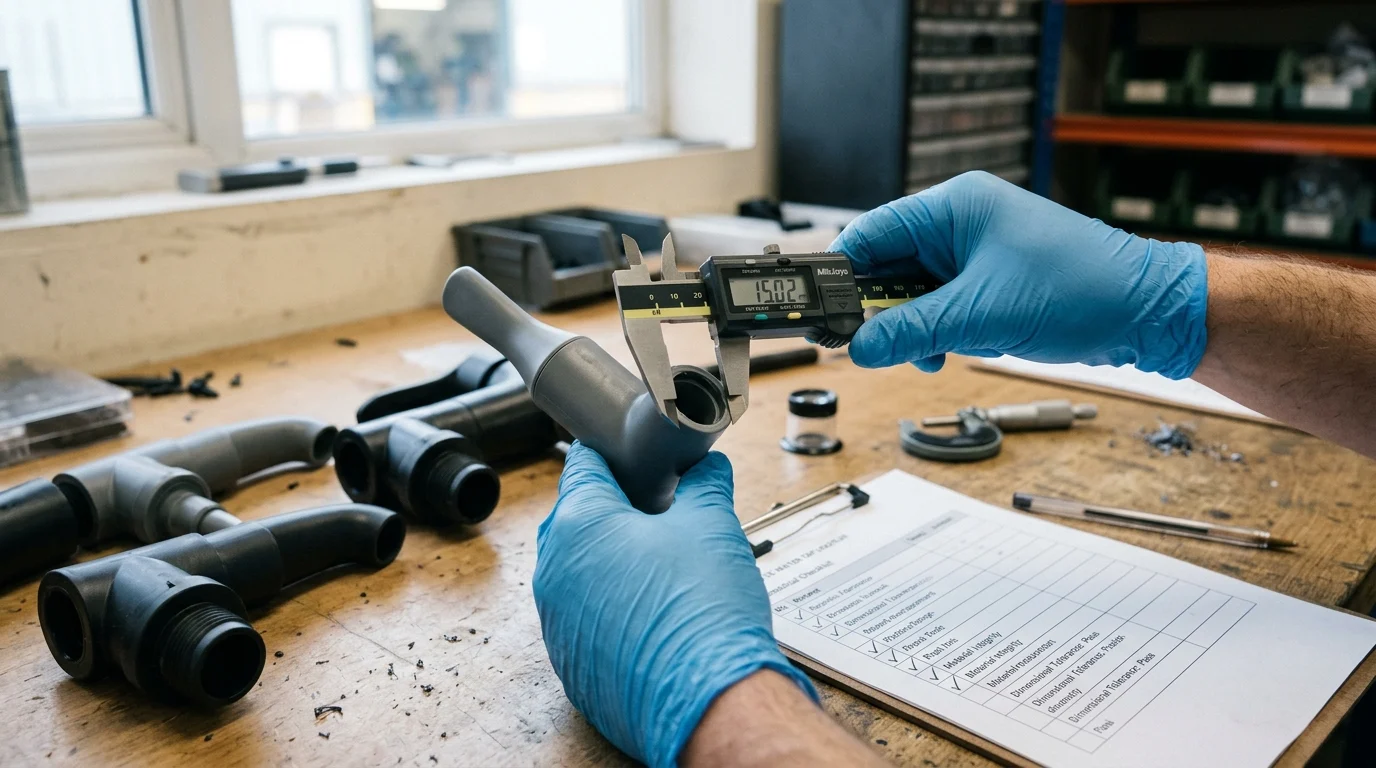
The remarkable corrosion resistance of plastic water taps is not a generic trait but rather a direct result of specific molecular structures found in modern engineering polymers. Selecting the appropriate material requires an understanding of thermal, chemical, and mechanical properties.
How PVC, CPVC, PP, and ABS perform
Different polymer formulations offer distinct advantages depending on the fluid chemistry and thermal environment. Polyvinyl Chloride (PVC) is widely used for cold water applications due to its excellent rigidity and resistance to chlorine. Chlorinated Polyvinyl Chloride (CPVC) alters the polymer chain to handle elevated temperatures, maintaining structural integrity up to 93°C (200°F).
Polypropylene (PP) is highly valued in industrial settings because it withstands an exceptionally broad pH range of 1 to 14, making it impervious to highly acidic or alkaline solutions. Acrylonitrile Butadiene Styrene (ABS) offers superior impact resistance and toughness, though it generally features lower thermal and chemical tolerances compared to CPVC or PP.
Why plastic avoids galvanic corrosion and scaling
Galvanic corrosion occurs when two dissimilar metals are electrically connected within a conductive fluid, causing the less noble metal to degrade rapidly. Polymers possess a low dielectric constant (approximately 3.0 for standard PVC), making them excellent electrical insulators that completely halt galvanic currents.
In addition to preventing galvanic decay, plastic water taps resist mineral scaling. The extremely smooth internal surface of molded polymers—often yielding a Hazen-Williams roughness coefficient of C=150—prevents calcium carbonate and other mineral precipitates from adhering to the bore. This anti-scaling property ensures flow rates remain consistent over the fixture's lifecycle.
Operating limits that still matter
Despite their chemical resilience, polymers are subject to specific operating constraints that must be engineered into the system design. Pressure ratings for standard plastic taps typically max out around 150 psi at 23°C (73°F), and this pressure capacity derates inversely as fluid temperatures increase.
Ultraviolet (UV) radiation is another critical limitation. Unmodified plastics can experience photo-oxidation, leading to embrittlement when exposed to direct sunlight. For outdoor installations, manufacturers must incorporate UV stabilizers, such as carbon black or titanium dioxide, to maintain the material's mechanical properties over time.
Plastic Water Taps vs Brass and Steel
Evaluating plumbing fixtures requires a direct comparison between advanced polymers and traditional metals. While brass and stainless steel have historically dominated the market, plastic water taps offer compelling advantages in specific performance categories.
Key comparison points for common tap materials
When comparing materials, specifiers must evaluate upfront costs, chemical compatibility, and regulatory compliance. Traditional brass fixtures are susceptible to dezincification in aggressive water and must meet strict regulations requiring less than 0.25% weighted average lead content to be deemed legally 'lead-free'.
Stainless steel, particularly the 316L grade, offers excellent corrosion resistance but comes at a significant financial premium—often costing three to five times more than an equivalent polymer fixture. Plastic taps bypass the heavy metal leaching issue entirely while offering a highly cost-effective price point.
| Material | Initial Cost | Corrosion Resistance | Max Temperature Limit | Heavy Metal Leaching Risk |
|---|---|---|---|---|
| Polymer (CPVC/PP) | Low | Excellent (Immune to oxidation) | Up to 93°C (200°F) | None |
| Standard Brass | Moderate | Moderate (Prone to dezincification) | High (>150°C) | High (Unless certified lead-free) |
| Stainless Steel (316L) | High | Very Good (Susceptible to chlorides) | Very High (>200°C) | None |
Differences in installation, maintenance, and replacement
The physical properties of plastics dramatically alter installation and maintenance protocols. Polymer fixtures are approximately one-sixth the weight of their steel counterparts, significantly reducing shipping costs and minimizing installer fatigue during large-scale commercial deployments.
However, threaded plastic connections require careful handling. Unlike metal threads that can withstand high torque, plastic threads are susceptible to stress cracking if overtightened. Industry best practices dictate a maximum torque of 15 to 20 ft-lbs for standard polymer fittings. Furthermore, liquid thread sealants must be verified for chemical compatibility with the specific plastic, as certain solvent-based sealants can degrade the polymer matrix.
Specifications, Compliance, and Installation Factors
Successfully integrating plastic water taps into a plumbing network demands strict adherence to dimensional specifications, regulatory certifications, and specialized installation techniques. Overlooking these parameters can compromise the integrity of the corrosion-resistant system.
Specifications buyers should verify
Procurement specialists must verify several critical specifications before authorizing the purchase of plastic taps. Thread compatibility is paramount; buyers must ensure alignment between National Pipe Thread (NPT) and British Standard Pipe Taper (BSPT) standards to prevent micro-leaks.
Flow rate specifications are equally critical, particularly in regions with strict water conservation mandates. Commercial plastic aerated taps are typically specified to deliver between 1.5 and 2.2 Gallons Per Minute (GPM). Additionally, buyers must select the appropriate wall thickness—such as Schedule 40 for standard pressure or Schedule 80 for heavy-duty industrial applications.
Potable water compliance and plumbing codes
For municipal and residential applications, plastic water taps must comply with stringent health and safety codes. In North America, fixtures intended for human consumption must carry NSF/ANSI 61 certification, which dictates strict limits on chemical impurities that can leach from the polymer into drinking water.
Simultaneously, NSF/ANSI 372 certification verifies that the product meets the stringent lead-free requirements mandated by the Safe Drinking Water Act. In the European and UK markets, equivalent certifications such as WRAS (Water Regulations Advisory Scheme) approval are mandatory, ensuring the plastics do not harbor microbial growth or alter the taste and odor of the water.
Installation and inspection best practices
Improper installation is the leading cause of failure in polymer plumbing networks. Because plastics possess a higher coefficient of thermal expansion than metals—PVC, for instance, expands at approximately 3.0 x 10^-5 in/in/°F, which is nearly three times the rate of steel—installers must account for thermal movement in the pipeline feeding the tap.
Inspectors should verify that strap wrenches, rather than aggressive metal pipe wrenches, are utilized during assembly to prevent gouging the fixture's exterior. Post-installation hydro-testing should be conducted incrementally, bringing the system up to 1.5 times the maximum operating pressure while checking for stress fractures at the threaded junctions.
When Plastic Water Taps Are the Right Choice
While plastic water taps provide unmatched resistance to electrochemical corrosion, their deployment must be strategically aligned with the operational demands of the facility. Identifying the correct application ensures maximum longevity and return on investment.
Best-fit applications for plastic taps
Certain environments inherently favor polymer fixtures over metallic alternatives. Reverse Osmosis (RO) systems represent a prime application; RO water is stripped of its minerals, resulting in highly aggressive, 'hungry' water with a conductivity often below 10 µS/cm, which rapidly leaches ions from brass and copper. Plastic taps remain entirely unaffected by this ultra-pure water.
Other ideal applications include coastal infrastructure subjected to airborne salinity, agricultural facilities dispensing liquid fertilizers, and laboratories utilizing corrosive reagents. In these scenarios, the chemical inertness of plastics far outweighs their thermal or mechanical limitations.
| Application Environment | Primary Challenge | Recommended Tap Material | Expected Benefit |
|---|---|---|---|
| Reverse Osmosis (RO) | Ultra-pure, aggressive water | Polypropylene (PP) / PVC | Zero ion leaching, maintains water purity |
| Coastal / Marine | High airborne chlorides | PVC / CPVC | Complete immunity to exterior salt corrosion |
| Industrial Chemical | Extreme pH variations | Polypropylene (PP) | Resists both strong acids and alkalis |
| Commercial Hot Water | Thermal stress & scaling | CPVC | Withstands up to 93°C; resists mineral buildup |
How buyers balance corrosion resistance, durability, and cost
Procurement decisions ultimately hinge on Total Cost of Ownership (TCO) analyses. Facility managers must balance the lower mechanical strength of plastics against their exceptional corrosion resistance and favorable pricing. While a commercial-grade plastic tap may carry an initial unit cost of $5 to $15—compared to $30 to $100 for a certified lead-free brass equivalent—the true value is realized over time.
By eliminating the risk of dezincification, heavy metal contamination, and galvanic pitting, plastic water taps frequently achieve a 10- to 15-year lifecycle in highly corrosive environments where metal fixtures would require replacement within three years. This favorable cost-to-durability ratio makes specialized polymers the optimal choice for modern, corrosion-resistant fluid handling systems.
Key Takeaways
- The most important conclusions and rationale for plastic water taps
- Specs, compliance, and risk checks worth validating before you commit
- Practical next steps and caveats readers can apply immediately
Frequently Asked Questions
Why do plastic water taps resist corrosion better than metal taps?
They do not support the electrochemical reaction that causes rust and metal loss, so they avoid pitting, galvanic corrosion, and many chemical attack issues in water systems.
Which plastic material is best for hot water taps?
CPVC is a practical choice for hot water because it handles higher temperatures than standard PVC. Confirm the exact pressure and temperature rating before specifying it.
Can plastic water taps help reduce scaling in water lines?
Yes. Their smooth internal surface makes it harder for mineral deposits like calcium to stick, which helps maintain flow and reduces cleaning frequency.
Are plastic water taps suitable for irrigation and construction projects?
Yes, especially where corrosion resistance, low maintenance, and compatibility with plastic piping matter. Pntek commonly supplies integrated plastic flow solutions for these applications.
What should buyers check before ordering plastic water taps from a supplier?
Check material type, pressure rating, temperature limit, UV resistance for outdoor use, connection size, and media compatibility. Request matching pipes, fittings, and valves for a complete system.


