
Introduction
Choosing plastic valves for corrosive service is no longer just a material substitution; it directly affects safety, maintenance intervals, and long-term operating cost. In China’s fast-growing chemical, water treatment, and electronics sectors, demand is rising for valves that can withstand aggressive acids, alkalis, and oxidizing media without the corrosion risks associated with metal components. This article explains which chemical-resistant plastic valves are most relevant in 2026, how common materials such as PVC, CPVC, PP, and PVDF compare, and what selection factors matter most for reliable piping performance in demanding industrial environments.
Why chemical-resistant plastic valves are becoming a strategic priority
As industrial processes handle increasingly aggressive media, relying on chemical-resistant plastic valves has transitioned from a niche alternative to a strategic necessity. Traditional metallic valves, even those forged from exotic alloys, often succumb to pitting, galvanic corrosion, or chemical attack in harsh fluid-handling systems. Engineered thermoplastics offer absolute immunity to many corrosive agents, ensuring pipeline integrity, preventing hazardous leaks, and maintaining operational safety.
Corrosion control, uptime, and total cost drivers
Facility engineers and procurement managers prioritize thermoplastics to control corrosion, maximize uptime, and optimize the total cost of ownership (TCO). Replacing specialized alloys like Hastelloy or titanium with advanced fluoropolymers such as PVDF or PFA can yield upfront material cost reductions of 40% to 60%. Furthermore, in highly corrosive applications—such as 37% hydrochloric acid processing—premium plastic valves can deliver up to a 300% longer operational lifespan compared to standard stainless steel alternatives, drastically reducing maintenance-related downtime and lifecycle expenditures.
Industries in China driving demand
In China, several high-growth industrial sectors are accelerating the demand for advanced plastic valving. The semiconductor manufacturing industry requires ultra-pure water (UPW) systems and aggressive etching chemical lines utilizing hydrofluoric acid, mandating high-purity PVDF and PFA valves to prevent ionic contamination. Simultaneously, the booming electric vehicle (EV) battery supply chain relies heavily on CPVC and PP valves for processing lithium salts, sulfuric acid, and other electrolytes. Market data indicates an annual growth rate exceeding 8.5% for industrial plastic valves within these specialized Chinese manufacturing hubs, driving rapid innovation in local production capabilities.
What defines high-performance chemical-resistant plastic valves
Specifying high-performance chemical-resistant plastic valves requires a deep understanding of polymer science and mechanical design. Unlike standard commercial plumbing components, industrial-grade plastic valves are engineered to withstand severe chemical environments while maintaining precise flow control and bubble-tight shutoff under varying dynamic loads.
Materials, seals, and connection types
The foundation of valve performance lies in the selection of body materials, elastomeric seals, and connection methods. Common body materials include UPVC, CPVC, Polypropylene (PP), and Polyvinylidene Fluoride (PVDF). Seals must be equally resistant; FKM (Viton) and EPDM are standard O-ring materials, while PTFE (Teflon) is preferred for valve seats and diaphragms facing extreme solvents. Connection types must align with the piping system design, utilizing socket fusion, butt welding, true union threading, or flanged connections for secure, leak-free integration.
| Material | Max Operating Temp | Typical Chemical Resistance | Relative Cost |
|---|---|---|---|
| UPVC | 60°C (140°F) | Bases, weak acids, salts | Low |
| CPVC | 90°C (194°F) | Strong acids, bases, oxidizers | Medium |
| PP | 80°C (176°F) | Organic solvents, alkalis | Medium |
| PVDF | 140°C (284°F) | Halogens, strong acids, aromatics | High |
Pressure, temperature, permeation, and cycle life
Operational parameters define the functional limits of the valve. Industrial plastic valves are typically rated for pressures between PN10 and PN16 (approximately 150 PSI to 232 PSI) at ambient temperatures. However, engineers must account for the inverse relationship between temperature and pressure resistance in thermoplastics; as temperatures approach the polymer's upper limit (e.g., 140°C for PVDF), the maximum allowable working pressure drops significantly. Additionally, permeation rates and mechanical cycle life—often exceeding 1,000,000 cycles for premium pneumatically actuated models—are critical metrics for long-term reliability in automated systems.
Plastic valve types and their applications
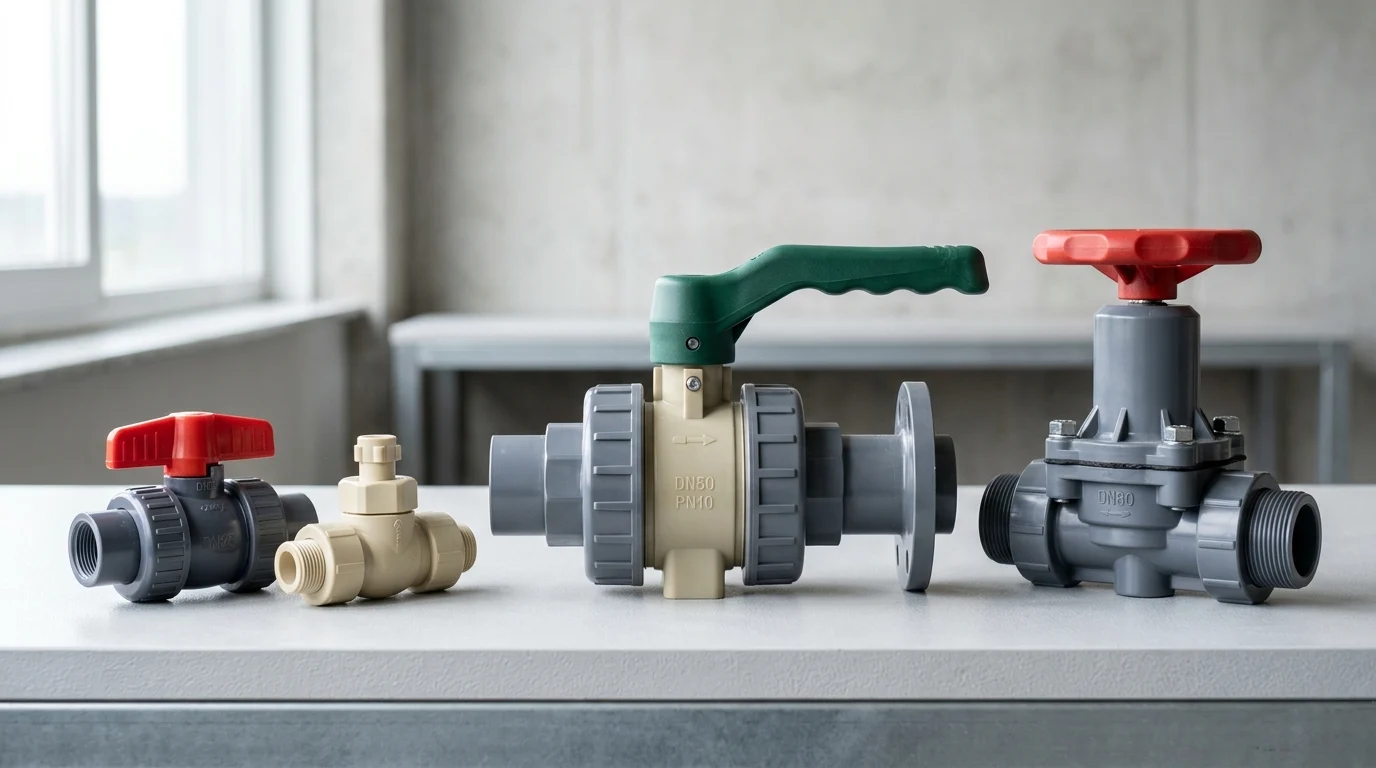
Different valve architectures serve distinct fluid handling purposes. Diaphragm valves are the industry standard for throttling highly corrosive or particulate-laden media, as the mechanism isolates the mechanical components from the fluid path. True union ball valves provide rapid, quarter-turn shutoff with minimal pressure drop, making them ideal for chemical distribution manifolds. Butterfly valves offer a compact, lightweight solution for large-diameter pipelines (typically DN50 to DN300) where space and structural load are constrained.
How to evaluate Chinese suppliers of chemical-resistant plastic valves
China has established itself as a global hub for valve manufacturing, with dense supply chain clusters in Zhejiang, Jiangsu, and Guangdong provinces. However, sourcing industrial-grade chemical-resistant plastic valves requires rigorous vendor evaluation to separate commodity plumbing suppliers from high-performance engineering partners capable of meeting strict industrial tolerances.
Manufacturing, testing, and traceability
Top-tier Chinese manufacturers utilize advanced precision injection molding to ensure uniform wall thickness and eliminate internal stresses that could lead to environmental stress cracking. Evaluation should focus heavily on a supplier's quality control infrastructure. Leading factories perform 100% hydrostatic pressure testing on assembled valves before shipment, adhering to standards like ISO 9393. Furthermore, strict lot traceability—often implemented via molded-in date codes or QR tracking—is essential for isolating potential material defects in critical chemical applications.
Certifications, compliance, and documentation
Compliance documentation is the definitive proof of a supplier's manufacturing integrity. Industrial buyers must verify ISO 9001:2015 quality management certifications and request comprehensive material test reports (MTRs), specifically EN 10204 type 3.1 certificates, which validate the chemical composition of the raw polymer batches. Depending on the end-use, valves may also require CE marking for the European market, NSF/ANSI 14 or 61 for potable water compatibility, and RoHS/REACH compliance to guarantee the absence of restricted hazardous substances in the plasticizers or pigments.
MOQ, lead time, tooling, and support
Commercial terms dictate the feasibility of a supply partnership. For standard valve configurations, Minimum Order Quantities (MOQs) in China typically range from 50 to 200 units per size, with standard lead times hovering between 15 and 35 days. However, for specialized OEM designs or unique actuator mounting pads, buyers must account for custom tooling costs. Injection mold tooling for a new valve body can range from $3,000 to over $12,000 depending on cavity count and complexity, necessitating a supplier with robust in-house CAD/CAM and mold-making capabilities.
How to select the right chemical-resistant plastic valve
Selecting the optimal chemical-resistant plastic valve is a high-stakes engineering decision. A mismatch between the valve specification and the process conditions can result in catastrophic leaks, environmental hazards, and costly production halts. Precision in the selection phase mitigates these operational risks.
Matching media, concentration, temperature, and pressure
The selection process begins with a comprehensive analysis of the fluid media. Engineers must evaluate the specific chemical, its concentration, and the continuous operating temperature. Chemical resistance is not static; for instance, UPVC can easily handle 70% sulfuric acid at 25°C, but if the concentration increases to 98% or the temperature rises to 60°C, the UPVC will rapidly degrade, necessitating an upgrade to CPVC or PVDF. Pressure spikes and flow velocity must also be mapped against the material's derating curve to ensure an adequate safety margin throughout the system's lifespan.
Using comparison tables and pilot validation
Utilizing standardized chemical resistance charts and cross-referencing multiple databases is standard practice. However, for complex mixtures or proprietary chemical blends, theoretical data may be insufficient. In these scenarios, conducting pilot validation is highly recommended. Procuring sample valves and subjecting them to a 30- to 90-day accelerated immersion test in the actual process media allows engineers to measure weight variance, dimensional swelling, and tensile strength degradation before committing to full-scale procurement.
| Valve Type | Primary Function | Flow Control Capability | Typical Size Range |
|---|---|---|---|
| Ball Valve | On/Off Isolation | Poor | DN15 – DN100 |
| Diaphragm Valve | Throttling / Isolation | Excellent | DN15 – DN250 |
| Butterfly Valve | Bulk Flow / Isolation | Moderate | DN50 – DN600 |
| Check Valve | Backflow Prevention | N/A | DN15 – DN200 |
Common specification and installation mistakes
Even perfectly specified valves can fail prematurely due to improper installation. A frequent error in plastic piping systems is over-torquing flanged connections; unlike steel flanges, plastic flanges require strict adherence to torque limits (often between 15 and 40 Nm, depending on diameter) and a star-pattern tightening sequence to prevent cracking. Another critical oversight is ignoring thermal expansion. Thermoplastics exhibit a coefficient of linear thermal expansion 5 to 10 times greater than metals. Failing to integrate expansion loops or sliding supports can impose severe shear stress on valve bodies and union nuts.
Final sourcing criteria for chemical-resistant plastic valves
The final phase of sourcing chemical-resistant plastic valves consolidates technical validation with commercial realities. Procurement teams must look beyond the initial unit price to secure long-term reliability for their fluid handling infrastructure, engaging suppliers who provide verifiable lifecycle value.
Balancing purchase cost and lifecycle value
A robust procurement strategy relies on calculating the Total Cost of Ownership (TCO). While a standard PP ball valve might cost $30 and a highly engineered PVDF equivalent might cost $180, the lifecycle value heavily favors the premium option in aggressive media. If the cheaper valve fails every 6 months, the compounding costs of replacement labor, process downtime, and potential chemical spill remediation quickly eclipse the initial $150 savings. World-class Chinese suppliers demonstrate their value by maintaining defect rates below 0.3% and offering extended warranties backed by comprehensive failure analysis support.
Procurement checklist for a final shortlist
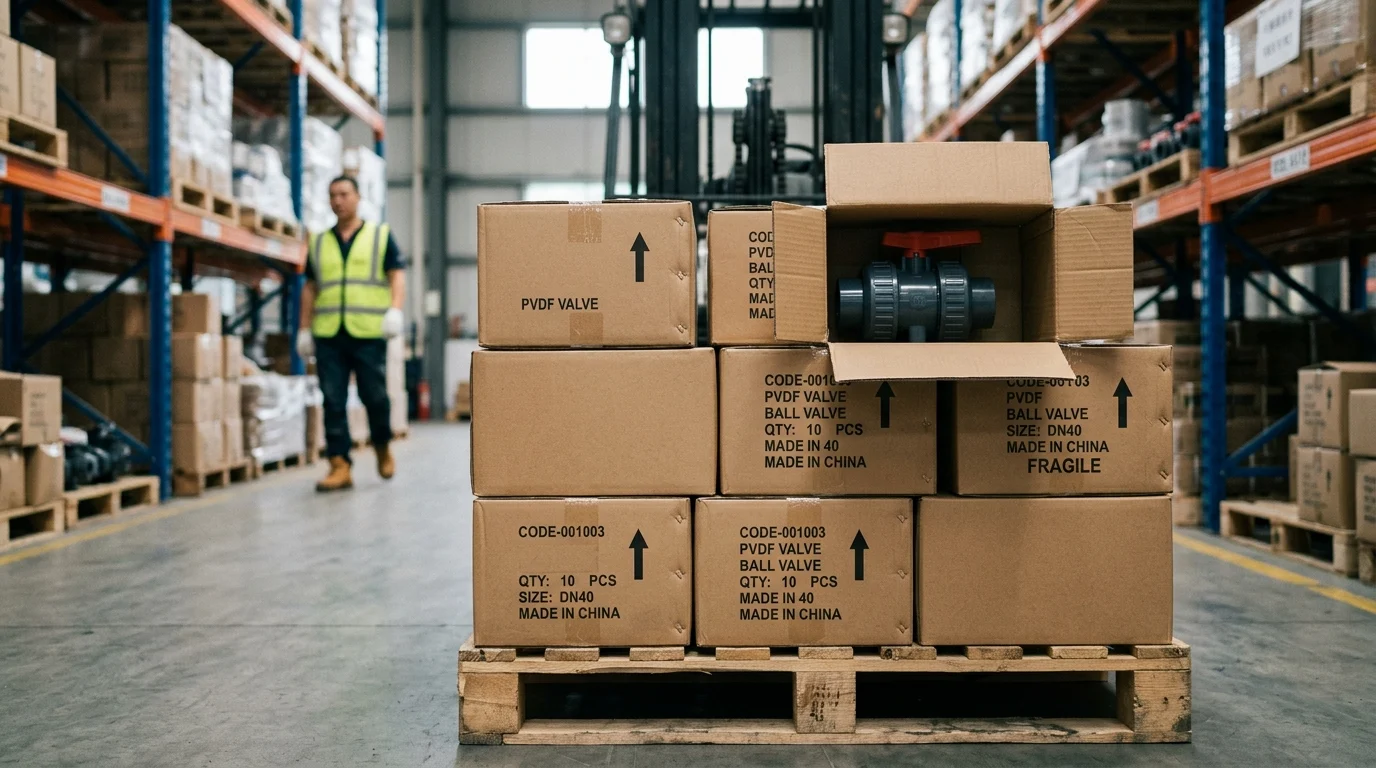
Before issuing a final purchase order, buyers should execute a standardized procurement checklist. This includes verifying the supplier's raw material sourcing (ensuring they use virgin resins from reputable chemical companies rather than regrind plastics), confirming the availability of spare parts like replacement EPDM/FKM diaphragms, and reviewing packaging protocols to ensure valves are shipped in sealed, dust-free bags to prevent contamination. Establishing clear Service Level Agreements (SLAs) regarding warranty claims and technical support response times ensures a sustainable, low-risk supply chain.
Key Takeaways
- The most important conclusions and rationale for chemical resistant plastic valves
- Specs, compliance, and risk checks worth validating before you commit
- Practical next steps and caveats readers can apply immediately
Frequently Asked Questions
Which plastic valve material suits most chemical-resistant piping systems?
Match media and temperature first: UPVC for many bases and salts, CPVC for stronger acids and higher heat, PP for alkalis and some solvents, PVDF for the harshest chemicals and purity-critical lines.
How do I choose between a ball valve, diaphragm valve, and butterfly valve?
Use ball valves for quick shutoff, diaphragm valves for corrosive or particle-filled fluids, and butterfly valves for larger pipe sizes where low weight and compact installation matter.
What should buyers check when sourcing plastic valves from China?
Ask for material certificates, pressure-temperature ratings, seal details, factory testing records, and traceability. Prefer suppliers with export experience and integrated pipes, fittings, and valves for easier system matching.
Can Pntek support complete plastic piping solutions, not just valves?
Yes. Pntek supplies valves along with plastic pipes and fittings in UPVC, CPVC, PPR, HDPE, and related product lines, helping buyers source more compatible system components together.
Why are chemical-resistant plastic valves often better than metal valves?
They resist corrosion from aggressive media, reduce leak risk, and often lower total cost. In many chemical lines, they also cut maintenance and downtime compared with stainless or specialty alloy valves.


