
Introduction
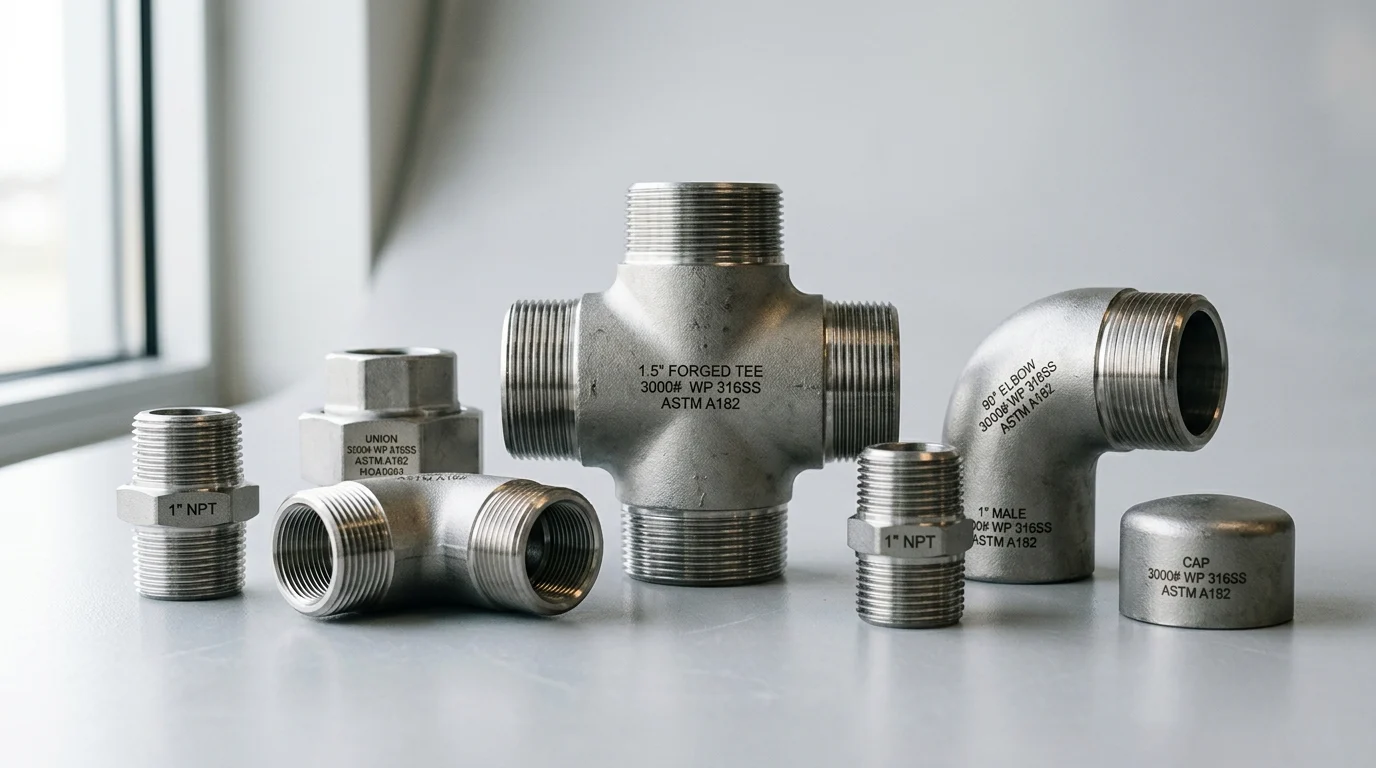
Selecting fittings for high pressure industrial water service is more than a material choice; it determines leak resistance, maintenance intervals, and system safety under continuous mechanical load. The right connection must match pressure class, temperature range, corrosion exposure, and installation method while meeting relevant standards. This article explains which fitting types and materials perform best in demanding water systems, how forged and threaded or socket-weld options compare, and what engineers should check to avoid common failure points. With that context, the following sections narrow the field to practical choices for reliable, high-pressure operation.
Why High Pressure Pipe Fittings Matter
Industrial water systems operating under extreme mechanical stress require robust infrastructure to maintain fluid containment, optimize performance, and ensure operator safety. From reverse osmosis desalination plants to high-pressure boiler feed networks in power generation, the integrity of the piping system relies heavily on the quality of its connections. High pressure pipe fittings serve as the critical junctions in these networks, tasked with absorbing dynamic loads and preventing catastrophic leaks.
When dealing with industrial water, engineers must account for both the hydraulic forces and the corrosive potential of the fluid. A failure at a single fitting can result in costly downtime, environmental hazards, and severe safety risks to facility personnel. Consequently, understanding the defining characteristics and failure modes of these components is foundational to reliable system design.
How are high pressure pipe fittings defined
High pressure pipe fittings are fundamentally categorized by their pressure-temperature (PT) ratings, manufacturing methods, and wall thicknesses. Unlike standard commercial fittings, which may be cast and rated for 150 psi, high-pressure variants are typically forged to eliminate porosity and align the grain structure for maximum strength. They are classified into specific pressure classes, most notably Class 3000, Class 6000, and Class 9000, under standards such as ASME B16.11.
In industrial water applications, these components must routinely handle operating pressures exceeding 3,000 psi (20.6 MPa). In specialized sectors, such as ultra-high-pressure water jetting or hydraulic fracturing water management, system pressures can escalate to 10,000 psi or beyond. The dimensional standards dictate that as the pressure class increases, the internal bore decreases to provide a thicker, more resilient wall capable of containing extreme internal forces.
Which operating conditions cause fitting failure
Fitting failure in high-pressure water systems is rarely due to static pressure alone; it is typically driven by dynamic operating conditions and fatigue. Water hammer—a sudden momentum change causing a severe pressure surge—is a primary culprit. During a water hammer event, transient pressure spikes can momentarily exceed the system's design limits by 1.5x to 2x, exerting immense radial and axial stress on fitting joints.
Thermal cycling and cavitation also accelerate degradation. Rapid temperature fluctuations cause cyclical expansion and contraction, leading to fatigue cracking at stress concentrators like thread roots or weld toes. Cavitation, which occurs when localized pressure drops below the vapor pressure of water and subsequent bubbles collapse, can mechanically erode the interior surface of the fitting. Over time, this erosion reduces the wall thickness, compromising the pressure boundary and leading to eventual rupture or pinpoint leaks.
Types and Materials of High Pressure Pipe Fittings
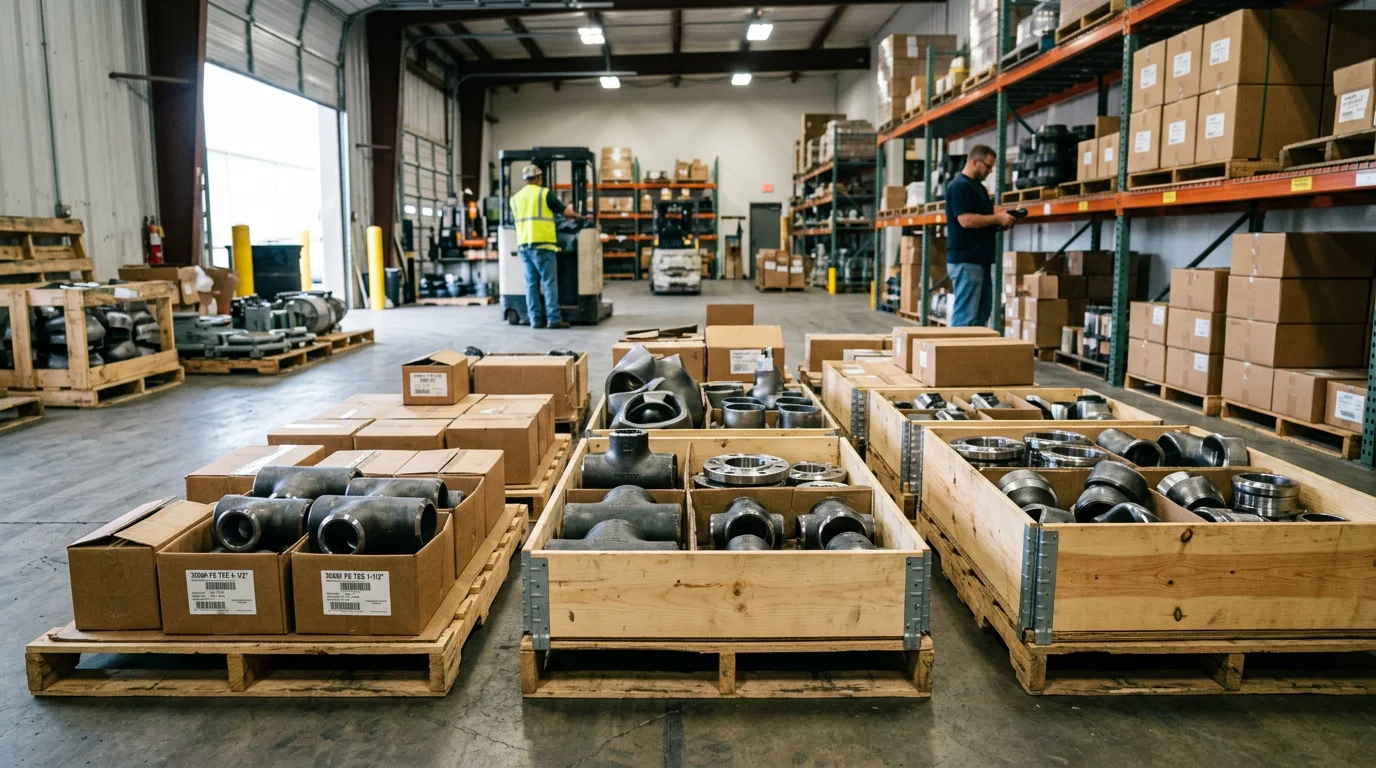
The selection of fitting types and materials dictates both the mechanical strength and the corrosion resistance of the piping network. Specifying the correct combination requires an in-depth understanding of the system's operational envelope, vibration levels, and fluid chemistry.
How do threaded, socket weld, butt weld, flanged, and grooved fittings compare
Different connection methods offer varying degrees of structural integrity, ease of installation, and maintenance accessibility. The choice heavily influences the overall reliability of the high-pressure network.
| Fitting Type | Connection Method | Typical Size Range (NPS) | Application Suitability |
|---|---|---|---|
| Socket Weld | Fillet welded | 1/8" to 2" | High pressure, small bore, high vibration |
| Butt Weld | Full penetration | 2" to 48"+ | Critical high-pressure lines, large diameters |
| Threaded (NPT) | Screwed | 1/8" to 4" | Low vibration, highly accessible, moderate pressure |
| Flanged | Bolted joint | 1/2" to 60"+ | Systems requiring frequent disassembly |
| Grooved | Mechanical coupling | 1" to 24" | Rapid assembly, moderate to high pressure |
Threaded fittings are generally restricted to smaller diameters and applications where vibration is minimal, as the thread roots act as stress concentrators. Socket weld fittings provide superior leak integrity for small-bore piping (up to 2 inches) and resist vibration fatigue far better than threaded alternatives. For larger diameters and the highest pressure ratings, butt weld fittings are the industry standard, offering full-penetration joints that allow for seamless radiographic inspection. Flanged and grooved fittings provide modularity, though high-pressure variants (e.g., ASME Class 900 or 1500 flanges) require significant physical space and precise torqueing protocols.
Which materials are best for high pressure service
Material selection for high-pressure water systems must balance tensile strength with resistance to oxidation, localized pitting, and stress corrosion cracking. Carbon steel (such as ASTM A105) is frequently used in closed-loop boiler feed systems where water chemistry is strictly controlled and oxygen is scavenged. However, for raw water, brackish water, or reverse osmosis applications, high-alloy materials are mandatory.
Austenitic stainless steels, specifically 316/316L, serve as the baseline for corrosive water environments. When handling higher chloride concentrations or extreme pressures, engineers turn to duplex and super duplex stainless steels (e.g., UNS S31803 / 2205 or UNS S32750 / 2507). Duplex 2205 offers a minimum yield strength of roughly 65 ksi (450 MPa), which is more than double that of standard 316L stainless steel (approx. 25-30 ksi). This exceptional strength-to-weight ratio allows designers to specify thinner-walled fittings while maintaining identical pressure ratings, thereby reducing overall system weight and material costs.
Specification Criteria and Standards
Rigorous specification bridges the gap between theoretical engineering design and operational reality. Utilizing standardized criteria ensures interoperability across the supply chain and guarantees that the selected components can safely manage the intended hydraulic loads.
How should pressure class, schedule, wall thickness, and end preparation be specified
Specification of high-pressure fittings requires aligning the fitting's pressure class with the corresponding pipe schedule. For forged fittings governed by ASME B16.11, the pressure class (3000, 6000, 9000) dictates the dimensional profile and wall thickness. To ensure a uniform internal diameter and minimize flow turbulence, the fitting class must match the connecting pipe.
Typically, Class 3000 fittings are specified for use with Schedule 80 or Extra Strong (XS) pipe. Class 6000 fittings correspond to Schedule 160 pipe, and Class 9000 fittings are mated with Double Extra Strong (XXS) pipe. End preparations must also be meticulously specified; for instance, butt weld fittings require precise bevel angles (usually 37.5 degrees) to ensure optimal weld penetration, while threaded fittings require exact adherence to NPT (National Pipe Taper) taper angles and thread depths.
Which codes, standards, testing, and traceability requirements apply
Industrial water systems are governed by stringent codes, primarily ASME B31.1 for Power Piping and ASME B31.3 for Process Piping. These codes dictate design minimums, allowable stress values, and required inspection protocols. Material standards, such as ASTM A182 for forged stainless and alloy steel components, govern the chemical composition and mechanical properties of the raw material.
Traceability is non-negotiable in high-pressure environments. Fittings must be supplied with EN 10204 Type 3.1 Material Test Reports (MTRs), which document the heat number, chemical analysis, and mechanical test results of the specific forging lot. Without unbroken traceability back to the origin mill, a fitting cannot be legally or safely deployed in a code-stamped high-pressure system.
How can fit-for-service options be compared
Comparing fit-for-service options requires evaluating the maximum allowable working pressure (MAWP) against the system's design temperature. As temperature increases, the mechanical strength of the fitting material degrades, lowering its effective pressure rating.
| Forged Fitting Class | Matching Pipe Schedule | Max Working Pressure (psi at 100°F, Carbon Steel) | Max Working Pressure (psi at 500°F, Carbon Steel) |
|---|---|---|---|
| Class 3000 | Schedule 80 / XS | 3,000 psi | 2,135 psi |
| Class 6000 | Schedule 160 | 6,000 psi | 4,270 psi |
| Class 9000 | XXS | 9,000 psi | 6,405 psi |
Verification of fit-for-service often culminates in hydrostatic testing. Industry standards typically require the assembled piping spool or system to hold 1.5 times the design pressure for a minimum duration of 10 to 30 minutes. This rigorous testing validates both the structural integrity of the fittings and the quality of the field welds or mechanical connections.
Sourcing and Quality Control
Procurement of high-pressure components demands stringent oversight across the entire supply chain. Because these fittings operate under immense stress, minor manufacturing defects that might be acceptable in low-pressure applications can lead to catastrophic failures. Effective sourcing relies on robust quality control and strategic supplier evaluation.
Which manufacturing and inspection checkpoints matter most
The most critical manufacturing checkpoint for high-pressure fittings is the forging process. Forging refines the internal grain structure of the metal, wrapping it around the contours of the fitting to maximize directional strength. Inspectors must verify that casting is never substituted for forging in Class 3000+ applications, as castings are prone to internal voids and micro-porosity.
Non-Destructive Examination (NDE) is essential for identifying subsurface anomalies. Depending on the criticality of the system, fittings may undergo Ultrasonic Testing (UT) to detect internal flaws or Magnetic Particle Inspection (MPI) to reveal surface cracks. For highly critical industrial water systems, such as nuclear feedwater lines, procurement specifications often mandate a defect rate tolerance of < 0.1%, requiring 100% volumetric inspection of all forged blanks prior to machining.
How do lead time, supply region, and documentation affect sourcing
Logistics and supply chain geography heavily influence project timelines and costs. Standard carbon steel A105 fittings in Class 3000 are heavily commoditized, with global supply chains supporting rapid lead times of 2 to 4 weeks. However, as material specifications become more exotic, lead times expand dramatically.
Procuring specialized Super Duplex 2507 or high-nickel alloy forgings from approved Western European or North American mills can extend lead times to 16 to 24 weeks. Sourcing from unvetted regions to compress timelines introduces significant risk regarding material purity and documentation fraud. Consequently, buyers must balance the urgency of the project against the necessity of sourcing from ISO 9001-certified manufacturers capable of providing verifiable 3.1 MTRs.
Which qualification steps reduce leakage risk
To mitigate leakage risks prior to installation, quality control teams implement rigorous qualification steps upon receipt of materials. Positive Material Identification (PMI) using handheld X-ray fluorescence (XRF) analyzers is routinely performed to verify that the alloy composition matches the MTRs, preventing the accidental integration of lower-grade materials.
Dimensional verification is equally critical. For threaded fittings, inspectors use go/no-go ring and plug gauges to ensure thread pitch and taper fall within strict ANSI/ASME B1.20.1 tolerances. For socket weld fittings, verifying the exact depth and diameter of the socket ensures that the pipe seats correctly, allowing for the mandatory 1/16-inch expansion gap required to prevent weld cracking during thermal expansion.
How to Choose the Right High Pressure Pipe Fittings
Finalizing the selection of high pressure pipe fittings requires a holistic evaluation of the system's operational parameters and lifecycle economics. Engineering and procurement teams must collaborate to ensure the chosen components deliver both immediate safety and long-term reliability.
What selection process aligns pressure, temperature, media, and connection type
The selection process begins with mapping the exact media characteristics—specifically the fluid's corrosivity, chloride content, and particulate load—against the anticipated pressure and temperature extremes. Engineers utilize established Pressure-Temperature (PT) rating charts to determine the baseline material and class requirements.
Once the material and class are established, the connection type is selected based on maintenance requirements and spatial constraints. If a high-pressure pump discharge requires routine maintenance, a high-pressure flanged connection might be selected despite its bulk. Conversely, for permanent, inaccessible, or high-vibration piping runs, butt weld or socket weld fittings are specified to eliminate the mechanical joints that are most prone to loosening and leakage over time.
How can teams balance cost and safety margin
Balancing initial Capital Expenditure (CAPEX) with long-term Operational Expenditure (OPEX) is the final hurdle in component selection. Over-specifying materials can needlessly inflate project budgets, while under-specifying compromises safety margins and invites costly unplanned outages.
For example, upgrading a high-pressure reverse osmosis manifold from standard 316L stainless steel to Duplex 2205 might increase initial fitting material costs by 30% to 40%, but this investment significantly reduces the risk of corrosion-related failures and lowers long-term OPEX.
Key Takeaways
- The most important conclusions and rationale for high pressure pipe fittings
- Specs, compliance, and risk checks worth validating before you commit
- Practical next steps and caveats readers can apply immediately
Frequently Asked Questions
What fitting type is best for high-pressure industrial water lines?
For small-bore lines, socket weld fittings are usually preferred; for larger critical lines, butt weld fittings offer the best strength and inspection access.
Are threaded fittings suitable for high-pressure water systems?
Only in limited cases. Use threaded fittings on smaller, accessible lines with low vibration, because thread roots can become leak or fatigue points.
Which plastic materials from Pntek are commonly used in water piping systems?
Pntek supplies UPVC, CPVC, PPR, and HDPE systems. Material choice depends on pressure, temperature, and corrosion conditions in your project.
How can water hammer damage high-pressure pipe fittings?
Water hammer creates sudden pressure spikes that can exceed design limits, cracking joints or causing leaks. Surge control and proper fitting selection reduce the risk.
Can Pntek support integrated supply for water piping projects?
Yes. Pntek offers pipes, fittings, and valves across multiple plastic systems, helping buyers source matched components and request quotes quickly.


