
Introduction
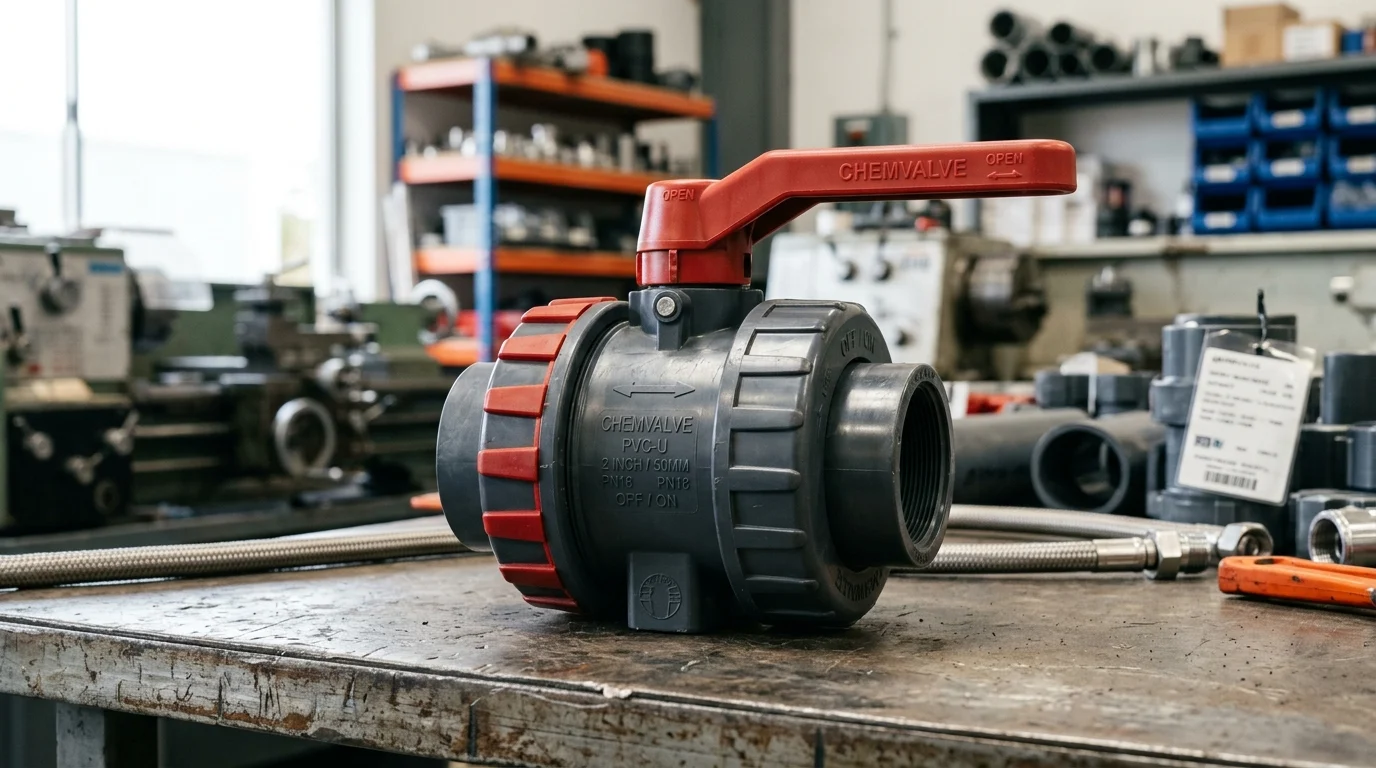
Choosing among industrial plastic valve manufacturers in China requires more than comparing unit prices. Buyers need to assess material selection, molding and machining capability, pressure ratings, certifications, quality control, export experience, and responsiveness across the full supply cycle. This article outlines the practical criteria that separate a low-cost supplier from a reliable long-term manufacturing partner, especially for corrosive, high-purity, and pressure-sensitive applications. By the end, you will have a clear framework for evaluating factories, asking better technical questions, and narrowing your shortlist with fewer sourcing risks.
Why Chinese Industrial Plastic Valve Manufacturers Matter
The global fluid control market relies heavily on industrial plastic valve manufacturers in China to supply critical components for corrosive and high-purity applications. As the primary hub for injection-molded thermoplastic valves, China offers highly integrated supply chains that span raw resin processing to final product assembly and testing.
Cost, scale, and export advantages
Industrial plastic valve manufacturers in specialized production clusters, such as those in Zhejiang and Guangdong provinces, leverage massive economies of scale. By integrating raw material sourcing, automated injection molding, and localized tooling, Chinese facilities typically maintain a 20% to 35% production cost advantage over North American and European competitors. This structural margin allows global distributors and EPC (Engineering, Procurement, and Construction) contractors to remain competitive in price-sensitive bids without sacrificing baseline performance.
Key industries served
These suppliers cater to highly demanding sectors, including municipal water treatment, chemical processing, semiconductor manufacturing, and commercial agriculture. In desalination and reverse osmosis (RO) systems, for instance, thermoplastic valves must withstand continuous exposure to brine and maintain structural integrity under dynamic fluid pressures up to 1.0 MPa. The ability to serve such diverse industries makes the selection of a robust, technologically capable manufacturing partner absolutely critical for global supply chains.
How to Compare Industrial Plastic Valve Suppliers
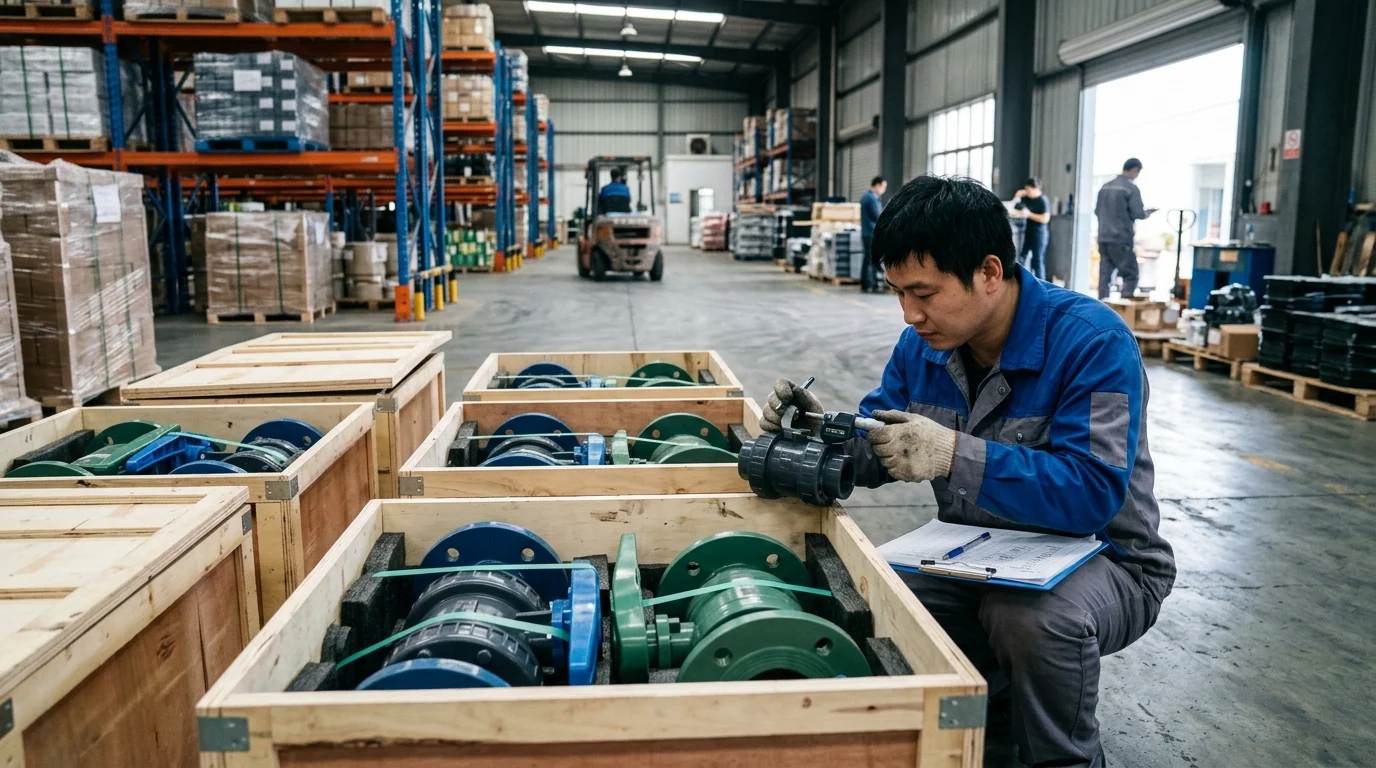
Evaluating suppliers requires a deep dive into their technical capabilities and material expertise. Industrial applications demand precise fluid control, and the manufacturer's ability to manipulate various engineering polymers dictates the valve's operational lifespan and safety profile.
Valve specs, materials, and performance limits
Industrial plastic valves are primarily molded from UPVC, CPVC, PPH, and PVDF. Each polymer features distinct thermal and chemical resistance limits. A competent manufacturer will provide detailed material data sheets confirming the origin of their resins, as 100% virgin materials are strictly required for high-stress environments to prevent premature micro-cracking.
| Polymer | Max Operating Temp | Relative Cost Index | Primary Industrial Use |
|---|---|---|---|
| UPVC | 60°C | 1.0x | General water and wastewater |
| CPVC | 90°C | 2.5x | High-temperature corrosives |
| PPH | 95°C | 1.8x | Chemical processing |
| PVDF | 140°C | 10.0x | Ultra-pure semiconductor fluids |
Product range and customization
Top-tier suppliers offer extensive catalogs encompassing ball, butterfly, check, and diaphragm valves across multiple international connection standards, including DIN, ANSI, and JIS. For proprietary fluid systems, buyers must evaluate the manufacturer's OEM and custom engineering capabilities. Developing custom injection mold tooling for a standard industrial valve body typically requires an investment of $3,000 to $8,000, depending on core complexity and cavitation, with tooling completion generally taking 30 to 45 days.
Pressure and application comparison criteria
Pressure ratings are a non-negotiable comparison metric in industrial fluid handling. Suppliers should explicitly differentiate between PN10 (1.0 MPa) and PN16 (1.6 MPa) designs in their product literature. A reliable manufacturer conducts rigorous burst pressure testing, often subjecting PN16 valves to a minimum of 2.4 MPa (1.5x the nominal pressure) during batch validation to ensure adequate safety margins in environments subject to water hammer or dynamic pressure spikes.
How to Assess Quality and Compliance
Quality assurance in thermoplastic valve production is paramount, as catastrophic valve failure in chemical or high-pressure systems can lead to severe environmental and financial liabilities. Rigorous vetting separates highly controlled manufacturing environments from lower-tier assembly workshops.
Certifications, testing, and traceability
Credible manufacturers maintain ISO 9001:2015 certification at a minimum, alongside application-specific credentials such as NSF/ANSI 61 for potable water safety or CE markings for European market compliance. Traceability is equally critical for industrial applications; expert suppliers implement heat numbers or permanent batch codes on every valve body, allowing full backward traceability to the specific resin lot and injection molding shift.
Factory audit checkpoints
During a factory audit, buyers must assess the condition and capacity of the supplier's injection molding infrastructure. Industrial-grade manufacturing requires molding machines ranging from 150T to 800T clamping force to accommodate large-diameter valves without warping or dimensional distortion. Furthermore, post-molding CNC machining centers should demonstrate high precision capabilities, holding tolerances of ±0.05 mm on valve stems and seating areas to prevent internal leakage.
Documentation and quotation red flags
Initial documentation and quotations can quickly reveal underlying quality risks. A major red flag is a supplier who does not specify the O-ring and seal materials (e.g., standard EPDM versus chemical-resistant FPM/FKM) or the specific resin brand being utilized. Additionally, if the quoted weight of a UPVC valve is 10% to 15% lower than the established industry standard for its nominal size, it strongly indicates the manufacturer is using aggressively hollowed molds or blending recycled regrind, both of which severely compromise burst strength.
How Pricing, Logistics, and Terms Differ
Navigating the commercial landscape of Chinese plastic valve procurement requires understanding the variables that dictate unit costs, production timelines, and shipping terms. These factors vary significantly based on the supplier's business model and operational scale.
Main price drivers
Raw material costs heavily influence the final unit price, particularly for high-performance polymers where PVDF resin can be up to 10 times more expensive than standard UPVC. Internal sealing components also act as major cost drivers; upgrading a valve from standard EPDM seals to highly chemical-resistant FKM (Viton) O-rings typically adds 15% to 20% to the total unit price, representing a necessary premium for harsh chemical applications.
MOQ, lead time, packaging, and Incoterms
Minimum Order Quantities (MOQs) for standard UPVC valves usually range from 500 to 1,000 pieces per size, whereas specialized, high-value PVDF valves may feature MOQs as low as 50 pieces. Standard lead times average 25 to 35 days for production runs using existing molds. Buyers must also align on Incoterms early in the negotiation, with FOB Ningbo or FOB Shanghai being the standard for maritime export, ensuring a clear division of risk and cost at the port of departure.
Factory vs trading company trade-offs
Buyers must carefully weigh the benefits of partnering directly with a factory versus utilizing a trading company. While direct factories offer lower unit costs and direct technical control over the manufacturing process, trading companies can consolidate diverse product lines and manage complex logistics for smaller buyers who cannot meet factory volume requirements.
| Supplier Type | Typical MOQ | Price Markup | Custom Tooling Capability |
|---|---|---|---|
| Direct Factory | 500 – 1,000 pcs | Base Price (0%) | High (In-house R&D) |
| Trading Company | 100 – 300 pcs | 10% – 25% | Low to Moderate |
How to Shortlist and Select the Right Supplier
Finalizing a partnership with an industrial plastic valve manufacturer demands a structured, objective evaluation process to ensure long-term supply chain stability and mitigate operational risks.
Step-by-step evaluation process
The evaluation process should systematically begin with a Request for Information (RFI) to filter baseline capabilities, followed by a detailed Request for Quotation (RFQ) to assess pricing transparency. Buyers should then procure physical samples for independent destructive testing. If sample validation is successful, a trial order—typically representing 10% to 15% of the projected annual volume—should be placed to validate mass production consistency, packaging integrity, and logistical reliability.
Weighted scorecard method
Procurement teams should utilize a weighted scorecard to objectively rank shortlisted suppliers. A standard industrial evaluation matrix might assign 40% to Quality Systems and Certifications, 30% to Landed Pricing, 15% to Lead Time Reliability, and 15% to Communication and Engineering Support. Suppliers failing to achieve a minimum threshold score of 80 out of 100 are typically disqualified from strategic partnership consideration.
Final selection criteria
Final selection hinges on risk mitigation and contractual alignment. The chosen manufacturer must agree to clear Quality Control (QC) parameters, including strict penalty clauses for batch defect rates exceeding 0.5%. Establishing these quantitative thresholds in the final purchasing agreement ensures the manufacturer remains accountable for sustained performance across the entire lifecycle of the procurement contract.
Key Takeaways
- The most important conclusions and rationale for industrial plastic valve manufacturers
- Specs, compliance, and risk checks worth validating before you commit
- Practical next steps and caveats readers can apply immediately
Frequently Asked Questions
What should I compare first when choosing a Chinese industrial plastic valve manufacturer?
Start with material grade, pressure rating, valve type, and application fit. Ask for data sheets for UPVC, CPVC, PPH, or PVDF and confirm whether the valve is rated for PN10 or PN16 service.
Which certifications matter most for industrial plastic valves?
At minimum, look for ISO 9001. For potable water or export projects, also request relevant approvals such as NSF/ANSI 61 or CE, plus batch traceability records for each valve body.
How can I verify a manufacturer's quality before placing a bulk order?
Request test reports, sample valves, and clear QC procedures. A reliable supplier should provide burst-pressure testing results, dimensional checks, and resin origin details before production starts.
Can one supplier provide valves plus matching plastic pipes and fittings?
Yes, and this can simplify procurement. Suppliers like Pntek that offer valves, pipes, and fittings in UPVC, CPVC, PPR, and HDPE can help improve compatibility and reduce sourcing risk.
When is customization worth discussing with a valve manufacturer?
Discuss customization when you need special connection standards, branding, or application-specific dimensions. Confirm tooling cost, lead time, and minimum order quantity early to avoid delays in project planning.


