
Introduction
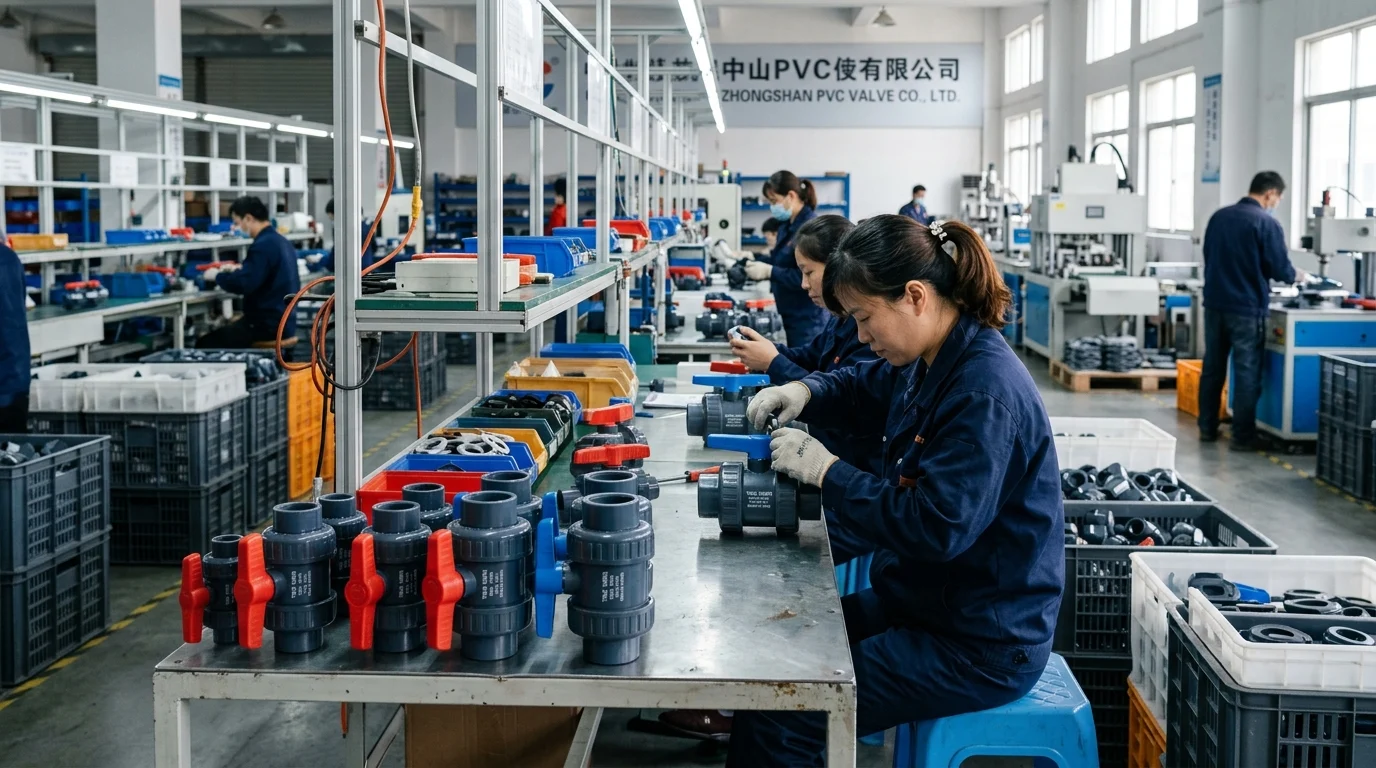
As water treatment projects expand in scale and technical complexity, sourcing the right PVC valve supplier has become a strategic decision rather than a simple price comparison. China’s leading manufacturers now compete on molding precision, material consistency, certification, and delivery speed, making them increasingly relevant for municipal, industrial, and EPC procurement teams in 2026. This article highlights the top Chinese PVC valve companies serving water treatment equipment, with attention to product quality, manufacturing capability, lead times, and supply reliability. It will help readers identify which manufacturers are best suited for cost-sensitive projects, specialized system requirements, and long-term sourcing partnerships.
Why choose a China PVC valve manufacturer
The procurement of thermoplastic fluid control systems for water treatment equipment increasingly centers on Asian manufacturing hubs. Selecting a China PVC valve manufacturer in 2026 offers strategic advantages for engineering, procurement, and construction (EPC) firms facing strict budgetary constraints and rapid project deployment schedules.
As global supply chains stabilize, the Chinese industrial base has heavily reinvested in automated injection molding and rigorous material science. This marks a transition from low-cost commodity production to the high-precision engineering required for critical water infrastructure.
Cost, localization, and project risk
Partnering directly with a tier-one China PVC valve manufacturer typically yields a 20% to 35% reduction in unit costs compared to sourcing from European or North American brands. This cost delta is achieved through integrated supply chains, localized raw material sourcing, and economies of scale, rather than a reduction in polymer quality.
Furthermore, localization mitigates project risk by shortening procurement cycles. Advanced manufacturers in hubs like Zhejiang and Guangdong can now execute tooling and mass production to compress lead times from a traditional 14-week window down to just 6 to 8 weeks. This provides EPC contractors with critical buffer time during complex installation phases.
Water treatment demand drivers
The expansion of reverse osmosis (RO) desalination, municipal wastewater recycling, and ultrapure water (UPW) facilities drives immense volume requirements for corrosion-resistant valves. With global water treatment capacity expanding at a projected compound annual growth rate (CAGR) of 6.5% through 2026, the demand for non-metallic piping systems is surging.
Chinese manufacturers are uniquely positioned to absorb this demand. Their ability to scale production rapidly ensures that multi-million-dollar water treatment plants are not delayed by bottlenecks in the supply of foundational components like true union ball valves and large-diameter butterfly valves.
How to define and compare China PVC valves
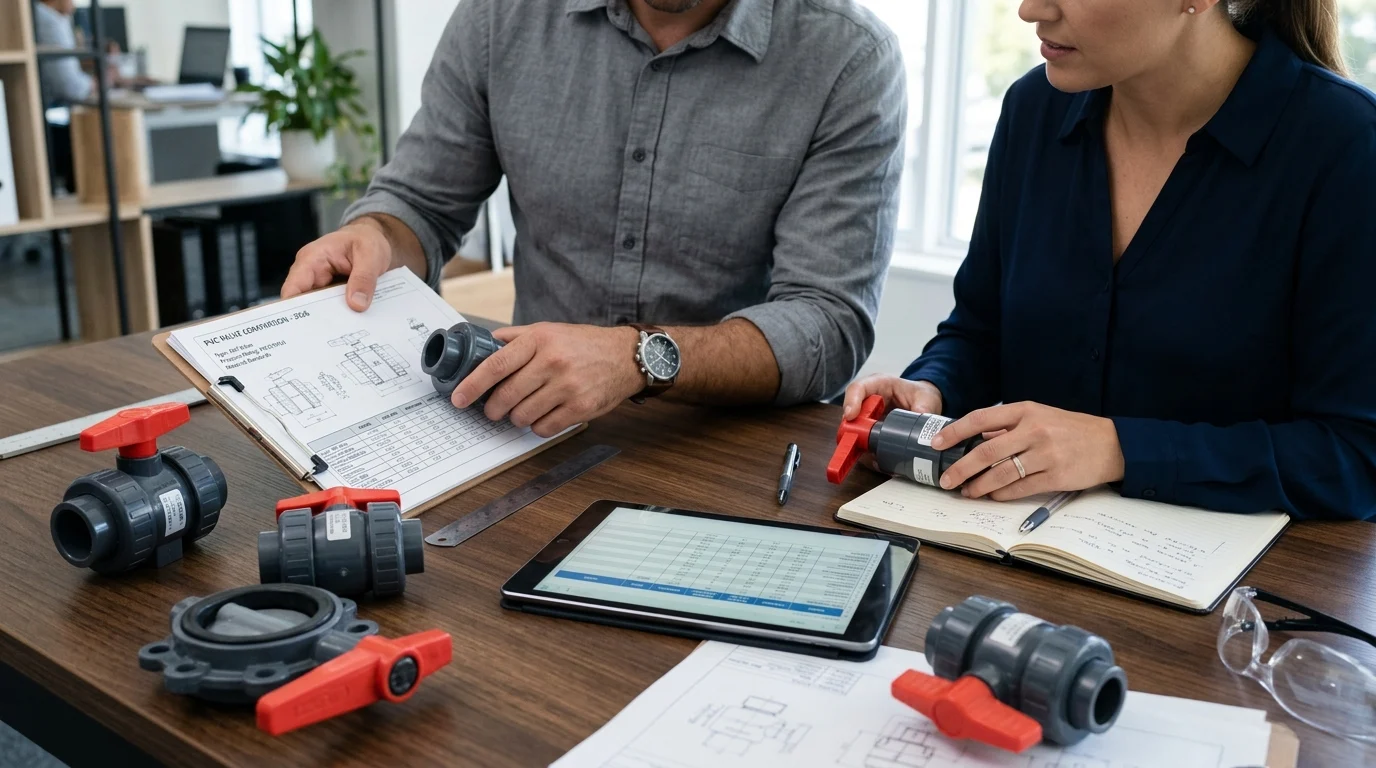
Specifying the correct polymer valve requires rigorous analysis of fluid dynamics, chemical dosing concentrations, and system longevity expectations. Not all thermoplastic valves are engineered to the same tolerances, making precise technical definitions essential before initiating supplier outreach.
Product, material, and performance criteria
Industrial water treatment equipment relies heavily on true union ball valves for isolation, butterfly valves for flow modulation in large-bore pipes, and diaphragm valves for chemical dosing. Standard pressure ratings must be strictly validated; typical specifications require PN10 (150 PSI) or PN16 (232 PSI) capabilities at an ambient temperature of 20°C.
Performance criteria also extend to operating torque. High-quality valves require lower operational torque, which reduces the strain on automated electric or pneumatic actuators and extends the lifecycle of the entire fluid control loop.
PVC vs UPVC vs CPVC valve differences
Understanding the thermal and chemical limitations of different polyvinyl chloride variants is critical for water treatment applications. The table below outlines the primary distinctions between standard PVC, unplasticized PVC (UPVC), and chlorinated PVC (CPVC).
| Material | Max Operating Temp | Chemical Resistance Profile | Typical Water Treatment Application | Relative Cost Index |
|---|---|---|---|---|
| PVC | 40°C (104°F) | Basic acids and alkalis | Low-pressure irrigation, drainage | 1.0x (Baseline) |
| UPVC | 60°C (140°F) | Excellent against chlorine, salts | Potable water, RO filtration skids | 1.2x |
| CPVC | 95°C (203°F) | Superior against harsh corrosives | Hot water distribution, acid dosing | 2.5x – 3.0x |
For the vast majority of ambient-temperature water treatment processes, UPVC remains the optimal balance of mechanical strength, chemical inertness, and cost-efficiency.
Key comparison factors for suppliers
When comparing products across different Chinese suppliers, buyers must scrutinize the internal components. The choice of O-ring and seat material dictates operational success: EPDM is standard for general water processing, while FPM/FKM is mandatory for systems handling ozone or high-concentration sodium hypochlorite.
Additionally, buyers should compare the dimensional standards supported by the manufacturer (e.g., DIN, ANSI, JIS, BS) and their historical defect rates. Top-tier suppliers consistently target and maintain an Acceptable Quality Limit (AQL) of less than 0.65% for major defects.
How to evaluate Chinese PVC valve manufacturers
Distinguishing between vertically integrated manufacturing facilities and trading intermediaries is a critical first step in supplier evaluation. Direct engagement with a factory ensures transparent communication regarding technical specifications, tooling modifications, and production scheduling.
Manufacturer profile and factory capabilities
A robust factory profile is defined by its core machinery and quality control infrastructure. Procurement engineers should look for advanced injection molding capabilities, typically ranging from 150-ton machines for small fittings up to 2,500-ton machines capable of molding 8-inch to 12-inch butterfly valve bodies.
Production capacity is another vital metric. A qualified China PVC valve manufacturer for industrial applications should demonstrate the ability to produce upwards of 150,000 to 200,000 units monthly. Furthermore, the presence of in-house CNC machining centers for mold maintenance and precision part finishing indicates a high level of manufacturing maturity.
OEM and private-label support
Original Equipment Manufacturer (OEM) partnerships necessitate clear agreements regarding custom tooling and intellectual property. Injection mold tooling in China for custom valve bodies typically requires a capital investment between $4,500 and $18,000, depending on cavity count, part complexity, and the steel grade utilized (e.g., S136 or H13).
For private-label support, where buyers require custom handle colors or molded brand logos on standard designs, manufacturers will impose Minimum Order Quantities (MOQs). These MOQs generally range from 500 to 2,000 pieces per SKU, ensuring that the machine setup time is economically viable for the factory.
How to reduce sourcing risk
Cross-border procurement introduces inherent risks regarding quality fade, compliance failures, and logistical bottlenecks. Implementing a stringent risk reduction strategy ensures that the landed goods meet the exact specifications required for critical water infrastructure.
Certifications, testing, and traceability
Validating internationally recognized certifications is non-negotiable. For potable water applications, NSF/ANSI 61 and NSF/ANSI 372 (lead-free) compliance must be verified through third-party databases. Additionally, the factory should hold a valid ISO 9001:2015 certificate covering its specific manufacturing scope.
Traceability and testing protocols are equally vital. Quality control procedures must mandate 100% hydrostatic pressure testing at 1.5 times the maximum working pressure (e.g., testing a PN16 valve at 24 bar) before the product is cleared for packaging.
Tooling, samples, packaging, and Incoterms
Clear definitions of Incoterms—most commonly FOB Ningbo or FOB Shenzhen—dictate liability transfers and freight cost structures. Prior to mass production, buyers must approve pre-production samples (PPS) to lock in the material finish, torque feel, and dimensional tolerances.
Packaging protocols must be engineered to withstand rigorous international transit. Standard export requirements should specify individual polybags to prevent scratching, inner cartons for batching, and double-wall corrugated master cartons capable of passing a standard 1.2-meter drop test without compromising the structural integrity of the valves inside.
Supplier qualification steps
Establishing a formal supplier qualification process prevents costly procurement errors. The following table outlines a standard audit framework used by top EPC firms to evaluate Chinese valve vendors.
| Audit Category | Evaluation Metric | Minimum Pass/Fail Threshold |
|---|---|---|
| Raw Material Control | Virgin resin usage verification | 100% virgin UPVC/CPVC (No regrind permitted for pressure parts) |
| In-Process QC | Dimensional inspection frequency | Measurements taken every 2 hours during continuous injection runs |
| Pressure Testing | Hydrostatic test sampling rate | 100% of finished valves tested (Batch sampling is unacceptable) |
| Financial Health | Registered capital & turnover | Minimum $1M USD registered capital; positive YOY growth |
Executing this audit, either via a local third-party inspection agency (such as SGS or TÜV) or an internal sourcing team, is a mandatory step before issuing a high-value purchase order.
How to shortlist the best supplier
The final stage of procurement involves synthesizing audit data, commercial terms, and technical capabilities into an actionable vendor selection. Shortlisting the best supplier requires a disciplined, objective approach that balances upfront costs with long-term reliability.
Decision framework for buyer evaluation
Procurement teams should utilize a quantitative weighted matrix to rank prospective suppliers. A standard distribution for critical fluid control components allocates 40% of the score to quality assurance and certifications, 30% to total landed cost, 20% to production lead times, and 10% to engineering communication and responsiveness.
This framework prevents buyers from defaulting to the lowest bidder—a common pitfall that often results in premature valve failure, costly system downtime, and severe reputational damage for the equipment manufacturer.
Final selection criteria for EPC contractors
For large-scale EPC contractors managing multi-year water treatment projects, financial stability and favorable commercial terms are paramount. Final selection often hinges on a supplier's ability to support flexible payment structures.
Standard negotiations for initial orders exceeding $50,000 typically result in terms of a 30% T/T deposit, with the 70% balance paid against the Bill of Lading (B/L) copy. For exceptionally large contracts, the willingness of the China PVC valve manufacturer to accept a Letter of Credit (L/C) at sight serves as a strong indicator of its financial robustness and confidence in its export execution capabilities.
Key Takeaways
- The most important conclusions and rationale for China PVC valve manufacturer
- Specs, compliance, and risk checks worth validating before you commit
- Practical next steps and caveats readers can apply immediately
Frequently Asked Questions
Why choose a China PVC valve manufacturer for water treatment projects?
You can reduce unit costs by about 20%–35% and often shorten lead times to 6–8 weeks. This helps EPC and infrastructure buyers control budgets and avoid schedule delays.
Which PVC valve material is best for water treatment equipment?
UPVC is usually the best choice for ambient-temperature water treatment. It offers strong chemical resistance, good durability, and better value than CPVC for most RO, potable water, and filtration systems.
What valve types are most common in water treatment systems?
True union ball valves are common for isolation, butterfly valves for larger pipe flow control, and diaphragm valves for chemical dosing. Select based on line size, media, and maintenance access.
How can buyers compare Chinese PVC valve suppliers effectively?
Check pressure ratings like PN10 or PN16, supported standards such as DIN or ANSI, seal materials, and defect control. Ask for test data, export experience, and consistent quality records before ordering.
Can Pntek support integrated valve and piping sourcing?
Yes. Pntek supplies valves, pipes, and fittings in UPVC, CPVC, PPR, and HDPE, which helps buyers simplify procurement for irrigation, construction, and water supply projects.


