
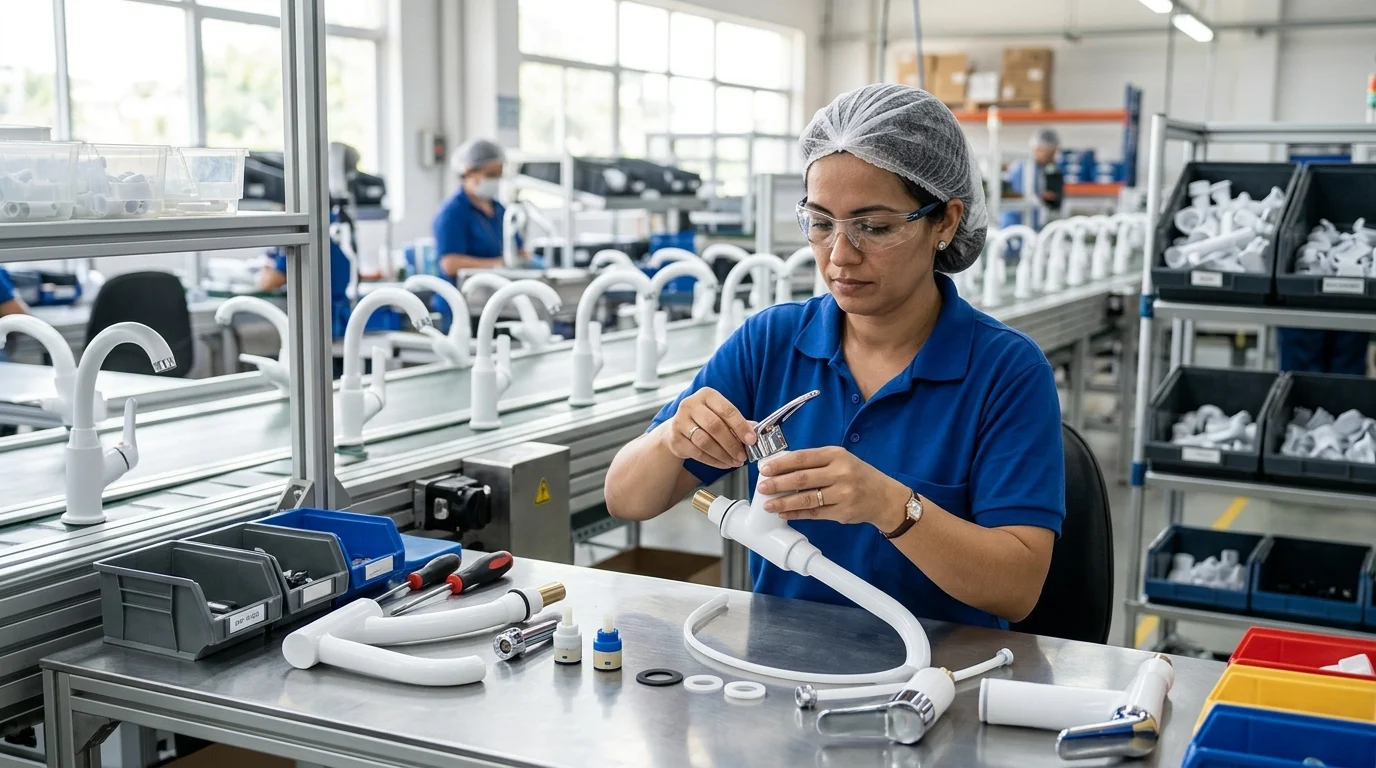
Introduction
Selecting a plastic faucet manufacturer in China affects far more than unit price. The right supplier influences material consistency, defect rates, certification compliance, delivery reliability, and the total landed cost your brand must manage after shipment. This article explains how to evaluate manufacturers beyond catalog claims, with practical criteria for comparing factory capability, quality control, tooling strength, communication, and supply chain stability. By the end, you will have a clearer framework for identifying partners that can protect product performance, reduce warranty risk, and support long-term growth in your target market.
Why Choosing the Right Plastic Faucet Manufacturer in China Matters
Sourcing plastic faucets from China requires navigating a massive industrial ecosystem, primarily concentrated in the manufacturing hubs of Zhejiang, Fujian, and Guangdong provinces. For global plumbing brands, commercial developers, and hardware retailers, selecting the correct manufacturing partner is not merely a transactional purchasing decision; it is a strategic alignment that directly dictates product viability, brand reputation, and profit margins.
A miscalculation in supplier vetting can lead to catastrophic supply chain disruptions, delayed product launches, and severe market backlash. Understanding the nuances of this specialized manufacturing sector is the first step toward securing a resilient and profitable supply chain.
Impact on quality, warranty risk, and landed cost
The correlation between supplier selection and end-user satisfaction is absolute. A sub-tier plastic faucet manufacturer utilizing regrind resin or operating poorly calibrated injection molding machines can easily exceed a critical defect rate of 1.5%. When defect rates climb, the immediate financial impact is felt in warranty claims and reverse logistics.
For instance, a baseline defect increase from 1% to just 3% can necessitate a 15% to 20% increase in a brand's warranty reserve capital. Furthermore, landed costs are heavily influenced by a supplier's packaging efficiency and defect offsets. Paying an aggressive $1.50 per unit Free on Board (FOB) is economically disastrous if 5% of the shipment arrives micro-fractured or unsellable due to poor handling and substandard materials.
What defines a reliable plastic faucet supplier
A reliable plastic faucet supplier is defined by systemic process controls rather than just an attractive unit price. Top-tier manufacturers maintain ISO 9001:2015 certifications backed by rigorous, documented internal auditing. They utilize advanced injection molding equipment capable of maintaining strict dimensional tolerances of ±0.05mm, which is essential for ensuring watertight seals and seamless component assembly.
Additionally, a dependable partner demonstrates long-term financial stability and typically maintains in-house tooling capabilities. Managing mold creation and maintenance under one roof drastically reduces the risk of intellectual property theft and accelerates mold repairs compared to fully outsourced tooling models.
How to Compare Plastic Faucet Manufacturers
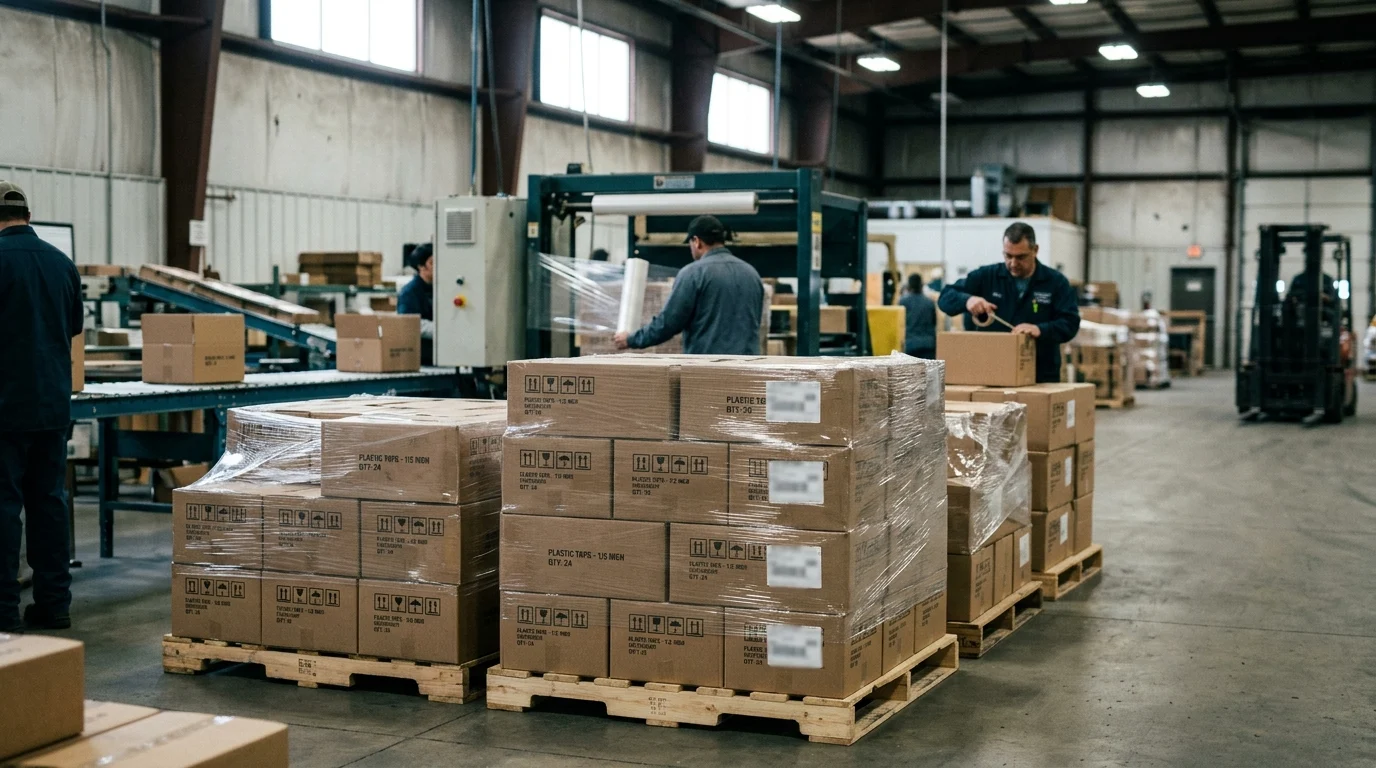
Evaluating potential manufacturing partners requires a granular assessment of their engineering and production capabilities. Procurement teams must look beyond polished B2B portal profiles and mandate detailed technical disclosures regarding materials, component sourcing, and production flexibility.
Material grades, cartridge systems, and mold quality
The structural integrity and durability of a plastic faucet rely heavily on the specific polymers used. Premium manufacturers utilize virgin ABS (Acrylonitrile Butadiene Styrene) for exterior housings due to its impact resistance and plating compatibility, while deploying high-strength POM (Polyoxymethylene) for internal, high-stress components.
Cartridge systems function as the engine of the faucet. Elite suppliers either source or manufacture ceramic disc cartridges rated for a minimum of 500,000 open-and-close cycles to ensure drip-free longevity. Mold quality is equally critical to the unit's lifecycle. Injection molds machined from standard P20 steel may suffice for short runs of 300,000 shots, whereas hardened H13 steel is mandatory for high-volume production exceeding one million cycles without flashing or dimensional drift.
OEM and ODM capabilities to assess
Distinguishing between Original Equipment Manufacturer (OEM) and Original Design Manufacturer (ODM) capabilities is vital for brands planning future product lines. A strong OEM partner will faithfully execute existing blueprints with strict adherence to provided tolerances, material specs, and assembly instructions.
Conversely, a competent ODM partner brings robust Research and Development (R&D) to the table. They offer in-house 3D modeling via software like SolidWorks and rapid prototyping capabilities using SLA 3D printing. This engineering support accelerates the time-to-market for custom ergonomic designs, often reducing a typical 6-month development cycle down to an agile 60 to 90 days.
Price, MOQ, and value comparison
Procurement managers must balance unit price against Minimum Order Quantities (MOQ) and overall market value. Unusually low MOQs paired with rock-bottom prices often indicate a supplier offsetting costs by utilizing inferior regrind plastics or bypassing critical quality control stages.
| Faucet Type / Material | Typical MOQ (Pcs) | Estimated Unit Cost (FOB) | Best Use Case |
|---|---|---|---|
| Standard ABS (Off-the-shelf) | 1,000 – 3,000 | $1.20 – $2.50 | Budget or temporary installations |
| Custom ABS with Chrome Plating | 3,000 – 5,000 | $2.80 – $4.50 | Mid-market residential upgrades |
| High-grade POM/Nylon (Custom) | 5,000+ | $3.50 – $6.00 | Commercial and heavy-duty use |
Comparing quotes across these tiers allows buyers to identify manufacturers whose pricing structures align with realistic material costs and industry-standard production minimums.
Compliance, Testing, and Quality Control Standards
In the global plumbing industry, regulatory compliance is non-negotiable. Faucets act as the final conduit for potable water, meaning any chemical leaching or structural failure presents severe health, safety, and liability risks. Buyers must rigorously audit a manufacturer's adherence to international testing standards.
Raw material traceability and water-contact safety
Even though the primary construction material is plastic, water-contact safety standards apply stringently. Depending on the target market, the manufacturer must prove compliance with certifications such as NSF/ANSI 61 (North America), WRAS (United Kingdom), or ACS (France).
Achieving these certifications requires absolute raw material traceability. The manufacturer must provide Certificates of Analysis (CoA) for all resin batches, proving the absence of BPA, phthalates, and restricted heavy metals to ensure RoHS compliance. Failure to secure traceable, food-grade virgin resins can result in entire shipments being impounded at customs or subjected to costly mandatory recalls.
Factory audits, in-process inspection, and final testing
Robust testing protocols separate premium manufacturers from high-risk assemblers. Comprehensive factory audits should confirm that 100% of finished units undergo in-process pneumatic leak testing. Typically, this involves subjecting the assembled plastic faucet to 0.8 MPa of air pressure for 60 seconds; any pressure drop indicates a faulty seal or micro-crack.
Final testing protocols must also include random batch sampling for hydrostatic burst pressure, often testing units up to 2.5 MPa to simulate extreme municipal water spikes and water hammer effects. Furthermore, visual inspections under standardized 1,000 Lux lighting must be enforced on the line to catch surface blemishes, particularly on complex electroplated or painted plastic finishes.
Cost Structure, Logistics, and Supply Chain Assessment
A transparent understanding of the manufacturer's cost structure and logistical operations is essential for accurate landed cost modeling. Volatility in raw material markets and international shipping constraints require proactive supply chain management and clear contractual terms.
Key cost drivers behind supplier quotations
Supplier quotations are driven by three primary variables: resin indices, tooling amortization, and surface finishing. Virgin ABS and POM resin prices fluctuate based on global petrochemical markets, typically ranging from $1,500 to $2,200 per metric ton. Buyers should request transparent quotes that separate material costs from labor and overhead to accurately monitor index-based price shifts.
Tooling represents a significant upfront capital expenditure, costing anywhere from $3,000 to $12,000 per mold depending on cavitation and internal complexity. Additionally, secondary processes like electroplating plastic to achieve a chrome or brushed nickel finish can inflate base unit costs by 30% to 40% due to the complex, multi-stage chemical etching and plating required.
Lead time, capacity planning, and inventory policy
Capacity planning and realistic lead times dictate inventory flow and cash cycle efficiency. A standard custom tooling process requires 30 to 45 days, followed by T1 sample approval. Once a product is in mass production, reliable factories average a 25 to 35-day lead time.
Buyers must evaluate the manufacturer's maximum monthly capacity to ensure scalability during peak seasons. Logistics also play a pivotal role in unit economics; a standard 40-foot High Cube (40HQ) container can hold approximately 20,000 to 25,000 boxed plastic faucets. Optimizing packaging dimensions with the supplier's engineering team can increase container utilization by 10% to 15%, significantly reducing the per-unit freight cost.
How to Select the Best Plastic Faucet Manufacturer
Transitioning from a shortlist of candidates to a finalized manufacturing agreement demands a structured, objective selection methodology. Bypassing due diligence in favor of speed often results in long-term operational friction and compromised product quality.
Step-by-step supplier selection process
A phased supplier selection process mitigates risk and establishes clear performance baselines. Begin with a comprehensive Request for Quotation (RFQ) that includes detailed 2D/3D CAD files, specific material grades, and packaging requirements. Following the initial RFQ, request production samples to physically evaluate the surface finish, mold parting lines, and cartridge actuation.
| Evaluation Criterion | Weighting | Key Metrics to Assess |
|---|---|---|
| Quality & Engineering | 40% | Defect rates, ISO certifications, in-house testing lab capabilities |
| Cost Competitiveness | 30% | FOB price transparency, tooling costs, favorable payment terms |
| Capacity & Lead Time | 20% | Monthly output volume, on-time delivery rate, mold maintenance |
| Communication | 10% | Technical English proficiency, response time, warranty support |
Once a supplier scores highly on this matrix, execute a trial order representing roughly 15% to 20% of your expected annual volume. This trial run is critical to stress-test their production consistency, communication during manufacturing, and adherence to delivery timelines before committing to a full-scale rollout.
Warning signs of a poor-fit manufacturer
Identifying red flags early in the negotiation phase is just as important as scoring capabilities. A major warning sign is a manufacturer's refusal to accommodate third-party quality audits from recognized organizations like SGS, TUV, or Intertek.
Another critical red flag is an unexplained, sudden price drop of 15% or more during late-stage negotiations; this almost universally indicates a planned, undisclosed substitution of virgin resin with inferior, brittle regrind plastic. Finally, a lack of dedicated, independent Quality Control (QC) personnel—where production line workers are solely responsible for checking their own output—guarantees that defective units will inevitably slip into the final packaging.
Key Takeaways
- The most important conclusions and rationale for plastic faucet manufacturer
- Specs, compliance, and risk checks worth validating before you commit
- Practical next steps and caveats readers can apply immediately
Frequently Asked Questions
What should I verify first when choosing a plastic faucet manufacturer in China?
Start with certifications, material grade, and defect-control records. Ask for ISO 9001 proof, virgin resin details, and recent QC reports before comparing price.
How can I judge plastic faucet quality before placing a bulk order?
Request samples and test finish, fit, leakage, and handle smoothness. Also confirm cartridge cycle rating, dimensional tolerance, and packaging strength for export shipping.
Why is a very low faucet price often risky?
It may hide regrind plastic, weak cartridges, or poor packaging. A slightly higher FOB price can reduce defects, returns, and warranty costs after delivery.
Should I choose OEM or ODM for my faucet brand?
Choose OEM if you already have drawings and specs. Choose ODM if you need design support, prototyping, and faster development of a custom faucet line.
Why work with a supplier offering valves, pipes, and fittings too?
For B2B buyers, an integrated supplier like Pntek can simplify sourcing, ensure better system compatibility, and reduce communication and shipping complexity across plumbing projects.


