
Butterfly Valves vs Globe Valves: Structural Design and Flow Control Characteristics
Butterfly valves and globe valves are both widely used industrial flow control valves, but they are designed for different operational purposes. Butterfly valves use a rotating disc to regulate or stop fluid flow, offering lightweight construction, fast operation, and compact installation. Due to their quarter-turn operation, butterfly valves are commonly used in large pipeline systems where quick shut-off and space-saving design are important.
Globe valves, by contrast, are specifically designed for precise flow regulation. Their internal linear-motion structure allows operators to accurately adjust flow rates, making them ideal for throttling applications. Although globe valves provide excellent control accuracy, their more complex flow path often creates higher pressure drop compared to butterfly valves.
In modern industrial systems, choosing between butterfly valves and globe valves largely depends on flow control requirements, energy efficiency, and maintenance expectations.
What is a butterfly valve?
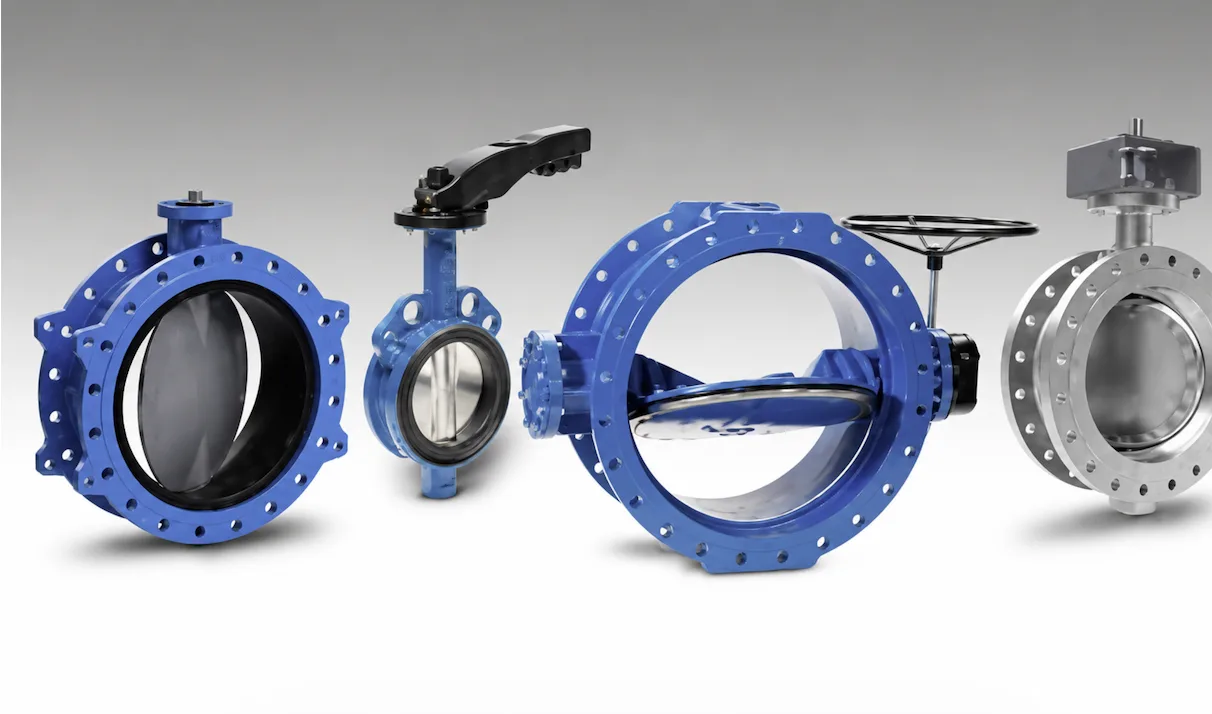
A butterfly valve is a quarter-turn flow control valve used to regulate, start, or stop the flow of liquids, gases, or slurries in piping systems. It
operates by rotating a valve disc mounted on a central shaft; rotating the handle or actuator 90 degrees opens or closes the valve.
Features and Functions of Butterfly Valves
Butterfly valves are known for their compact design, light weight, low operating torque, and low installation cost, making them ideal for large-
diameter piping and automated control systems. Their primary function is to provide rapid shut-off and moderate flow regulation in applications
such as water treatment, HVAC systems, chemical processing, and industrial fluid handling.
Advantages of Using Butterfly Valves
The main advantages of butterfly valves include simple structure, quick operation, low maintenance requirements, and excellent space-saving
performance. However, they also have some limitations, such as lower accuracy in throttling applications, potential leakage under high pressure
conditions, and flow resistance caused by the valve disc remaining inside the pipe even when fully open.
What is a globe valve?
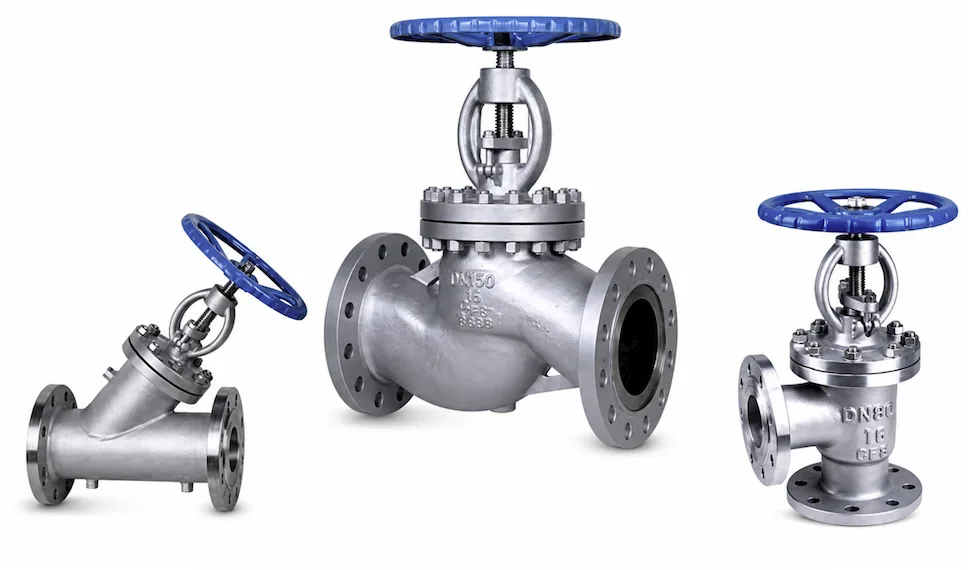
A globe valve is a linear motion valve designed to regulate, start, or stop fluid flow in a pipeline by moving a valve disc or spool against a fixed valve seat. Unlike a quarter-turn valve, a globe control valve uses a handwheel or actuator to raise or lower an internal valve disc, thereby achieving precise control of flow and pressure.
What is the structure and function of a globe valve?
Globe valves are widely recognized for their excellent throttling capability, reliable sealing performance, and suitability for applications requiring
precise flow regulation, such as steam systems, power plants, oil and gas processing, and industrial production lines. The primary function of a
globe valve is to provide stable and precise flow control under high pressure and high temperature conditions.
What are the advantages of using a globe valve?
The main advantages include: excellent throttling accuracy, strong closing performance, durability in harsh operating environments, and good
pressure management capabilities. However, globe valves also have some disadvantages, such as: higher pressure drop due to their complex flow
path; larger size and heavier structure compared to other types of valves; slower operating speed; and higher installation and maintenance costs.
Flow Control Efficiency and Pressure Drop Comparison
One of the biggest advantages of butterfly valve performance is its low flow resistance. When fully open, the valve disc allows relatively smooth fluid movement, reducing pressure loss and improving system efficiency. This makes butterfly valves highly suitable for water supply systems, HVAC systems, irrigation networks, and large-scale industrial pipelines.
Globe valve efficiency, however, focuses more on precise flow adjustment than minimizing pressure drop. Because the fluid changes direction inside the valve body, globe valves naturally generate higher pressure loss. Despite this limitation, they remain highly effective in systems requiring accurate flow regulation, such as steam systems, chemical processing plants, and power generation facilities.
For industries prioritizing energy savings and lower operational costs, butterfly valves are often considered the better option. For applications requiring detailed flow control and stable throttling performance, globe valves provide superior operational precision.
Maintenance Requirements and Service Life Analysis
Maintenance is another important factor when comparing industrial butterfly valves and globe valves. Butterfly valves generally feature a simpler internal structure with fewer moving components, reducing maintenance frequency and replacement costs. Their lightweight design also simplifies installation and repair processes.
Globe valves contain more internal components, including seats, stems, and discs that experience continuous friction during operation. As a result, maintenance requirements are typically higher, especially in high-pressure or high-temperature applications. However, globe valves often provide better sealing reliability and longer-lasting throttling accuracy when properly maintained.
In corrosive industrial environments, PVC butterfly valves and plastic globe valves are becoming increasingly popular because of their resistance to chemicals, rust, and scale buildup. These advantages help extend service life while reducing overall maintenance costs.
Different Industrial Applications
Butterfly Valves — Common Application Areas
Widely used in water treatment plants
Common in fire protection systems
Frequently applied in agricultural irrigation systems
Suitable for chemical pipelines
Extensively used in HVAC systems
Advantages of Butterfly Valves
Compact and lightweight structure
Low operational torque requirements
Highly compatible with automated actuator systems
Ideal for large-diameter pipeline applications
Globe Valves — Common Application Areas
Commonly used in steam systems
Widely applied in the oil and gas industry
Suitable for power stations
Frequently installed in industrial processing lines
Advantages of Globe Valves
Excellent flow regulation capability
Suitable for precise pressure management
Performs well in frequent throttling operations
Provides reliable control in demanding industrial environments
Importance in Industrial Automation
Both butterfly valves and globe valves are essential in modern fluid control systems
Proper valve selection can:
Improve operational efficiency
Reduce energy consumption
Enhance long-term system reliability
About Us
As a leading manufacturer of plastic valves and industrial piping systems, PNTEK provides high-quality PVC valves, butterfly valves, pipe fittings, and fluid control solutions for global customers. The company serves industries including agricultural irrigation, water treatment, chemical engineering, construction, and industrial fluid transportation.
PNTEK is equipped with advanced manufacturing technology and modern injection molding equipment to ensure high precision, corrosion resistance, and stable sealing performance in every product. The company continuously improves its production processes and quality control systems to provide reliable OEM and ODM services worldwide.
With strong technical expertise and extensive export experience, PNTEK delivers customized piping and valve solutions tailored to different industrial environments, helping customers improve efficiency and lower long-term operational costs.
FAQ
What is the main difference between butterfly valves and globe valves?
Butterfly valves are designed for fast shut-off and low pressure loss, while globe valves are better for precise flow regulation.
Which valve has lower pressure drop?
Butterfly valves generally create lower pressure drop because of their streamlined flow path.
Are globe valves suitable for throttling applications?
Yes. Globe valves are widely used for accurate throttling and flow adjustment applications.
Why are PVC butterfly valves popular in industrial systems?
PVC butterfly valves offer corrosion resistance, lightweight installation, and lower maintenance costs.
Which industries commonly use globe valves?
Globe valves are commonly used in steam systems, power plants, oil and gas facilities, and chemical processing industries.


