
Introduction
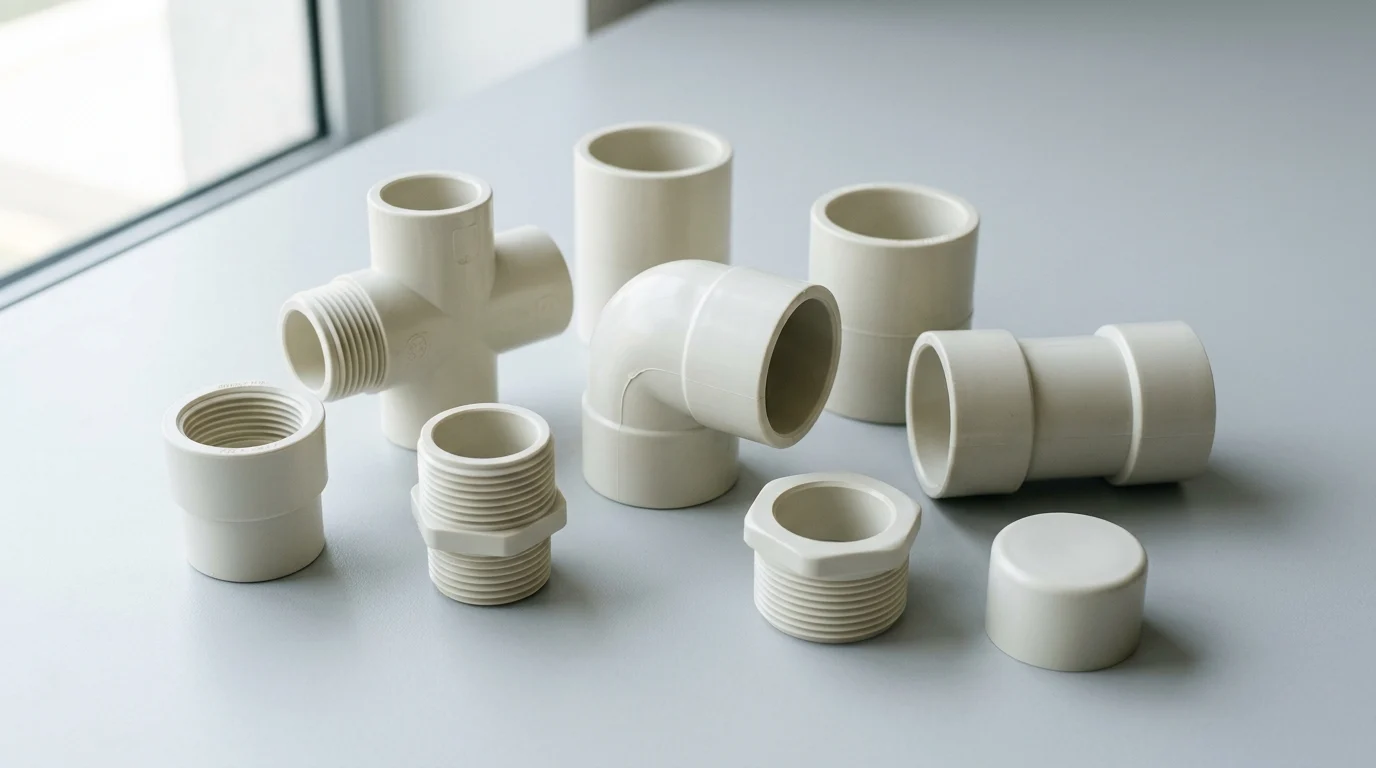
Selecting plastic pipe fittings for a home water system involves more than matching pipe size. Material type, pressure rating, temperature tolerance, connection method, and certification all influence durability, leak resistance, and water safety over decades of use. The right choice can reduce maintenance, prevent hidden failures behind walls, and keep the system compliant with local plumbing standards. This article explains the key factors that matter when comparing fittings for residential water supply, including how product quality, operating conditions, and installation requirements affect performance, so you can make informed decisions before moving into specific fitting types and selection criteria.
Why plastic pipe fittings matter in residential water supply
The specification of plastic pipe fittings is a critical junction in modern residential water supply networks. With synthetic polymers now constituting over 75% of new plumbing installations in North American and European residential markets, the focus has shifted from basic material viability to optimizing long-term system performance under diverse environmental stresses.
Unlike legacy metallic systems, plastic fittings require a rigorous alignment between polymer chemistry, mechanical design, and the physical demands of potable water distribution. Understanding these interactions is essential for engineers, procurement managers, and contractors tasked with delivering failure-resistant plumbing infrastructure.
How fitting quality affects reliability
Fitting quality directly dictates the operational lifespan of the entire plumbing assembly. High-grade polymer fittings are engineered to achieve a minimum 50-year design life under continuous hydrostatic stress. The structural integrity of these components relies heavily on the uniformity of the injection molding process.
Substandard manufacturing introduces micro-fractures and flow lines during molding, which propagate under cyclic pressure loads. Over time, these microscopic defects inevitably lead to catastrophic blowouts or insidious slow leaks behind finished walls, dramatically increasing the total cost of ownership through property damage and complex remediation.
Which performance factors increase leakage risk
Leakage risks escalate when performance factors such as thermal expansion, pressure transients, and dimensional inaccuracies are inadequately managed. For instance, Cross-linked Polyethylene (PEX) exhibits a thermal expansion rate of approximately 1.1 inches per 100 feet of pipe for every 10°F change in water temperature. If fittings lack the necessary elastic memory or structural rigidity to accommodate this movement, mechanical connections will rapidly degrade.
Furthermore, strict dimensional tolerances are non-negotiable. A deviation exceeding +/- 0.05 millimeters on a fitting’s barb can compromise the radial compression of crimp rings. Under standard 60 to 80 psi residential pressures, this minute discrepancy is sufficient to cause weeping joints, underscoring the critical nature of precision engineering in mitigating leakage risk.
How to compare plastic pipe fittings
Evaluating plastic pipe fittings requires a methodical comparison of polymer properties against the specific thermal and mechanical demands of the residential water supply application. No single material serves as a universal solution; rather, each offers distinct advantages depending on the system architecture.
Which material options are available
The primary material options for residential potable water include PEX (Cross-linked Polyethylene), CPVC (Chlorinated Polyvinyl Chloride), PP-R (Polypropylene Random Copolymer), and standard PVC (Polyvinyl Chloride) exclusively for cold water lines.
PEX currently dominates flexible routing applications due to its elastic memory and freeze-damage resistance, while CPVC offers superior rigidity, making it ideal for vertical risers and straight multi-family runs. PP-R utilizes heat-fusion to create monolithic joints, effectively eliminating mechanical failure points entirely, though it requires a larger dimensional footprint.
How temperature, pressure, and flow ratings differ
Temperature, pressure, and flow ratings serve as the absolute boundaries for material selection. Most premium residential hot water plastics, such as PEX and CPVC, are rated to sustain 100 psi at 180°F (82°C) and 160 psi at 73°F (23°C). Inner diameters also dictate flow velocities; fittings that severely restrict flow can induce cavitation, noise, and pressure drops across the network.
| Material | Standard Dimension Ratio | Max Operating Temp | Pressure Rating @ 180°F |
|---|---|---|---|
| PEX | SDR 9 | 200°F | 100 psi |
| CPVC | SDR 11 | 200°F | 100 psi |
| PP-R | SDR 7.4 | 185°F | 115 psi |
| PVC (Cold Only) | Sch 40 | 140°F | N/A |
Which cost and installation trade-offs matter most
Cost and installation trade-offs often dictate the final specification, as labor frequently outweighs material expenses. Solvent-welded CPVC requires lower initial tooling capital but demands longer curing times and rigorous ventilation during installation.
Conversely, cold-expansion PEX fittings necessitate specialized expansion tools—often exceeding $400 per unit—but drastically reduce labor hours per connection while maintaining the internal pipe diameter. Material costs for PP-R are typically 15% to 25% higher than standard PEX systems, but the elimination of brass transition fittings offsets long-term corrosion risks in areas with aggressive water chemistries.
What compliance and quality checks matter
Navigating the regulatory landscape ensures that selected fittings do not compromise public health or violate municipal building codes. Compliance is not merely a legal hurdle; it is a baseline indicator of material safety and operational reliability.
Which standards and potable-water approvals apply
Potable water systems mandate strict adherence to leaching and toxicity standards. In North America, fittings must carry NSF/ANSI 61 certification, which verifies that the polymer does not leach harmful volatile organic compounds (VOCs) or heavy metals into drinking water.
Additionally, any integrated metallic components, such as threaded brass insert fittings, must comply with NSF/ANSI 372, dictating a maximum weighted average lead content of 0.25%. Mechanical compliance with standards like ASTM F1960 (for cold expansion) or ASTM D2846 (for CPVC systems) ensures that the dimensional and performance characteristics align with standardized pipe geometries.
How to assess manufacturing and quality control
Assessing manufacturing and quality control involves scrutinizing the producer’s facility certifications and batch testing protocols. Top-tier manufacturers operate under ISO 9001 quality management systems and enforce an Acceptable Quality Limit (AQL) of 1.5 or lower for critical dimensional defects.
Rigorous quality control programs subject random batch samples to extreme stress conditions. This typically includes burst testing at 3.2 times the maximum working pressure and long-term hydrostatic stress tests exceeding 1,000 hours at elevated temperatures to validate polymer stability before a batch is released to the supply chain.
How to choose the right plastic pipe fittings
The procurement of plastic pipe fittings requires aligning technical specifications with supply chain capabilities and project-specific constraints. A successful procurement strategy bridges the gap between engineering ideals and installation realities.
Which selection steps match fitting type to application
Matching the fitting type to the application begins with correlating the Standard Dimension Ratio (SDR) and the joining method to the installation environment. For instance, cold-expansion fittings are optimal for environments where ambient temperatures remain above freezing during rough-in, whereas push-to-connect fittings may be reserved for confined, hard-to-reach transition points where tool access is limited.
The selection must also account for flow restrictions. Insert-style crimp fittings reduce the internal diameter of the pipe, potentially necessitating upsized pipe runs to maintain a flow velocity below the industry standard of 8 feet per second, thereby preventing water hammer and excessive acoustic generation.
How lead time, packaging, and SKU standardization affect buying
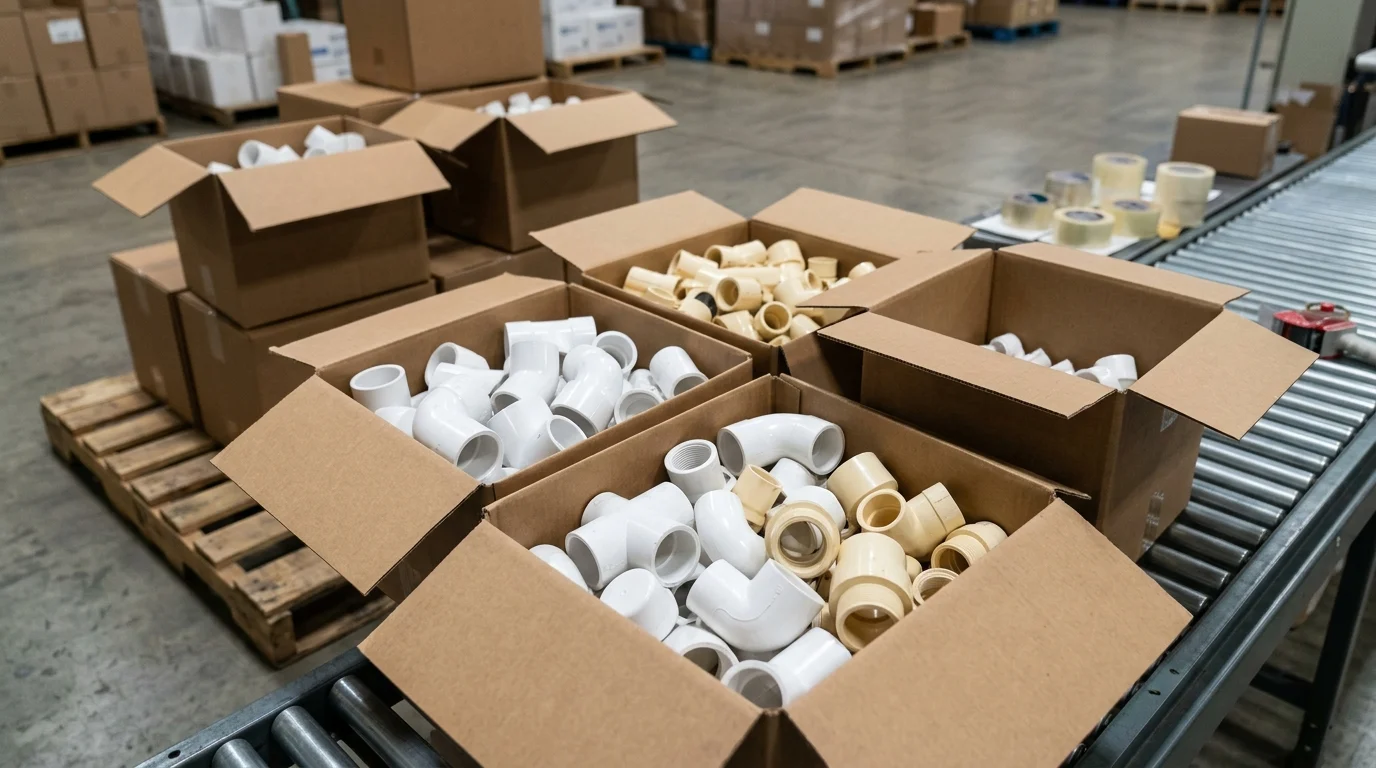
Logistics play a pivotal role in large-scale residential developments. Standardizing SKUs across a project can reduce inventory holding costs by up to 20% and minimize critical installation errors on site. Procurement managers must carefully account for manufacturing lead times when planning project phases.
Domestic injection-molded standard fittings typically require a 4- to 6-week lead time, while custom molds or overseas bulk orders may necessitate 10 to 12 weeks. Furthermore, specifying bulk packaging over retail-ready blister packs reduces on-site waste disposal costs and accelerates rough-in speeds for plumbing contractors.
Which decision factors differ by project type
Decision factors vary significantly between single-family housing and multi-dwelling units (MDUs). Multi-family high-rise structures often utilize booster pumps that elevate system pressures to 120 psi or higher at the lower levels, necessitating higher-rated fittings, robust pressure-reducing valves, and strict adherence to commercial fire-stop code requirements.
In contrast, single-family homes typically operate at a stable 60 to 80 psi municipal pressure, allowing contractors to prioritize installation speed and acoustic dampening over extreme pressure tolerances.
| Project Type | Typical Pressure Requirement | Primary Selection Driver | Preferred Joining Method |
|---|---|---|---|
| Single-Family Custom | 60 – 80 psi | Long-term reliability, low noise | Cold-expansion PEX |
| Multi-Family High-Rise | 100 – 120+ psi | Fire rating, pressure tolerance | CPVC or Heavy-wall PP-R |
| Tract Housing | 60 – 80 psi | Speed of installation, cost | Crimp PEX / Insert fittings |
How to finalize a specification strategy
Establishing a robust specification strategy requires translating complex engineering requirements into actionable procurement documents. This final step protects both the installing contractor and the ultimate property owner from systemic failures.
How to balance compliance, performance, and cost
Balancing compliance, performance, and cost demands a Total Cost of Ownership (TCO) approach. While premium polymer fittings may introduce a 10% to 15% upfront material cost premium compared to generic commodity alternatives, this initial investment is frequently offset by a drastic reduction in warranty callbacks.
Industry data indicates that utilizing standardized, high-quality fittings paired with matched-system tooling reduces post-installation leak incidents by over 40%. This proactive specification safeguards developers against severe water damage litigation, mold remediation costs, and long-term reputation loss.
Which specification checklist supports final approval
A comprehensive specification checklist is essential for final approval and purchasing authorization. This matrix must verify that the chosen fittings hold current third-party certifications (such as IAPMO, NSF, or ICC-ES) and explicitly align with the pipe manufacturer’s warranty stipulations, as mixing incompatible brands often voids system guarantees.
Furthermore, the checklist should confirm that the manufacturer provides adequate localized technical support, clear installation guidelines, and transparent traceability codes molded onto every fitting. This traceability is crucial for isolating specific production runs in the rare event of a batch recall, ensuring rapid response and minimal disruption to the overall project timeline.
Key Takeaways
- The most important conclusions and rationale for plastic pipe fittings for water supply
- Specs, compliance, and risk checks worth validating before you commit
- Practical next steps and caveats readers can apply immediately
Frequently Asked Questions
Which plastic fitting material is best for residential water supply?
Match the material to the job: PEX for flexible routing, CPVC for rigid hot and cold lines, PP-R for heat-fused durability, and PVC only for cold water. Choose based on temperature, pressure, and installation method.
Can PVC fittings be used for hot water lines?
No. Standard PVC is generally limited to cold water service. For hot water, use CPVC, PEX, or PP-R fittings rated for residential temperatures and pressures.
What ratings should I check before buying plastic pipe fittings?
Verify temperature, pressure, and size compatibility. For residential hot water, a common target is 100 psi at 180°F. Also confirm the fitting matches the pipe standard, such as SDR or schedule.
How do poor-quality fittings increase leak risk?
Low-quality fittings may have molding defects or loose tolerances that weaken seals. Even small dimensional errors can cause weeping joints under normal 60 to 80 psi household pressure, especially behind walls.
Where can buyers source integrated plastic water supply fittings from Pntek?
Pntek supplies UPVC, CPVC, PPR, and HDPE pipes, fittings, and valves for water supply projects. Buyers can request a quick quote through pntekplastblog.com for product matching and export support.


