
Introduction
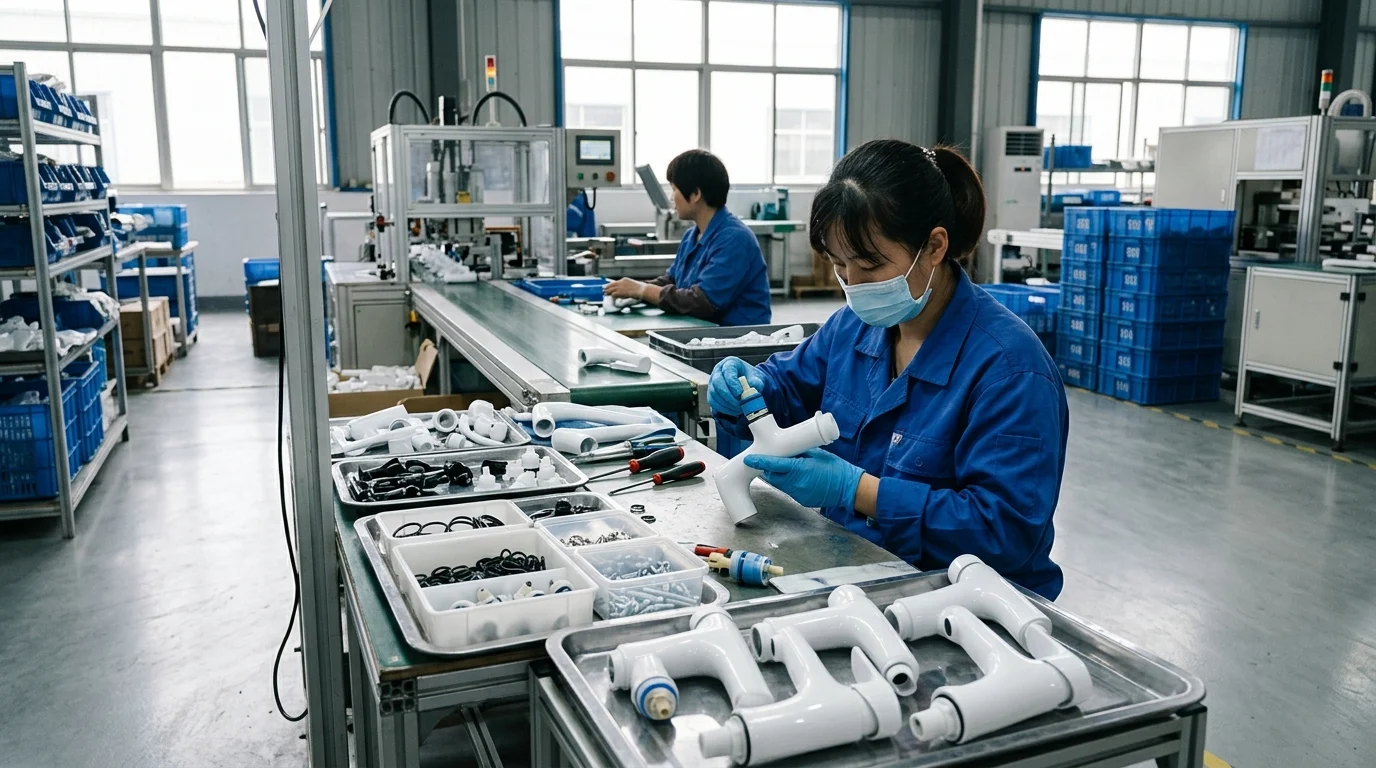
Choosing the right OEM plastic faucet factory can determine how quickly a kitchen or bathroom brand turns product ideas into compliant, cost-effective fixtures. Beyond lower material costs, a strong OEM partner brings expertise in polymer selection, mold development, finishing, assembly, and quality control—factors that directly affect durability, appearance, and certification readiness. This article explains what an OEM plastic faucet factory actually provides, why engineered plastics are gaining ground over metal, and which production capabilities matter most when evaluating suppliers for private-label or custom faucet programs.
Why an OEM plastic faucet factory matters
The transition from traditional brass to engineered polymers in the plumbing sector has fundamentally reshaped supply chain economics. Partnering with a specialized OEM plastic faucet factory allows kitchen and bathroom brands to navigate volatile metal prices, stringent lead-free regulations, and evolving consumer aesthetic demands. By utilizing advanced polymers such as Acrylonitrile Butadiene Styrene (ABS) and Polyoxymethylene (POM), manufacturers can achieve highly durable, corrosion-resistant fixtures that rival the performance of metal counterparts.
For brands scaling their product lines, relying on an established OEM partner eliminates the need for massive capital expenditures in injection molding infrastructure. Instead, businesses can leverage the factory's existing expertise in polymer science, precision tooling, and high-volume assembly to bring compliant, market-ready products to global distribution channels rapidly.
Cost, speed to market, and differentiation
The most immediate advantage of sourcing from an OEM plastic faucet factory is the significant reduction in unit costs. Engineered plastics typically offer a 30% to 50% cost reduction compared to cast brass, isolating brands from the unpredictable commodities market. Furthermore, the injection molding process generates virtually zero material waste compared to the extensive machining required for metal bodies.
Speed to market is another critical differentiator. While developing a new brass casting mold and perfecting the machining tolerances can take up to 90 days, plastic injection molds can often be engineered, cut, and sampled within 45 to 60 days. This accelerated timeline allows brands to react swiftly to design trends, offering complex geometries, modern matte finishes, and lightweight configurations that are either cost-prohibitive or physically impossible to achieve with traditional metals.
Best fit market segments
Plastic faucets have historically dominated specific niches but are now expanding into broader categories. The recreational vehicle (RV) and marine industries rely heavily on polymer fixtures due to strict weight limitations and the need to resist constant vibration. Similarly, the manufactured housing and modular construction sectors utilize plastic faucets to maintain tight budget controls without sacrificing aesthetic appeal.
Beyond mobile and modular applications, budget-conscious residential markets and commercial utility sectors represent massive growth areas. High-impact ABS faucets with premium electroplated finishes are increasingly specified for multi-family residential developments, where property managers require high-volume, low-cost replacements that meet strict local plumbing codes.
How to evaluate OEM plastic faucet capabilities
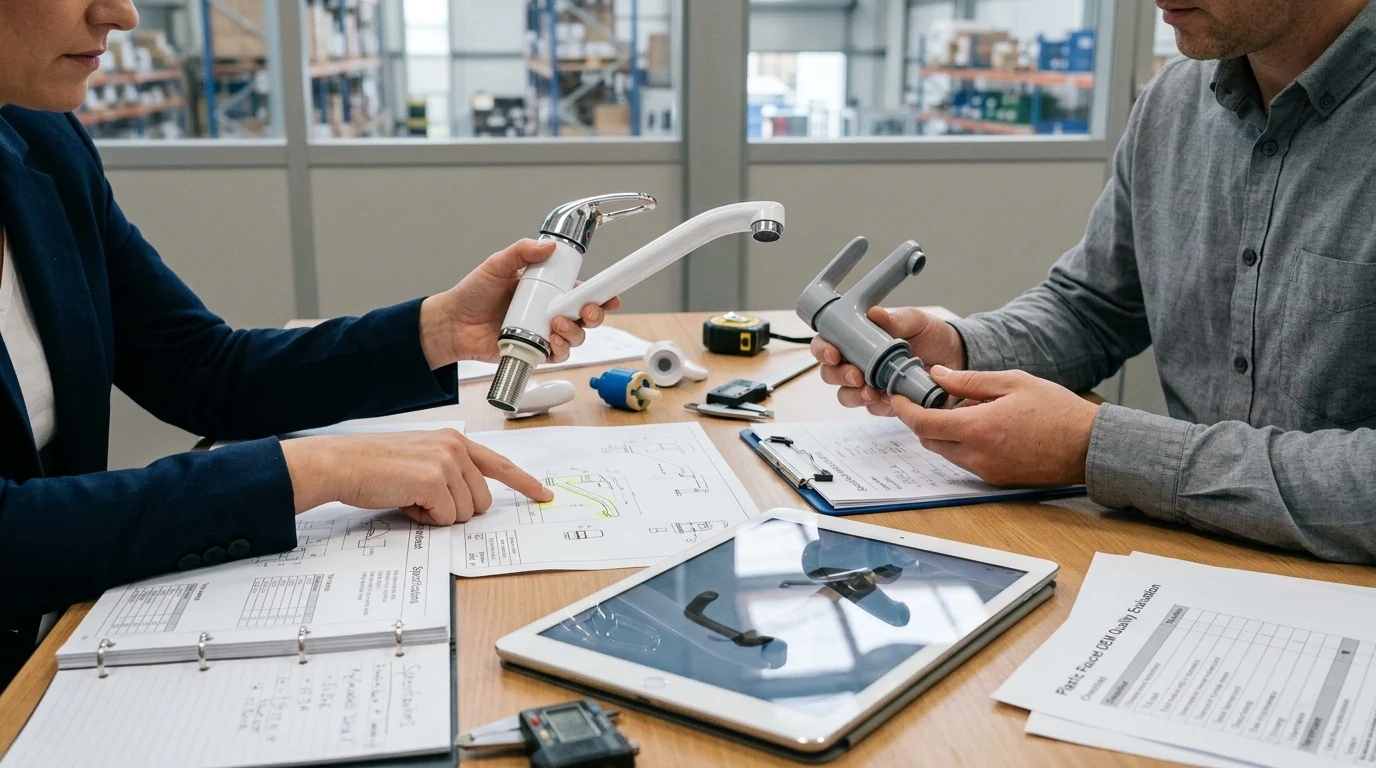
Not all manufacturing facilities possess the technical rigor required to produce reliable plumbing fixtures. Evaluating an OEM plastic faucet factory requires a deep dive into their engineering capabilities, specifically their handling of high-stress polymers and their precision in assembling watertight, pressurized components.
Materials, molding, cartridge integration, and finishing
A capable factory must demonstrate expertise in multi-material applications. High-quality plastic faucets typically utilize electroplatable ABS for the exterior shell to ensure cosmetic superiority, while relying on highly durable POM or PPO (Polyphenylene Oxide) for internal waterways to resist thermal expansion and chemical degradation. Evaluating the factory's injection molding floor is critical; look for modern machines with clamping forces between 150 and 300 tons to ensure void-free, structurally sound housings.
Cartridge integration is the mechanical heart of the faucet. The factory must machine or mold internal cavities to exacting tolerances to accept standard 35mm or 40mm ceramic disc cartridges. Any deviation in the seating area will result in premature leaks. Additionally, finishing capabilities such as PVD (Physical Vapor Deposition) over plastic or multi-stage electroplating must be scrutinized. A premium facility will subject its chrome-plated ABS to 24- to 48-hour CASS (Copper Accelerated Acetic Acid Salt Spray) testing to guarantee finish longevity.
Quality control checkpoints
Stringent quality control protocols separate tier-one suppliers from generic assemblers. Because plastic is susceptible to micro-cracking if improperly molded, non-destructive testing is non-negotiable. Leading factories implement 100% inline air decay testing, typically pressurizing units to 0.6 MPa to 0.8 MPa to detect microscopic leaks before water is ever introduced.
Batch testing should also include static water pressure tests up to 1.6 MPa and burst testing that exceeds standard municipal water pressures. Furthermore, thermal cycling tests—alternating between 10°C and 80°C water—must be documented to ensure the polymer waterways and seals do not degrade under extreme residential use cases.
Private label development and tooling ownership
When developing a private label line, clarity regarding tooling ownership and intellectual property is paramount. Brands must ensure that the contract explicitly grants them ownership of the injection molds once amortization or payment is complete. Evaluate the factory's tooling grade; high-production molds should be constructed from hardened steel (such as S136 or H13) and guaranteed for at least 300,000 to 500,000 shots.
A competent OEM partner will also offer robust design for manufacturability (DFM) feedback during the private label development phase. They should assist in optimizing wall thicknesses, placing injection gates in non-cosmetic areas, and designing snap-fits or sonic-welded joints that minimize assembly time and reduce potential failure points.
How to compare OEM plastic faucet suppliers
Selecting a manufacturing partner requires comparing suppliers across dimensions that directly impact brand reputation and bottom-line profitability. Unit price is only one factor; compliance, field reliability, and transparent cost structures are the true indicators of a sustainable OEM relationship.
Certifications, testing, and compliance
In the North American market, plumbing fixtures must adhere to strict regulatory standards. When comparing suppliers, require verifiable proof of certifications such as UPC, cUPC, and ASME A112.18.1. It is critical to verify that the factory holds the actual certifications for their core components, rather than merely claiming they can meet the standards.
Furthermore, compliance with NSF/ANSI 61 and AB1953 (the California Lead Plumbing Law) is mandatory for potable water applications. Engineered plastics inherently bypass the heavy metal risks associated with brass, easily meeting the requirement of having a weighted average lead content of less than 0.25%. However, the factory must still prove that their specific polymer blends and internal lubricants are certified safe for drinking water.
Durability, warranty risk, and field failures
Field failures destroy brand equity faster than any other variable. Compare suppliers based on their warranty risk mitigation strategies. A premier OEM plastic faucet factory will utilize globally recognized ceramic cartridges (such as Sedal or Citec) rated for 500,000 operational cycles, rather than cutting costs with unbranded, low-cycle alternatives.
Assess the supplier's historical defect rates and their willingness to accept financial liability for systemic field failures. Factories that confidently offer multi-year warranties on their OEM products generally possess superior process controls and utilize higher-grade resins.
Key cost drivers
Understanding the bill of materials (BOM) allows brands to negotiate effectively and recognize when a supplier is cutting corners. Resin quality, cartridge sourcing, and surface finishing are the primary cost drivers. Virgin ABS and POM resins cost significantly more than recycled regrind materials, but regrind compromises structural integrity and plating adhesion.
| Component / Process | Standard Specification | Premium Specification | Estimated Cost Impact |
|---|---|---|---|
| Body Resin | Standard ABS (partial regrind) | 100% Virgin High-Impact ABS / POM core | +15% to 25% |
| Surface Finish | Basic Chrome Electroplating | PVD / Matte Black / Brushed Nickel | +20% to 40% |
| Ceramic Cartridge | Domestic standard (35mm, 100k cycles) | Premium brand (500k cycles) | +$1.50 to $2.50 / unit |
| Testing Standard | Random batch air leak check | 100% Air (0.8 MPa) + CASS 48hr | +5% to 10% |
Comparing these drivers across different factory quotes reveals whether a lower price is the result of manufacturing efficiency or dangerous material substitutions.
How to reduce sourcing and production risk
Offshore manufacturing introduces inherent supply chain vulnerabilities. Brands must implement structured risk reduction strategies spanning the entire lifecycle of the product, from initial factory audits to final container loading.
Supplier qualification steps
Supplier qualification should begin with an independent or third-party audit of the factory's Quality Management System (QMS), ideally verifying ISO 9001:2015 compliance. Audits must assess incoming material inspection, inline process controls, and final assembly testing. Establish clear Acceptable Quality Limit (AQL) thresholds before signing a contract; a standard benchmark for plumbing fixtures is an AQL of 1.5 for major defects and 4.0 for minor cosmetic flaws.
Sampling, validation, and change control
The sampling phase is critical for locking in product specifications. Implement a stringent First Article Inspection (FAI) process. The factory must provide a comprehensive dimensional report alongside the physical samples. Once the T1 (first tool) samples are approved, utilize a Production Part Approval Process (PPAP) to ensure the factory can reliably reproduce the part at mass-production volumes. Crucially, institute a strict change control agreement prohibiting the factory from altering resin suppliers, cartridge brands, or mold parameters without written brand authorization.
Logistics, lead times, and inventory
Inventory management and lead times directly impact cash flow. OEM plastic faucet factories generally require Minimum Order Quantities (MOQs) ranging from 1,000 to 3,000 units per SKU, particularly for custom finishes or non-standard colors. Brands must map out the production timeline to prevent stockouts.
| Production Phase | Typical Duration / Requirement | Risk Mitigation Strategy |
|---|---|---|
| Tooling & Molds | 40 to 60 days | Implement contractual timeline penalties |
| T1 Sampling | 7 to 14 days | Require rigorous FAI documentation |
| Standard MOQ | 1,000 to 3,000 units | Negotiate split shipments for initial orders |
| Mass Production | 30 to 45 days | Establish buffer inventory agreements |
By proactively managing these logistical timelines and establishing buffer stock agreements for critical components, brands can insulate themselves from shipping delays and seasonal production bottlenecks.
How to choose the right OEM plastic faucet factory
Finalizing the selection of an OEM plastic faucet factory requires synthesizing technical capabilities, cost structures, and strategic alignment. The ideal partner operates not just as a contract manufacturer, but as an extension of the brand's engineering and supply chain teams.
Decision criteria and supplier fit
Decision criteria must align with the brand's specific market positioning. A factory specializing in ultra-low-cost, high-volume production for the RV market may lack the cosmetic finishing refinement required for a brand targeting budget-luxury residential remodels. Evaluate the supplier's New Product Introduction (NPI) support: do they have an in-house R&D team capable of translating industrial design sketches into mold-ready 3D CAD files?
Furthermore, assess the supplier's financial stability and capacity scalability. A factory operating at 95% capacity may offer excellent pricing but will struggle to accommodate sudden spikes in order volume. Choose a partner that demonstrates continuous investment in automated assembly lines and advanced injection molding technology.
Cost and performance trade offs
Ultimately, choosing the right factory involves navigating cost and performance trade-offs. Pushing a factory for the absolute lowest unit price often forces them to compromise on unseen elements. For example, reducing the thickness of the chrome plating from a robust 0.3 microns to a marginal 0.15 microns saves pennies per unit but drastically increases the risk of the finish peeling or blistering in humid bathroom environments.
A successful partnership is built on transparency. Brands should clearly define their performance baselines—such as required lifecycle testing and acceptable defect rates—and allow the factory to price the BOM accordingly. By prioritizing total cost of quality over the lowest initial quote, kitchen and bathroom brands can secure a reliable OEM plastic faucet factory that drives long-term profitability and market growth.
Key Takeaways
- The most important conclusions and rationale for OEM plastic faucet factory
- Specs, compliance, and risk checks worth validating before you commit
- Practical next steps and caveats readers can apply immediately
Frequently Asked Questions
Why choose an OEM plastic faucet factory for kitchen and bathroom brands?
It lowers unit cost, shortens development time, and helps brands avoid investing in molding equipment. It also supports lead-free, corrosion-resistant faucet designs for faster market entry.
What materials are best for OEM plastic faucets?
ABS is commonly used for the exterior because it plates well and looks premium. POM or PPO is often used for internal waterways due to better strength, chemical resistance, and thermal stability.
How can I verify a factory’s faucet quality control?
Ask for 100% inline air leak testing, static pressure reports, burst test data, and thermal cycling results. Practical benchmarks include 0.6–0.8 MPa air testing and up to 1.6 MPa water pressure testing.
What should brands confirm before starting a private label faucet project?
Confirm tooling ownership, cartridge specifications, finish requirements, testing standards, and packaging details in writing. This reduces disputes and keeps future reorders consistent.
Can Pntek support OEM plastic faucet sourcing with broader plumbing supply needs?
Yes. Pntek also supplies plastic pipes, fittings, and valves, which helps buyers consolidate sourcing for kitchen, bathroom, irrigation, and water supply projects with one export-oriented partner.


