
Introduction
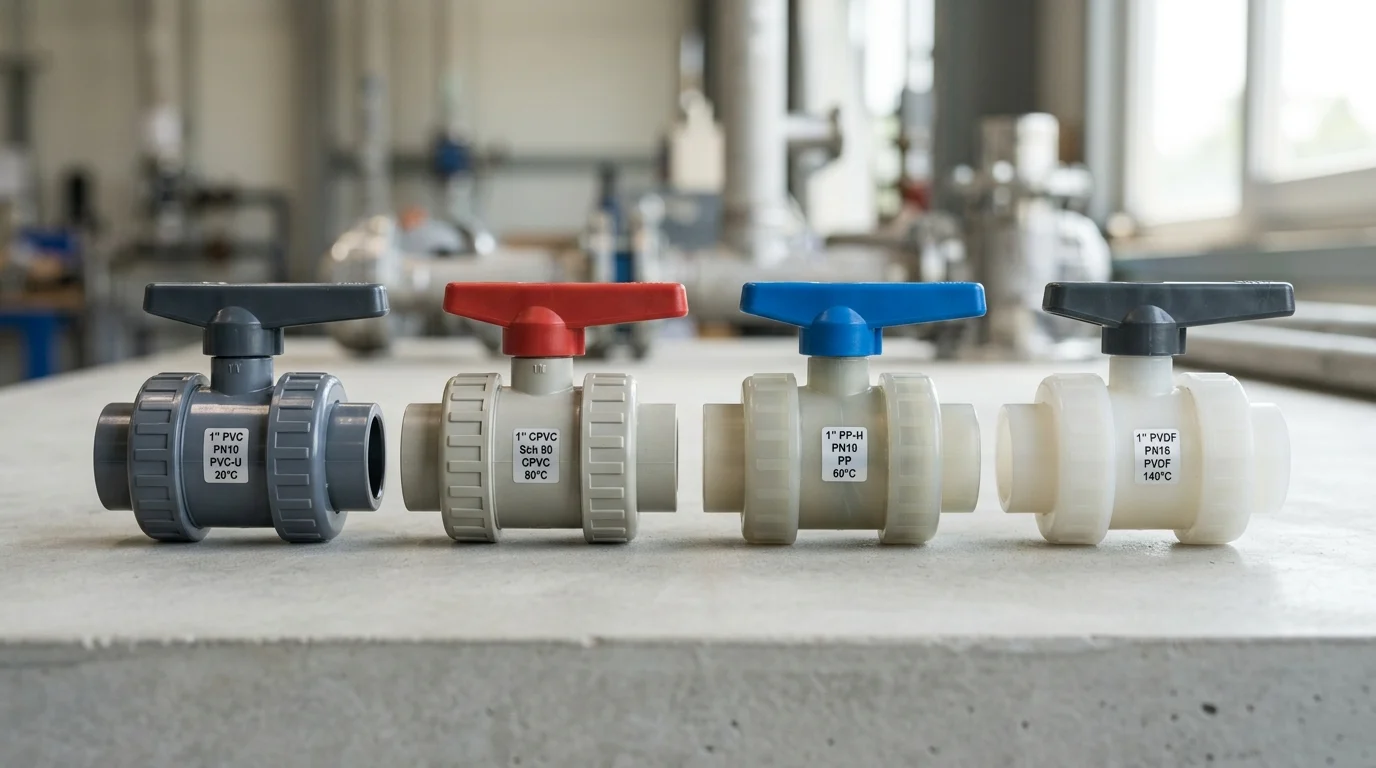
Choosing among PVC, CPVC, PP, and PVDF plastic valves is less about brand preference than matching material properties to pressure, temperature, and chemical exposure. These four polymers can look similar in service, yet their performance and cost differ sharply across industrial, water treatment, and chemical handling applications. This guide compares their core characteristics, including corrosion resistance, thermal limits, mechanical behavior, and typical use cases, so you can see where each material fits best. By the end, you should have a clearer basis for selecting the most practical valve material without overpaying for unnecessary performance or risking premature failure.
What are PVC, CPVC, PP, and PVDF
Thermoplastic valves represent a critical component in industrial fluid handling, offering distinct advantages over metallic counterparts, particularly regarding corrosion resistance, weight reduction, and lifecycle longevity. Selecting the appropriate polymer requires a rigorous understanding of the fundamental chemical structures and thermodynamic properties of the available materials.
The industrial market relies heavily on four primary plastics: PVC, CPVC, PP, and PVDF. Each material occupies a specific performance niche, with raw material costs scaling significantly alongside chemical and thermal capabilities. For example, while a standard PVC ball valve serves as a low-cost commodity item, a functionally equivalent PVDF valve can command a price premium of 500% to 1,000%, necessitating precise engineering justification based on application demands.
How do PVC, CPVC, PP, and PVDF differ
Polyvinyl Chloride (PVC) is an amorphous thermoplastic characterized by a chlorine content of approximately 57%, providing baseline chemical resistance and structural rigidity. It possesses a specific gravity of 1.38 to 1.42 g/cm³, making it heavier than water but significantly lighter than metal alloys.
Chlorinated Polyvinyl Chloride (CPVC) undergoes a post-chlorination process, increasing its chlorine mass fraction to between 63% and 74%. This molecular alteration significantly elevates the polymer's thermal stability and ambient tensile strength compared to standard PVC.
Polypropylene (PP) is a semi-crystalline polyolefin known for its exceptionally low specific gravity (typically 0.90 to 0.92 g/cm³) and superior resistance to caustic solutions. Unlike the chlorinated polymers, PP contains no halogens, making it advantageous in specific environmental applications.
Polyvinylidene Fluoride (PVDF) is a highly crystalline fluoropolymer containing roughly 59% fluorine by weight. This dense structure (specific gravity of 1.75 to 1.80 g/cm³) delivers unparalleled chemical inertness, high-purity characteristics, and mechanical toughness under extreme thermal and chemical stressors.
Which comparison criteria matter most
When evaluating these thermoplastics for valve construction, engineers must prioritize maximum continuous operating temperature, pressure derating curves, and chemical compatibility with the specific process media. These three factors form the non-negotiable baseline for safe operation.
Secondary criteria, which often drive the final procurement decision, include impact strength at sub-zero temperatures, ultraviolet (UV) resistance for outdoor installations, permeation rates, and the required joining methodology. Furthermore, the total cost of ownership (TCO) must be calculated, factoring in not just the initial purchase price, but installation labor, expected maintenance cycles, and the financial risk of process downtime.
How do PVC, CPVC, PP, and PVDF perform
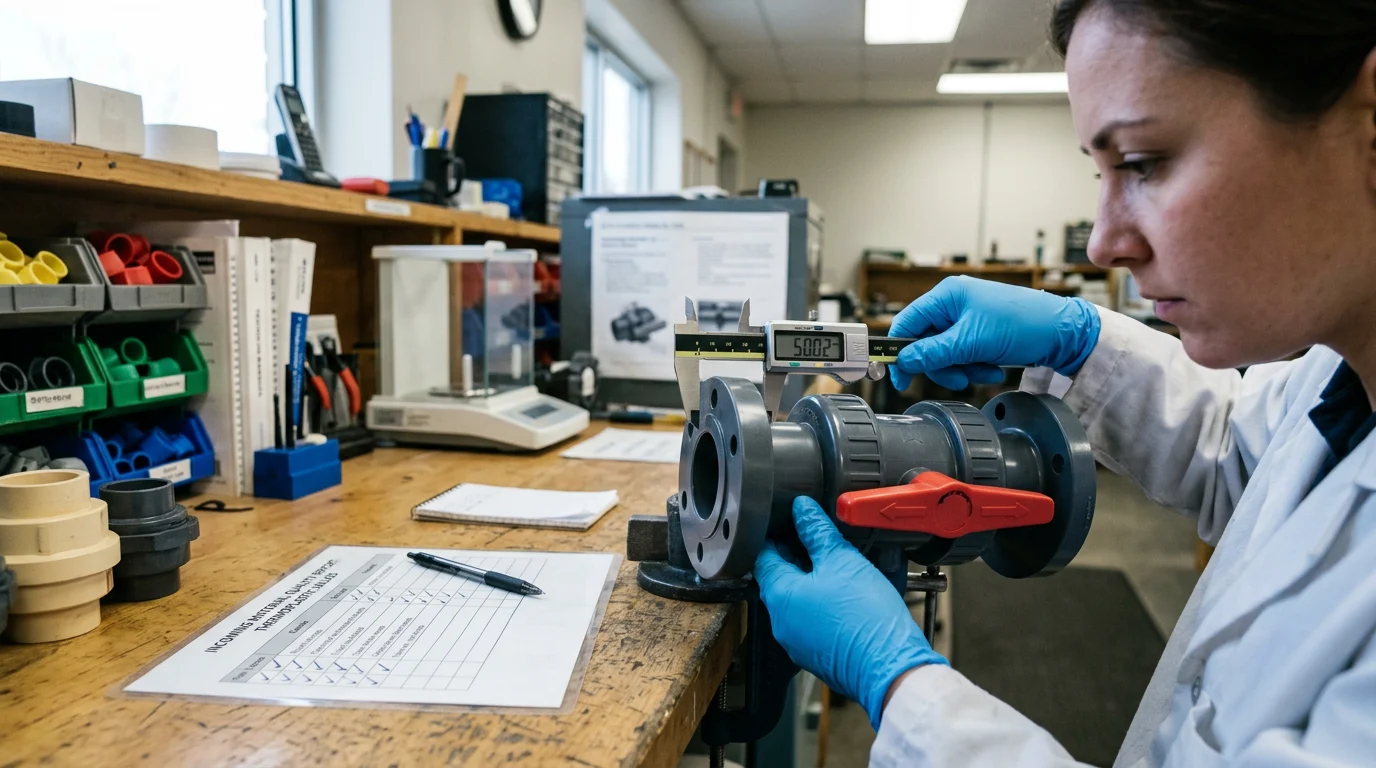
Performance metrics for thermoplastic valves are dictated by the polymer's response to thermal, mechanical, and chemical stressors. Engineers must consult pressure-temperature (P-T) derating curves, as thermoplastic pressure ratings are inversely proportional to operating temperatures.
| Material | Max Operating Temp | Typical Tensile Strength (73°F) | Specific Gravity | Primary Chemical Strength |
|---|---|---|---|---|
| PVC | 140°F (60°C) | 7,000 – 7,500 psi | 1.38 – 1.42 | Weak acids, water, salts |
| CPVC | 200°F (93°C) | 7,500 – 8,200 psi | 1.50 – 1.55 | Hot corrosive liquids, acids |
| PP | 180°F (82°C) | 4,500 – 5,000 psi | 0.90 – 0.92 | Strong bases, caustics |
| PVDF | 280°F (138°C) | 6,500 – 7,500 psi | 1.75 – 1.80 | Halogens, strong solvents |
How do chemical resistance, temperature, and pressure compare
The operational temperature limits define the primary boundary for valve deployment. Standard PVC is restricted to a maximum service temperature of 140°F (60°C), while CPVC extends this upper limit to 200°F (93°C). PP operates reliably up to 180°F (82°C) and demonstrates superior resistance to alkaline solutions, though it remains vulnerable to strong oxidizing acids. PVDF outperforms the others with a maximum continuous operating temperature of 280°F (138°C) and offers universal resistance to aliphatic and aromatic hydrocarbons, concentrated acids, and aggressive halogens.
Pressure capabilities also diverge sharply as temperatures rise. Thermoplastic valves are typically rated at a baseline temperature of 73°F (23°C), commonly at 150 psi or 232 psi (PN16). However, at elevated temperatures, derating factors must be applied. For instance, at 120°F (49°C), a PVC valve retains only about 40% of its original pressure rating, whereas CPVC at the same temperature retains approximately 65% of its capacity.
How do strength, permeation, and UV resistance differ
Mechanical strength and environmental resilience vary significantly across the material spectrum. CPVC exhibits the highest ambient tensile strength at approximately 8,000 psi, but PVDF retains its structural integrity far better at elevated temperatures, avoiding the rapid softening seen in chlorinated polymers.
Regarding permeation, PVDF's dense, highly crystalline structure provides an exceptional barrier to gas and liquid permeation. This low permeability prevents blistering in aggressive chemical service and makes it suitable for ultra-pure water (UPW) systems where gas intrusion must be eliminated.
In outdoor applications, PVDF is inherently resistant to ultraviolet (UV) degradation and requires no additional protection. Conversely, PVC, CPVC, and PP are susceptible to photo-oxidation. Unprotected exposure leads to chain scission, resulting in chalking and severe embrittlement. These vulnerable materials require UV-stabilizing additives, such as 2% to 3% carbon black or titanium dioxide, or external protective cladding to maintain mechanical properties over a 10- to 20-year lifespan.
What application and risk factors should buyers assess
Selecting the optimal thermoplastic valve requires a holistic assessment of the specific process environment, moving beyond baseline chemical compatibility to encompass dynamic operational variables and potential failure modes.
How do media, operating conditions, and service environment affe ct selection
The interaction between process media and the valve material is heavily influenced by concentration, temperature, and fluid velocity. For example, while CPVC effectively handles sulfuric acid at concentrations up to 70%, concentrations reaching 98% strictly mandate the use of PVDF or PTFE-lined components to prevent rapid degradation.
Operating conditions such as thermal cycling must be evaluated, as thermoplastics possess high coefficients of linear thermal expansion. PP, for instance, expands approximately 5.0 x 10^-5 in/in/°F, which is nearly ten times the expansion rate of carbon steel. This necessitates specific piping support designs and expansion loops to prevent stress fracturing at the valve flanges.
Service environments characterized by high vibration or the presence of abrasive slurries may necessitate specific valve internal geometries or elastomeric seats (such as FKM or EPDM) that complement the rigid polymer body while absorbing mechanical shocks.
What risks come from choosing the wrong material
Improper material selection introduces severe operational and safety risks, ranging from micro-cracking and fugitive emissions to catastrophic structural rupture. Utilizing PVC in systems exceeding 140°F (60°C) will result in rapid polymer softening, loss of thread integrity, and eventual blowout failures under pressure.
Furthermore, fluid systems are prone to transient pressure surges or water hammer. During a water hammer event, pressure spikes can exceed standard operating pressures by a factor of 5 to 10. These instantaneous shocks can easily shatter embrittled PP or PVC valves if surge arrestors are not installed or if the material has lost its impact resistance due to chemical attack.
Chemical incompatibility also introduces the risk of leaching. In aggressive media, plasticizers, stabilizers, or unreacted monomers can extract from the polymer matrix into the process fluid. This not only accelerates the mechanical degradation of the valve but also contaminates high-purity batches, a critical failure in pharmaceutical or semiconductor applications.
What sourcing and installation factors matter
Procurement of thermoplastic valves involves navigating a complex landscape of industry standards and specialized installation methodologies. Ensuring supply chain integrity and fabrication compatibility is paramount for long-term system reliability and regulatory compliance.
Which standards, certifications, and traceability requirements a pply
Compliance with recognized standards validates the material's suitability for specific applications. For municipal and potable water systems, valves must carry NSF/ANSI 14 and NSF/ANSI 61 certifications to ensure no toxic leaching occurs into drinking water.
Industrial valves should conform to dimensional, face-to-face, and testing standards such as ASTM F1970, ISO 16136, or ASME B16.34. In semiconductor and pharmaceutical manufacturing, PVDF and PP valves often require compliance with FDA CFR 21 177.1520 or USP Class VI standards.
Traceability is equally critical in high-risk environments. Premium suppliers provide lot-controlled certificates of analysis (CoA) and material test reports (MTRs), allowing buyers to trace the exact polymer batch back to the resin manufacturer, ensuring absolute material authenticity.
How do joining methods, fabrication, and compatibility affect in stallation
Installation protocols are strictly dictated by the polymer family. PVC and CPVC valves are typically joined using solvent cement welding. This process requires specific primers and cements (e.g., ASTM F493 for CPVC) and mandatory curing periods—often exceeding 24 hours for systems operating above 60 psi—before the system can be hydrostatically tested.
In contrast, PP and PVDF cannot be solvent welded due to their chemical inertness. They require thermal fusion techniques such as socket fusion, butt welding, or infrared (IR) fusion. IR fusion provides the highly consistent, crevice-free welds demanded by ultra-pure water systems, preventing bacterial accumulation in dead legs.
Compatibility between the valve body and the piping system is crucial. Installing a CPVC valve in a PP piping system requires specialized transition fittings, such as flanged connections with elastomeric gaskets, as the two plastics cannot be chemically or thermally fused together.
What evaluation steps help shortlist suppliers
Shortlisting suppliers requires a rigorous audit of their manufacturing and quality assurance capabilities. Buyers should prioritize manufacturers who conduct 100% shell and seat hydrostatic testing, typically at 1.5 times the maximum rated working pressure, rather than relying on statistical batch sampling.
Additional evaluation criteria include the supplier's ISO 9001 certification, their ability to provide comprehensive engineering documentation (including exact P-T curves and Cv flow coefficients), and their minimum order quantities (MOQs) for specialized PVDF or high-purity PP components.
Finally, buyers must assess the availability of replacement seal kits and spare parts. A supplier should offer a range of O-ring materials (PTFE, EPDM, FKM) designed specifically for the chosen valve body to accommodate varying chemical media over the system's lifespan.
Which decision framework should guide material selection
Establishing a standardized decision framework ensures that engineers and procurement teams align material capabilities with both technical requirements and budgetary constraints. A structured approach mitigates the risk of over-engineering while preventing premature failures.
| Application Profile | Recommended Material | Primary Justification / Key Metric |
|---|---|---|
| General Water / Irrigation | PVC | Highly cost-effective, handles up to 140°F (60°C), easy solvent welding. |
| Hot Corrosive Fluids / Plating | CPVC | Withstands up to 200°F (93°C), high ambient tensile strength. |
| Industrial Caustics / Bases | PP | Superior alkaline resistance, lightweight (0.91 g/cm³ specific gravity). |
| Semiconductor UPW / Halogens | PVDF | Zero leaching, handles 280°F (138°C), exceptional purity and chemical inertness. |
When is PVC, CPVC, PP, or PVDF the best choice
PVC remains the undisputed standard for general fluid transfer, municipal water, and wastewater treatment due to its mechanical rigidity and unmatched cost-efficiency. It is the default choice when temperatures remain below 140°F (60°C) and aggressive solvents are absent.
CPVC is the optimal choice for commercial hot water distribution, metal plating lines, and applications requiring higher thermal limits without incurring the premium cost of fluoropolymers.
PP excels in the chemical processing industry, particularly in chlor-alkali facilities handling concentrated sodium hydroxide, potassium hydroxide, or hydrochloric acid, where its resistance to stress cracking in alkaline environments is superior to chlorinated plastics.
PVDF is reserved for the most demanding environments. It is the mandatory choice for handling highly reactive halogens like liquid bromine and chlorine gas, ozone-treated water, and ultra-pure water (UPW) systems requiring 18.2 megohm-cm resistivity, where zero allowable metallic or organic leaching is a strict operational parameter.
How should buyers balance performance, compliance, and cost
Balancing performance and cost requires a comprehensive Lifecycle Cost Analysis (LCCA). While the initial capital expenditure for a PVDF valve may be up to 10 times higher than a comparable PVC valve, its extended service life in aggressive environments often yields a lower total cost of ownership. This is achieved by eliminating unplanned downtime, which can cost thousands of dollars per hour in semiconductor fabrication or chemical processing plants.
Buyers must weigh regulatory compliance requirements—such as FDA or USP Class VI mandates—against
Key Takeaways
- The most important conclusions and rationale for PVC vs CPVC vs PP vs PVDF Plastic Valves
- Specs, compliance, and risk checks worth validating before you commit
- Practical next steps and caveats readers can apply immediately
Frequently Asked Questions
Which plastic valve is best for higher temperatures?
PVDF handles the highest continuous temperature, up to 280°F. CPVC follows at 200°F, PP at 180°F, and PVC at 140°F. Always verify the valve’s pressure derating at your actual operating temperature.
When should I choose PVC valves?
Choose PVC for low-cost service with water, salts, and mild acids below 140°F. It fits general industrial and utility lines where chemical exposure is moderate and budget matters.
Is PP better than CPVC for caustic chemicals?
Yes, PP is typically preferred for strong bases and caustic solutions. CPVC is often better for hotter corrosive liquids and many acids, so confirm compatibility with the exact media and concentration.
Why are PVDF valves much more expensive?
PVDF costs more because it offers top chemical resistance, high purity, and the highest temperature capability. Use it when aggressive chemicals, solvents, halogens, or contamination-sensitive processes justify the premium.
What factors matter most when comparing plastic valve materials?
Focus first on chemical compatibility, maximum continuous temperature, and pressure-temperature derating. Then check UV exposure, permeation, impact resistance, joining method, and total lifecycle cost before selecting a valve.


