
Introduction
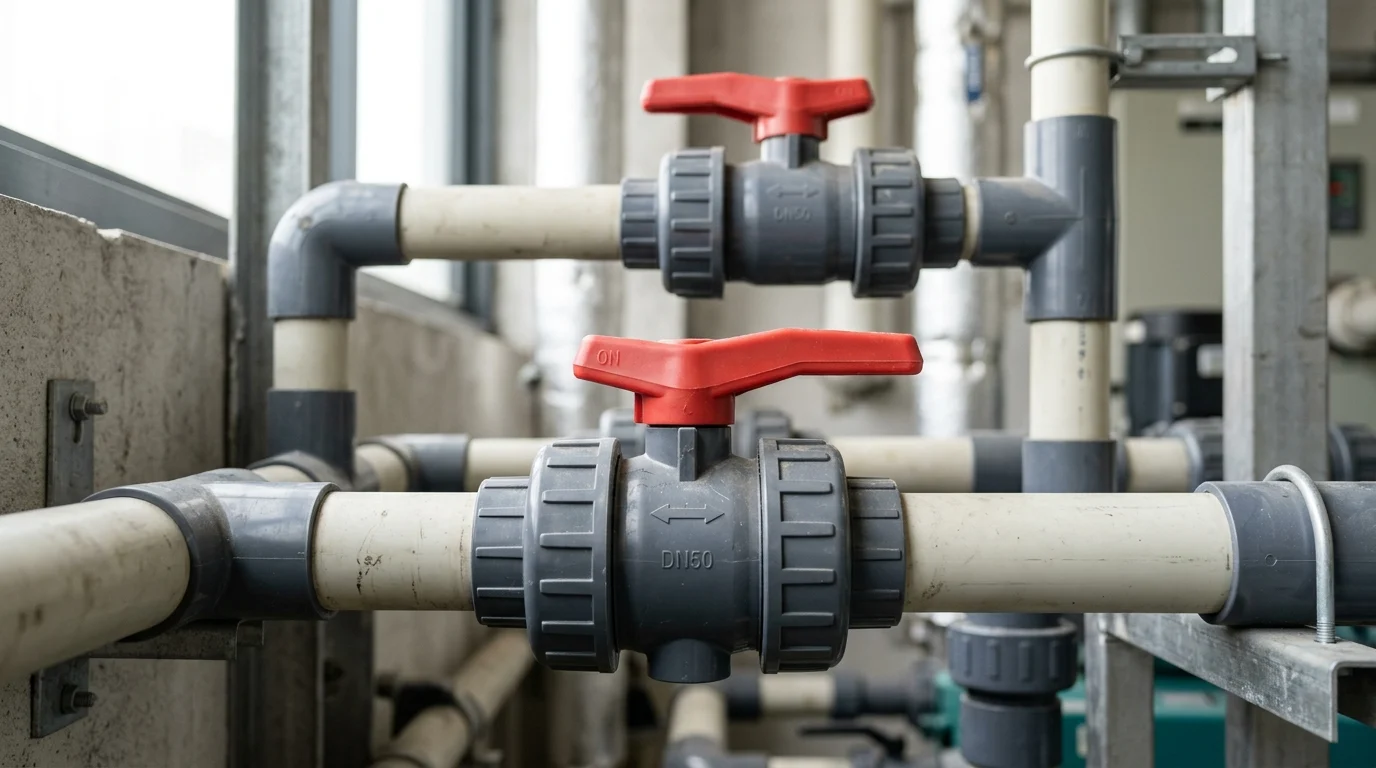
Water treatment systems depend on valves that can withstand corrosive chemicals, constant cycling, and strict reliability demands without driving up maintenance costs. Plastic valves have become a practical choice because they combine chemical resistance, low weight, and solid performance across many treatment stages, from chemical dosing to filtration and wastewater handling. This article examines seven common applications of plastic valves in water treatment and explains why they fit each use case, including where material compatibility, pressure limits, and service conditions matter most. By the end, readers will have a clearer sense of how plastic valves support safer operation, longer service life, and more efficient plant design.
Why Plastic Valves Matter in Water Treatment
The integration of engineered polymers into industrial fluid handling has fundamentally transformed the design and operation of modern water treatment facilities. As plants face increasingly stringent regulatory requirements and process environments become more aggressive, traditional metallurgical solutions frequently exhibit critical vulnerabilities. Plastic valves have emerged as a primary solution, offering engineered resistance to hostile media, significantly reduced weight, and favorable lifecycle economics.
While historical applications of plastic valves were often limited to low-pressure auxiliary lines, advancements in polymer science have elevated their status to mission-critical components. Modern thermoplastic and fluoropolymer valves now routinely handle system pressures up to 232 psi (16 bar) and operate reliably across extreme pH ranges, cementing their position as indispensable assets in municipal, industrial, and high-purity water treatment networks.
Corrosion resistance and chemical compatibility
The foremost engineering advantage of plastic valves in water treatment is their inherent immunity to galvanic corrosion and destructive chemical attack. Unlike ferrous metals, which require sacrificial anodes, protective coatings, or costly alloy upgrades to survive aggressive environments, polymers maintain structural and functional integrity across a pH spectrum of 1 to 14. This broad chemical compatibility is essential when managing highly reactive coagulants, flocculants, and disinfectants.
For example, handling 12.5% sodium hypochlorite—a standard disinfection agent—causes rapid pitting in 316L stainless steel but has negligible impact on Polyvinylidene Fluoride (PVDF) or unplasticized Polyvinyl Chloride (PVC-U). Similarly, highly oxidative environments involving ozone or sulfuric acid demand the specific inert properties of engineered plastics to prevent catastrophic valve failure and subsequent process contamination.
Key valve types and material options
Selecting the optimal plastic valve requires precisely matching the polymer substrate and valve mechanism to the specific fluid dynamics of the application. The most frequently specified configurations include ball valves for rapid isolation, butterfly valves for large-diameter flow modulation, diaphragm valves for precise chemical throttling, and check valves for backflow prevention. Each type is manufactured from a range of specialized resins tailored to distinct thermal and mechanical thresholds.
| Material | Max Operating Temp | Typical Water Treatment Application | Tensile Strength (psi) |
|---|---|---|---|
| PVC-U | 140°F (60°C) | Raw water intake, low-temp chemical dosing | ~7,000 |
| CPVC | 200°F (93°C) | Hot water systems, concentrated acids | ~8,000 |
| PP-H | 180°F (82°C) | Industrial wastewater effluent, RO reject | ~4,800 |
| PVDF | 280°F (138°C) | High-purity deionization, ozone systems | ~6,600 |
Engineers must cross-reference these material properties against system parameters, recognizing that polymer mechanical strength is inversely proportional to temperature. A PVC-U valve rated for 150 psi at 73°F (23°C) will require significant pressure derating as the media temperature approaches its thermal limit.
High-Value Applications for Plastic Valves
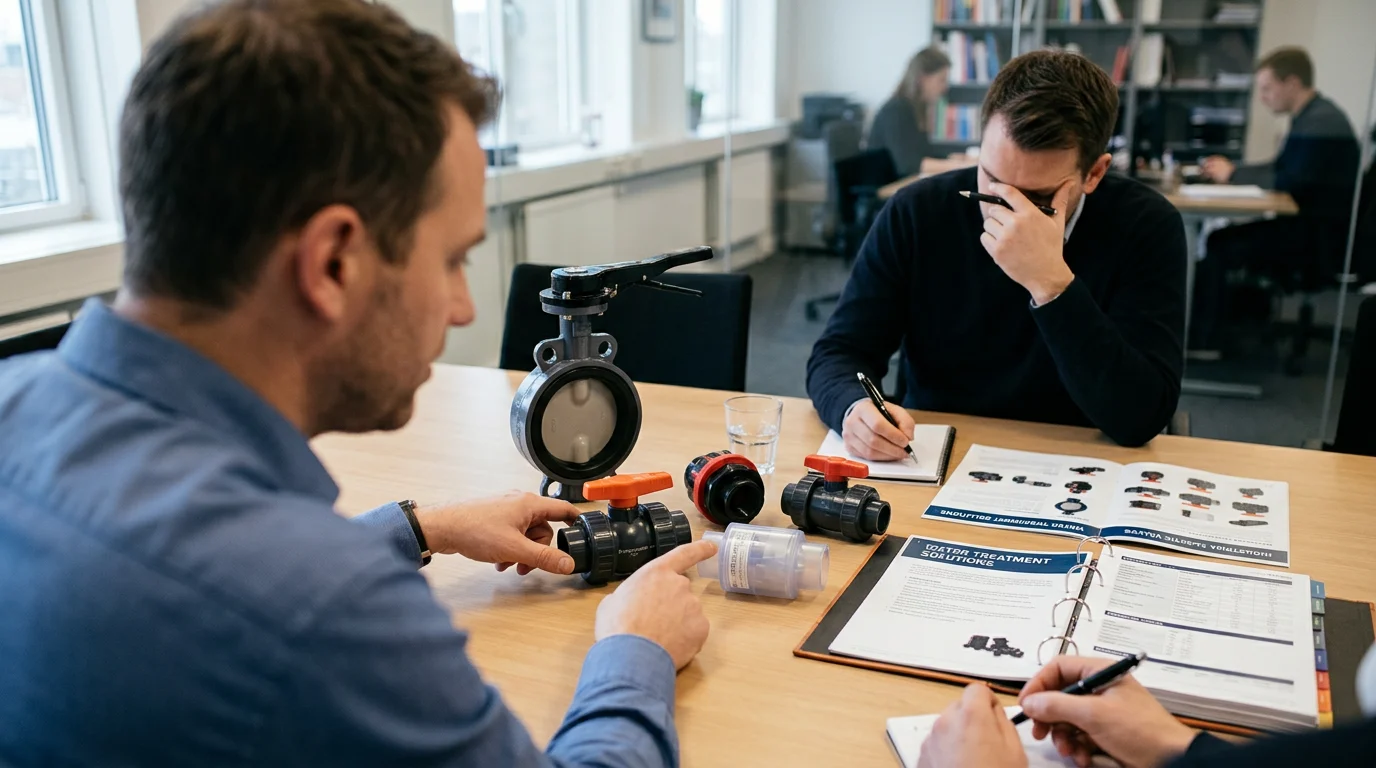
Within the complex architecture of a water treatment plant, plastic valves are strategically deployed across seven primary applications: raw water intake, chemical dosing, reverse osmosis (RO) skids, wastewater effluent discharge, deionization processes, sludge handling, and potable water distribution. In these high-value applications, the strategic deployment of non-metallic valves directly correlates with increased process uptime and reduced maintenance overhead.
By isolating the specific demands of each process zone, facility engineers can optimize valve selection, ensuring that the chosen polymer assembly meets the exact volumetric, chemical, and pressure requirements of that specific operational phase.
Raw water intake and distribution
Raw water intake and primary distribution networks typically involve high-volume, low-pressure fluid transfer. In these zones, large-diameter plastic butterfly valves—often ranging from 8 inches to 24 inches (200mm to 600mm)—are highly favored. Their lightweight construction drastically reduces the need for heavy lifting equipment during installation and minimizes structural stress on the adjoining piping network.
These intake streams frequently contain suspended solids, sand, and organic matter. Thermoplastic butterfly valves equipped with resilient EPDM or FKM liners provide reliable bubble-tight shutoff even when minor particulate matter is present. Operating at typical intake pressures below 100 psi, these valves offer a highly efficient, corrosion-resistant alternative to traditional cast iron or epoxy-coated steel components.
Chemical dosing and process lines
Chemical dosing and process lines represent the most demanding environments within a water treatment facility, requiring absolute precision and leak-free operation. In these applications, plastic diaphragm valves are the industry standard. Their design isolates the mechanical operating components from the fluid stream, eliminating the need for stem packing and completely preventing fugitive emissions of hazardous chemicals.
When metering highly aggressive media such as 98% sulfuric acid for pH adjustment or ferric chloride for coagulation, engineers typically specify PVDF or CPVC bodies paired with PTFE diaphragms. These systems often operate at micro-flow rates down to 0.1 gallons per minute (GPM), where the precise throttling characteristics of a true union plastic diaphragm valve ensure accurate chemical delivery without the risk of internal scaling or degradation.
Operating conditions and failure risks
Despite their numerous advantages, plastic valves must be engineered to withstand specific operational stresses to mitigate failure risks. The most critical operational threats include water hammer (hydraulic shock), thermal expansion, and improper actuation torque. Because polymers have a lower modulus of elasticity compared to metals, sudden pressure spikes caused by rapid valve closure can exceed the material's burst strength.
To mitigate these risks, engineers must enforce strict actuation speeds—typically ensuring closure times exceed 3 to 5 seconds for pneumatic or electric actuators. Additionally, because the coefficient of thermal expansion for plastics is significantly higher than that of metals (e.g., PVC expands roughly five times more than steel per degree of temperature change), proper piping support, expansion loops, and continuous pressure derating calculations are mandatory to prevent mechanical stress fractures at the valve connection points.
Plastic vs Metal Valves in Water Systems
The specification debate between plastic and metal valves is a foundational aspect of water treatment engineering. While traditional metallurgy offers superior absolute strength and extreme pressure tolerance, engineered plastics provide unparalleled chemical resistance and lifecycle longevity in corrosive environments.
A rigorous comparative analysis of performance metrics, procurement costs, and maintenance burdens is required to determine the optimal material for a given fluid handling system.
Performance, cost, and maintenance differences
The divergence between plastic and metal valves is most pronounced in their performance profiles under chemical stress and their respective capital costs. Plastic assemblies offer a significantly lower barrier to entry, frequently reducing initial procurement costs by 30% to 50% compared to high-grade stainless steel or specialty alloys. Furthermore, the weight reduction—often up to 80%—directly translates to lower shipping, handling, and labor costs during installation.
| Engineering Metric | Engineered Plastics (PVC, CPVC, PVDF) | Metallic Alloys (316L SS, Duplex) |
|---|---|---|
| Initial Capital Cost | Baseline (Highly economical) | 1.5x to 4.0x Baseline |
| Weight Profile | Low (Specific gravity ~1.4 to 1.8) | High (Specific gravity ~8.0) |
| Corrosion Mechanism | Immune to oxidation and galvanic attack | Vulnerable to localized pitting / crevice corrosion |
| Max Pressure Rating | Typically limited to 150 – 232 psi | Routinely exceeds 1,000+ psi |
| Actuation Torque | Lower (reduces actuator size/cost) | Higher (requires robust actuation) |
Maintenance cycles also differ drastically. Metal valves in aggressive water applications often require routine inspection for internal scaling, rust, and seat degradation. Conversely, plastic valves inherently resist biofilm adhesion and scaling due to their ultra-smooth internal bore, effectively extending the mean time between maintenance (MTBM) events.
When plastic outperforms metal
Plastic consistently outperforms metal in applications characterized by high chloride concentrations, such as reverse osmosis (RO) desalination and brackish water treatment. In these environments, chloride ions aggressively attack the passive oxide layer of 316L stainless steel, leading to rapid pitting and crevice corrosion—often initiating at chloride concentrations as low as 1,000 ppm.
By contrast, engineered polymers are completely inert to chloride attack. In RO reject lines, where brine concentrations are exceptionally high, specifying PP or PVDF valves completely eliminates the risk of galvanic corrosion. Furthermore, in ultra-pure water (UPW) and deionization systems, fluoropolymers are mandated over metals to prevent the leaching of microscopic metallic ions that would otherwise compromise the stringent resistivity requirements (e.g., 18.2 Megohm-cm) of the treated water.
How to Specify and Validate Plastic Valves
Procuring the correct plastic valve requires a systematic approach to specification, moving beyond basic pipe size to encompass flow dynamics, actuation requirements, and regulatory compliance. A poorly specified valve can lead to flow restrictions, premature actuator burnout, or catastrophic pressure failures.
Engineers must rely on standardized calculation methodologies and rigorous supplier validation protocols to ensure the selected components will perform reliably throughout the facility's intended lifecycle.
Specification and selection steps
The specification process begins with precise hydraulic sizing, utilizing the valve's flow coefficient (Cv)—which defines the volume of water in gallons per minute that will flow through the valve with a 1 psi pressure drop. Undersizing a plastic valve leads to excessive fluid velocity and cavitation, which can erode the polymer body, while oversizing results in poor throttling resolution and unnecessary capital expenditure.
Following hydraulic sizing, engineers must calculate the required actuation torque. Unlike metal valves, plastic valves can experience an increase in breakaway torque if seated in a closed position for extended periods, a phenomenon known as "seat swell" in certain chemical media. It is standard engineering practice to apply a 20% to 30% safety margin to the manufacturer's published torque values when sizing electric or pneumatic actuators to ensure reliable operation under worst-case static friction conditions.
Compliance, testing, and supplier assessment
Regulatory compliance is a non-negotiable aspect of valve validation, particularly in municipal drinking water applications. Plastic valves and their internal elastomers must hold active NSF/ANSI/CAN 61 certification, which dictates stringent limits on the leaching of toxic substances and volatile organic compounds (VOCs) into potable water streams.
During the supplier assessment phase, procurement teams should mandate comprehensive factory acceptance testing (FAT) documentation. High-quality manufacturers will subject 100% of their valves to hydrostatic shell testing at 1.5 times the maximum rated working pressure, and seat leak testing at 1.1 times the rated pressure. Additionally, buyers sourcing custom-actuated assemblies should verify the supplier's Minimum Order Quantity (MOQ)—which typically ranges from 10 to 50 units for specialized OEM configurations—to ensure alignment with project procurement schedules.
Decision Framework for Valve Selection
Establishing a robust decision framework for valve selection is vital for aligning upfront engineering design with long-term operational sustainability. Facility managers and design engineers must navigate a complex matrix of technical specifications, budgetary constraints, and environmental variables.
By adopting a holistic view of the valve's lifecycle, organizations can avoid the trap of optimizing for initial capital expenditure at the expense of long-term reliability and compliance.
Balancing performance, compliance, and lifecycle cost
The most effective procurement strategies utilize a Total Cost of Ownership (TCO) model, projecting costs over a standard 10 to 15-year facility lifecycle. While a specialized PVDF diaphragm valve may cost three times as much as a standard PVC ball valve, its deployment in an aggressive sulfuric acid line will prevent multiple replacement cycles, process shutdowns, and potential environmental fines.
Engineers must balance these performance capabilities against strict compliance mandates and lifecycle costs. For instance, replacing a corroded metal valve in a chemical dosing skid every 3 years incurs not only the cost of the hardware but also labor, system downtime, and hazardous waste disposal. Specifying the correct engineered plastic extends the replacement cycle to 10 years or more, drastically reducing the annualized cost of the asset.
Practical recommendations for buyers and engineers
Practical execution of this decision framework relies on several core engineering recommendations. First, always specify true-union connections for plastic valves 2 inches and under; this allows the valve body to be removed from the pipeline for maintenance without cutting the pipe. For sizes 3 inches and larger, flanged connections with properly torqued backing rings are required to distribute mechanical stress evenly and prevent flange cracking.
Finally, account for external environmental factors.
Key Takeaways
- The most important conclusions and rationale for Plastic Valves
- Specs, compliance, and risk checks worth validating before you commit
- Practical next steps and caveats readers can apply immediately
Frequently Asked Questions
Why are plastic valves commonly used in water treatment?
They resist corrosion, handle harsh chemicals, reduce weight, and lower maintenance compared with metal valves in treatment systems.
Which plastic valve type is best for chemical dosing lines?
Diaphragm valves are often preferred because they provide precise throttling and help reduce leakage in aggressive chemical service.
What plastic material works well for sodium hypochlorite service?
PVDF and PVC-U are common choices because they tolerate sodium hypochlorite far better than many metal valves.
Where are plastic butterfly valves typically installed in a water treatment plant?
They are widely used on raw water intake and primary distribution lines, especially for large-diameter, low-pressure flow control.
Do plastic valves need pressure derating at higher temperatures?
Yes. As media temperature rises, plastic valve pressure ratings drop, so always check the manufacturer’s derating chart before selection.


