
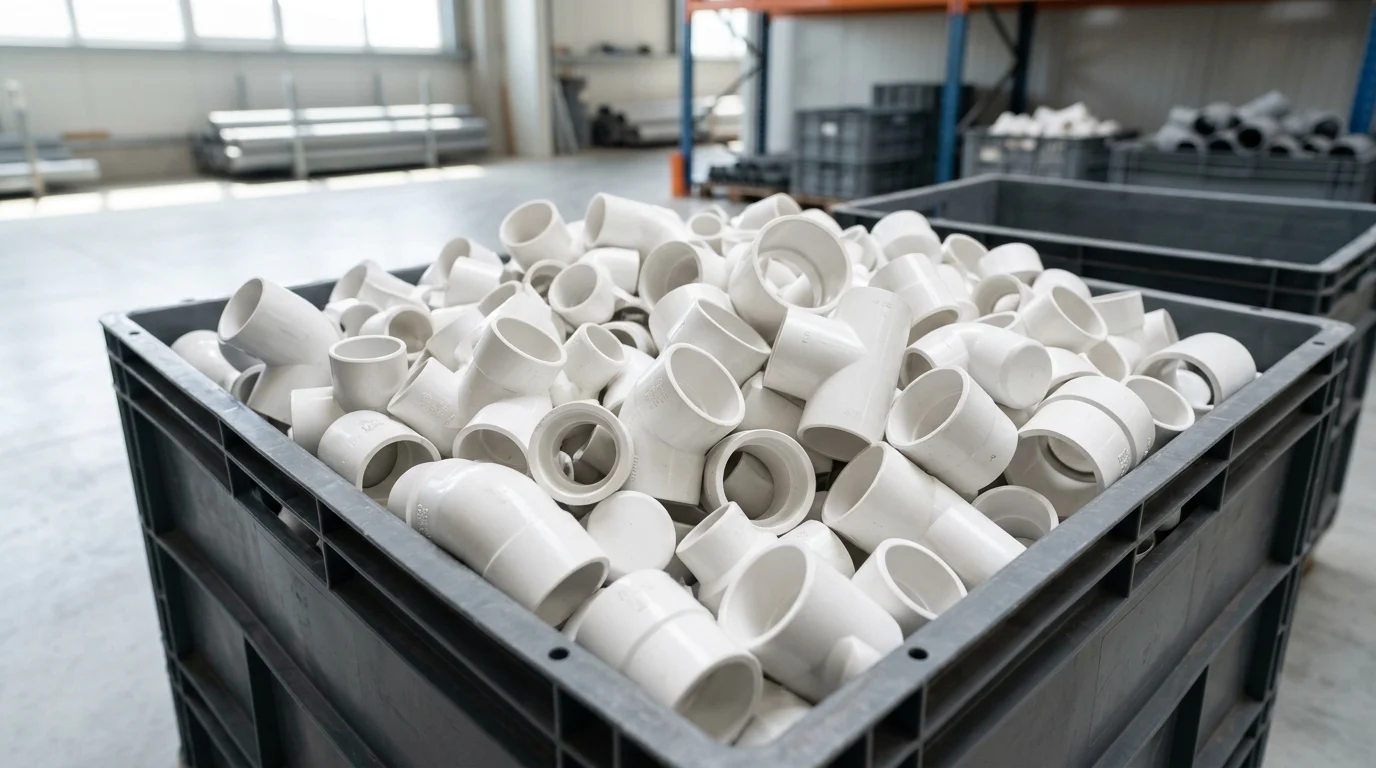
Introduction
Selecting UPVC pipe fittings for farm irrigation involves more than matching sizes and placing a bulk order. The right choice depends on operating pressure, water quality, layout complexity, and the reliability of the supplier, especially when thousands of fittings will be installed across a single project. This article explains how to evaluate fittings for durability, sealing performance, and compatibility with irrigation cycles, while also reducing procurement risk, defects, and replacement costs. By the end, you will have a practical framework for choosing bulk UPVC fittings that support consistent water flow, long service life, and smoother project execution.
Why bulk UPVC pipe fittings matter for farm irrigation
Procuring UPVC pipe fittings in bulk for large-scale agricultural projects requires a strategic approach to fluid dynamics and supply chain management. Unplasticized Polyvinyl Chloride (UPVC) remains the industry standard for irrigation due to its high tensile strength, chemical inertness, and cost-effectiveness. However, transitioning from ad-hoc purchases to bulk procurement introduces significant engineering and financial variables that require rigorous oversight.
Irrigation cycles and water source conditions
Agricultural irrigation networks are subjected to intense operational stresses that dictate fitting requirements. Cyclic pumping, often occurring four to six times per day, introduces repetitive water hammer effects that test the structural integrity of every joint. These pressure surges can easily fracture substandard injection-molded plastics.
Furthermore, water sources derived from deep boreholes or open reservoirs frequently carry abrasive sediments and dissolved minerals. This necessitates fittings with high abrasion resistance and minimal internal friction to maintain flow efficiency over long distances without premature degradation.
Commercial risks in bulk purchasing
The commercial risks inherent in sourcing UPVC pipe fittings in bulk cannot be overstated. When minimum order quantities (MOQs) scale upwards of 10,000 to 50,000 units per SKU, even a marginal defect rate becomes a catastrophic liability.
For example, a 2% failure rate in a 50,000-piece deployment results in 1,000 potential leak points across a farm. During peak drought conditions, the resulting pressure drops and system downtime can lead to total crop failure, far eclipsing the initial savings of choosing a substandard supplier based purely on unit cost.
Technical specifications to compare in UPVC fittings
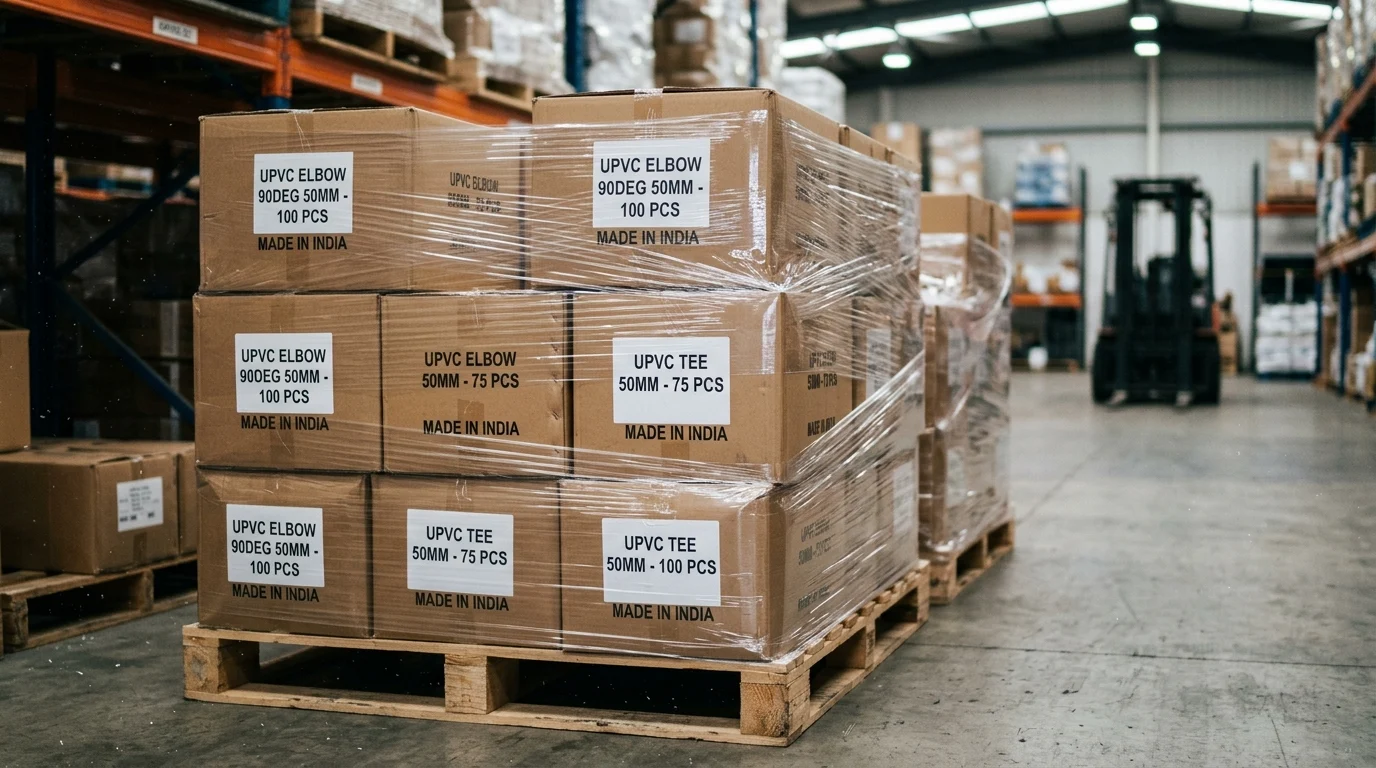
Evaluating the technical specifications of UPVC fittings is the most critical phase of the procurement process. Exacting dimensional tolerances and validated pressure ratings are non-negotiable for ensuring leak-free performance across kilometers of agricultural piping.
Pressure rating, diameter tolerance, and wall design
Fittings must be matched to the system's hydraulic demands using standardized Pressure Nominal (PN) ratings. Typical farm mains require PN10 (1.0 MPa or 145 psi) or PN16 (1.6 MPa or 232 psi) fittings to withstand primary distribution pressures.
Wall design plays a crucial role in maintaining these ratings; a standard 90mm PN16 fitting requires a minimum wall thickness of 6.7mm with a strict positive tolerance (e.g., +0.3mm). Any negative deviation in outer diameter (OD) or wall thickness compromises the solvent weld interface and significantly lowers the burst pressure threshold.
Fitting types, sealing methods, and chemical resistance
The selection of fitting types—ranging from standard elbows and tees to complex reducers and saddle clamps—must align with the chosen sealing method. While elastomeric ring seals (using EPDM or NBR rubber) offer flexibility for thermal expansion, solvent-cemented joints provide superior rigidity for buried lines.
Additionally, fittings must exhibit high chemical resistance to withstand the continuous injection of liquid fertilizers, herbicides, and soil treatments. High-grade UPVC must maintain structural stability across a continuous pH range of 3.0 to 10.0 without embrittlement.
Comparison table for supplier evaluation
To streamline supplier evaluation, procurement engineers should utilize a standardized technical comparison matrix. The following table outlines the baseline specifications required for high-grade agricultural UPVC fittings:
| Specification Parameter | Minimum Acceptable Standard | Premium Grade Standard |
|---|---|---|
| Pressure Rating (Mains) | PN10 (1.0 MPa) | PN16 (1.6 MPa) |
| Wall Thickness (90mm OD) | 5.1mm (+0.2mm) | 6.7mm (+0.3mm) |
| Material Composition | 100% Virgin UPVC | 100% Virgin UPVC + UV Inhibitors |
| Tensile Yield Strength | 45 MPa | >50 MPa |
How to evaluate quality, compliance, and suppliers
Securing favorable technical specifications on paper is only the first step; validating that a supplier can consistently manufacture to those standards across bulk volumes requires rigorous auditing. Quality assurance protocols separate reliable manufacturing partners from high-risk traders.
Standards, test reports, and traceability
Global agricultural projects typically demand compliance with ISO 1452-3 or equivalent regional standards for plastic piping systems. Verification requires reviewing independent laboratory test reports, particularly for hydrostatic pressure resistance.
For instance, a compliant PN16 fitting must survive internal testing at 4.2 MPa for one hour without structural failure. Furthermore, traceability is essential; high-quality fittings feature molded-in date codes, cavity numbers, and material batch identifiers to isolate potential defects in the field.
Molding quality, raw material consistency, and batch control
The structural integrity of UPVC relies heavily on raw material consistency. The introduction of recycled PVC (regrind) lowers production costs but severely degrades impact resistance and lifespan.
Expert procurement mandates that the maximum allowed regrind be strictly capped at less than 5%, or eliminated entirely in favor of 100% virgin resin. Visual and tactile inspections of molding quality should check for flow marks, sink marks, or internal voids, which indicate improper injection temperatures or inadequate cooling cycles.
Factory, trader, and OEM assessment criteria
Differentiating between direct factories, trading companies, and Original Equipment Manufacturers (OEMs) is critical for supply chain transparency. Factory assessments should quantify production capacity by the number and tonnage of injection molding machines, which typically range from 100T for small couplings to 800T for large-diameter irrigation mains.
A verified ISO 9001 quality management system, coupled with in-house hydrostatic testing equipment and a dedicated quality control laboratory, is a mandatory prerequisite for any factory handling bulk agricultural orders.
Sourcing, logistics, and installation risk control
Even the highest quality UPVC fittings can fail if logistical planning and installation protocols are poorly managed. Sourcing bulk components requires synchronizing manufacturing lead times with seasonal planting schedules and site readiness.
Quantity planning, spares, lead times, and packaging
Accurate quantity planning must account for both immediate installation needs and long-term maintenance. Standard industry practice dictates ordering a 3% to 5% buffer of spare fittings to cover installation errors and future repairs.
Lead times are a critical variable; a standard 40-foot High Cube (40HQ) container of mixed fittings typically requires 25 to 35 days for production, excluding ocean transit. Furthermore, packaging specifications must be explicitly detailed in the purchase order, mandating double-corrugated export cartons to prevent crushing and micro-fractures during transit.
Installation conditions, solvent cement, and storage
Site conditions heavily influence the success of the final assembly. UPVC solvent cement relies on a chemical reaction that is highly sensitive to ambient temperature and humidity.
Storage protocols must dictate that fittings and adhesives are kept in shaded, ventilated areas below 40°C to prevent thermal deformation and premature curing of the cement. During installation, joints must be allowed a minimum curing time of 24 hours at 20°C before the system is subjected to full operational pressure testing.
Final procurement decision for UPVC fittings
The final procurement decision for bulk UPVC pipe fittings demands a balanced synthesis of technical validation, commercial viability, and long-term risk management. Hasty purchasing based solely on unit cost frequently results in disproportionate operational expenditures over the system's lifespan.
Step-by-step selection process
A systematic selection process mitigates procurement risk. The cycle should commence with a detailed Request for Proposal (RFP) outlining exact PN ratings and chemical resistance requirements.
This is followed by procuring and destructively testing physical samples from shortlisted suppliers. Before committing to a full container load, executing a localized trial order allows engineers to assess the dimensional accuracy of the fittings in real-world solvent welding scenarios.
Decision matrix for price, compliance, and durability
To formalize the final choice, procurement teams should utilize a weighted decision matrix. While initial capital expenditure is important, the projected 20-to-50-year lifespan of a buried irrigation system dictates that durability and compliance carry heavier weightings.
The matrix below illustrates a standard evaluation framework for bulk UPVC procurement:
| Evaluation Criteria | Weighting (%) | Key Indicators Assessed |
|---|---|---|
| Technical Compliance | 40% | ISO certification, PN rating validation, dimensional accuracy |
| Material Durability | 30% | Virgin resin usage, UV stability, wall thickness consistency |
| Cost & Commercials | 20% | Bulk unit price, payment terms, MOQ flexibility |
| Logistics & Support | 10% | Lead times, packaging quality, warranty provisions |
Key Takeaways
- The most important conclusions and rationale for UPVC pipe fittings bulk
- Specs, compliance, and risk checks worth validating before you commit
- Practical next steps and caveats readers can apply immediately
Frequently Asked Questions
What pressure rating is best for farm irrigation UPVC fittings?
Use PN10 for typical branch lines and PN16 for mains or systems with frequent pump cycling. Match the fitting rating to actual working pressure plus surge margin.
How can bulk buyers reduce leakage risk in UPVC pipe fittings?
Check OD and wall-thickness tolerances, request hydrostatic test reports, and confirm 100% virgin UPVC. Small dimensional errors can weaken solvent joints across large installations.
Which sealing method suits buried farm irrigation lines?
Solvent-cemented joints are usually best for buried lines because they provide rigid, leak-resistant connections. Use quality cement and proper curing times to avoid early failures.
Are UPVC fittings compatible with fertilizers and farm chemicals?
Yes, if the fittings are high-grade UPVC with suitable chemical resistance. Ask suppliers to confirm performance across your chemical range, especially for fertigation and pH-sensitive applications.
Why source UPVC pipe fittings bulk from an experienced supplier like Pntek?
An experienced manufacturer can offer consistent quality, integrated pipes, fittings, and valves, plus export support and responsive quotes. That helps simplify large irrigation procurement and reduce supply risk.


