
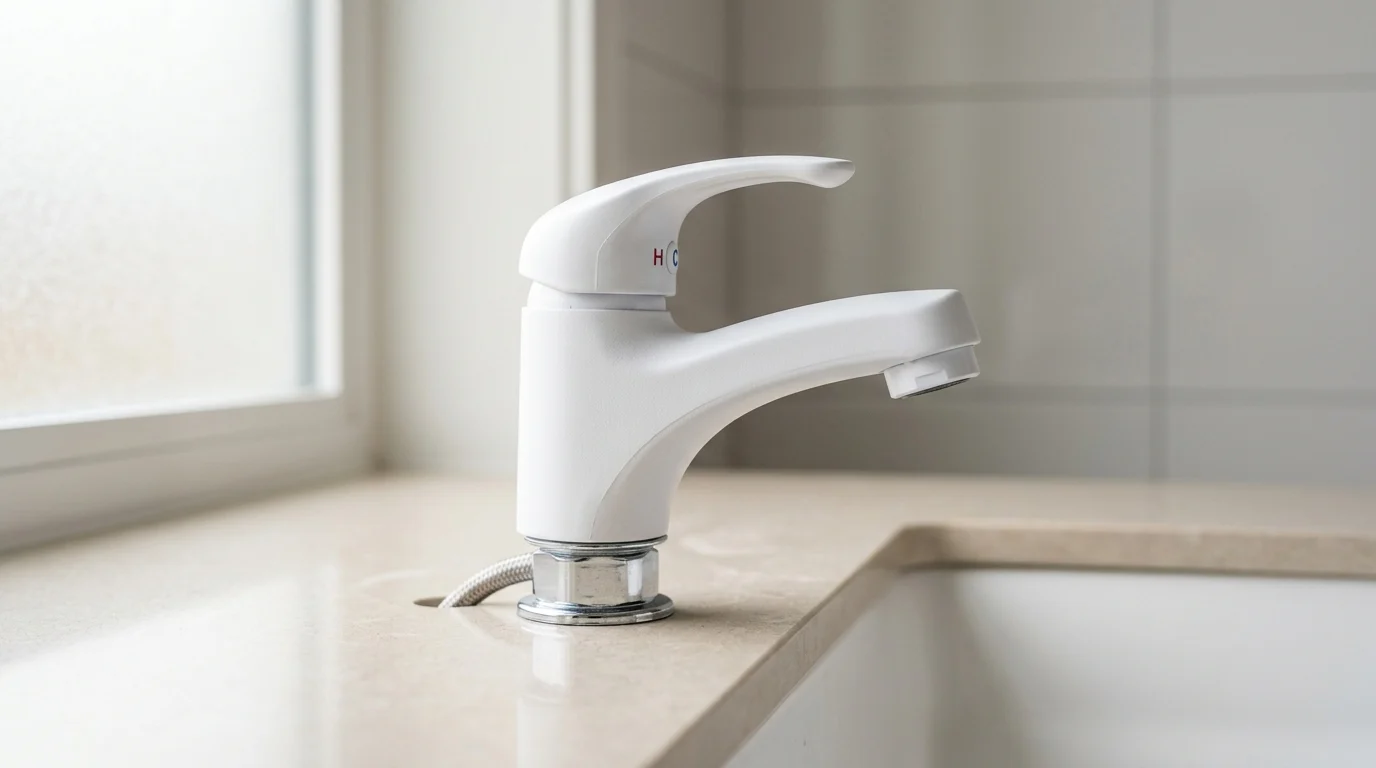
Why Plastic Faucet Installation Quality Matters for B2B Buyers
For B2B wholesale buyers, distributors, and procurement teams, the commercial viability of a plastic faucet portfolio extends far beyond the initial unit cost. The intersection of manufacturing quality and field installation directly dictates the total cost of ownership, brand reputation, and long-term profitability.
When dealing with large-scale projects, a seemingly minor failure rate can trigger catastrophic financial consequences. Replacement costs, labor hours, and potential water damage liabilities often exceed the original product value by 500% to 1000%. Consequently, understanding installation best practices is not merely a technical requirement for contractors; it is a critical risk-management metric for importers sourcing bulk volumes.
How to Frame Installation Quality for Procurement Teams
Procurement teams must evaluate plastic faucets through the lens of Total Cost of Ownership (TCO) rather than relying strictly on the lowest FOB price. High-quality manufacturing facilitates seamless installation, significantly reducing the labor time required per unit. Distributors should target product lines that yield a field defect rate of less than 0.5%, a benchmark achievable only when stringent quality control aligns with proper installation protocols.
When framing installation quality during supplier negotiations, buyers should request comprehensive technical documentation. Products that feature precision-molded threads, ergonomic handles, and robust internal sealing mechanisms inherently minimize the risk of human error during installation. By prioritizing these engineering features, procurement professionals can effectively lower warranty claims and Return Merchandise Authorization (RMA) processing costs.
Which Plastic Faucet Applications Drive Bulk Demand
The commercial demand for plastic faucets is driven by diverse sectors, each imposing unique installation stresses on the product. Agricultural irrigation systems require high-volume, UV-resistant bibcocks capable of enduring harsh outdoor environments and rough handling by seasonal labor. In contrast, construction site temporary water supplies prioritize rapid deployment and high impact resistance.
Industrial and chemical handling applications demand specialized polymer compositions, such as CPVC or PVDF, to safely manage corrosive fluids. These distinct application environments dictate bulk purchasing patterns, with major distributors routinely placing Minimum Order Quantities (MOQs) ranging from 5,000 to 10,000 units per SKU. Understanding the specific end-use application allows buyers to source the exact material and thread specifications required to guarantee a successful, leak-free installation.
What Specifications Buyers Should Verify Before Installation
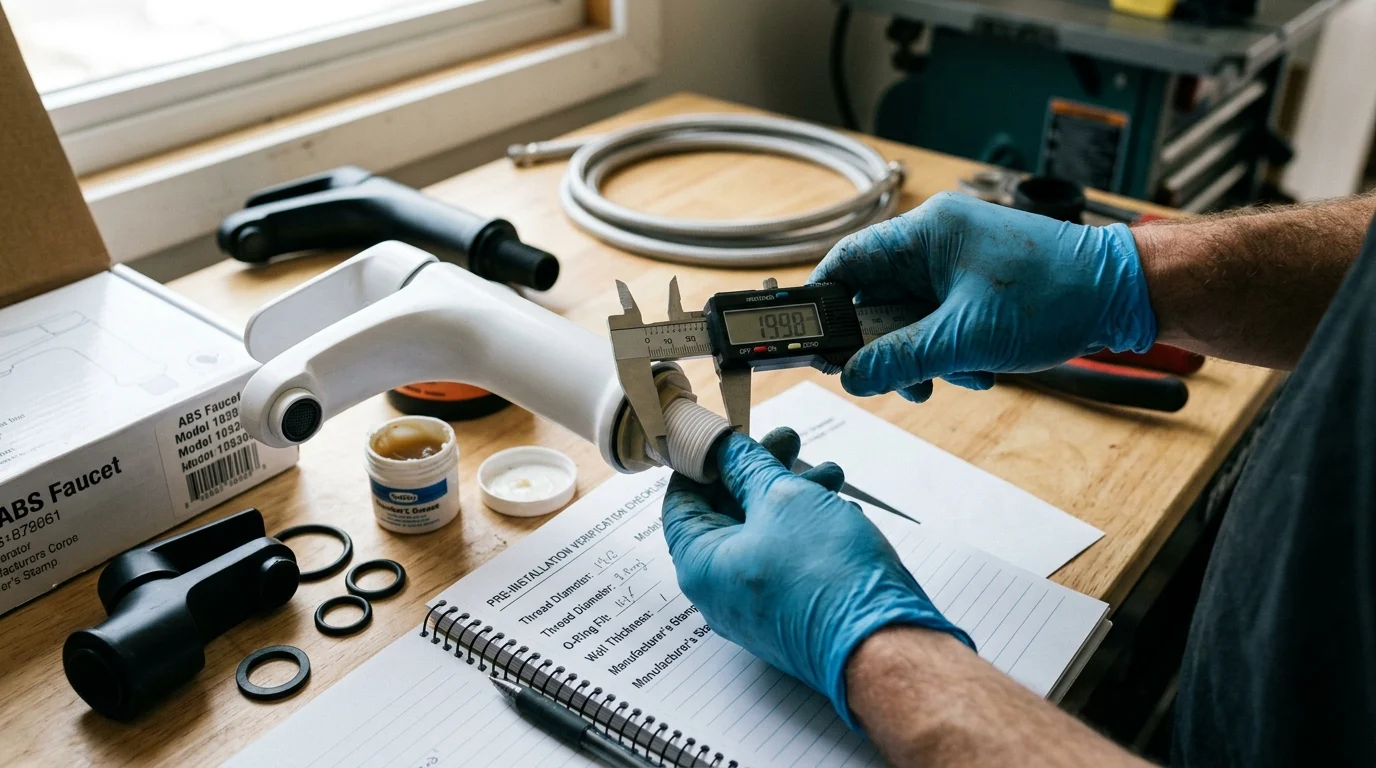
Before an installer ever touches a wrench, the success of a plastic faucet installation is predetermined by the technical specifications verified during the procurement phase. Distributors must ensure that the products they supply precisely match the environmental and operational parameters of the end-user’s plumbing infrastructure.
Material, Thread, Pressure, Temperature, and Chemical Resistance
Selecting the correct polymer is the foundational step in specification verification. Unplasticized Polyvinyl Chloride (UPVC) is highly cost-effective for cold water applications but is strictly limited to a maximum operating temperature of 60°C (140°F). For high-temperature environments, Chlorinated Polyvinyl Chloride (CPVC) or Polypropylene Random Copolymer (PPR) must be specified, as they safely handle temperatures up to 90°C (194°F) and 95°C (203°F), respectively.
Beyond temperature, buyers must meticulously verify thread standards and pressure ratings. Mismatched threads—such as forcing an NPT (National Pipe Thread) fitting into a BSP (British Standard Pipe) connection—guarantee installation failure and thread stripping. Furthermore, industrial installations typically require valves rated at PN16 (capable of handling up to 232 PSI), whereas light-duty agricultural faucets may only require a PN10 rating (145 PSI). Chemical resistance profiles must also be matched to the fluid medium to prevent premature material degradation.
How to Compare Plastic Faucet Types
Comparing plastic faucet types involves analyzing the internal mechanisms that govern flow control and longevity. Buyers must distinguish between traditional compression-style bibcocks, which utilize rubber washers that degrade over time, and modern quarter-turn ball valves utilizing durable PTFE seats and ceramic or polished plastic cores.
High-end plastic faucets are often lifecycle-tested to endure upwards of 500,000 open-and-close cycles without leaking. Procurement teams should also evaluate the handle design—lever handles provide faster operation but are susceptible to higher torque stress, whereas T-handles or cross handles encourage gentler operation, extending the lifespan of the valve stem.
Key Specification Comparison Table
To streamline the specification process, procurement teams and distributors can utilize the following comparative matrix to align material capabilities with project requirements:
| Material | Max Temperature | Max Pressure | Primary B2B Application |
|---|---|---|---|
| UPVC | 60°C (140°F) | PN16 (232 PSI) | Cold water supply, irrigation, municipal lines |
| CPVC | 90°C (194°F) | PN16 (232 PSI) | Hot water distribution, industrial chemical piping |
| PPR | 95°C (203°F) | PN20 (290 PSI) | Residential plumbing, HVAC closed-loop systems |
| POM / ABS | 40°C (104°F) | PN10 (145 PSI) | Light-duty agriculture, temporary site water stations |
How Professional Installers Should Handle Plastic Faucet Installation
Even the highest-quality plastic faucet will fail if subjected to improper installation techniques. Professional contractors and maintenance teams must adhere to strict Standard Operating Procedures (SOPs) to maintain the structural integrity of the polymer and ensure the validity of the manufacturer’s warranty.
Pre-Installation Inspection and Site Preparation
Installation begins with a rigorous visual inspection of both the plastic faucet and the receiving pipe. Installers must check the faucet threads for molding burrs, verify the presence and seating of any required O-rings, and ensure the valve body is free of micro-cracks sustained during transit.
Site preparation requires thoroughly cleaning the male and female threads. Any residual dirt, PVC shavings, or dried solvent cement from adjacent pipe work will act as an abrasive, scoring the plastic threads and creating a pathway for micro-leaks. If solvent welding is required nearby, sufficient curing time must elapse before the mechanical threaded connection is finalized to prevent chemical vapors from attacking the faucet’s internal seals.
Recommended Installation Sequence
The recommended sequence for threaded plastic connections relies heavily on the proper application of Polytetrafluoroethylene (PTFE) thread seal tape. Installers should apply 3 to 5 wraps of high-density PTFE tape in the direction of the thread. Liquid pipe dopes or anaerobic thread lockers should be strictly avoided unless explicitly certified for use with the specific plastic, as many petroleum-based sealants will chemically degrade PVC and ABS, leading to catastrophic brittle failure.
Tightening must be executed with extreme caution. The faucet should first be hand-tightened until snug. Subsequently, a strap wrench or a smooth-jawed crescent wrench should be used to apply no more than 1/4 to 1/2 of a turn past hand-tight. Using heavy-duty pipe wrenches with serrated teeth will gouge the plastic housing, compromising its pressure-retaining capabilities.
Pressure Testing and Post-Installation Checks
Once the installation is complete, the system must undergo a controlled pressure test. The plumbing network should be filled slowly to allow trapped air to bleed out, as compressed air pockets can cause severe water hammer spikes that shatter plastic valves.
Industry best practices dictate hydrostatically testing the system at 1.5 times the maximum intended operating pressure—for example, testing at 15 bar for a system designed to operate at 10 bar. This pressure should be maintained for a minimum of 2 hours while all faucet joints are visually inspected for weeping or pressure drops. Only after this verification should the system be commissioned for daily use.
What Installation Mistakes Increase Returns and Failure Rates
Analyzing field data reveals that a significant majority of RMA requests and product failures stem from installation errors and environmental mismanagement rather than inherent manufacturing defects. Educating downstream partners on these pitfalls is essential for distributors aiming to protect their profit margins.
Over-Tightening, Poor Sealing, and Misalignment
The most pervasive mistake in plastic plumbing is over-tightening. Metal plumbing components can withstand high torque, but applying metal-standard torque to a plastic faucet (exceeding 15 to 20 Nm) will inevitably stretch the female threads or induce hairline fractures in the valve body. These fractures may not leak immediately but will burst under continuous line pressure.
Misalignment during the initial threading process—known as cross-threading—permanently destroys the plastic thread profile. Furthermore, poor sealing practices, such as substituting PTFE tape with incompatible hemp fiber or aggressive liquid adhesives, create uneven stress distribution that physically splits the plastic housing over time.
Material Mismatch, UV Exposure, and Temperature Risks
Installing a plastic faucet in an environment it was not engineered for guarantees premature failure. Deploying standard indoor ABS faucets in outdoor agricultural settings exposes them to intense Ultraviolet (UV) radiation, which causes the polymer to become brittle and chalky within months. For outdoor use, UV-stabilized UPVC or specialized dark-pigmented plastics are mandatory.
Temperature fluctuations also pose a severe risk due to the thermal expansion coefficients of plastics. For instance, UPVC expands approximately 0.05 mm per meter per degree Celsius. If a plastic faucet is rigidly anchored without allowing for thermal expansion and contraction, the resulting mechanical stress will shear the faucet away from the supply line during extreme temperature swings.
Packaging, Handling, and Storage Best Practices
Installation failures often begin before the product reaches the plumbing site, originating from improper packaging, handling, and storage. Dropping bulk cartons during warehouse logistics can introduce invisible micro-cracks into the valve bodies.
To mitigate this, distributors should insist on double-corrugated export cartons and individual polybag packaging to protect threads from abrasion. Furthermore, plastic faucets should be stored in climate-controlled environments, ideally between 5°C and 35°C, away from direct sunlight and heavy industrial solvents that could emit degrading volatile organic compounds (VOCs).
How Importers and Distributors Should Source Plastic Faucet Products

For importers and wholesale distributors, a proactive sourcing strategy is the most effective defense against installation failures. By partnering with sophisticated manufacturers, B2B buyers can ensure that the products arriving at the job site are engineered for foolproof installation and long-term durability.
How to Assess Supplier Capabilities
Assessing a supplier requires looking beyond the product catalog and examining their manufacturing infrastructure. Top-tier manufacturers operate under strict ISO 9001 quality management systems and utilize automated injection molding machinery to ensure absolute dimensional consistency across millions of units.
Distributors must inquire about the raw material sourcing. High-performance plastic faucets must be molded from 100% virgin resin. Suppliers who blend high percentages of regrind (recycled) plastic to lower costs produce faucets with compromised tensile strength, increasing the likelihood of brittle fractures during standard wrench tightening. A reliable supplier will also maintain in-house testing laboratories capable of performing batch-level pneumatic and hydrostatic burst tests.
Compliance, Labeling, Carton Design, and Logistics
International trade requires strict adherence to compliance and logistics standards. Importers must ensure products carry necessary certifications, such as CE for European markets or NSF for North American potable water applications. Proper labeling, including molded-in material indicators and pressure ratings, aids installers in selecting the right valve for the job.
| Sourcing Criteria | Benchmark Standard | Impact on Installation |
|---|---|---|
| Material Purity | 100% Virgin Resin | Prevents brittle fractures under installation torque |
| Thread Precision | ISO 7-1 / ANSI B1.20.1 | Ensures leak-free mating with standard pipe networks |
| Carton Weight | < 25 kg per master carton | Reduces drop-damage and fatigue during site handling |
| Quality Testing | 100% pneumatic/hydro test | Eliminates out-of-box defect rates for contractors |
How to Align Sourcing with Installation Requirements
Ultimately, successful sourcing aligns factory output with localized installation realities. If a distributor operates in a region where BSP threads are the infrastructure standard, importing NPT-threaded faucets will cause widespread installation failure and immediate product rejection.
Forward-thinking importers add value by bundling plastic faucets with localized, highly visual installation manuals. Some distributors also request custom packaging that includes a roll of compatible PTFE tape or spare EPDM O-rings with every master carton. By anticipating the needs and common mistakes of the end-user, B2B buyers can drastically reduce field failures, solidify their brand reputation, and secure recurring bulk orders in the competitive plumbing sector.
Key Takeaways
- Wholesale sourcing and supply-chain implications for Plastic Faucet
- Specifications, compliance, and commercial terms buyers should validate
- Actionable recommendations for distributors and procurement teams
Frequently Asked Questions
What should buyers verify before installing a plastic faucet?
Confirm material type, thread standard, pressure rating, temperature limit, and chemical compatibility. Matching these details to the project prevents leaks, thread damage, and premature failure.
Can NPT and BSP plastic faucet threads be used together?
No. NPT and BSP threads are different standards. Forcing them together can strip plastic threads and cause leaks, so always confirm the required thread type before ordering or installation.
Which plastic faucet material is best for hot water?
For hot water, choose CPVC or PPR instead of standard UPVC. UPVC is generally for cold water, while CPVC and PPR handle higher operating temperatures more safely.
How can installers avoid cracking a plastic faucet?
Avoid over-tightening, use compatible sealing tape correctly, keep threads aligned, and tighten by hand before using tools lightly. Excess torque is a common cause of plastic faucet damage.
Does Pntek supply plastic faucets for bulk projects?
Yes. Pntek supplies plastic faucets, pipes, fittings, and valves for irrigation, construction, water supply, and infrastructure projects, with export support and responsive quotation service.


