
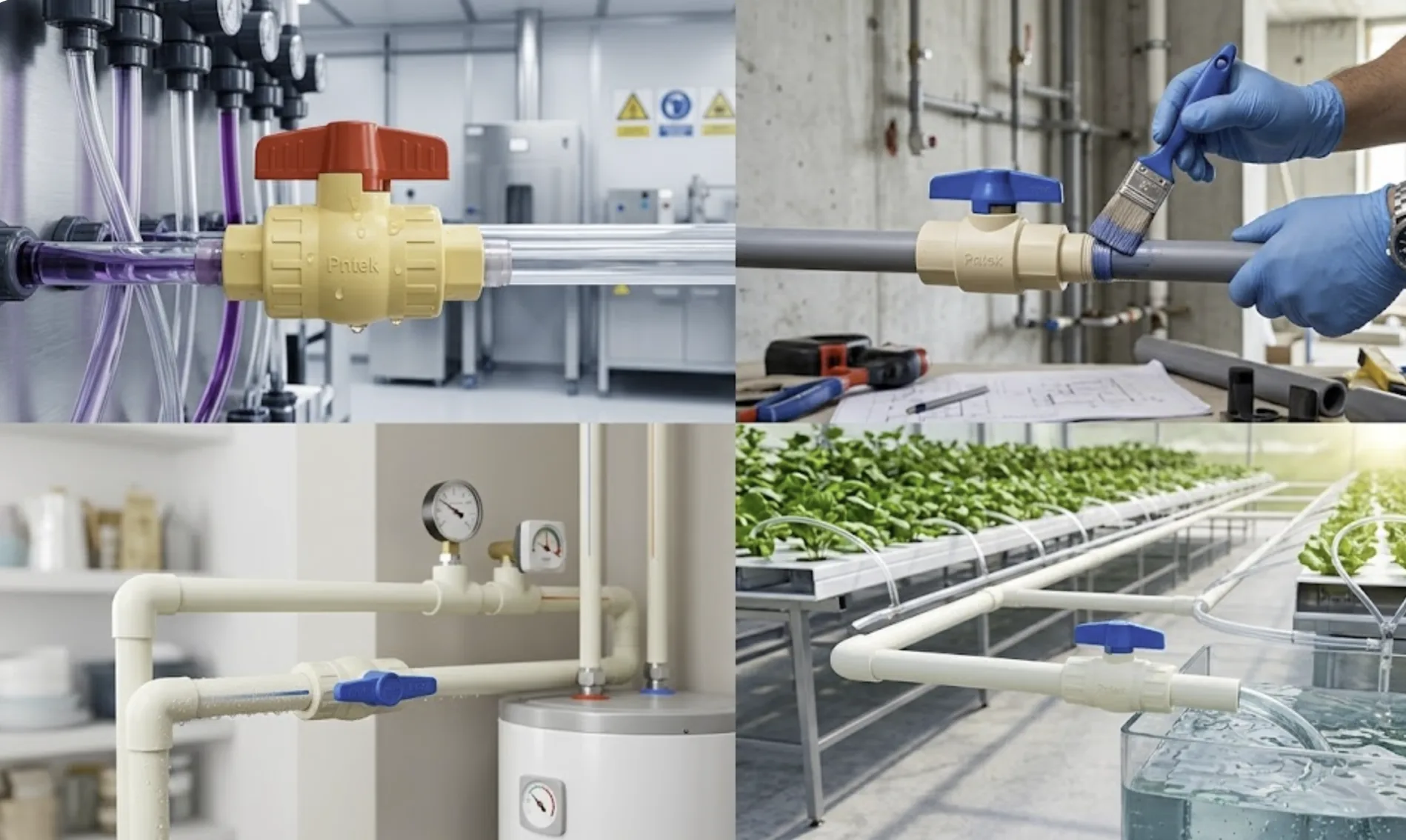
When selecting materials for plumbing systems, choosing between PPR ball valves and CPVC ball valves is essential for ensuring long-term performance in both hot and cold water systems. Whether you are searching for a hot water plastic valve solution, a corrosion-resistant plumbing valve for CPVC systems, or a PPR pipe valve for domestic water supply, understanding their differences helps improve system safety, durability, and efficiency.
Material Composition and Structural Differences
The primary difference between PPR and CPVC ball valves lies in their material structure and thermal resistance.
PPR (Polypropylene Random Copolymer) valves
Excellent heat resistance and flexibility
Commonly used in hot and cold potable water systems
Joined using heat fusion welding for leak-proof sealing
CPVC (Chlorinated Polyvinyl Chloride) valves
Higher rigidity and chemical resistance
Suitable for hot water and industrial fluid systems
Installed using solvent cement joints
In general, PPR pipe valve systems are preferred for residential plumbing, while CPVC valve systems are often used in industrial or high-temperature environments.
Temperature Resistance and Application Range
One of the most important factors in choosing a hot and cold water ball valve solution is temperature performance.
PPR ball valves
Suitable for temperatures up to ~70–95°C
Ideal for domestic hot water systems
Stable under long-term moderate heat exposure
CPVC ball valves
Can withstand higher temperatures (up to ~90–110°C depending on grade)
Better for industrial hot water and chemical systems
Maintains strength under continuous thermal stress
For high-temperature environments, CPVC often offers slightly better performance, while PPR is more balanced for general plumbing use.
Chemical Resistance and Durability
Durability in different water conditions is a key consideration for plastic plumbing ball valves comparison (PPR vs CPVC).
PPR valves
Resistant to scale buildup and corrosion
Excellent for clean water and domestic systems
Long service life with minimal maintenance
CPVC valves
Strong resistance to chemicals and acidic fluids
Suitable for industrial water treatment systems
More rigid but highly durable under harsh conditions
CPVC is often preferred in chemical-heavy environments, while PPR dominates residential water systems.
Installation Method and System Compatibility
Installation differences also affect cost, labor, and system design.
PPR ball valves
Heat fusion welding creates seamless joints
Requires specialized welding tools
Highly leak-resistant after installation
CPVC ball valves
Solvent cement bonding for quick installation
Easier and faster to install than PPR systems
Widely compatible with standard PVC piping systems
For large-scale installations, CPVC systems often reduce labor time, while PPR offers superior sealing integrity.
Which One Should You Choose for Water Applications?
The choice between PPR and CPVC depends on usage conditions and system design:
Choose PPR ball valves for:
Residential hot and cold water systems
Drinking water supply networks
Long-term low-maintenance plumbing
Choose CPVC ball valves for:
High-temperature industrial systems
Chemical and corrosive fluid environments
Fast-installation commercial projects
In modern plumbing systems, both materials play important roles depending on application requirements.
FAQ
What is the main difference between PPR and CPVC ball valves?
PPR valves are more flexible and ideal for residential water systems, while CPVC valves offer higher temperature and chemical resistance.
Which valve is better for hot water systems?
CPVC valves generally perform better at higher temperatures, while PPR is suitable for standard household hot water.
Are PPR valves safe for drinking water?
Yes, PPR valves are widely used in potable water systems due to their non-toxic and corrosion-resistant properties.
Which is easier to install, PPR or CPVC valves?
CPVC valves are easier and faster to install using solvent cement, while PPR requires heat fusion welding.
Which material lasts longer in plumbing systems?
Both have long lifespans, but CPVC performs better in harsh chemical environments, while PPR excels in residential water systems.
About Pntek Ball Valve Supplier
We specialize in manufacturing and supplying high-quality plastic piping systems and industrial valve solutions, including PPR valves, CPVC valves, PVC fittings, and advanced water flow control products.
Our products are widely used in residential plumbing, commercial water systems, industrial pipelines, and agricultural irrigation networks, offering reliable and cost-effective fluid control solutions.
With advanced polymer technology, precision injection molding, and strict quality control systems, we ensure our valve products deliver excellent durability, corrosion resistance, and long-term performance. Our mission is to provide efficient, safe, and sustainable plumbing solutions for global markets.


