
PVC pipe sizing and pressure rating are fundamental parameters in fluid engineering systems. Correct interpretation of nominal size, outside diameter (OD), wall thickness, and pressure class directly affects system safety, hydraulic efficiency, and lifecycle cost. This guide provides a structured overview of PVC pipe dimensions, standardized sizing systems, and pressure ratings, supported by current engineering standards and data.
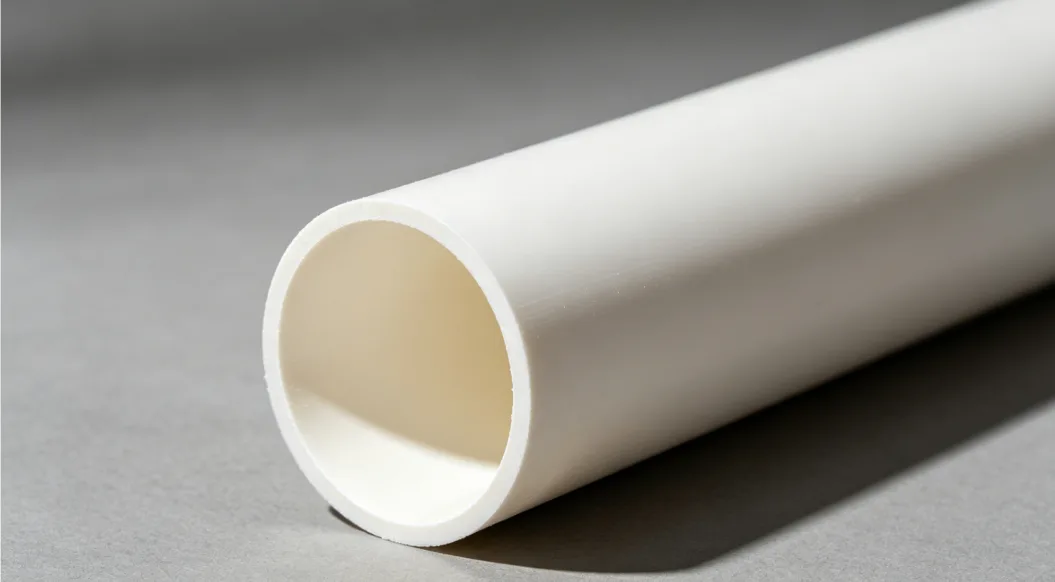
Understanding PVC Pipe Dimensions and Standards
PVC (polyvinyl chloride) pipes are manufactured according to standardized systems that define geometry and performance. The most widely used standards include:
ASTM D1785 (Schedule 40 & 80 PVC)
-
ASTM D2241 (SDR-based PVC pressure pipes)
-
NSF/ANSI 61 (drinking water system compliance)
PVC pipe size is typically expressed as Nominal Pipe Size (NPS), which does not equal the actual outside diameter. Instead, OD remains constant for a given NPS, while wall thickness varies depending on schedule or SDR rating.
Key dimensional parameters:
| Parameter | Definition | Engineering Relevance |
|---|---|---|
|
Nominal Pipe Size (NPS) |
Approximate internal diameter |
System compatibility |
|
Outside Diameter (OD) |
Fixed outer size |
Fittings and connections |
|
Wall Thickness |
Pipe wall dimension |
Strength and pressure resistance |
|
Inside Diameter (ID) |
Flow passage size |
Hydraulic capacity |
According to the American Society for Testing and Materials, maintaining consistent OD ensures interchangeability of fittings across pressure classes.
PVC Pipe Size Chart (Schedule 40 & 80)
The following table summarizes common PVC pipe sizes and dimensions based on ASTM D1785.
Schedule 40 PVC Pipe Dimensions
| NPS (inches) | OD (mm) | Wall Thickness (mm) | ID (mm) |
|---|---|---|---|
|
1/2″ |
21.34 |
2.77 |
15.80 |
|
1″ |
33.40 |
3.38 |
26.64 |
|
2″ |
60.33 |
3.91 |
52.50 |
|
4″ |
114.30 |
6.02 |
102.26 |
|
6″ |
168.28 |
7.11 |
154.06 |
Schedule 80 PVC Pipe Dimensions
| NPS (inches) | OD (mm) | Wall Thickness (mm) | ID (mm) |
|---|---|---|---|
|
1/2″ |
21.34 |
3.73 |
13.84 |
|
1″ |
33.40 |
4.55 |
24.30 |
|
2″ |
60.33 |
5.54 |
49.25 |
|
4″ |
114.30 |
8.56 |
97.18 |
|
6″ |
168.28 |
10.97 |
146.34 |
Engineering insight: Schedule 80 pipes have thicker walls, reducing ID and increasing pressure capacity, but also increasing friction loss.
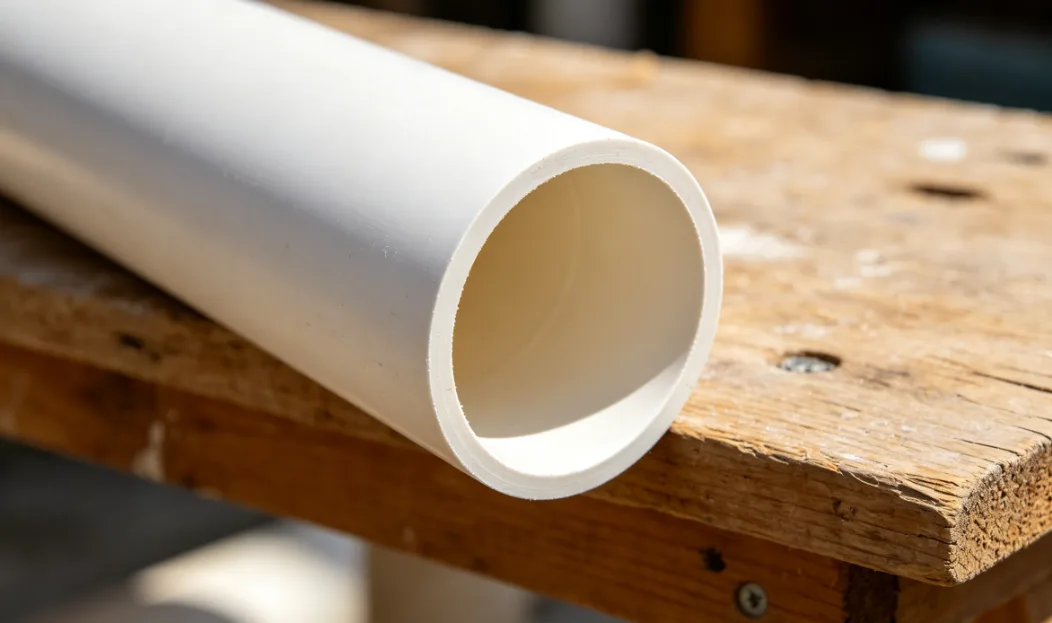
SDR (Standard Dimension Ratio) Explained
SDR is an alternative sizing method defined as:
SDR=ODWall ThicknessSDR = \frac{OD}{Wall\ Thickness}SDR=Wall ThicknessOD
Lower SDR values indicate thicker walls and higher pressure ratings.
Common SDR Classifications
| SDR Value | Pressure Class (Approx.) | Typical Application |
|---|---|---|
|
SDR 41 |
Low pressure (~100 psi) |
Drainage, irrigation |
|
SDR 26 |
Medium pressure (~160 psi) |
Water distribution |
|
SDR 21 |
Higher pressure (~200 psi) |
Municipal systems |
|
SDR 13.5 |
High pressure (~315 psi) |
Industrial piping |
The American Water Works Association recognizes SDR-based PVC pipes (AWWA C900/C905) as standard for potable water infrastructure.
PVC Pipe Pressure Ratings
Pressure rating defines the maximum internal pressure a pipe can safely withstand at a specified temperature (usually 73°F / 23°C).
Pressure Rating Factors
-
Wall Thickness (Schedule or SDR)
-
Pipe Diameter
-
Material Strength
-
Temperature Derating
Typical Pressure Ratings (Schedule PVC)
| Pipe Size | Sch 40 (psi) | Sch 80 (psi) |
|---|---|---|
|
1/2″ |
600 |
850 |
|
1″ |
450 |
630 |
|
2″ |
280 |
400 |
|
4″ |
220 |
320 |
|
6″ |
180 |
250 |
Data aligns with engineering references from NSF International and ASTM specifications.
Temperature Derating for PVC Pipes
PVC mechanical strength decreases with temperature increase. Pressure ratings must be adjusted using derating factors.
Temperature Correction Table
| Temperature (°F) | Derating Factor |
|---|---|
|
73°F (23°C) |
1.00 |
|
100°F (38°C) |
0.80 |
|
120°F (49°C) |
0.62 |
|
140°F (60°C) |
0.50 |
Example: A pipe rated at 200 psi at 73°F will only handle 100 psi at 140°F.
The Plastic Pipe Institute emphasizes temperature derating as critical in industrial system design.
Key Selection Criteria for PVC Pipe Sizing
Selecting the correct PVC pipe involves multi-variable engineering evaluation:
1. Flow Requirements
-
Determine required flow rate (GPM or m³/h)
-
Ensure velocity stays within 3–5 ft/s for water systems
2. Pressure Requirements
-
Account for static + dynamic pressure
-
Include surge pressure (water hammer)
3. Chemical Compatibility
PVC exhibits strong resistance to acids, alkalis, and salts, making it suitable for:
Water treatment systems
-
Chemical processing
-
Irrigation networks
4. Installation Conditions
-
Underground vs. above-ground
-
UV exposure considerations
-
Thermal expansion allowances
PVC vs CPVC vs HDPE: Performance Comparison
| Property | PVC | CPVC | HDPE |
|---|---|---|---|
|
Max Temp |
140°F |
200°F |
140°F |
|
Pressure Strength |
High |
Moderate |
High |
|
Chemical Resistance |
Excellent |
Excellent |
Excellent |
|
Flexibility |
Rigid |
Rigid |
Flexible |
PVC remains the preferred material for cost-sensitive, moderate-temperature, pressure-rated systems.
Industry Applications of PVC Pipes
PVC piping systems are widely used due to their balance of strength, cost-efficiency, and corrosion resistance.
Typical applications include:
Municipal water distribution
-
Agricultural irrigation systems
-
Industrial fluid transport
-
Drainage and sewer systems
According to the U.S. Environmental Protection Agency, PVC remains one of the most widely used materials in potable water infrastructure due to durability and low failure rates.
Key Takeaways
-
PVC pipe size is defined by NPS, with constant OD and variable wall thickness
-
Schedule and SDR systems determine pressure capacity
-
Pressure ratings decrease significantly with temperature increase
-
Proper sizing must consider flow, pressure, and environmental conditions
FAQ: PVC Pipe Size and Pressure Rating
1. What is the difference between Schedule 40 and Schedule 80 PVC pipes?
Schedule 80 PVC pipes have thicker walls than Schedule 40, resulting in higher pressure ratings but smaller internal diameters. This reduces flow capacity slightly while improving mechanical strength.
2. How is SDR different from pipe schedule?
SDR is a ratio-based system (OD to wall thickness), while schedule is a fixed classification. SDR provides more consistent pressure performance across different pipe diameters.
3. Can PVC pipes be used for hot water systems?
Standard PVC is not suitable for high-temperature applications above 140°F. CPVC is typically used instead for hot water due to its higher thermal resistance.
4. How do you calculate PVC pipe pressure rating?
Pressure rating depends on wall thickness, diameter, and material strength. Engineers use ASTM formulas and apply temperature derating factors for accurate calculations.
5. What factors reduce PVC pipe lifespan?
High temperature, UV exposure, chemical incompatibility, and excessive pressure cycles can degrade PVC pipes over time, reducing service life and increasing failure risk.


